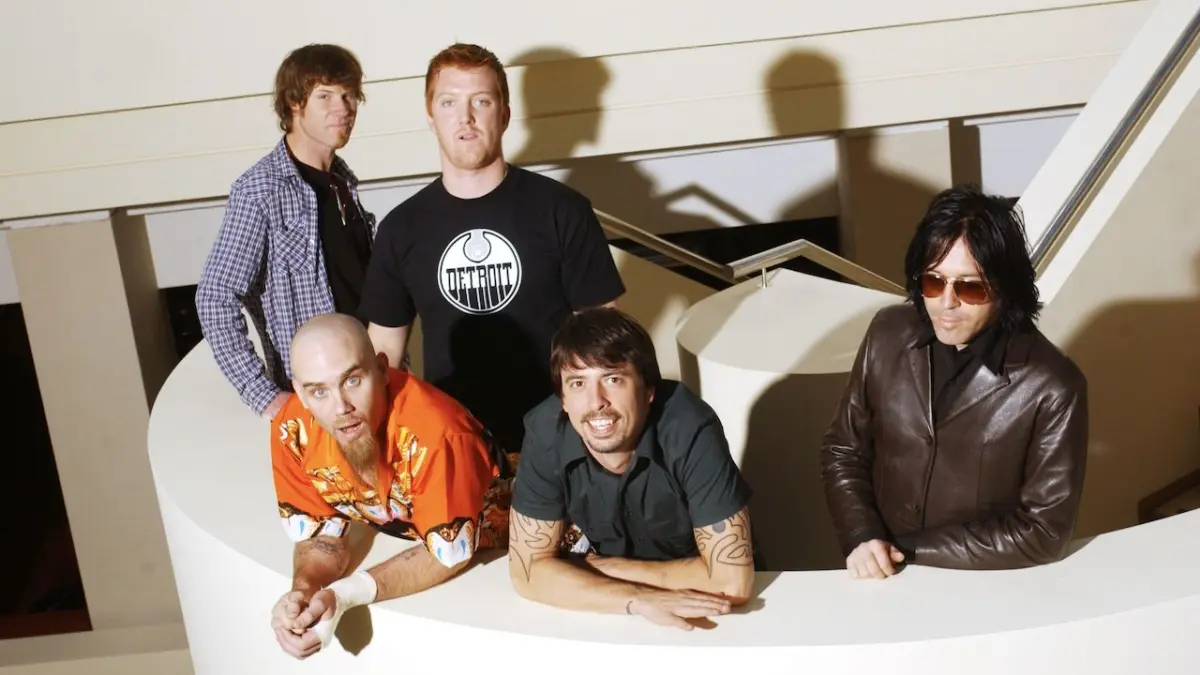
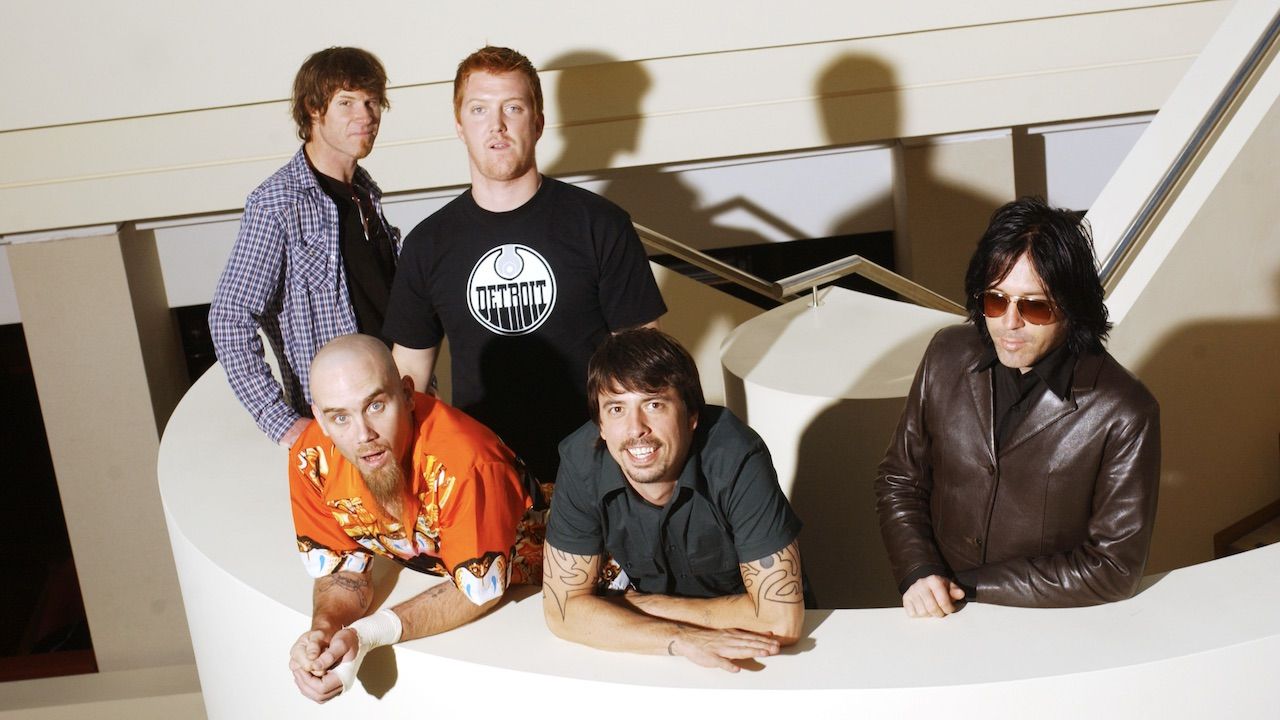
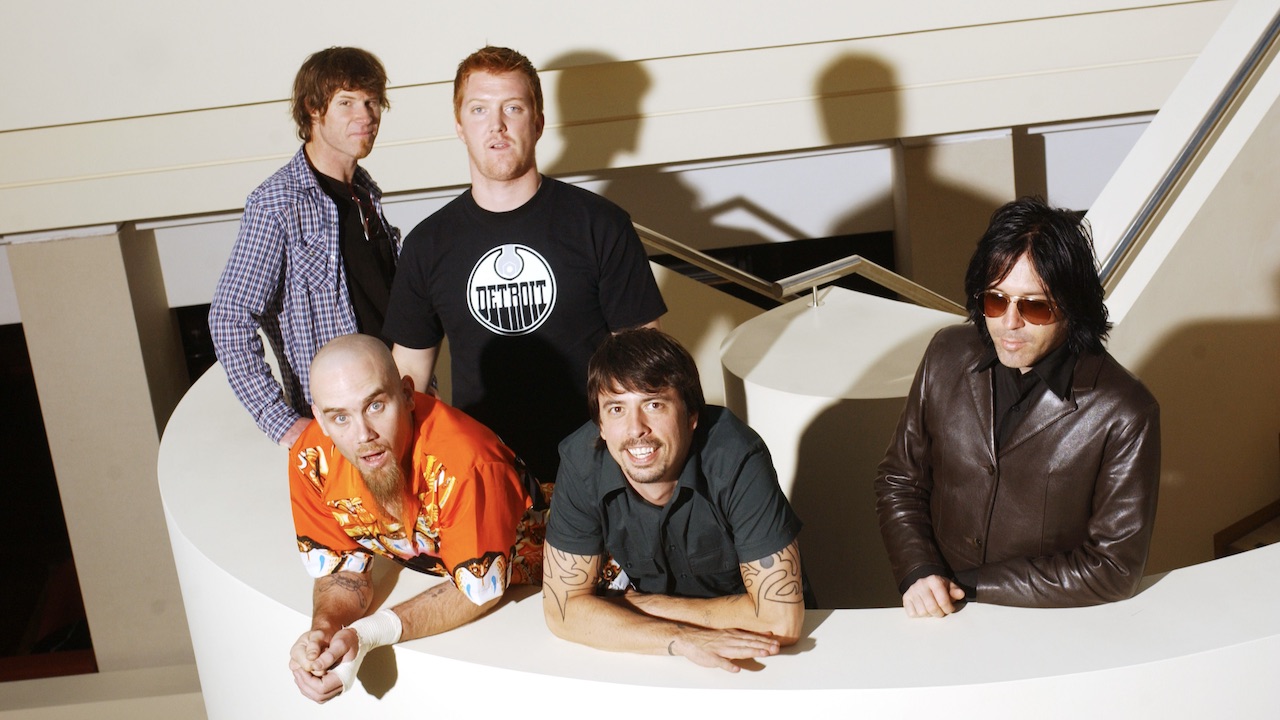
At the dawn of the 21st century, alternative rock stood at an uncertain crossroads. The commercial dominance of grunge had faded into the formulaic, heavy-handed tropes of nu-metal and post-grunge, while the burgeoning indie-rock revival was beginning to capture mainstream media attention. Out of the sun-baked, arid landscape of Palm Desert, California, emerged a sonic force that defied both trends: Queens of the Stone Age (QOTSA).
Fronted by former Kyuss guitarist Josh Homme, the band forged an unholy alliance between heavy metal power, psychedelic space-rock, and sleek, danceable pop sensibilities—a sound Homme famously dubbed "trance robot music."
The release of their landmark third studio album, 2002’s Songs for the Deaf, marked a watershed moment for modern rock music. Recorded amidst friction with record company executives and elevated by the powerhouse drumming of Foo Fighters leader and former Nirvana member Dave Grohl, the album became a critical and commercial triumph. Framed as a surreal, high-speed radio broadcast across the Mojave Desert, Songs for the Deaf bridged the gap between underground DIY culture and global rock stardom, demonstrating that uncompromising, esoteric guitar music could conquer the charts without surrendering its edge.
Detailed Chronology: From Desert Generator Parties to Global Acclaim
[Late 1980s – Mid 1990s]  Palm Desert Generator Parties; Kyuss forms and releases 4 albums.
       │
[1995 – 1996]             Kyuss disbands acrimoniously; Homme tours with Screaming Trees.
       │
[1997 – 1998]             Homme forms Queens of the Stone Age; Releases self-titled debut (1998).
       │
[2000]                    Release of 'Rated R'; Critical acclaim & commercial breakthrough.
       │
[Late 2001]               Rancho De La Luna sessions; Studio friction; Gene Trautmann exits.
       │
[Early 2002]              Dave Grohl joins on drums; Recording completed in ~2 weeks.
       │
[August 27, 2002]         'Songs for the Deaf' released to widespread acclaim and chart success.
The Kyuss Incubator and the Palm Desert DIY Ethos
The origin of Queens of the Stone Age is rooted in the isolated, sun-bleached expanse of California’s Palm Desert. During the late 1980s and early 1990s, local musicians and skateboarders sought refuge from authority by organizing subterranean, generator-powered gigs out in the middle of the wilderness. Powered by portable electrical generators, kegs of beer, and a variety of illicit substances, bands like Yawning Man and Across The River played all-night sessions beneath the desert stars.
It was within this feral environment that a teenage Josh Homme honed his craft as the guitarist for Kyuss, alongside bassist Nick Oliveri, vocalist John Garcia, and drummer Brant Bjork. Kyuss pioneered a heavy, downtuned style that critics labeled "stoner rock." Over the course of four studio albums—culminating in 1994’s classic Welcome to Sky Valley—Kyuss gained a passionate cult following. However, internal friction and commercial pressures fractured the group, leading to an acrimonious split in 1995.
Reinvention: "Trance Robot Music"
Following the demise of Kyuss and a brief stint as a touring guitarist for Seattle’s Screaming Trees, Homme sought to distance himself from the rigid constraints of heavy metal and stoner rock. Rather than trading on his former band’s legacy, he envisioned a sleeker, more dynamic sound.
In 1997, Homme established Queens of the Stone Age. His objective was clear: create music that was "heavy enough for the boys and sweet enough for the girls." Influenced as much by the garage-punk fury of The Stooges, The Misfits, and Discharge as by the motorik rhythms of Can and the smooth crooning of Frank Sinatra and Roy Orbison, QOTSA’s self-titled 1998 debut album delivered minimalist, hypnotic riffs combined with a seductive Rat Pack swagger.
Rated R and the "Saviours of Rock" Narrative
The band’s sophomore album, 2000’s Rated R, propelled QOTSA into mainstream consciousness. Anchored by the infamous opening track Feel Good Hit of the Summer—featuring a guest vocal appearance by Judas Priest frontman Rob Halford—the record earned widespread acclaim. Major media outlets prematurely crowned QOTSA as the "new saviours of rock music," a label Homme greeted with characteristic skepticism. He publicly questioned whether rock was actually drowning or in need of saving at all, maintaining that good rock music had always existed beneath the mainstream radar.
Studio Tensions and the Arrival of Dave Grohl
By late 2001, expectations for QOTSA’s third album were sky-high. Homme, adhering to a pre-planned three-record evolution, sought to synthesize the trance-like simplicity of the debut with the expansive experimentation of Rated R.
Early songwriting took place during Homme’s informal "Desert Sessions" at Rancho De La Luna in Joshua Tree, involving a rotating cast of collaborators including Mark Lanegan, PJ Harvey, and producer Chris Goss. However, when formal recording commenced with producer Eric Valentine, the studio environment proved rigid and stifling. Interscope Records executives began expressing concern regarding the record’s unconventional artistic direction.
The project faced a potential bottleneck when drummer Gene Trautmann departed early in the sessions. Homme reached out to long-time friend Dave Grohl, who was facing creative stagnation during the initial sessions for Foo Fighters’ fourth album, One by One. Grohl accepted the invitation immediately, driving to the studio that same evening.
Grohl’s arrival injected immense energy into the project. His ferocious, mathematically precise drumming transformed the material, allowing the band to finish tracking the drum parts in under two weeks.
The Concept Drive: LA to Joshua Tree
To bridge the album’s diverse tracklist, Homme implemented a unifying concept: framing the record as a late-night drive from Los Angeles to the open desert of Joshua Tree, navigating through low-wattage, bizarre radio stations along the way.
By recruiting friends like Lux Interior (The Cramps), Jesse Hughes (Eagles of Death Metal), and Jeordie White (Marilyn Manson) to deliver surreal radio host idents—including fake station calls like KRDL ("We spoil music for everyone") and KLON ("We play the songs that sound more like everyone else than anyone else")—the album gained a theatrical, immersive narrative structure.
Supporting Context & Critical Metrics
Commercial and Chart Performance
Upon its release on August 27, 2002, Songs for the Deaf shattered commercial expectations for an experimental hard-rock record.
Region
Peak Chart Position
Certification / Sales Impact
United Kingdom
No. 4
Gold status within months; established massive European festival draw
United States (Billboard 200)
No. 17
Certified Gold (RIAA); later achieved Platinum status
Lead Single (No One Knows)
No. 1 (US Modern Rock)
Nominated for Best Hard Rock Performance at the 45th Grammy Awards
Musical Analysis of Key Tracks
                        SONGS FOR THE DEAF
                                 │
     ┌───────────────────────────┼───────────────────────────┐
     ▼                           ▼                           ▼
"You Think I Ain't..."    "No One Knows"             "Go With The Flow"
Raw Punk Energy           Dynamic Staccato Riffing    Relentless Driving Rhythm
Vocals: Nick Oliveri      Rhythm: Grohl & Homme       Visual: Iconic Animated Video
"You Think I Ain’t Worth a Dollar, But I Feel Like a Millionaire": Originally recorded during a Desert Sessions run, this track opens the album following radio static. Driven by Nick Oliveri’s unhinged, screaming vocals and Dave Grohl’s pounding rhythm, it sets an aggressive, unapologetic tone.
"No One Knows": The album’s lead single and signature track. Built around a bouncy, staccato guitar line and a syncopated bass groove, the song features explosive drum fills from Grohl that recall the tight, telepathic interplay of classic rock legends like Led Zeppelin.
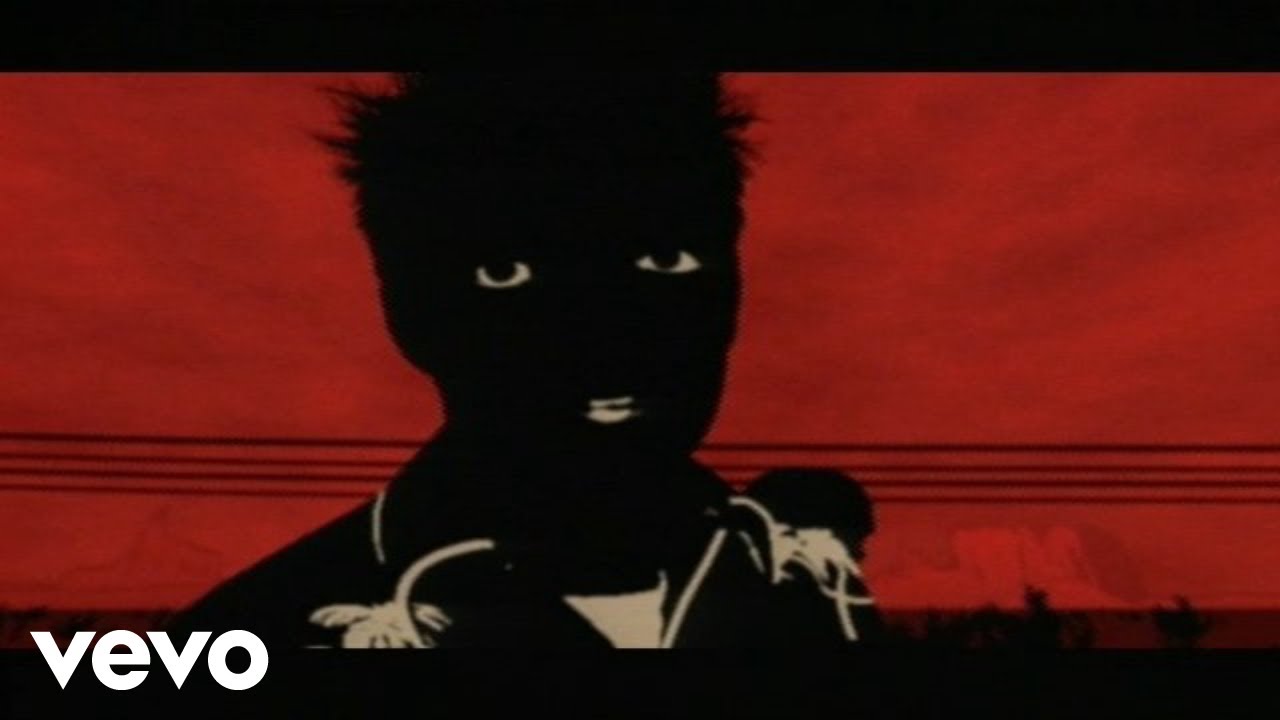
"Go with the Flow": Driven by relentless piano chords and a driving motorik beat, this track showcases Homme’s falsetto vocal delivery, pairing romantic lyricism with high-octane guitar riffs.
"First It Giveth": A mid-tempo track addressing the seductive and destructive nature of chemical inspiration, utilizing odd time signatures and layered harmonies.
Official Statements and Primary Perspectives
The trajectory of Queens of the Stone Age during this era was defined by strong artistic independence and personal camaraderie. Below are key perspectives from the principal figures involved in the creation of Songs for the Deaf.
On Desert Isolation and Artistic Autonomy
"We were a little young to go to see Black Flag and the Misfits and GBH and Discharge without getting killed, so we ended up creating what we wanted to hear those bands evolve into. In the desert, it was about having to make your own thing, and being isolated enough to do it without anyone fucking with you."
— Josh Homme, Frontman & Guitarist
"Kyuss got noticed because it didn’t give a shit if anyone noticed it. Bands now scratch and they claw. I don’t wanna show up and go, ‘Please can I get into this club?’ I want someone to ask me. That attitude is the reason why it’s still fun. It’s like being a deliberate outsider. You invited the outsider in, and now the outsider’s gonna fuck things up."
— Josh Homme
On the Fall of Kyuss
"Business started to dictate what we were doing, and the spirit of creativity and camaraderie and brotherhood, all that made our band pure and organic, started to evaporate."
— Brant Bjork, Former Kyuss Drummer
On the Chemistry Between Homme and Grohl
"I first met Josh in 1992… They seemed like us, like kids who grew up in the suburbs listening to rock ’n’ roll records, doing petty crime and drugs, just little vandals from the middle of nowhere. Josh and I have a connection musically that I just don’t have with anybody else: as a drummer, playing with him, we share this frequency that I haven’t shared with anyone else. It’s intangible and unspoken, almost like ESP."
— Dave Grohl, Guest Drummer
"Being in Queens was one of the greatest experiences of my life. If you can say that you were a member of Queens Of The Stone Age, that’s like wearing a patch on your chest that says ‘I Am A Badass’ for the rest of your life… We never had a bad show. I was playing drums in the best band I’d ever been in and fucking loving it."
— Dave Grohl
"Dave came in and made these songs that I thought were good, really phenomenal. It uplifted not only our spirit, but us as players, including Josh: his playing on it really made everybody come forward. Dave was a champion of all things."
— Nick Oliveri, Bassist & Vocalist
Future Outlook and Enduring Legacy
Following the release of Songs for the Deaf and an extensive world tour—including high-profile festival slots at Glastonbury and Summer Sonic—Dave Grohl returned to Foo Fighters to re-record One by One, energized by his stint with QOTSA. While some industry insiders feared Grohl’s temporary departure might cause friction, Homme viewed it as a validation of creative freedom.
                  2002 FESTIVAL TOUR & BEYOND
                               │
       ┌───────────────────────┴───────────────────────┐
       ▼                                               ▼
DAVE GROHL                                      JOSH HOMME & QOTSA
Returns to Foo Fighters                         Solidifies QOTSA as a top-tier
Re-records 'One By One'                         headlining act worldwide
Homme’s philosophy—that musicians should be free to pursue external projects without abandoning their main bands—helped normalize side projects and supergroups in modern rock culture. Grohl and Homme would later join forces again alongside Led Zeppelin bassist John Paul Jones in the supergroup Them Crooked Vultures in 2009.
Decades after its release, Songs for the Deaf remains a definitive masterpiece of 2000s rock music. It proved that a band forged in the isolation of the California desert could redefine mainstream guitar music on its own terms—without compromising its dark, unhinged, and esoteric identity.