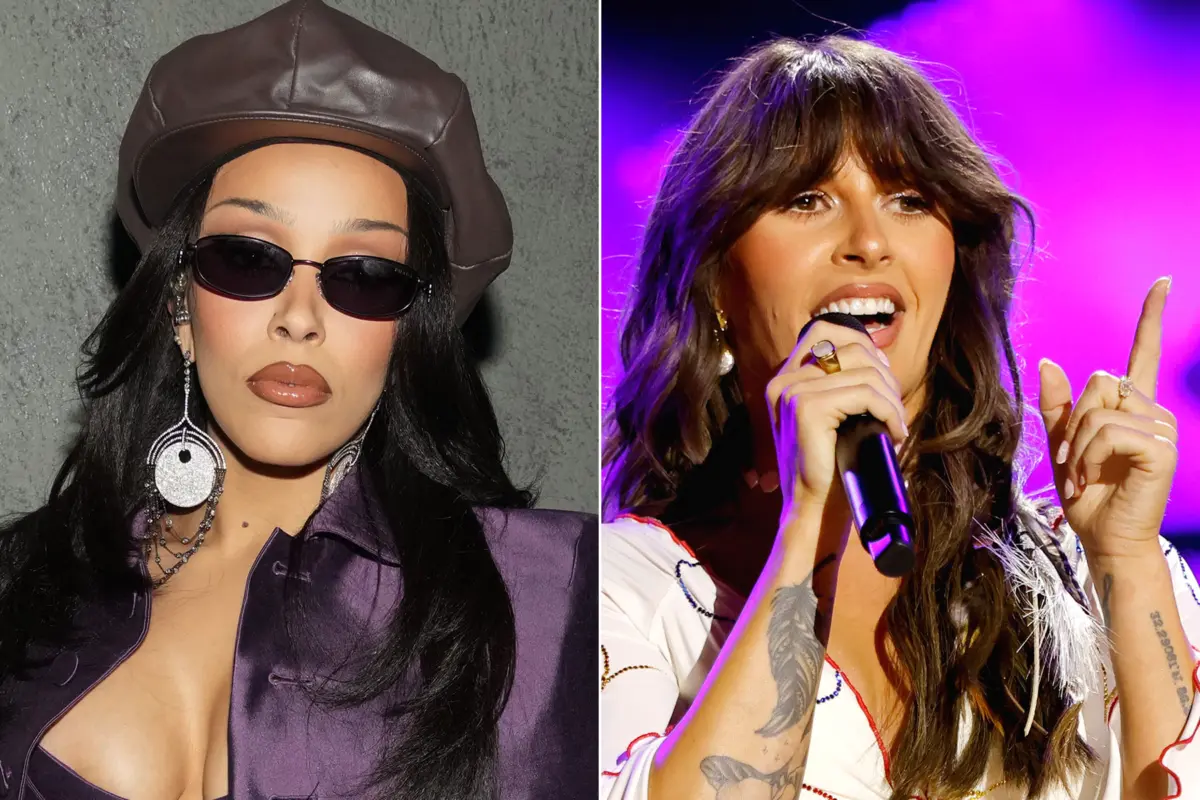
Executive Overview
In the hyper-connected landscape of contemporary pop culture, musical crossover and cross-genre awareness are typically viewed as baseline expectations for mainstream superstars. Yet, in a digital ecosystem governed by algorithmic fragmentation and hyper-niche fandoms, the boundaries between genres can remain remarkably impenetrable.
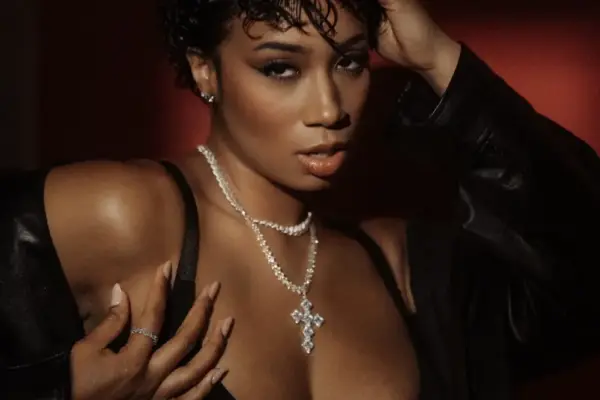
This reality was brought into sharp relief over the weekend when Grammy-winning pop and hip-hop chameleon Doja Cat found herself at the center of a viral firestorm. During a widely circulated Sundae Conversation interview, the “Paint the Town Red” artist casually admitted she had no idea who country music breakout star Ella Langley was—despite Langley’s inescapable cultural omnipresence, anchored by a historic, 19-week reign at No. 1 on the Billboard Hot 100 with her megahit “Choosin’ Texas.”
Rather than backing down after drawing the internet’s collective ire, Doja Cat doubled down during a subsequent late-night livestream on Tuesday, August 25. What followed was a masterclass in unfiltered, polarizing celebrity commentary. The singer offered a candid, albeit scathing, critique of the country genre as a whole, dissected “Choosin’ Texas” after listening to a mere minute and seventeen seconds, and defended her right to unapologetically dislike a style of music that doesn’t align with her personal artistic sensibilities.
This collision of two vastly different musical worlds offers a fascinating lens through which to examine modern celebrity culture, the mechanics of modern chart dominance, and the widening chasm between pop superstardom and country music’s historic commercial zenith.
Detailed Chronology: From Viral Ignorance to Livestream Defiance
The saga began over the weekend of August 23–24, when a snippet from Doja Cat’s appearance on Sundae Conversation made its way across social media platforms like X (formerly Twitter) and TikTok. Prompted by the interviewer about current music landscape titans, Doja displayed a genuine, unfeigned lack of recognition when Langley’s name was dropped. For a pop superstar deeply embedded in the upper echelons of the Billboard charts—a space where Langley has reigned supreme for nearly half a year—the gap in knowledge immediately set off alarm bells among pop and country purists alike.
Clips of the interview spread rapidly, accumulating millions of views and triggering an online debate. Critics accused the rapper-singer of being out of touch, while defenders argued that pop artists are under no obligation to monitor every genre outside their primary domain.
Recognizing the online chatter, Doja Cat took matters into her own hands on Tuesday night (Aug. 25). During an impromptu livestream with her fanbase, she addressed the controversy head-on, pulling up “Choosin’ Texas” on her device to review the track in real-time.
True to her provocative public persona, Doja offered no diplomatic PR-trained cushions. She launched into a frank assessment of the genre that has dominated American radio and streaming services for the better part of two years.
"I really don’t just give a f—k about country music and I don’t understand what’s so hard to believe about that," Doja told her viewers. "I never cared. I like that one Keith Urban song from 2004. I wouldn’t say that I like her music; she’s probably a fine lady. I don’t care for that type of s—t at all. It doesn’t inspire me, it doesn’t make me feel good."

Despite her upfront disdain for the genre, Doja attempted to approach the song with a degree of objective critique. Listening to the opening segments of “Choosin’ Texas,” she acknowledged Langley’s vocal talents while remaining steadfast in her personal aversion to the sonic architecture of modern country-pop.
"This is not my vibe, but she has a very pretty voice," Doja noted mid-listen. "If this is No. 1 on the charts, I’m sure it’s on the radio. I could see them playing this s—t on the radio. I don’t like it, but that’s fine. It’s very earwormy, it sounds like, it’s like a catchy melody. I get it, and she’s pretty."
However, her patience with the track had a strict expiration date. Cutting the music off abruptly after just 77 seconds, Doja crystallized her perspective with a nuanced distinction between subjective taste and objective quality:
"The song’s not bad, it’s literally not bad. The music’s not bad, I just don’t f—king like it. Just ’cause I don’t like something doesn’t make it bad. I’m sorry, I can’t do more than a minute and 17 seconds of that. I’m not gonna play the whole song."
Supporting Context & Metrics: The Clash of Two Titans
To fully understand the gravity of Doja Cat’s commentary, one must examine the staggering commercial weight of the music she was critiquing alongside her own formidable chart history.
Ella Langley’s Historic Reign
Ella Langley’s “Choosin’ Texas” is not merely a hit; it is a historic juggernaut. On the Billboard Hot 100 chart dated August 29, the track notched its 19th consecutive week at No. 1. This monumental achievement places Langley in rareified air, tying her for the longest non-holiday No. 1 stretch in Hot 100 history.
She now shares this elite distinction with two other historic cultural monoliths:
- Lil Nas X featuring Billy Ray Cyrus for their genre-bending cultural phenomenon “Old Town Road” (2019).
- Shaboozey for his inescapable crossover anthem “A Bar Song (Tipsy)” (2024).
By tying this record, Langley has cemented her status as a generational commercial force, bridging the gap between traditional country twang and mainstream pop accessibility. For a mainstream audience, hearing “Choosin’ Texas” on repeat across multiple media channels is an unavoidable reality—making Doja Cat’s initial unfamiliarity with the track all the more jarring to industry analysts.
Doja Cat’s Chart Pedigree
While Doja Cat may inhabit a different sonic universe than Langley, her own credentials on the Billboard charts are unimpeachable. As a multi-platinum recording artist and Grammy winner, Doja has reached the summit of the Hot 100 twice:

- “Say So” featuring Nicki Minaj (2020)
- “Paint the Town Red” (2023)
Doja’s refusal to pander to the Nashville machine aligns with her broader career trajectory. Known for seamlessly pivoting between alternative R&B, heavy rap flows, psychedelic pop, and experimental electronic soundscapes, Doja has consistently rejected creative boxes. Her upcoming Tour Ma Vie World Tour, kicking off in Detroit on October 1, is expected to further showcase her boundary-pushing artistic identity—one that clearly leaves little room for contemporary country radio staples.
Cultural Implications: Genre Silos in the Streaming Era
Doja Cat’s public dismissal of country music opens up a broader conversation regarding the fracturing of modern music consumption. In previous decades, Top 40 radio served as a centralized clearinghouse where pop, rock, R&B, and country routinely coexisted within the same listening diet.
However, the advent of algorithmic streaming platforms has fostered insulated listening ecosystems. Today, a user can stream exclusively hyperpop, drill rap, or contemporary country without ever crossing paths with adjacent genres. Doja’s admitted ignorance of Ella Langley—despite Langley’s multi-month residency at the top of the charts—highlights how insulated even mainstream superstars can become within their respective professional and personal bubbles.
Furthermore, Doja’s commentary sheds light on the ongoing tension surrounding the commercial crossover of country music into the pop mainstream. Over the past five years, artists like Morgan Wallen, Post Malone, Beyoncé (with Cowboy Carter), and Shaboozey have aggressively blurred traditional genre lines. While some pop artists embrace these fusions, Doja’s unapologetic rejection of the genre serves as a reminder that not all mainstream artists feel compelled to participate in or appreciate Nashville’s current commercial dominance.
Crucially, Doja’s insistence on separating personal taste from objective quality—noting that a song can be well-crafted and commercially successful while still failing to resonate with her personal aesthetic—offers a refreshing dose of media literacy. In an internet culture that frequently demands polarizing, black-and-white declarations of art being either "masterpieces" or "garbage," Doja’s middle-ground stance ("The music’s not bad, I just don’t f—king like it") cuts through the noise.
Future Outlook
As the dust settles on Doja Cat’s viral livestream review, both artists are pivoting back to their respective high-stakes professional endeavors.
For Ella Langley, the historic run of “Choosin’ Texas” continues to rewrite the record books, proving that her appeal transcends traditional demographic boundaries, even if it hasn’t yet penetrated Doja Cat’s personal headphones. As she eyes her next musical moves, Langley remains one of the most bankable and culturally significant figures in modern American music.
Meanwhile, Doja Cat is shifting her full attention toward the live stage. With the Tour Ma Vie World Tour set to launch in Detroit on October 1, fans can expect a high-concept, visually stunning theatrical spectacle that leans heavily into her established catalog of hip-hop and pop hits—barring, of course, any sudden, ironic detours into 2004 Keith Urban covers.
Ultimately, the brief clash between Doja Cat and Ella Langley serves as a snapshot of modern pop culture: chaotic, transparent, digitally amplified, and defined by the stark contrasts between the massive artists who shape our cultural soundscape.