In the fast-paced, often cyclical world of high fashion, redemption is a currency as frequently traded as luxury garments. Yet, boundaries do exist—lines drawn by historical trauma, societal sensitivities, and the unyielding weight of public accountability. This reality was laid bare when renowned British fashion designer John Galliano, alongside the Metropolitan Museum of Art in New York, announced the cancellation of a major upcoming retrospective exhibition titled John Galliano: Horizons. Originally scheduled to open in May 2027, the exhibition was designed to honor Galliano’s decades-long contributions to avant-garde design and haute couture, and its theme was poised to anchor the celebrated, star-studded Met Gala.
The decision to scrap the exhibition follows mounting, vocal opposition from cultural leaders, anti-hate organizations, and elected officials. Critics fiercely objected to the commemoration of a figure whose career was severely derailed in 2011 following a well-publicized conviction for antisemitic and racist outbursts in Paris. While Galliano has spent the subsequent decade-and-a-half working toward sobriety, quietly rebuilding his career as the creative director of Maison Margiela, and issuing repeated apologies, the intersection of his historical misconduct, the proposed timing of the event—coinciding with Yom HaShoah (Holocaust and Heroism Remembrance Day)—and a contemporary surge in global antisemitism proved to be an insurmountable hurdle.
This comprehensive report examines the sequence of events leading up to the cancellation, the divergent responses from institutional champions and community critics alike, the complex discourse surrounding art versus artist in the fashion industry, and what this pivotal moment signals for the future of cultural exhibitions.
Detailed Chronology: From Runway Heights to Paris Downfall and Institutional Retreat
To understand the weight of the Met’s canceled retrospective, one must trace the trajectory of John Galliano’s meteoric rise, his catastrophic fall, and his slow, calculated return to the fringes of mainstream acceptance.
The Golden Age of Haute Couture
Emerging from Central Saint Martins in the late 1980s, John Galliano quickly established himself as a visionary tour de force. Known for historical pastiche, theatrical runway productions, and jaw-dropping technical precision, he breathed new life into traditional European houses. His tenure at Givenchy, followed by a legendary, era-defining fifteen-year run as creative director at Dior beginning in 1996, cemented his status as one of the definitive fashion geniuses of the late 20th and early 21st centuries. His shows were not merely clothing presentations; they were immersive, narrative-driven theatrical spectacles that pushed the boundaries of wearable art.
The 2011 Paris Incident and Legal Fallout
The zenith of Galliano’s career came to a screeching halt in February 2011. Amidst the frenzy of Paris Fashion Week, the designer was arrested following an altercation at La Perle café in the Marais district. Galliano was accused of hurling vicious antisemitic and racist insults at a Jewish museum curator and her companion of South Asian descent. In the days that followed, additional footage emerged from a separate incident showing an intoxicated Galliano declaring his love for Adolf Hitler.
The backlash was swift and uncompromising. Dior immediately suspended and then fired him, and his eponymous label distanced itself from its founder. In September 2011, a French court found Galliano guilty of public insults based on origin and religion, ordering him to pay fines and suspended damages. During the trial, legal defense teams attributed his erratic, hateful behavior to severe, compounding factors: intense work-related stress, acute alcoholism, and multiple chemical dependencies.
The Margiela Era and Rehabilitation Efforts
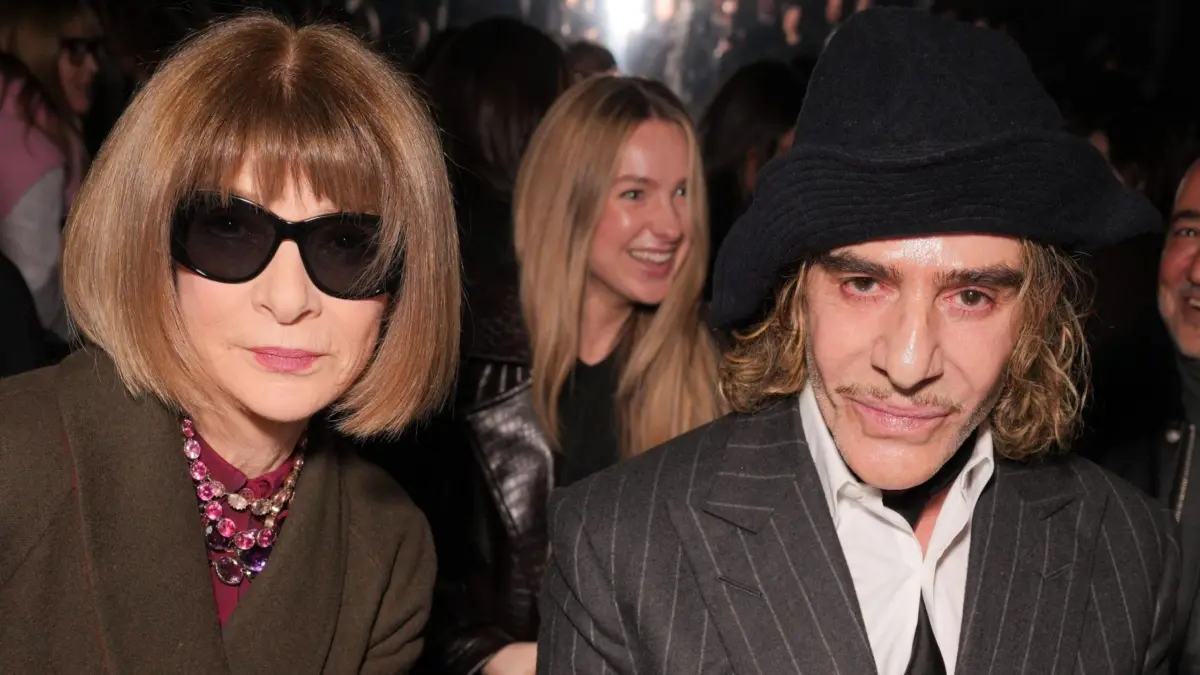
For several years, Galliano vanished from the epicenter of the fashion world. However, the industry’s tolerance for past transgressions—paired with an insatiable appetite for genuine design talent—paved the way for a rehabilitation arc. In 2014, Anna Wintour, global editorial director of Vogue and a powerful trustee of the Metropolitan Museum of Art, championed Galliano’s return by facilitating a residency at Oscar de la Renta.
By late 2014, Galliano was appointed creative director of Maison Margiela. Over the next decade, he operated largely away from the flashbulbs of high society, channeling his anxieties and creative energies directly into his collections. His critically acclaimed Artisanal collections for Margiela—most notably the viral, doll-like porcelain makeup and rain-slicked Victorian streetscapes of early 2024—were hailed by critics as masterclasses in tailoring and theatricality, signaling to the fashion establishment that his creative powers remained undiminished.
The Met Exhibition Announcement and Sudden Reversal
Buoyed by his critical rehabilitation at Margiela, discussions began regarding a monumental retrospective at the Metropolitan Museum of Art’s Costume Institute, mapped for May 2027. The project, John Galliano: Horizons, was intended to celebrate his transformative design vocabulary. Furthermore, Galliano’s work was selected as the conceptual theme for the 2027 Met Gala—the museum’s premier annual fundraising event.
However, as news of the exhibition leaked and subsequently crystallized, it ignited immediate alarm. The announcement that the gala would coincide with Yom HaShoah amplified tensions. Facing an escalating public relations crisis, intense legislative pushback, and deep community pain, Galliano, in consultation with the Met, made the unprecedented decision to pull the plug on the exhibition entirely.
Supporting Context & Metrics: The Cultural and Social Climate
The cancellation of John Galliano: Horizons does not occur in a vacuum; it is reflective of broader sociological shifts regarding accountability, the curation of historical memory, and rising geopolitical tensions.
Rising Tensions and the Burden of Antisemitism
In recent years, global monitoring agencies, including the Anti-Defamation League (ADL) and law enforcement bodies worldwide, have reported staggering, multi-year surges in antisemitic and Islamophobic incidents. Against this backdrop, the prospect of a major cultural institution bestowing its highest honor—a retrospective at the Met—upon a convicted perpetrator of antisemitic and racist abuse struck many as deeply tone-deaf and morally hazardous.
When evaluating the timing of the proposed exhibition and gala, critics pointed to the profound insensitivity of celebrating a designer with a documented history of anti-Jewish vitriol on a date sacred to the memory of Holocaust victims. The convergence of these factors transformed what the museum likely viewed as an aesthetic celebration into a flashpoint for cultural ethics.
The Economics and Influence of the Met Gala
The Metropolitan Museum of Art’s Costume Institute exhibitions and the corresponding Met Gala are not merely artistic endeavors; they are financial engines for the museum, raising tens of millions of dollars annually while dictating global fashion trends for months. Anna Wintour, who serves as the chief architect of the gala, wields immense influence over which designers are lionized and which narratives are amplified on the global stage.
The decision by Wintour and museum leadership to ultimately back away from the exhibition highlights the fragility of high-fashion institutional backing when confronted with sustained, organized public outcry. It also underscores a growing institutional anxiety: museums can no longer separate an artist’s personal conduct and public statements from their creative output without facing severe reputational damage.
Official Statements and Stakeholder Reactions
The cancellation generated a cascade of statements from the central figures involved, public officials, and advocacy groups, each offering a distinct perspective on the boundaries of forgiveness, accountability, and art.
John Galliano’s Statement of Accountability
In his official announcement regarding the cancellation, Galliano struck a reflective and apologetic tone, emphasizing that true atonement requires more than institutional validation:
"After much reflection and discussion with the Met and all those involved, I have decided, with great sadness, that it is best for the exhibition not to take place at this time.
I remain fully accountable for the pain caused by my words in the past, particularly the hurt I caused to the Jewish and Asian communities, and I remain deeply sorry for it. I understand that meaningful atonement is not achieved through an exhibition, institutional recognition or a single public gesture. It is a continuing responsibility, demonstrated through listening, learning and one’s conduct over time."
Galliano also highlighted his fifteen years of continuous sobriety and recovery from addiction, while noting that he ultimately recognized that honoring his work would cause acute pain to communities still grappling with historical and contemporary prejudice.
Anna Wintour and Institutional Support
Anna Wintour, a steadfast ally of Galliano throughout his post-conviction career, praised the designer for his self-awareness while affirming her unwavering support for both him and the museum:
"John’s decision that the exhibition devoted to his work should not take place at this time is very courageous and a measure of the man he is. I believe this is the right decision, and both he and the Museum have my full support."
Community Leaders and Advocacy Pushback
Conversely, leaders from civic and anti-hate organizations celebrated the cancellation as a necessary victory for moral clarity.
New York City Council Speaker Julie Menin, who engaged in extensive dialogues with Met leadership regarding the exhibition, released a pointed statement:
"After my numerous and lengthy meetings and conversations with the Met, I am pleased that they have agreed to not honour John Galliano. From the beginning, I have told them that I strongly disagreed with this decision, and at this rising time of antisemitism, it had served as a gut punch to the Jewish community. This is the correct decision, as the harm and pain this was causing was simply unacceptable."
Echoing these sentiments, Jonathan Greenblatt, chief executive of the Anti-Defamation League, emphasized that the timing and nature of the proposed honor missed the mark entirely:
"Even Galliano ultimately recognized what the Met should have done from the start. This was the wrong move at the wrong moment. Timing matters."
Future Outlook: What the Galliano Cancellation Means for Fashion and Museums
The abrupt shelving of John Galliano: Horizons establishes a significant precedent for how cultural institutions evaluate controversial figures. As the fashion industry and museums navigate the turbulent waters of public morality, several key takeaways emerge for the future:
The Limits of Rehabilitation: While the fashion ecosystem has historically operated under an ethos of reinvention—where raw talent often shields creators from the consequences of personal misconduct—public scrutiny and institutional risk aversion are shifting the calculus. Recovery from addiction and private acts of contrition may allow a designer to work behind the scenes, but public lionization on an international stage remains heavily contested.
Institutional Sensitivity to Timing and Optics: Museums can no longer insulate themselves within the ivory tower of "pure art." The alignment of cultural celebrations with historical remembrance days, coupled with heightened awareness of social justice metrics, requires institutions to conduct more rigorous community impact assessments before greenlighting retrospectives.
The Ongoing Debate Over Separating Art from Artist: The Galliano controversy forces curators, critics, and consumers to continually grapple with an unresolved question: Can we celebrate the revolutionary garment while condemning the creator? For now, the consensus surrounding the Met’s decision suggests that when the harm inflicted is tied to hate speech against marginalized groups, the public demand for accountability will routinely supersede aesthetic achievements.
Ultimately, the canceled Met exhibition serves as a stark reminder that in the modern cultural landscape, creative genius does not operate in a vacuum. As museums and designers look toward the horizon, they must weigh the brilliance of the design against the enduring echoes of the words spoken off the runway.