By Global Music Desk
Published: November 2026
Executive Overview
Humanity is currently experiencing the most prolific era of musical creation in history. Every single day, upwards of 100,000 newly minted tracks are uploaded to global streaming services, flooding the digital ecosystem with audio. Yet, despite this unprecedented deluge of content—and a simultaneous surge of AI-generated compositions—the average listener’s ears are firmly fixed on the past.
Data compiled by independent entertainment analytics firm Luminate reveals a striking cultural paradox: modern listening habits are increasingly defined by nostalgia. In the first half of 2026, roughly 60% of all music consumed across both the UK and the US was catalogued music released five or more years ago. In the UK, 18 of the top 20 bestselling songs of the year originated 12 months ago or earlier, while blockbuster tracks like Zara Larsson’s 2015 hit Lush Life resurface to dominate contemporary charts.

This deep-seated reliance on retro repertoires has triggered a fierce debate across the industry. While tech giants and streaming platforms champion personalization algorithms and generative AI tools, artists, tastemakers, and musicologists warn of an existential threat. They argue that an over-reliance on data-driven recommendation engines risks trapping audiences in algorithmic echo chambers, marginalizing grassroots creators, and transforming the modern charts into a museum of past glories.
Detailed Chronology: The Evolution of Consumption
To understand how modern playlists became time capsules, one must trace the systemic shifts in music consumption over the past two decades.
- 2008: Entertainment data firm Luminate (formerly MRC Data) begins tracking music streaming metrics comprehensively, capturing the nascent transition from physical media and digital downloads to on-demand platforms. At this stage, current releases dominate consumption models heavily inherited from the CD era.
- The Mid-2010s: The proliferation of high-speed mobile data and ubiquitous smartphone integration cements streaming as the primary mode of music delivery. Services like Spotify, Apple Music, and Deezer unlock the entirety of recorded human music history, placing it literally at the fingertips of users.
- The TikTok Phenomenon (2020–2024): Short-form video platforms redefine how music breaks. Viral moments become the primary engine for chart success. However, platforms like TikTok prove optimized for singular hooks rather than long-term artist development, creating a volatile "boom-and-bust" cycle for emerging talent.
- Late 2025: Streaming giants aggressively introduce text-to-playlist AI features and enhanced generative curation tools, allowing subscribers to prompt bespoke mood-based playlists. Simultaneously, platforms grapple with millions of low-quality or automated uploads, prompting Spotify to purge tens of millions of spammy tracks.
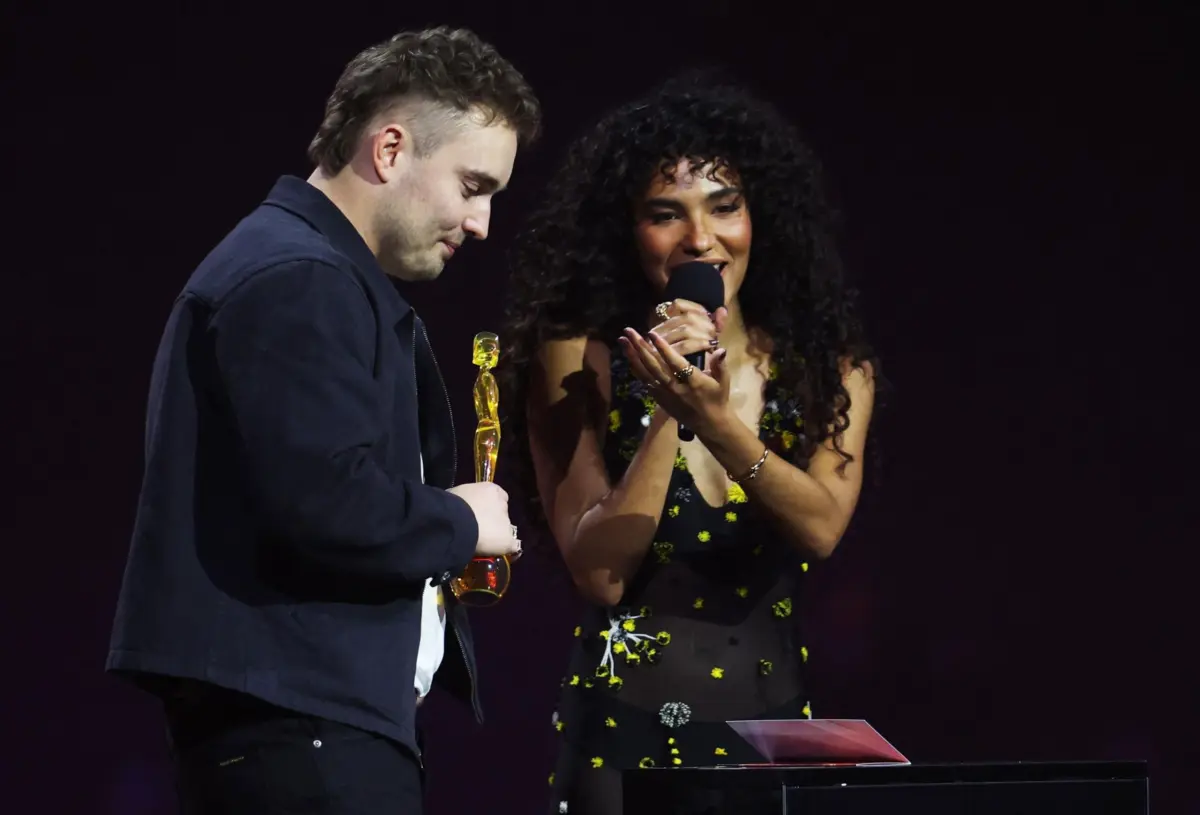
- The 2026 Mid-Year Reality: Luminate releases its mid-year data report, confirming that "current" music (releases under 18 months old) is decisively outperformed by deep catalogue hits. Concurrently, duets like Sam Fender and Olivia Dean’s Rein Me In break records by locking down the UK number-one spot for a historic 23 non-consecutive weeks, illustrating that when new music does break, it tends to suffocate the charts rather than diversify them.
Supporting Context & Metrics: The Numbers Behind the Nostalgia
The dominance of older tracks is not a localized anomaly; it is a structural shift confirmed by rigorous industry metrics.

The Deep Catalogue Takeover
According to Luminate’s 2026 metrics, roughly 60% of total streams in the UK and the US now belong to songs aged five years or older. In the United States—the world’s largest music market—hip-hop and R&B remain the most heavily streamed genres. Within these dominant categories, approximately 60% of all streams are directed toward classic, legacy hits rather than boundary-pushing contemporary projects.
[100,000+ Daily Uploads] ──> [Algorithmic Filtering / AI Curation] ──> [60% of Streams: Older Catalogs]
                                                                  ──> [40% of Streams: Current Hits]
Chart Stagnation
The UK Official Charts mirror this consumer inertia. Out of the top 20 bestselling songs of 2026, an astonishing 18 were released over a year prior. Legacy anchors continue to perform like contemporary releases:
- Zara Larsson’s Lush Life (released June 2015) surges into the top 10.
- Michael Jackson’s Billie Jean (1983) and Fleetwood Mac’s Dreams (1977) maintain positions inside the top 30 bestsellers.
The AI Flood and Platform Cleanup
The sheer volume of music creates an environment of content oversaturation. Spotify reported removing an estimated 75 million "spammy" or low-quality tracks from its platform. Deezer notes that despite the immense media attention surrounding synthetic audio, AI-generated tracks account for a minute 0.5% of actual streams on its platform—though their indirect impact on discovery algorithms remains deeply contentious.

Official Statements and Industry Perspectives
Key figures across the global music ecosystem have offered starkly contrasting views on the health of contemporary music discovery and artist sustainability.
- J Erving, Founder of Human Re Sources (Raye’s distribution company): Highlighting the friction modern artists face in building enduring careers, Erving noted in a recent interview with Billboard: "It’s easier today for folks to be passive fans. For you to consider yourself broken [as a mainstream artist], people need to care about you beyond the song. Where is the connectivity? Are people really dialled in in a deeper way?"
- Oliver Schusser, Head of Apple Music: Emphasizing the corporate and curatorial responsibility to foster future headliners, Schusser told BBC News: "You know, we do the Super Bowl halftime show, we need to make sure that we still have performers in 10, 20, 30 years. Because if you look back at the performers we had in the last four years, they all started somewhere before they got to the world’s biggest stage."
- Anna-Kaisa Kaila, Musicologist: Warning about the inherent biases within generative AI curation, Kaila explained: "With AI systems, the bias can either come from the data or from the system itself. If there’s not enough training data in a particular style that is perhaps not so commercially dominant, it will be that much harder for the system to pull up tracks in that style."
- Tim Garcia, London-Based DJ and Curator: Critiquing the closed-loop nature of algorithmic recommendation engines, Garcia stated: "They’re based on everyone’s listening behaviour and data, right? So, you’re probably going to get given a very similar recommendation to an artist you’re already listening to."
- Dan Mackta, Managing Director at Qobuz: Reinforcing the argument for human-led curation, Mackta added that automated streaming technology "is never going to want to throw a curve ball at you."
- Chiminyo, Independent London Artist: Voicing deep concerns over synthetic market saturation, Chiminyo pointed out the eerie similarities found within popular automated playlists: "It’s all the same: the same piano feel, the same microphone placement, the same tape machine has been used on every single one of these tracks."
Future Outlook: Reclaiming Human Discovery
As the music industry navigates the latter half of the decade, the pressing question is whether listeners can be coaxed out of their algorithmic and nostalgic comfort zones.
Grassroots movements are pushing back against passive, data-driven consumption. Initiatives like Sofar Sounds’ Shoreditch Fringe festival and their newly launched Human Discovery Movement seek to strip away the digital intermediary. By utilizing low-tech methods—such as text-line "mystery numbers" that deliver voice-note recommendations from real-world tastemakers—these organizations aim to put curation back into human hands. Live, intimate performances are increasingly viewed by independent artists as the primary antidote to passive streaming, fostering the deep, emotional connections necessary to sustain a long-term career.

Concurrently, streaming platforms face mounting regulatory and consumer pressure to refine their trust-and-safety protocols. While companies like Spotify have implemented platform-wide policies against impersonation and synthetic deception, the battle lines between efficiency and authenticity are drawn sharper than ever.
New music is certainly not dying out; creators are publishing at volumes unimaginable a generation ago. However, in 2026, the modern listener’s journey is a high-stakes obstacle course fought against frictionless nostalgia, algorithmic echo chambers, and a tidal wave of digital noise. For the charts to reflect the vibrant pulse of contemporary culture once more, the industry must actively choose to champion the unexpected, elevating human stories above predictable code.