Executive Overview
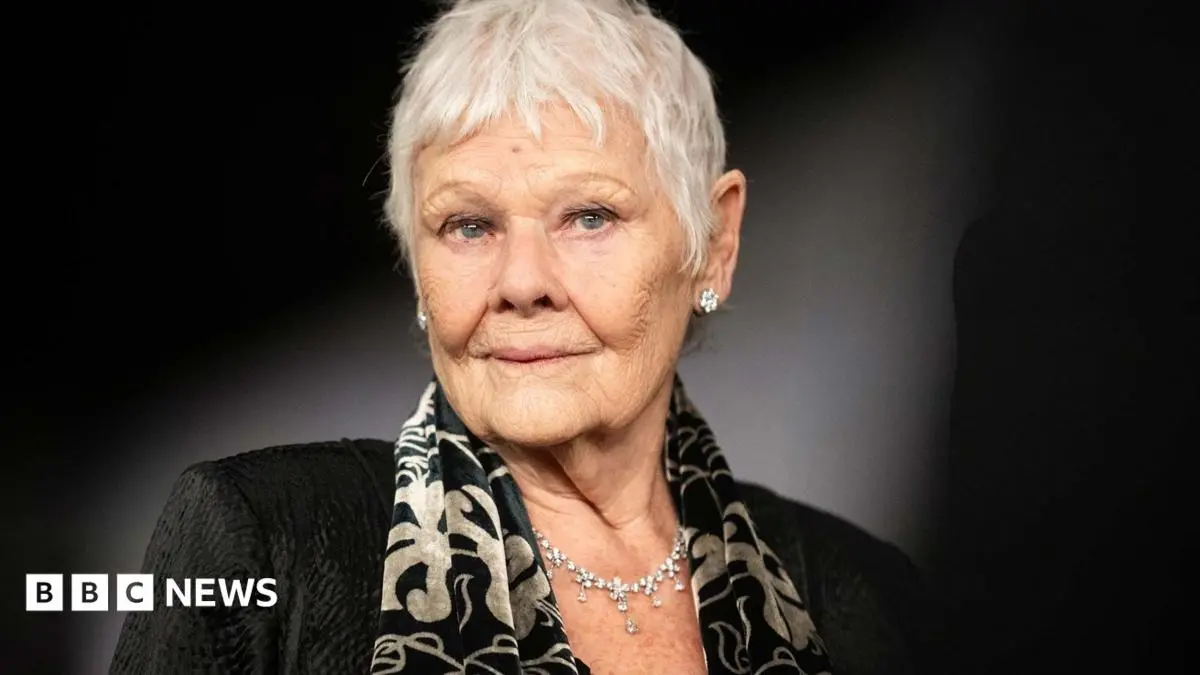
In a remarkably candid and deeply moving interview with the BBC, legendary British actress Dame Judi Dench has confirmed that her advancing age-related macular degeneration (AMD) has effectively brought her illustrious, seven-decade acting career to a close. Speaking on BBC Radio 4’s Today programme with presenter Emma Barnett, the 91-year-old Oscar winner laid bare the stark realities of her deteriorating vision, admitting that she is no longer able to read, perform on stage, or work on film sets.
The announcement marks a poignant milestone in the cultural history of British theatre and cinema. Dench, universally revered as one of the most versatile and gifted performers of her generation, has spent more than seventy years captivating audiences with her commanding stage presence, razor-sharp comedic timing, and ferocious emotional depth. From her classical origins at the Old Vic and the Royal Shakespeare Company to her global cinematic fame as MI6 chief "M" in the James Bond franchise and her Academy Award-winning turn in Shakespeare in Love, Dench’s footprint on the performing arts is indelible.
However, the relentless progression of AMD—diagnosed more than a decade ago in 2012—has finally closed the curtain on her active performance career. Beyond the professional loss, Dench offered intimate reflections on the indignities of extreme aging, the awkward social hurdles imposed by severe sight loss, and cherished memories from a lifetime spent in the spotlight. The interview coincided with the release of her new memoir, Is it too late to make a run for it?, co-written with theatre director Brendan O’Hea. This comprehensive profile examines Dench’s career, the medical realities of her condition, the broader conversation surrounding accessibility in the arts, and the profound legacy of a true titan of the stage and screen.
Detailed Chronology: From the Old Vic to Global Icon
To understand the weight of Dame Judi Dench’s departure from performance, one must trace a trajectory that spans over seventy years of theatrical and cinematic history. Born in York, England, in 1934, Dench initially trained as a set designer before her undeniable theatrical lineage—her father was a doctor for the York Theatre Royal and her mother worked as a wardrobe mistress—drew her toward the stage.
The Classical Foundations (1950s–1970s)
Dench made her professional stage debut in 1957 as Ophelia in Hamlet with the Old Vic Company. Throughout the late 1950s and 1960s, she established herself as a formidable classical actress, joining the Royal Shakespeare Company (RSC) in 1962. Her performances in Shakespearean tragedy and comedy alike—ranging from Juliet to Lady Macbeth and Titania—earned her critical acclaim and cemented her status as a cornerstone of British theatrical institutions.
[1957] Professional Stage Debut (The Old Vic)
  │
  ├──> [1962] Joins the Royal Shakespeare Company (RSC)
  │     │
  │     └──> [1995] Shatters the Glass Ceiling: Cast as "M" in 'GoldenEye'
  │           │
  │           └──> [1999] Academy Award Win for 'Shakespeare in Love'
  │                 │
  │                 └──> [2012] Diagnosed with Age-Related Macular Degeneration (AMD)
  │                       │
  │                       └──> [2026] Official Confirmation of Retirement from Performance
Unlike many actors who found fame exclusively in one medium, Dench seamlessly balanced a punishing theatrical schedule with television and film work. Her early television credits, such as the 1968 BBC production of The Cherry Orchard and the 1981 adaptation of A Fine Romance, endeared her to British television audiences long before she became a global cinematic powerhouse.
The Cinematic Renaissance (1990s–2010s)
While Dench was already a British theatrical dame commander by the time the 1990s rolled around, international stardom arrived later in life, proving that talent knows no expiration date. In 1995, she shattered a long-standing Hollywood glass ceiling by taking on the role of "M," James Bond’s unflappable superior, in GoldenEye. As the first woman to portray the iconic spy master, Dench brought a steely intelligence, moral complexity, and sharp wit to the role, anchoring the franchise through the Pierce Brosnan and Daniel Craig eras until her character’s departure in Skyfall (2012).
Just four years after her Bond debut, Dench captured global gold at the 71st Academy Awards. Despite appearing on screen for a mere eight minutes as Queen Elizabeth I in John Madden’s romantic comedy-drama Shakespeare in Love (1998), she delivered a masterclass in economy and royal hauteur that secured her the Oscar for Best Supporting Actress.
Throughout the 2000s and 2010s, Dench’s filmography read as a roll call of prestigious cinema:
- Chocolat (2000): Earned her an additional Oscar nomination for her role as Armande Voizin.
- Iris (2001): Portrayed the brilliant, Alzheimer’s-afflicted author Iris Murdoch, netting another Academy Award nomination.
- Mrs Henderson Presents (2005): Displayed her unmatched capacity for combining ribald humor with profound pathos.
- Philomena (2013): Starred alongside Steve Coogan in a devastatingly human portrayal of a mother searching for the son forced away from her decades prior, earning yet another Oscar nod.
Supporting Context & Metrics: Understanding AMD and its Impact on Artists
Age-related macular degeneration (AMD) is a progressive medical condition that gradually destroys the macula—the center of the retina responsible for sharp, straight-ahead vision needed for reading, driving, and recognizing faces. While it rarely leads to complete total blindness, as peripheral vision is usually spared, the functional impact on a professional actor can be utterly devastating.
The Mechanics of Sight Loss in Acting
Acting is fundamentally a visual and collaborative medium. Performers rely heavily on split-second eye contact with scene partners, precise blocking on complex stage designs, the ability to read and memorize vast amounts of script text, and the capacity to track lighting cues and camera angles.
In recent years, Dench had spoken openly about the logistical hurdles her failing vision presented on set. Memorizing lines—traditionally achieved through repetitive reading—became a grueling exercise requiring the assistance of friends and colleagues who would record scripts for her to learn entirely by ear. On film sets, navigating unfamiliar terrain without tripping over lighting cables or missing fellow actors’ physical cues required immense psychological resilience.
Social Realities and Everyday Humiliation
Speaking to Emma Barnett on the Today programme, Dench shed light on the lesser-discussed, profoundly human consequences of advanced sight loss: the social isolation and awkward encounters.
With characteristic candor, Dench revealed that her inability to recognize faces frequently leads to embarrassing mix-ups in public spaces. "I sometimes approach the wrong people and give them an almost hug before realising my mistake," she remarked, highlighting how everyday interactions fraught with visual cues can become minefields for those with degenerative eye diseases.
When Barnett gently steered the conversation toward the psychological weight of reaching the age of 91, Dench offered a typically pragmatic, no-nonsense assessment:
"There’s nothing to say for it at all. [I] don’t think about it too much."
Official Statements & Candid Reflections
The interview was not solely a chronicle of loss; it was also a masterclass in storytelling, offering listeners rare glimpses into the inner life, professional philosophy, and artistic passions of one of the twentieth and twenty-first centuries’ greatest cultural figures.
The Backstage Encounter with Sidney Poitier
During the broadcast, Dench reflected on her illustrious theatrical memories, sharing a particularly enchanting anecdote about meeting the legendary American actor Sidney Poitier. The encounter took place in New York while Dench was starring in David Hare’s play Amy’s View.
Director Richard Eyre was sitting in Dench’s dressing room going over notes when a knock sounded at the door. In walked Poitier, who in 1964 had made history as the first Black man to win the Academy Award for Best Actor.
Dench described the physical and emotional sensation of his presence with characteristic vividness, stating that walking into her dressing room felt like stepping into a "wind tunnel."
"It was thrilling," she recalled.
Asked by Barnett what she had managed to say to the Hollywood royalty, Dench laughed, admitting: "Not much, a bit of an open mouth. So charming. Very tall."
A Lifelong Devotion to Shakespeare
The conversation naturally drifted toward Dench’s enduring relationship with the works of William Shakespeare, a cornerstone of her professional life. Her passion for the Bard was ignited at the tender age of nine when she watched her brother play King Duncan in a production of Macbeth.
Recalling that transformative childhood moment, Dench recited the line that hooked her for life:
“He walked on and he said, ‘What bloody man is that?’ I thought, ‘Oh my God, this is for me.’ He said ‘bloody’, did you hear that?”
She also confessed to being utterly "besotted" by Shakespeare’s sonnets, praising their architectural and emotional precision:
"It’s the rhythm of it. It’s the rhythm of your heart… it’s the way he’s summed up so simply the way that any of us feel about, well, anything."
Future Outlook: A Legacy Carved in Stone
As Dame Judi Dench steps back from the physical demands of active performance, her legacy within the global artistic community remains absolute, secure, and untouchable. The publication of her memoir, Is it too late to make a run for it?—crafted in close collaboration with director Brendan O’Hea—serves as a vital bridge between her storied past and her appreciative public.
Cultural Footprint and Mentorship
While Dench can no longer tread the boards of the West End or command the silver screen as an active lead, her influence continues to reverberate through the generations of actors she inspired. Throughout her career, she earned a reputation not only for her electrifying talent but for her profound generosity of spirit toward younger performers. Directors, co-stars, and crew members consistently praise her lack of pretension, her rigorous work ethic, and her wicked sense of humor—qualities that kept her grounded amidst global adulation.
The Imperative of Accessibility in the Arts
Dench’s public transparency regarding her struggle with age-related macular degeneration has also placed a much-needed spotlight on accessibility within the creative industries. As performers age, the industry must grapple with how to accommodate artists whose physical capabilities shift, ensuring that institutional knowledge, mentorship, and creative brilliance are not prematurely discarded due to medical challenges.
Organizations supporting macular degeneration research and vision impairment advocacy have repeatedly praised public figures like Dench for destigmatizing degenerative conditions. By speaking openly about her vulnerabilities—from the inability to read a script to accidentally hugging strangers on the street—Dench humanizes a condition affecting millions of older adults worldwide.
Final Curtain
For legions of fans who grew up watching her command the screen as "M," shatter emotional boundaries in Philomena, or deliver breathtaking verse on the stages of Stratford-upon-Avon, the news that Dench can no longer perform is undeniably bittersweet. Yet, as Dame Judi herself demonstrates with every interview, every sharp witticism, and every reflection on the rhythmic beauty of Shakespeare’s sonnets, her spirit remains entirely unbowed.
The stage lights may have dimmed on her active career, but the radiance of her artistic legacy will continue to illuminate the theatrical landscape for generations to come.