Executive Overview
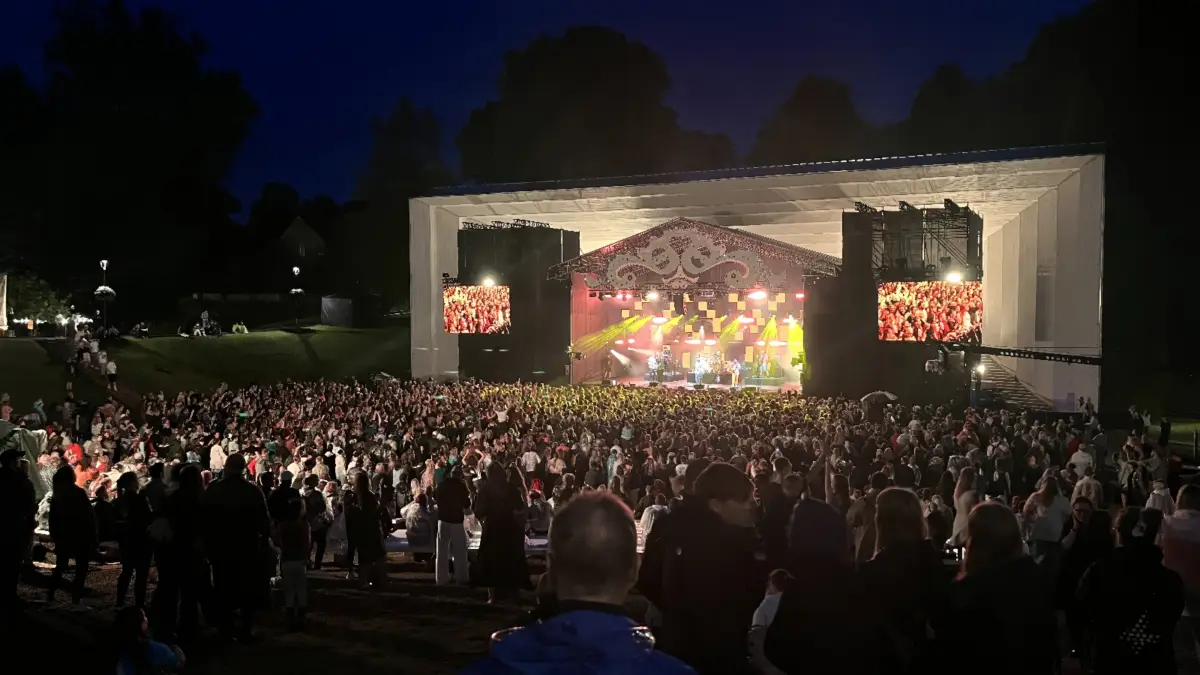
For four days each summer, the historical ruins and green hills of Viljandi, Estonia, transform into a vibrant crossroads where centuries-old agrarian traditions meet the bleeding edge of modern instrumentation. The latest edition of the Viljandi Folk Festival once again affirmed its status as one of Europe’s premier celebrations of roots music. Drawing tens of thousands of attendees from across the continent, the festival defied unpredictable weather—shifting from blistering sunshine to torrential downpours—to deliver a masterclass in cultural preservation, sonic experimentation, and communal catharsis.
This year’s programming carefully balanced the delicate excavation of nearly forgotten European repertoires with explosive, genre-bending reinventions. From the ghost-like preservation of evacuated island fiddle tunes to Nordic-metal folk interpretations and Cape Verdean morna, the festival operated on a singular, unifying premise: tradition is not a static museum artifact, but a living, breathing, and violently adaptive force. As global music festivals increasingly homogenize around commercial pop acts, Viljandi remains stubbornly, gloriously distinct, proving that local vernaculars, when amplified with passion and technical brilliance, possess universal resonance.
Detailed Chronology: A Weekend of Sonic Transformation
Friday: Recovering Lost Pasts and Heavy Beginnings
The festival opened in the early afternoon with a poignant reminder of cultural fragility. Sounds and Stories from Ruhnu Island brought music and narratives to the stage that had come closer than most to disappearing entirely. Named after Ruhnu (or Runö in Swedish)—a tiny speck in the Gulf of Riga that sheltered a few hundred ethnic Swedes and an isolated fiddle tradition until the Soviet advance emptied the island overnight in 1944—the performance was a rare, one-off emotional anchor. Fiddlers Karoliina Kreintaal and Lee Taul, alongside storyteller Kairi Leivo, spent years unearthing the repertoire from surviving archival tapes.
They were joined by Ruhnu-born storyteller Jüri Keskpaik, who chronicled the island’s inner life—its weddings, feasts, church, and sea—while members of the Nordic supergroup Groupa (fiddler Mats Édén, flautist Jonas Simonson, and Norwegian percussionist Terje Isungset, who builds instruments from wood, stone, and ice) added atmospheric depth. Behind the performers, archive film projected Ruhnu’s rugged coastline and vanished community, creating a haunting dialogue between past and present.
As evening descended, familial traditions took center stage. Amaro Duho, assembled in 2021 by Matild Dobi from her own children, demonstrated the endurance of Oláh Roma heritage. Four decades after Dobi helped launch Ando Drom—a titan of Hungarian Roma music—her new project kept the songs tethered to the family hearth. Played on guitar, tambura, and accordion with the loose, unforced ease of a living room jam session, their set resonated effortlessly before a few thousand strangers.
Estonian tradition, however, was handled with far less gentleness by Mandoterror. Featuring a distorted rhythm section and a mandolin screaming where a lead guitar normally lives, the five-piece outfit weaponized Estonian folk melodies to Nordic-metal weights. Frontman Kristjan Kuusmik delivered sharp, unyielding vocals while Tanel Sakrits drove the melodies on mandolin, pulling material from their album Nõiajaht and the anthem "Oru Leeni." The speed and volume proved that ancient folk structures could withstand—and even thrive under—industrial-grade amplification.
The night truly ignited with Zetod on the Song Festival Grounds. Formed in Värska in 2003, the band takes Seto leelo—the ancient polyphonic singing of Estonia’s southeastern borderlands—and injects it with the speed and fury of punk rock. Built around four driving fiddles, accordion, bass, and drums, their high-octane set turned the front rows into a churning mosh pit. Frontman Jalmar Vabarna, who also serves as the elected ülemsootska (earthly stand-in for the Seto king), commanded the crowd with authority, proving that ancient regional pride translates seamlessly into modern festival electricity.
Saturday: Peak Crowds, Rhythmic Cross-Pollination, and Subversive Folk
Saturday brought the festival’s largest single-day attendance, with 11,000 people packing the winding paths between stages. The energy spilled onto the Song Festival Grounds, where Poland-Ukraine’s HrayBery engineered a massive communal folk dance. Dressed in the reconstructed Sunday best of a century ago—straw boater hats and waistcoats for the men, high-collared blouses and pale skirts for the women—the band resurrected the village dance music of the San river valley, a borderland historically shared by Poles, Ukrainians, Jews, and Roma. Driven by dual fiddles, a hammered dulcimer, and a frame drum, their kolomyjkas and polkas compelled the audience to form massive, interlocking human chains across the concrete arena.
A stark contrast arrived hours later with Duo Ruut (Duo Ruut³). Ann-Lisett Rebane and Katariina Kivi sat face-to-face across a single kannel (traditional Estonian zither), plucking and bowing its strings to create pristine, hypnotic minimalism. However, for this set, they expanded their sonic footprint with Indrek Mällo on bass, Jaan Jaago on electric guitar, and percussionist Tõnu Tubli. While the expanded rhythm section sacrificed some of the duo’s signature quiet intimacy, it successfully unlocked a deep, rhythmic groove that swept the field into motion.
Over on II Kirsimägi, Orkesta Mendoza dissolved the boundary between stage and soil. Sergio Mendoza directed a six-piece outfit blending mambo, cumbia, and ranchera with surf guitar and indie rock, a sound born from his upbringing in Ambos Nogales, the town split in two by the US-Mexico border. With a single command of “¡Derecha! ¡Izquierda!”, Mendoza had thousands swaying in unison, driven by Quetzal Guerrero’s acrobatic violin and Ozzy Acosta’s relentless percussion.
As night fell, Puuluup drew the weekend’s largest crowd: some 8,000 spectators gathered to witness Ramo Teder and Marko Veisson manipulate the talharpa (a bowed lyre nearly extinct outside the island of Vormsi). Looping the instrument’s rustic squeaks and knocks through modern electronics, the tuxedo-clad duo delivered deadpan humor alongside avant-garde folk. Celebrating Veisson’s 50th birthday, the set culminated in the musician crowd-surfing the ecstatic audience before members of Duo Ruut joined them on stage for a triumphant, chaotic finale.
Immediately following, OOPUS transformed the festival grounds into an open-air rave. Mari Meentalo fed traditional bagpipes, jaw harps, and regilaul vocals into loopers connected to Johannes Ahun’s analog Roland synthesizers. Thousand-year-old runic songs re-emerged as driving acid house, propelled by Aleksander Sprohgis’s blinding light design and Raho Aadla’s hyper-kinetic choreography. It was the definitive proof that ancestral Estonian folk and modern electronic club culture share an identical rhythmic heartbeat.
Sunday: Melancholy, Mastery, and a Mud-Soaked Farewell
Sunday arrived warm and dry before succumbing to a dramatic downpour. The afternoon offered gentle reprieves with Tell Your Birds, an Estonian-Latvian-Italian quartet crafting drifting ambient drones from historical field recordings, and Nancy Vieira, who introduced Cape Verdean morna to Viljandi for the first time. Vieira, widely regarded as the spiritual heir to Cesária Évora, carried the aching, displaced beauty of the islands through guitar, cavaquinho, and her own unhurried vocals, eventually inviting the crowd onto the stage for an exuberant dance finale.
The undisputed artistic peak of the weekend, however, belonged to Scottish pianist Amy Laurenson. Following a nightmare journey involving flight cancellations and lost luggage that nearly barred her from the festival, Laurenson delivered a transcendent piano solo inside the Ait. Adapting traditional Shetland fiddle tunes for the piano keyboard rather than accompanying strings, she commanded absolute, pin-drop silence from the spellbound room. It was an astonishing display of technical grace and emotional depth that cut straight through the weekend’s kinetic chaos.
As the festival drew to a close, local favorites Angus claimed the final slot on the Song Festival Grounds. Joined by guest vocalist Sofia-Liis Liiv, the seven-piece band delivered a warm, unhurried blend of reggae, ska, and dub sung entirely in Estonian. Playing straight through a heavy downpour, they invited a mud-soaked, fiercely loyal crowd to skank one last time. Frontman Anton Ventsel bade farewell with a sentiment that encapsulated the entire weekend: "Have a good evening, a safe journey home, and folk is forever."
Supporting Context & Metrics
The Viljandi Folk Festival continues to outpace many of its European counterparts in terms of cultural longevity and economic resilience. Key metrics from the event underscore its scale:
- Attendance: Peaked on Saturday at 11,000 daily visitors, with total four-day attendance exceeding 30,000.
- Geographic Scope: Featuring acts from Estonia, Sweden, Norway, Hungary, Ukraine, Poland, Mexico, Cape Verde, and Scotland.
- Archival Integration: Over 40% of the musical acts incorporated direct field recordings, historical archives, or endangered instrumentation (such as the talharpa and Ruhnu fiddle traditions) into their modern arrangements.
- Environmental & Logistical Footprint: Maintained across multiple historic outdoor stages (Kaevumägi, II Kirsimägi, Song Festival Grounds, and indoor venues like the Ait) with minimal ecological disruption to the protected Viljandi castle hills.
Official Statements & Cultural Impact
Organizers and participating artists alike emphasized the festival’s ongoing mission to bridge the gap between historical preservation and contemporary relevance.
In an interview regarding the festival’s thematic focus, artistic leadership noted:
"We do not archive music to keep it behind glass. Folk music is a living organism that must interact with the modern world—whether that means distortion pedals, acid house synthesizers, or punk rock tempos. If our ancestors could adapt to changing worlds, so must their songs."
Furthermore, the cross-border collaborations—such as HrayBery’s resurrection of San river valley heritage and Orkesta Mendoza’s border-defying cumbia—highlighted the festival’s growing role as a platform for geopolitical healing and cultural empathy. By giving voice to displaced communities, diaspora repertoires, and suppressed minority dialects (such as Seto and Ruhnu-Swedish), Viljandi functioned not merely as an entertainment venue, but as a vital European sanctuary for cultural diversity.
Future Outlook
As the final amps were unplugged and the mud settled across the festival grounds, the institutional momentum of the Viljandi Folk Festival remained unshakeable. Despite unpredictable weather and logistical hurdles that tested international artists, the 2026 edition proved that the festival’s curatorial vision is sharper and more adventurous than ever.
Planning is already well underway for the next iteration. Organizers have officially confirmed dates for the upcoming festival, which will run from July 22nd to July 25th, 2027. Given the soaring demand, artistic triumphs, and deeply loyal community surrounding the event, early planning is strongly recommended for those wishing to witness firsthand how Estonia keeps its ancient fires burning.