Executive Overview
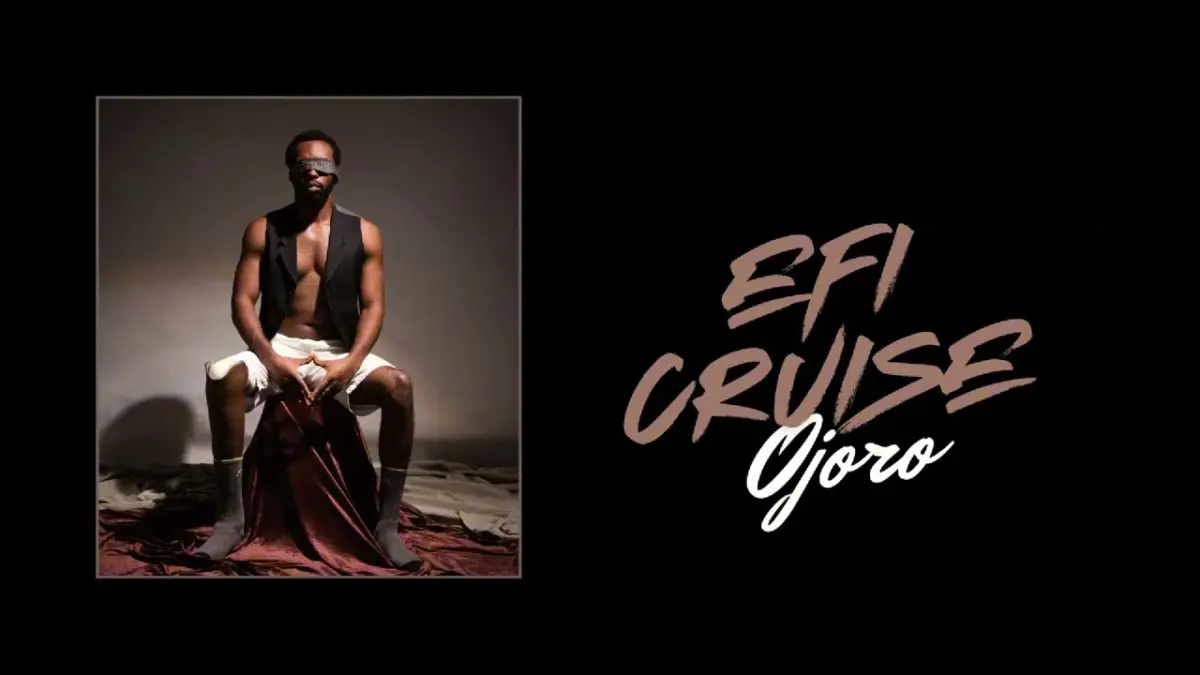
As Nigeria marked its sixty-sixth anniversary of independence on October 1, the nation’s political elite engaged in their customary rituals: televised broadcasts filled with grandiloquent rhetoric about democracy, national unity, and economic progress. Yet, for millions of citizens grappling with soaring inflation, infrastructural decay, and systemic inequality, these high-minded speeches ring hollow. Enter Efi Cruise, a vanguard of modern Nigerian alternative music, who chose Independence Day to drop a searing, rhythmically driving counter-narrative.
Released via Bayside Records, his latest single, “Ojoro,” strips away the sanctimonious veneer of the political class to expose a stark reality. Efi Cruise coined a brutal, hyper-accurate descriptor for the current state of governance: “oyocracy.” Derived from the ubiquitous Nigerian street shorthand “OYO” (“On Your Own”), the term defines a system characterized by “government for yourself, government by yourself.”
Produced in collaboration with Onil, David Knauf, and the Bayside team, “Ojoro” channels the defiant spirit of 1970s Afrobeat pioneers like Fela Kuti, applying it to contemporary civilian rulers. Merging infectious highlife grooves, funk rhythms, and the artist’s signature jazz-infused vocal improvisations, the track is far more than a catchy protest song. It is a cultural diagnosis, an investigative critique wrapped in infectious polyrhythms, and a poignant call for societal introspection.
This article explores the anatomy of “Ojoro,” tracing Efi Cruise’s unique artistic evolution from Lagos to Plymouth and back, examining the socio-political crucible that birthed his distinctive "Southern Afro-Jazz" sound, and evaluating the broader implications of art as a tool for democratic accountability in contemporary West Africa.
Detailed Chronology: From Lagos Roots to Plymouth Business Halls and Back
To understand the piercing clarity with which Efi Cruise dissects Nigerian governance, one must examine the winding trajectory of his life and career—a journey defined by geographic displacement, institutional friction, and an unyielding commitment to artistic authenticity.
Formative Years and the Call of Music
Born Efiom Ita in the sprawling, relentless metropolis of Lagos, the artist carries deep familial roots anchored in the southern coastal city of Calabar—a cultural intersection renowned for its rich artistic traditions and historical significance. Long before he was decoding the political malfeasance of federal ministers, Ita was immersing himself in sound. His earliest formal musical training took place within the structured confines of his school choir, where he developed an acute ear for vocal harmony, pitch control, and choral arrangement.
However, the path to a professional music career in Nigeria is rarely straightforward. Yielding to familial expectations that prioritize traditional professions and corporate stability, Ita moved abroad to pursue higher education. He settled in Plymouth, United Kingdom, where he immersed himself in the rigorous study of business. For most, obtaining a British business degree serves as a launchpad into the corporate world—a predictable, secure trajectory far away from the volatile creative industries of West Africa.
The 2018 Homecoming and Artistic Rebirth
Yet, the pull of his homeland and the urgent need for creative expression proved insurmountable. In 2018, against the explicit advice and wishes of his family, friends, and peers, Efiom Ita packed his bags and returned to Nigeria. This counter-migration—moving back to a developing economy with notoriously deficient infrastructure rather than staying within the comfort of the Global North—became the catalytic moment for the birth of Efi Cruise.
Back on home soil, free from the corporate constraints of Plymouth, he dedicated himself entirely to music. His initial years back in Lagos were marked by relentless experimentation. He began blending the sophisticated, improvisational phrasing of Western jazz—specifically scat-singing, where wordless syllables mimic the fluidity of a horn—with the pulsing, indigenous rhythms of Nigerian highlife and funk.
This tireless experimentation crystallized into a self-defined genre he calls Southern Afro-Jazz. It is a sound that bridges the gap between the intellectualism of jazz improvisation and the visceral, grassroots energy of Southern Nigerian storytelling.
The Album Era: Mirrors to If You Were Me You Would Be Dead
Efi Cruise’s studio output reflects an artist unwilling to pander to fleeting commercial trends. In 2023, he released his debut full-length project, Mirrors, an introspective collection that showcased his vocal dexterity and complex harmonic sensibilities. The album established him as a serious compositional force outside the mainstream Afrobeats machinery.
Following up quickly on that critical momentum, he released his sophomore album, If You Were Me You Would Be Dead, last year. This project pushed his thematic boundaries further, exploring existential dread, societal pressure, and the psychological toll of navigating modern Nigerian life.
By the time he entered the studio with producers Onil and David Knauf to work on material for late 2024, Efi Cruise had honed a blistering socio-political perspective. The culmination of this creative evolution is “Ojoro”—a track that seamlessly merges his jazz-trained vocal acrobatics with the confrontational, socio-political legacy of classic Afrobeat.
Supporting Context & Metrics: The Anatomy of “Oyocracy” and the Reality of “Oyo”
To fully appreciate the lyrical brilliance and cultural weight of “Ojoro,” one must unpack the vernacular and systemic realities embedded in its verses. Efi Cruise utilizes Nigerian Pidgin English not merely as a stylistic choice, but as a political weapon designed to bypass the obfuscating language of the ruling elite and speak directly to the lived experiences of the populace.
Decoding “Oyocracy” and the OYO Syndrome
The core thesis of the song rests upon a brilliant linguistic portmanteau: “Oyocracy.”
In Nigerian urban slang, OYO is an acronym for “On Your Own.” It is the grim phrase uttered when an individual realizes that the state apparatus—police, healthcare, infrastructure, social safety nets—is entirely absent. If you are robbed, you are OYO. If your business burns down due to erratic power surges, you are OYO. If your child’s public school lacks books and teachers, you are OYO.
By suffixing this acronym with “-cracy” (derived from the Greek kratia, meaning power or rule), Efi Cruise transforms a coping mechanism into an indictment. “Oyocracy” is defined in the track as:
“Government for yourself, government by yourself.”
It encapsulates a political class that operates as an isolated cartel, utilizing public offices exclusively for self-enrichment while outsourcing the burden of survival entirely to the citizenry.
Lyrical Breakdown: From Misplaced Portfolios to Hollow Congregations
The song’s narrative unfolds through a series of vivid, biting imagery and rhetorical questions:
- The Visuals of Excess: Efi Cruise targets politicians who dominate television screens during national broadcasts, describing them caustically as having a “bigi belle like who want born twins”—bellies bloated enough to suggest they are carrying twins, a metaphor for systemic greed, corruption, and the unbridled consumption of public wealth at the expense of starving populations.
- Incompetence as Policy: He launches a scathing critique of institutional decay caused by political patronage. He points out the absurdity of systemic appointments where square pegs are forced into round holes—where a qualified farmer might be tasked with inspecting oil installations, or a lawyer is placed in charge of civil engineering and road construction. Meritocracy is replaced by loyalty, resulting in multi-billion-naira projects that crumble within months.
- The Meaning of “Ojoro”: When faced with astronomical unaccounted expenditures of public funds, the artist asks in Pidgin, “Wetin we go call them oh?” (What shall we call these people?). He answers with the title of the track: “Ojoro.” In Nigerian street culture, particularly during street football (soccer) matches, “ojoro” is the sharp cry hurled at a referee or opponent when a decision is blatantly fixed, or rules are cheated. It signifies foul play, rigged games, and institutionalized dishonesty.
- Societal Atomization: Crucially, Efi Cruise does not let ordinary Nigerians off the hook. He extends his critique inward, observing how years of surviving under an oppressive “Oyocracy” have fractured communal solidarity. “Even in congregations people are lonely,” he sings, painting a haunting picture of a society where isolation pervades even sacred, communal spaces. People gather in churches and mosques, yet remain profoundly disconnected, consumed by the hyper-individualistic survival mode forced upon them by the state.
- Direct Confrontation: The track reaches its emotional crescendo when the artist addresses the political actor directly, using the respectful yet defiant title “oga” (boss). Rather than offering despair, he issues a stern, moral demand: “Show love to your brother-man.” It is a call to reclaim basic humanity in a political landscape devoid of empathy.
+--------------------------------------------------------------------------+
|                        THE PILLARS OF "OYOCRACY"                         |
+--------------------------+-----------------------------------------------+
| Feature                  | Societal Impact                               |
+--------------------------+-----------------------------------------------+
| Systemic Patronage       | Misplaced portfolios (e.g., lawyers building  |
|                          | roads, farmers inspecting oil).               |
+--------------------------+-----------------------------------------------+
| Unaccounted Expenditure  | Public funds vanish; infrastructure collapses |
|                          | while leaders display extreme wealth.         |
+--------------------------+-----------------------------------------------+
| The "OYO" Reality        | Citizens forced to provide their own power,   |
|                          | security, water, and healthcare.              |
+--------------------------+-----------------------------------------------+
| Communal Attrition       | Trust erodes; citizens feel deeply isolated   |
|                          | even within religious and social gatherings.  |
+--------------------------+-----------------------------------------------+
Musical Architecture: Afrobeat Heritage Meets Southern Afro-Jazz
Aesthetically, “Ojoro” draws heavily from the blueprint laid down by Fela Kuti in the 1970s. Fela utilized the hypnotic, driving tempos of Afrobeat—characterized by interlocking horn lines, complex percussion patterns, and call-and-response vocals—to ridicule and expose the military dictatorships of his era.
Efi Cruise and his co-producers (Onil and David Knauf) appropriate this historic sonic architecture, modernizing it for an era governed not by khaki-clad generals, but by suit-wearing politicians hiding behind the facade of electoral democracy.
However, Efi Cruise infuses the track with his unique jazz sensibility. Unlike traditional Afrobeat, which relies heavily on direct, declarative chants, “Ojoro” weaves intricate vocal scatting through the highlife and funk grooves. This juxtaposition creates a sophisticated tension: the music makes you want to move your feet, while the lyrical content forces you to examine your conscience and your society.
Official Statements and Industry Reception
The release of “Ojoro” on Independence Day has generated significant ripples across the Nigerian independent music circuit and international world music platforms. Bayside Records, the indie imprint championing the release, issued a joint statement contextualizing the strategic timing of the drop:
"Independence Day is often packaged by the establishment as a celebration of freedom and collective achievement. But true independence means freedom from poverty, institutional decay, and the psychological weight of a government that serves only itself. Efi Cruise has crafted a mirror for the nation. ‘Ojoro’ does not offer empty platitudes; it speaks truth to power with rhythm, intelligence, and uncompromising honesty."
Music critics and cultural commentators have been quick to praise the single for reviving the tradition of socially conscious protest music at a time when much of the mainstream Afrobeats landscape leans heavily toward hedonism, romance, and commercial escapism. While party anthems dominate commercial radio charts, artists like Efi Cruise prove that the alternative and underground scenes remain the true ideological watchdogs of Nigerian society.
In interviews surrounding the release, Efi Cruise emphasized that “Ojoro” is not designed to be a partisan political attack targeting any single administration or political party. Rather, it is a structural critique of a political culture that has persisted across decades of Nigerian history—a bipartisan disease of self-enrichment that transcends electoral cycles.
Future Outlook: The Role of Conscious Art in Shaping Nigeria’s Democratic Future
As Nigeria limps past its sixty-sixth year of statehood, the questions raised by Efi Cruise on “Ojoro” carry urgent implications for the future. With general elections on the horizon and youth-led disillusionment at an all-time high—evidenced by mass emigration ("Japa" syndrome) and widespread economic agitation—the cultural mood is volatile.
Can music drive political accountability? Historically, the answer in Nigeria is a resounding yes. Fela Kuti’s music made him a state enemy, yet his critiques outlived the military regimes he fought against. Similarly, the protest music of the #EndSARS era and contemporary underground movements demonstrate that young Nigerians are increasingly looking to their artists to articulate grievances that traditional media and political opposition fail to capture.
For Efi Cruise, “Ojoro” is a milestone in his ongoing mission to establish Southern Afro-Jazz as a major pillar of African alternative music. By refusing to separate musical experimentation from socio-political commentary, he proves that art can be simultaneously avant-garde and deeply accessible.
As listeners stream “Ojoro” across digital platforms via its official Fanlink release or watch the official audio release on YouTube, the lingering refrain of the song remains a haunting challenge to both the political class and the electorate: Wetin we go call them oh?
Until accountability replaces impunity, and governance shifts from “OYO” (On Your Own) to collective responsibility, songs like “Ojoro” will serve as the indispensable soundtrack of a nation searching for its true liberation.