Executive Overview
In the sprawling, complex topography of modern West London, few sonic and theatrical crossroads resonate as acutely as Ladbroke Grove. It is a neighborhood defined by sharp contradictions—an enclave where multi-million-pound townhouses cast long shadows over social housing estates, and where the echoes of institutional neglect remain forever raw. It was here, amidst the persistent chants of "Justice for Grenfell, Justice for Gaza" reverberating through the streets after the devastating 2017 tower fire that claimed 72 lives, that rising artist Behkam found the catalyst for his artistic awakening.
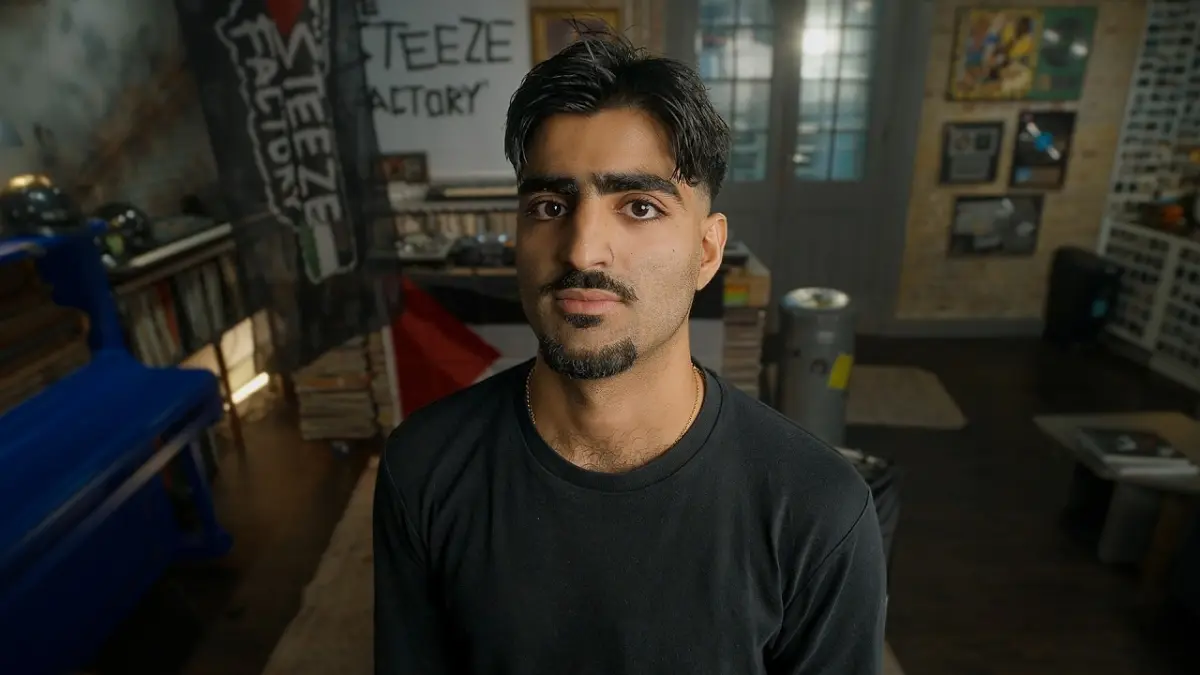
Those demonstrations did not merely serve as background noise for the young creator; they became the heartbeat of his debut theatrical work, Manchester Drive. Named after a unassuming street in North Kensington, the project has evolved from grassroots protest chants into a multifaceted artistic statement encompassing a powerful title track, an acclaimed play, and a raw, unvarnished live performance session filmed at producer Toddla T’s legendary West London studio, the Steeze Factory.
Behkam’s work occupies a rare, vital intersection between contemporary British hip-hop, socio-political commentary, and classical Persian literature. By adapting the 12th-century epic love story Layli o Majnun by Nezami Ganjavi into a modern narrative about a corner-shop kid turned viral rap star, Behkam manages to speak simultaneously to the local and the global. His lyrics bridge the gap between systemic failures in domestic British housing and the ongoing humanitarian catastrophes in Gaza and the West Bank.
Captured on film with the gritty authenticity that defines the Steeze Factory sessions—complete with background hums, an upright Gumtree piano, and an utter rejection of sanitized studio booths—Manchester Drive represents a seismic shift in how working-class immigrant narratives are brought to the British stage and soundscape. This in-depth report explores the genesis of Behkam’s masterwork, the cultural mechanics of its creation, the unique production environment that birthed its viral live session, and the broader sociopolitical implications of an artist refusing to compromise his voice for commercial palatability.
Detailed Chronology: From the Groves of North Kensington to the Stage
To understand the weight of Manchester Drive, one must trace the geographic and psychological coordinates of Behkam’s upbringing. Growing up in Ladbroke Grove—a district historically rich in Caribbean, African, and Middle Eastern immigrant culture, yet increasingly vulnerable to rapid gentrification—Behkam experienced firsthand the socioeconomic fault lines of twenty-first-century London. He often refers to himself colloquially as a "Lad Broke," a sharp, self-aware pun on his home turf that encapsulates the jarring daily reality of living directly alongside extreme wealth while struggling to make ends meet.
The pivotal turning point for Behkam’s artistic trajectory arrived in the wake of the Grenfell Tower tragedy. The fire, which occurred just a mile or so from his daily haunts, permanently altered the civic consciousness of North Kensington. When local protests merged local demands for housing justice with international solidarity movements—most notably linking the fight for accountability at Grenfell with the plight of Palestinians in Gaza—Behkam internalized these structural inequities. He recognized that the mechanisms silencing marginalized communities in West London were mirrored on a geopolitical scale across the Middle East.
This realization prompted Behkam to step away from conventional songwriting structures and venture into dramatic writing. He began drafting what would become Manchester Drive, a play that reflects his own hybrid background as the son of Iranian immigrants who ran a local corner shop along the iconic Notting Hill Carnival route.
The Evolution of Manchester Drive (2024–2026)
- The Artistic Conception: Drawing inspiration from Nezami Ganjavi’s 12th-century Persian masterpiece Layli o Majnun—a foundational Middle Eastern tragedy of love, madness, and societal expectation—Behkam crafted a contemporary analogue. In his script, the protagonist is Ardz, a diligent medical student by day and a gifted pianist and rapper by night, whose parents run a humble red corner shop.
- The Narrative Arc: Ardz’s life is upended when a freestyle video of him rapping goes viral online, instantly thrusting him into the dizzying machinery of the British music industry. However, when Ardz attempts to use his newfound platform to post socio-political commentary, his corporate management attempts to sanitize his image, locking him out of his own social media accounts. He is forced into an agonizing choice: conform to the sterile expectations of the commercial music machine, or retain his authentic voice. Compounding this internal crisis is his developing romance with Shirin, a fearless photojournalist documenting the harrowing realities on the ground in the West Bank.
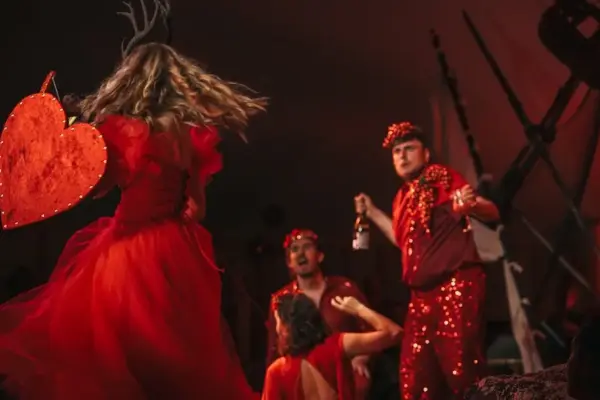
- The Training Ground: Behkam’s path to the stage was forged through rigorous institutional and grassroots training programs. He honed his craft through the Lyric Hammersmith’s competitive Springboard programme and the Theatre Peckham Rep. His theatrical debut as Bacchus in The Bacchae at the Lyric Hammersmith demonstrated his commanding physical and vocal presence on stage, laying the groundwork for his ability to seamlessly blend acting, live piano, and rapid-fire rap delivery in Manchester Drive.
- The Stage Debut: Following months of workshops and fine-tuning, Manchester Drive made its highly anticipated stage run in May as part of the Peckham Fringe festival. Hosted at the Canada Water Theatre and produced under the umbrella of Theatre Peckham, the production was directed with dynamic precision by Amari Harris. Behkam shared the stage with a talented ensemble cast featuring Rima Georges and Wesley Bozonga, delivering a performance that combined live musicality with raw, emotionally charged theatricality to critical acclaim.
Supporting Context & Metrics: The Steeze Factory Session and the Economics of Raw Sound
While the theatrical production of Manchester Drive showcased Behkam’s narrative range, it is the musical execution of the title track—specifically its live recording at the Steeze Factory—that has cemented his status as a formidable force in contemporary British rap.
Inside the Steeze Factory
The Steeze Factory is not your average multi-million-pound Soho recording complex with acoustic isolation booths and glass-walled mixing suites. Located in West London, it is a single, unpretentious room rented within an industrial complex, masterminded by acclaimed Sheffield producer Toddla T. Known for his pioneering work with UK bass, grime, and hip-hop heavyweights like Skepta, Wiley, Roots Manuva, and Ms. Dynamite, Toddla T designed the Steeze Factory as an intentional antidote to the over-engineered, sterile environment of modern pop production.
+-------------------------------------------------------------------+
                   THE STEEZE FACTORY ENVIRONMENT
+-------------------------------------------------------------------+
|  [Industrial Complex - West London Single Room]                   |
|                                                                   |
|   +-----------------------+     +-------------------------------+ |
|   | Running Air Conditioning|   | The Kettle (Constantly Boiling)| |
|   +-----------------------+     +-------------------------------+ |
|                                                                   |
|   +-----------------------+     +-------------------------------+ |
|   | Upright Piano         |     | No Isolation Booths           |
|   | (Gumtree Purchase, £50|     | (Vocalists Stand in Room)     |
|   +-----------------------+     +-------------------------------+ |
+-------------------------------------------------------------------+
In this room, the boundaries between control room and live floor dissolve completely. Vocalists perform out in the open space alongside Toddla T, with the background hum of the air conditioning unit, the whistling of a constantly boiling kettle, and the earthy resonance of an upright piano purchased off Gumtree for a mere £50 serving as organic textures in the final mix. The Steeze Factory operates as a creative incubator, hosting intimate sessions, cyphers, and underground parties designed to foster direct dialogue and creative friction between veteran UK MCs and emerging talent.
The Organic Connection
The collaboration between Behkam and Toddla T was forged through mutual acquaintances, but its roots run deeper than professional networking. In a striking art-imitates-life coincidence, Toddla T realized only after meeting Behkam that the young rapper’s parents operated the very same red corner shop along the Notting Hill Carnival route where the producer had regularly stopped for his morning iced coffee over the years.
This shared physical landscape forms the bedrock of the "Manchester Drive" performance captured on camera. Stripped of studio artifice, Behkam’s delivery is visceral and direct. He addresses his listeners as someone reporting from the front lines of urban alienation, delivering lines that cut through political apathy:
"Feeling silenced every time I speak up… a child asks whether something falling from the sky is food, and is told it’s a bomb."
He targets the glaring double standards of Western geopolitical empathy, sharply critiquing a system that enthusiastically flings open its doors to white European refugees fleeing conflict in Ukraine while systematically ignoring, criminalizing, or leaving Black and brown migrants to drown in the Mediterranean. As the performance builds to its emotional crescendo, Behkam signs off with a phrase that doubles as both a geographical anchor and a journalistic dispatch: “Reporting live from Manchester Drive.”
Following the release of the live session video, the performance caught the attention of prominent figures in British music culture, including Jordan Stephens—one-half of the acclaimed Brighton rap duo Rizzle Kicks. Stephens joined Toddla T for a dedicated Steeze Factory reaction video, unpacking the lyrical density, socio-political courage, and artistic integrity of Behkam’s performance for a wider digital audience.
Official Statements & Industry Perspectives
The convergence of theater, grassroots activism, and raw hip-hop production embodied by Manchester Drive has drawn praise from cultural commentators, theatrical directors, and veteran producers alike.
Speaking on the motivations behind the project, creative collaborators have emphasized the urgent necessity of centering immigrant working-class experiences in contemporary British art. Director Amari Harris noted during the run-up to the Peckham Fringe festival:
"What Behkam has achieved with Manchester Drive is rare. He isn’t writing about politics as an abstract intellectual exercise; he is writing from the visceral memory of the streets he walks every day. The play bridges the gap between the domestic kitchen table in a North Kensington corner shop and the rubble of international conflicts because, to the people living these realities, those struggles are fundamentally connected."
Producer Toddla T, reflecting on the ethos of the Steeze Factory sessions, highlighted why Behkam’s raw delivery resonated so powerfully within his studio space:
"People get too caught up in trying to make music sound like it was manufactured in a lab. Real rap, real art, comes from the room you’re standing in—with the kettle boiling, the air-con humming, and the piano out of tune in just the right way. Behkam brought that street-level energy straight into the mic without filtering it through corporate fear. That’s what we live for at the Steeze Factory."
Cultural critics reviewing the production at Canada Water Theatre praised the seamless fusion of classical Persian narrative structures with modern British urban realities. By filtering the 12th-century romance of Layli o Majnun through the lens of a viral TikTok generation grappling with censorship and solidarity movements, Behkam successfully demonstrated that classic archetypes of devotion, sacrifice, and systemic oppression remain timeless.
Future Outlook: The Next Chapter for Behkam and UK Socio-Political Theatre
As the dust settles on the spring run of Manchester Drive at the Peckham Fringe and the digital ripple effects of the Steeze Factory live session continue to expand across YouTube and social media, the question on the lips of industry insiders is simple: What comes next?
The success of Manchester Drive signals a growing appetite within the British cultural landscape for uncompromising, multi-disciplinary art that refuses to neatly categorize itself. By straddling the lines between hip-hop recording artist, playwright, actor, and socio-political commentator, Behkam is pioneering a distinct blueprint for the next generation of UK creatives.
Key Trajectories for the Artist and the Movement
- The Theatrical Tour Pipeline: Given the enthusiastic critical response at Theatre Peckham and Canada Water Theatre, discussions are reportedly underway regarding an extended regional and national tour for Manchester Drive. Producers recognize that the play’s themes of housing justice, migrant solidarity, and media censorship possess universal resonance that extends far beyond the M25.
- Musical Expansion: The synergy discovered between Behkam and Toddla T at the Steeze Factory suggests that further musical collaborations are inevitable. As Behkam continues to write new material, the fusion of his classical piano training, poetic lyricism, and uncompromising political stance with Toddla T’s bass-heavy, organic production style points toward a potential debut full-length project that blurs the boundaries between concept album and spoken-word theater.
- Redefining Media Independence: In an era where viral social media algorithms and corporate management teams routinely attempt to sanitize and police the political speech of emerging artists—a central conflict dramatized through the character of Ardz in Manchester Drive—Behkam’s real-world commitment to maintaining his artistic autonomy serves as a vital case study. His ability to leverage grassroots theater spaces and independent studios like the Steeze Factory demonstrates that sustainable, independent counter-cultural movements can thrive outside traditional major-label boardrooms.
Ultimately, Manchester Drive is far more than a localized coming-of-age story or a viral music video. It is a sonic and theatrical monument to the resilience of North Kensington, a bridge connecting West London council estates to the besieged streets of Gaza and the West Bank, and a resounding declaration that the voices of the pavements will not be easily muted. As Behkam continues to report live from the intersections of his art and his activism, his work ensures that the chants echoing through Ladbroke Grove will continue to reverberate across stages and sound systems for years to come.