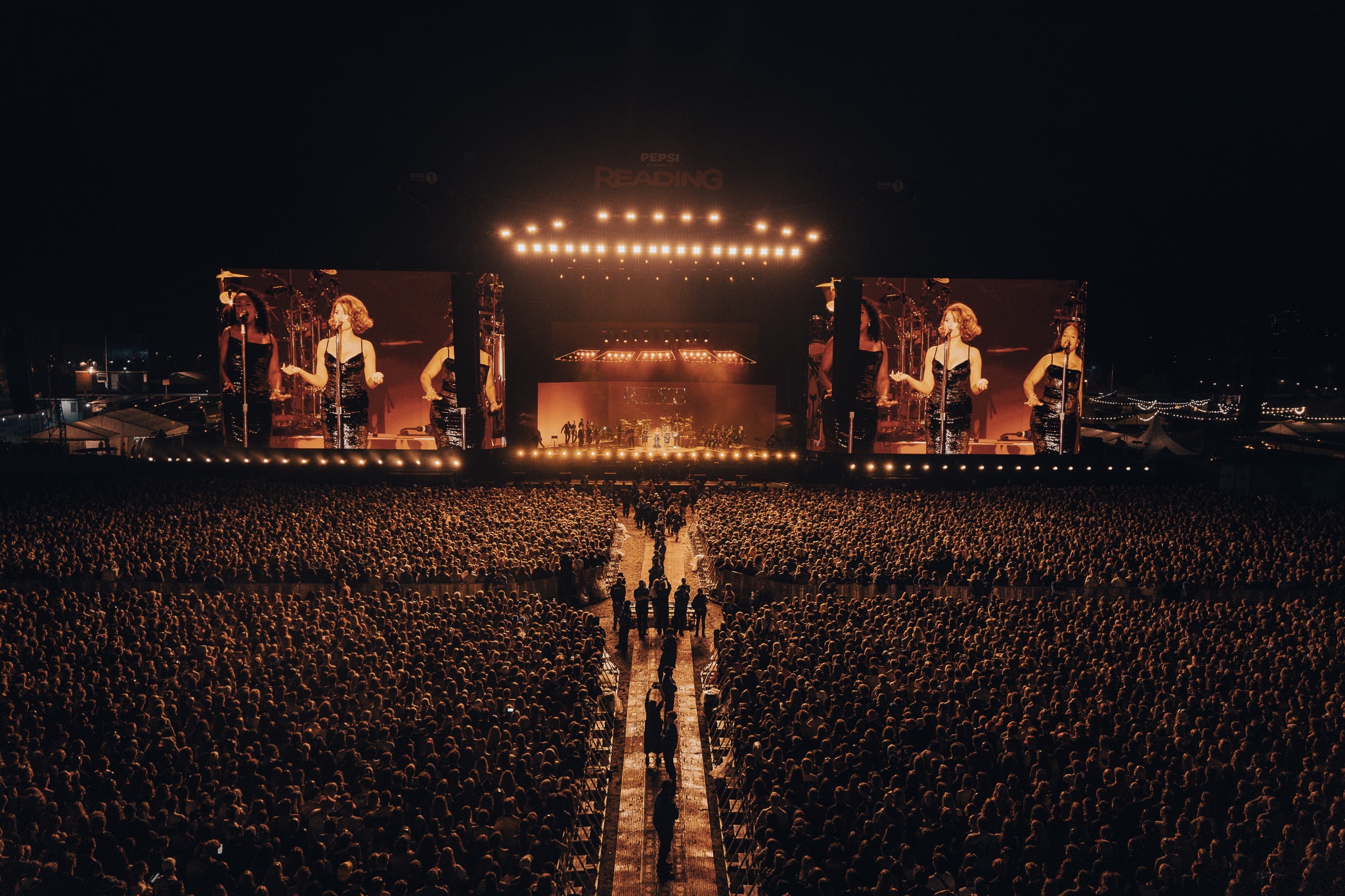
By any historical metric, the Reading Festival is an institution, having operated continuously in various iterations since 1961. Long-since twinned with its sister event in Leeds, the festival entered uncharted territory this past weekend with a deliberate, high-stakes rebranding campaign: Reading and Leeds 2.0.
In an era where music consumption has become entirely fluid, festival organizers abandoned traditional genre-siloing. Instead, they curated a bold, genre-agnostic lineup anchored by six major British and Irish headliners. This strategic pivot reached far beyond the event’s traditional rock-and-alternative base, leaning heavily into pop, hip-hop, and electronica.
Critics of the shift might argue that leaning into mainstream pop compromises the historic counter-cultural edge of August bank holiday festival fields. However, this argument collapses under the weight of contemporary musical realities. Throughout most of pop music’s history, the received commercial logic demanded that artists sanitize or dumb down their output to maximize mass sales.
In 2026, that dynamic has completely inverted. Today’s premier pop acts are taking daring, artistically uncompromising swings, and their careers are scaling unprecedented heights as a direct result.
This renaissance is mirrored in the skyrocketing global popularity of Rosalía and was underscored at Reading by Friday night co-headliner Charli XCX. Both artists have captured massive new audiences precisely by delivering their boldest, most avant-garde work to date. Over three high-intensity days, Reading 2.0 proved that a festival can successfully reinvent its DNA without losing its soul—marrying high-art conceptual staging with the chaotic, mud-splattered joy of the traditional British weekender.
Detailed Chronology: Day-by-Day Festival Breakdown
Friday: Avant-Garde Pop Dominates the Field
The festival’s opening day immediately established the experimental tone of Reading 2.0. Early afternoon audiences in the main arena were treated to a performance by Slovakian pop visionary ADÉLA. Displaying a stylistic lineage bridging FKA Twigs and Rosalía, ADÉLA merged grueling, technically ambitious contemporary dance routines with crushing, high-BPM rave beats. Describing her artistic upbringing as "too much of a bad bitch to appear in Swan Lake," she executed a sequence of classical dance movements en pointe over a pounding rave track—a jarring, unforgettable snapshot of modern pop’s willingness to blur high and low culture.
As dusk settled, the main stage hosted a phenomenal three-act sequence: Geese, Charli XCX, and Fontaines D.C.
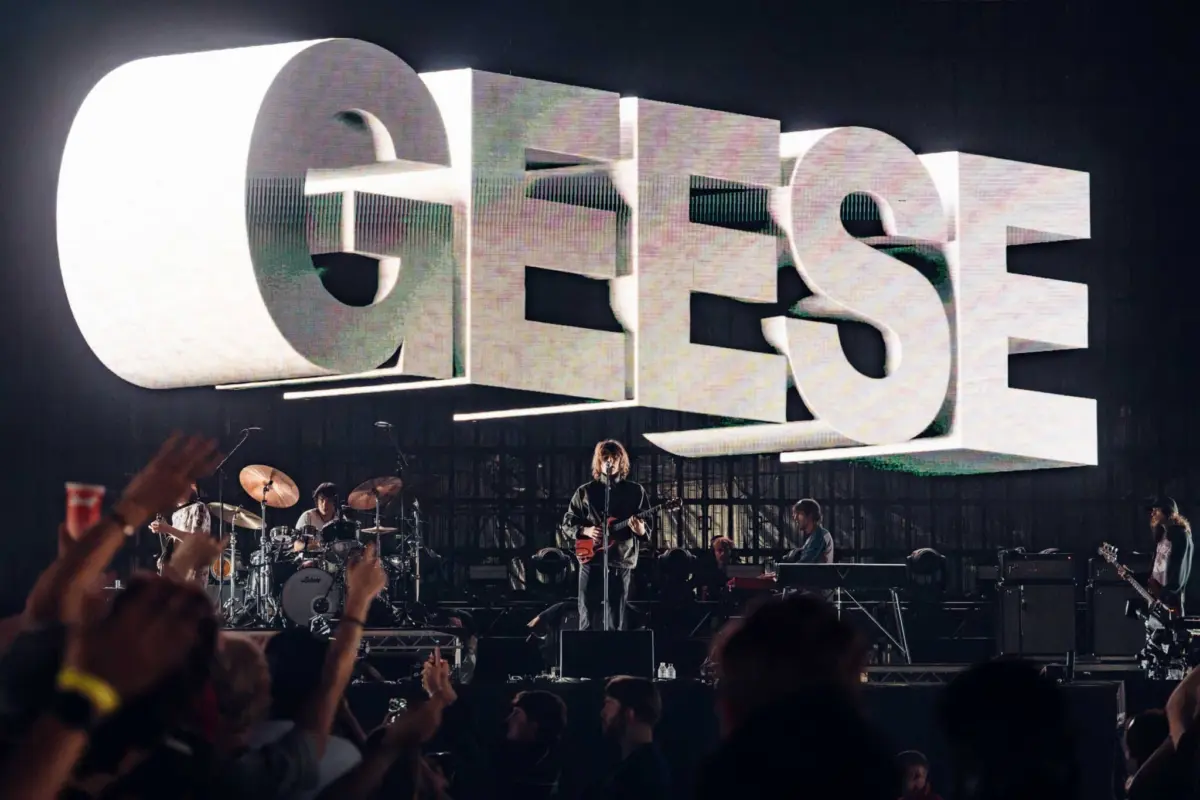
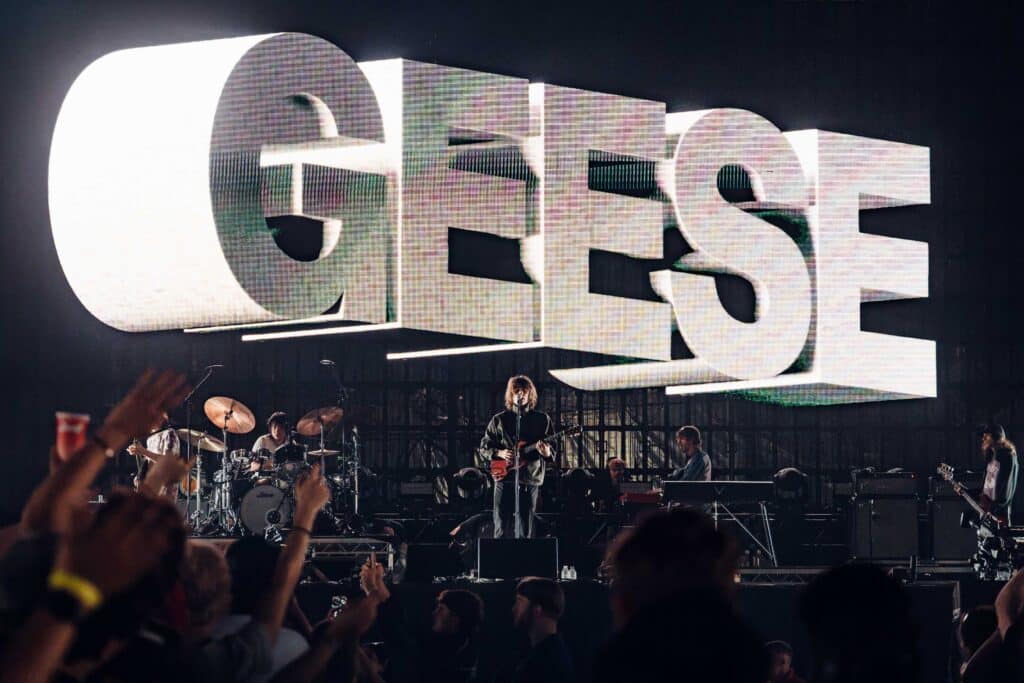
Geese arrived with their reputation as one of the most intellectually stimulating young guitar bands of the decade firmly intact. Their intricate, art-rock arrangements translate surprisingly well to massive festival fields. Bolstered by a clever introductory video fusing British and New York subcultures, they delivered a technically proficient set that hinted at an even greater stadium-ready future.
Charli XCX followed with what was indisputably the definitive performance of the entire weekend. Eschewing the stripped-back presentation of previous eras, her 2026 live show felt meticulously curated for the massive festival screens. Drawing heavily from her universally acclaimed Brat era alongside a blistering, 2 AM-style rave remix of her 2019 single "Blame It On Your Love," she turned the field into an open-air club. High-concept pyrotechnics during "House"—the lead single from the upcoming Wuthering Heights soundtrack—proved a masterclass in visual storytelling.
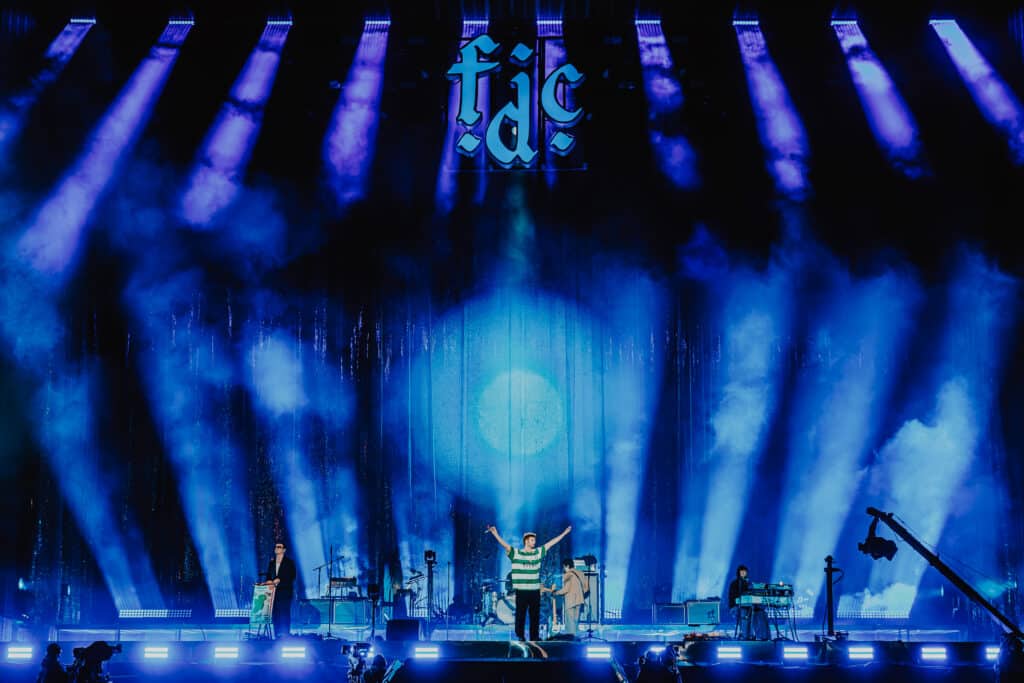
Fontaines D.C. faced the unenviable task of following Charli XCX’s hyper-kinetic pop spectacle. As critic Mark Muldoon aptly noted, it felt akin to eating a meticulously constructed salad after a massive pizza. Yet, the Irish post-punk stalwarts held their ground through sheer atmospheric intensity. Relying on an enclosed, intimate stage design with low-hanging lighting rigs and restricted screen ratios, they played through early technical issues and recent personal grief with a visceral, unyielding edge that reminded onlookers why they remain critical darlings.
Saturday: Pyrotechnics, Hip-Hop Royalty, and Vocal Acrobatics
Saturday opened with 21-year-old American singer-songwriter Sombr (Shane Michael Boose), who proved that theatrical entrances are back in vogue. Arriving backstage via an ambulance before slowly teasing his way to the front of the stage, Sombr backed up the theatrics with massive, field-uniting anthems like "Back to Friends," "Undressed," and "Homewrecker." He also introduced a welcome logistical innovation: instead of the tedious band-introduction ritual, his backing musicians’ names flashed dynamically on screen as the camera panned across them.
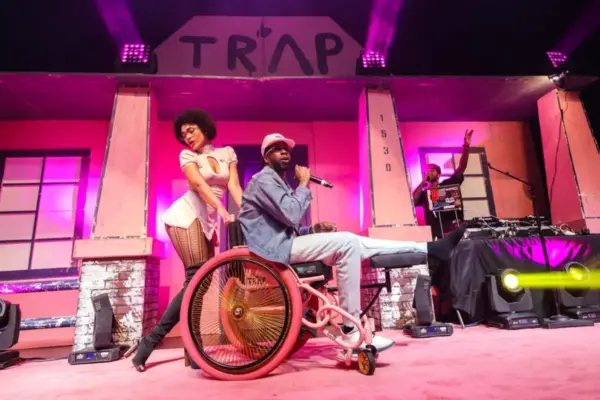
The Saturday night headline slot belonged to Dave, who mounted a production of staggering opulence. Dave utilized a full backing band, a 20-string orchestral section during a deeply introspective rendition of "The Boy Who Played The Harp," and a revolving door of high-profile guest artists. While James Blake and Central Cee drew massive cheers, it was the incendiary arrival of Kano for "3 Wheel-Ups" that catalyzed the crowd, closely followed by the contemplative lyricism of recent album highlight "Chapter 16."
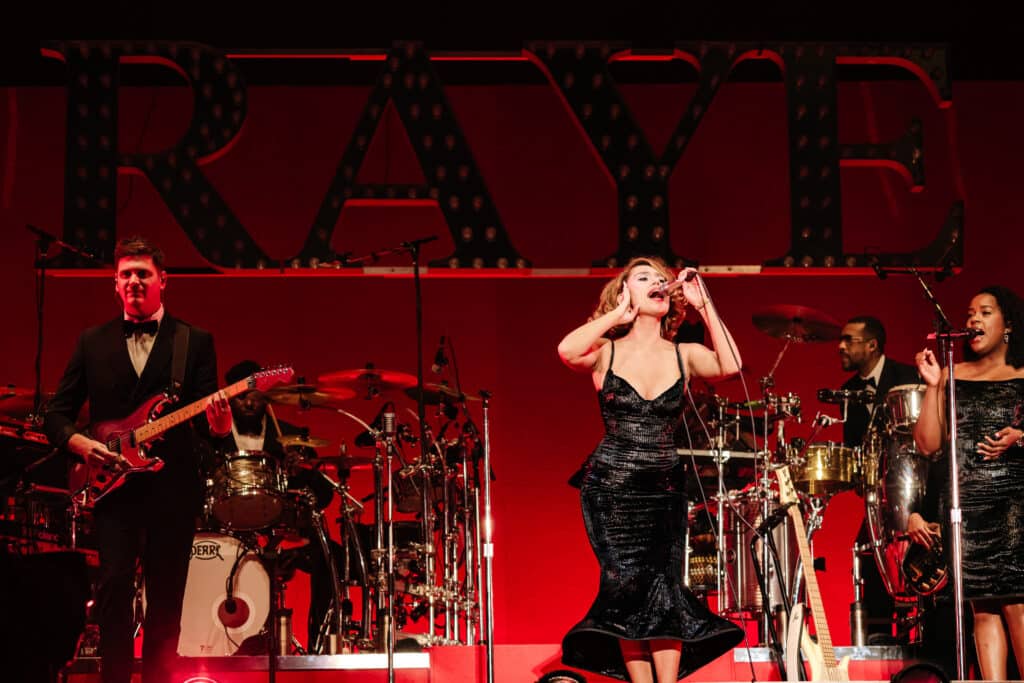
Earlier in the evening, Raye demonstrated the live benefits of musical fearlessness. Buoyed by the critical success of her epic 73-minute genre-bending concept album, This Music May Contain Hope, Raye casually discarded her biggest streaming hit, "Escapism," as her opening number.
She then settled into a performance that evoked a late-night, smoke-filled jazz club operating at maximum wattage. Possessing a voice of staggering power and dramatic range, Raye looked and sounded every bit the logical choice for the next James Bond theme. Her self-effacing charm—candidly pointing out broken lighting rigs and restarting tracks mid-flow—provided a refreshing, human antidote to modern pop perfectionism.
Sunday: Pagan Rituals, Chill-Hop, and Massive Drops
Sunday’s programming offered a masterclass in tonal whiplash. Inside the chandelier-decked Ballroom tent, British indie outfit Westside Cowboy showcased intricate, Americana-infused indie rock anchored by Aoife Anson O’Connell’s striking, Adrianne Lenker-esque vocals.
On the main stage, secret guest Lola Young delivered a masterclass in emotional catharsis. Her performance veered between raw anguish, biting anger, and direct, confrontational engagement with the camera operator, weaponizing the big screens as an active participant in her set.
Transitioning the mood downward into sunless afternoon relaxation, Loyle Carner delivered a masterclass in vulnerable, jazz-inflected hip-hop. Backed by the intricate, polyrhythmic drumming of Richard Spaven, Carner did not shy away from political discourse, weaving pointed commentary on contemporary figures like Nigel Farage and Middle Eastern geopolitics into his verses.
Later, Florence + the Machine transformed the main stage into a dark, mesmerizing pagan ritual gone slightly awry. Florence Welch commanded the field with an eerie, otherworldly authority, supported by unsettlingly theatrical dancers who occasionally mimicked the undead gnawing at the edges of her gown. Amidst the theatricality, the live sound exhibited a muscular, heavy-hitting weight that surprised casual observers. Before launching into an emotional, torrential-rain-soaked rendition of "Dog Days Are Over," Welch delivered one of the festival’s most persuasive anti-phone manifestos:
*"Filming this song will stop you from experiencing this song. And is that not why you f*king came?!"
The festival reached its absolute physical climax with its sixth and final headliner: Chase & Status. Delivering 75 minutes of unrelenting, chunky basslines and earth-shattering drops against a stage set featuring a burnt-out car and a British bus shelter, the electronic stalwarts successfully drained the final reserves of energy from a thoroughly exhausted Reading site.
Supporting Context & Metrics: The Ultimate Festival Anthems
To quantitatively capture the acoustic footprint of Reading 2.0, cultural analysts tracked song saturation across the sprawling site throughout the weekend. The statistical findings offer a fascinating cross-generational snapshot of festival anthems:
The Millennial Anchor: Despite celebrating new genres, the omnipresent indie-rock millennial rite-of-passage The Killers’ "Mr. Brightside" rang out across various campsites and sound systems no less than seven times over the weekend. By contrast, Gen X touchstones like Pulp’s "Common People" registered zero formal plays, marking a distinct generational handover.
The Gen Z Champion: Statistical methodology crowned Icona Pop’s "I Don’t Care" as the definitive Gen Z festival anthem of 2026, registering five formal plays across the grounds.
The Runner-Up: Only one track managed to surpass Icona Pop’s frequency: Skepta’s "Too Many Man," which achieved an impressive six plays, reflecting the enduring dominance of UK grime in the modern festival consciousness.
Official Statements and Operational Review
Behind the music, Reading and Leeds 2.0 scored high marks for core operational logistics—an area that has historically plagued large-scale UK greenfield events.
Infrastructure: Mobile network data infrastructure held up remarkably well under the strain of tens of thousands of simultaneous social media uploads.
Audio Engineering: Sound bleed between stages was minimized, and acoustic fidelity remained uniformly high across all three days.
Late-Night Entertainment: To compensate for strict municipal curfews on amplified outdoor stages, organizers supercharged the festival’s silent disco complexes. Spanning multiple competitive DJ channels (famously prompting games of cultural conversion between the "yellow" and "green" channels), the silent discos acted as sprawling communal living rooms for the late-night crowds.
Festival organizers released a brief operational statement on Sunday evening praising the crowd’s resilience and engagement with the new layout:
"Reading and Leeds 2.0 was designed to reflect how our audience actually listens to music today—without borders, without genre snobbery, and with a demand for uncompromised artistic ambition. The success of this weekend proves that our community is ready to embrace the future while honoring our rich history."
Future Outlook: Looking Ahead to Reading 2.1
As the mud dried and the temporary infrastructure was systematically dismantled, the cultural legacy of Reading and Leeds 2.0 was already locked in. By successfully bridging the gap between historic guitar-band loyalty and the visionary, high-risk pop spectacles of artists like Charli XCX and Raye, the festival has future-proofed its brand for the next decade.
Ticketmaster and festival promoters have confirmed that Reading and Leeds festivals will return in August 2027. While formal headliner announcements remain tightly under wraps, industry insiders are already speculating whether organizers will double down on the genre-agnostic model, potentially adopting the colloquial moniker Reading 2.1.
Early bird registration and ticketing details are slated to go live via official vendor channels in the coming weeks. If the 2026 installment is any indicator, the race for next year’s passes will be fiercer than ever.