Executive Overview
In the grand pantheon of American rhythm and blues, few voices possess the raw, emotionally devastating power of Irma Thomas. Yet, save for her revered status on the British Northern Soul circuit, Thomas has too often been omitted from the mainstream global conversations that routinely elevate her contemporaries—luminaries like Etta James, Gladys Knight, and Aretha Franklin. It is a historical oversight that remains glaring, unjustified, and ripe for rectification.
Born in Ponchatoula, Louisiana, in 1941, Thomas’s journey is a masterclass in artistic resilience. Across a career spanning more than seven decades, she has weathered the shifting tides of the music industry, personal heartbreak, label instability, and natural catastrophe—most notably Hurricane Katrina. Armed with what critics have famously described as the "sadly sweet voice of a fallen angel," Thomas carved out a distinct space in American music history.
From her early breakout hits with Allen Toussaint to her Grammy-winning artistic renaissance, and her triumphant 2024 reunion with The Rolling Stones, this deep-dive profile explores the life, times, and enduring legacy of the undisputed Soul Queen of New Orleans.
Detailed Chronology: From Ponchatoula Prodigy to Global Icon
Early Beginnings and the New Orleans R&B Scene
Irma Thomas’s vocal gifts were apparent from her earliest days in her local Louisiana community. By the tender age of 13, she was already auditioning for Specialty Records, signaling an ambition that far outpaced her years. However, it was local bandleader Tommy Ridgley who truly catalyzed her professional trajectory. Ridgley secured her a recording contract with Ron Records, a boutique label specializing in raw New Orleans R&B.
Run by Joe Ruffino, Ron Records was a incubator for regional heavyweights. Thomas found herself rubbing shoulders with icons-in-the-making such as Professor Longhair and Mac Rebennack (who would later find global fame as Dr. John). Her debut single, the brilliantly confident (You Can Have My Husband But Please) Don’t Mess With My Man, rocketed to No. 22 on the Billboard R&B chart. Even at the start of her recording career, Thomas sounded entirely formed—possessing a self-assurance and vocal maturity that belied her youth.
The Minit Records Era and Collaboration with Allen Toussaint
Seeking to expand her sonic palette, Thomas transitioned to the Minit label, where she forged a legendary creative partnership with producer, songwriter, and arranger Allen Toussaint.
Toussaint penned the exquisite, blues-drenched It’s Raining (1962) specifically for her. The following year, she recorded Ruler Of My Heart, a composition by Aaron Neville that would later become a standard, famously covered by Otis Redding and Norah Jones. This period cemented Thomas as a premier interpreter of deep soul and heartache ballads, laying down templates that generations of vocalists would study.
The Imperial Years and The Rolling Stones Entanglements
The year 1964 proved to be a watershed moment for Thomas, yielding four Top 100 R&B hits. It kicked off with the heart-wrenching Wish Someone Would Care on Imperial Records—a song written by Thomas herself during the painful collapse of her first marriage. Ironically, the single was backed by the nifty snare drum shuffle of the uptempo Breakaway (penned by Jackie DeShannon and Sharon Sheely), which later became a major crossover pop hit for Tracy Ullman.
This was swiftly followed by Anyone Who Knows What Love Is (Will Understand), co-written by Randy Newman. An emotional tour de force, the track was backed by the gospel-tinged Time Is On My Side.
That gospel-tinged flip-side would become the center of a bitter historical irony. The Rolling Stones recorded a carbon-copy version of Time Is On My Side—replicating Thomas’s arrangement note-for-note, down to the ad-libs—for their second album. It became the British band’s first major stateside Top 10 hit. Through a cruel twist of cultural amnesia, many listeners mistakenly believed Thomas had covered the Stones. The slight stung so deeply that Thomas famously refused to perform the song live for decades.
Her 1964 chart run concluded with Times Have Changed and the standout He’s My Guy (both on Imperial). During this golden era, Thomas functioned as an unofficial R&B ambassador, her technically flawless vocal performances serving as gold-standard masterclasses in the genre.
Label Hopping, Chess Records, and Swamp Dogg
As the decade drew to a close, Thomas’s commercial momentum slowed due to erratic label support. Her final R&B hit of the 1960s was a muscular cover of Otis Redding’s Good For Me (1968), recorded for Chess Records at the legendary studios in Muscle Shoals, Alabama.
Alas, her tenure at Chess was tragically brief. A sustained partnership with a major label during this creative peak could have vastly altered her commercial standing. Stints with Canyon, Roker, and Cotillion followed before she linked up with iconoclast Swamp Dogg on his Fungus Records imprint.
Under Fungus, she released the devastatingly soulful In Between Tears (1973) and an album of the same name. It was an idiosyncratic, deeply immersive record that, regrettably, spent decades consigned to industry obscurity before being rediscovered by crate-diggers and connoisseurs.
The Soul Queen of New Orleans and The Lion’s Den
Following a multi-year residency living in Los Angeles, Thomas returned home to New Orleans. Embraced fully by her city, she earned the crown that would define the rest of her life: The Soul Queen of New Orleans.
Alongside her husband, Emile Jackson, she opened her own live-music venue, The Lion’s Den, where she regularly fronted the house band. Concurrently, she became a permanent fixture at the New Orleans Jazz & Heritage Festival (established in 1970). This continuous local exposure birthed a thriving, lucrative second wind in her live performance career.
Recording-wise, the 1970s and 1980s brought further shifts. In 1978, she signed with Maison de Soul, releasing Hip Shakin’ Mama as a direct nod to the burgeoning disco and dancefloor crowds. For the same label, she recorded Soul Queen Of New Orleans, an album featuring disco-era updates of her classic back catalog.
In 1986, Thomas signed with Rounder Records, initiating a critically lauded era marked by pristine studio albums:
- The New Rules (1986)
- The Way I Feel (1988)
- Live: Simply The Best (1991)
- True Believer (1992)
Hurricane Katrina and Grammy Glory
In August 2005, Hurricane Katrina struck the Gulf Coast, flooding 80 percent of New Orleans. The Lion’s Den was among the hundreds of regional properties utterly destroyed in the deluge.
Refusing to let the disaster silence her, Thomas channeled her grief into the studio. She entered Dockside Studios in Maurice, Louisiana, to record After The Rain. Released to universal acclaim, her 18th studio album captured her indomitable spirit and earned her the Grammy Award for Best Contemporary Blues Album—making her the first female artist to win the category since Etta James.
Supporting Context & Metrics
Cultural Reach and Contemporary Resonance
While commercial charts in the United States and the United Kingdom frequently overlooked Thomas, her artistic footprint remained massive among fellow musicians and tastemakers.
- Collaborations: Over the decades, Thomas has leant her voice to projects spanning the musical spectrum, recording alongside B.B. King, Galactic, and British blues revivalist Hugh Laurie. On Laurie’s 2005-era sessions (specifically the 2011 album Let Them Talk), she delivered a haunting rendition of the steel-driving railroad ballad John Henry.
- Screen Synchronizations: British satirist and writer Charlie Brooker helped introduce Thomas to an entirely new demographic. Her track Anyone Who Knows What Love Is (Will Understand) was woven into the atmospheric fabric of seven distinct episodes of Netflix’s critically acclaimed anthology series, Black Mirror, turning a 1960s deep-cut into a modern cult anthem.
- Peer Adoration: Icons such as Otis Redding, Mick Jagger, Bonnie Raitt, Boz Scaggs, and Eric Clapton have openly sung her praises. Music historians also trace a direct line from Thomas’s reading of I Need Your Love So Bad to Peter Green’s definitive 1968 recording of the track with Fleetwood Mac.
Official Statements and Triumphant Redemptions
The ultimate validation of Thomas’s historical standing arrived decades after her initial hits.
At the New Orleans Jazz Fest 2024, an emotional, full-circle moment took place on stage. Invited to share the spotlight with The Rolling Stones, Irma Thomas joined Mick Jagger to perform Time Is On My Side—the very song that had launched the British rock icons into American stardom six decades prior.
Addressing the massive festival crowd, Jagger offered a gracious, public acknowledgment of the band’s historical debt to Thomas. More importantly, the moment offered Thomas a long-overdue public platform to reclaim a masterpiece that had been clouded by industry politics and misattribution for generations.
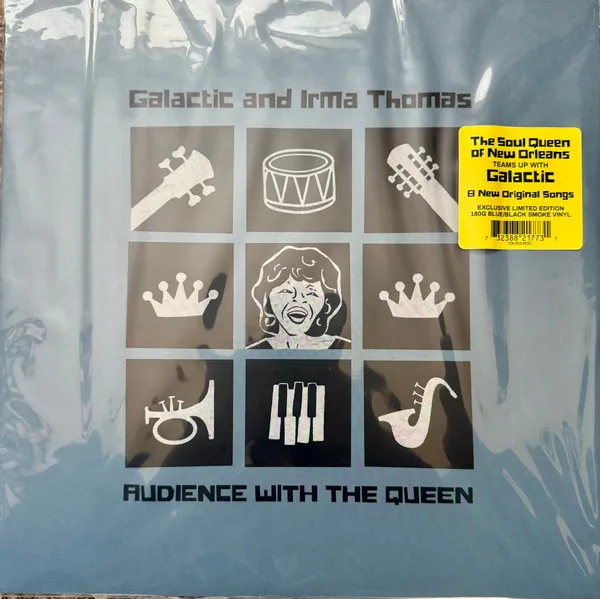
Furthermore, demonstrating that her creative engine shows zero signs of slowing down, Thomas teamed up with New Orleans electro-funk powerhouse Galactic for a brand-new collaborative release, Audience With The Queen, issued via Tchoup-Zilla Records.
Future Outlook
As the decades roll on, the music industry is increasingly tasked with correcting the historical erasures of Black female artists who shaped the bedrock of modern popular music. Irma Thomas stands at the very top of that list.
Referred to reverently by peers and critics as the singer with "the sadly sweet voice of a fallen angel," Thomas often introduces herself simply as "The Teacher." For anyone seeking a masterclass in how to command rhythm, blues, and deep soul royalty, the curriculum is clear. One need only listen to the recorded legacy of Her Majesty, Irma Thomas—an artist who weathered every storm, outlived her detractors, and secured an immortal crown in the annals of American music history.