Executive Overview
In the heart of Manchester’s vibrant Northern Quarter, independent music venue and cultural hub renae has taken a decisive, systemic step toward reshaping the city’s nightlife landscape. This week, the venue announced the official launch of the Promoter Promise—a transformative financial and developmental initiative explicitly designed to dismantle barriers for marginalised and underrepresented promoters across Greater Manchester.
At a time when the broader United Kingdom music and events industry continues to grapple with deeply entrenched structural inequalities, renae’s new scheme offers a tangible, well-resourced antidote. The initiative is not merely a funding grant; it is an immersive, multi-layered support system. Three successful applicants will each receive a comprehensive package comprising a £1,000 curatorial budget, a £350 personal bursary, and an additional £300 dedicated to targeted marketing. Beyond the financial injection, the scheme bridges the gap between ambition and execution by providing bespoke, one-to-one mentorship, on-the-ground operational assistance, and free future event space hire at renae’s newly inaugurated upstairs club venue, TOPP — The Other People Place.
By directly targeting individuals from underrepresented backgrounds—including musicians, sound engineers, and stage managers with emerging experience in events promotion—renae is actively addressing the homogenous leadership that has long defined the commercial nightlife sector. As the music community faces mounting pressure from recent census data and parliamentary inquiries exposing endemic discrimination, misogyny, and racial pay gaps, initiatives like the Promoter Promise offer a blueprint for grassroots industry reform. Applications for the inaugural cohort close at 4:00 PM BST on Monday, 28th September.
Detailed Chronology & Mechanics of the Promoter Promise
The genesis of the Promoter Promise stems from a period of introspective evaluation by renae’s programming team. Recognizing that true inclusivity requires more than passive open-door policies, the Northern Quarter venue structured a comprehensive program designed to shoulder the financial and logistical risks that so often deter emerging talent from breaking into the commercial events sector.
Eligibility and Target Demographics
The scheme is purposefully inclusive of a broad spectrum of creative professionals. It is open to any Greater Manchester-based individual who identifies as part of a marginalised or underrepresented demographic. Applicants must possess some foundational experience within the arts and creative sectors, while having less than two years of formal background in events promotion.
While the term "promoter" traditionally conjures images of booking agents and night organizers, renae’s framework explicitly extends an invitation to:
- Musicians looking to transition into event curation.
- Sound engineers seeking to steer the sonic identity and technical standards of live showcases.
- Stage managers aiming to oversee production logistics from an authoritative, curatorial standpoint.
The Financial Package
Navigating the modern live music economy carries immense financial risk, particularly for independent operators lacking institutional backing. To mitigate this, renae has committed substantial capital per successful applicant through a three-tier funding breakdown:
- £1,000 Curatorial Budget: Designated strictly for artist bookings, talent fees, and production essentials, ensuring fair and prompt pay for performers.
- £350 Bursary: Allocated as a personal stipend for the promoter, recognizing and compensating them for the uncompensated emotional and physical labor of event production.
- £300 Marketing Allocation: Dedicated to digital and physical promotion, helping emerging voices cut through the noise of a crowded urban nightlife market.
Holistic Support and Mentorship
Recognizing that capital alone cannot guarantee sustainable success, renae has embedded a robust mentorship framework into the Promoter Promise. Successful applicants will work directly with Beau-Azra Scott, renae’s Creative Producer and Events Programmer, through individualized, one-to-one mentoring sessions.
This guidance covers everything from risk assessments and licensing to artist liaison and financial management. Furthermore, participants will receive hands-on assistance from venue staff on the night of their events, ensuring they are supported operationally. To foster long-term career sustainability, participants are also granted free future event space hire at renae, allowing them to build enduring event series without the crushing overhead of venue rentals.
The Venue: TOPP — The Other People Place
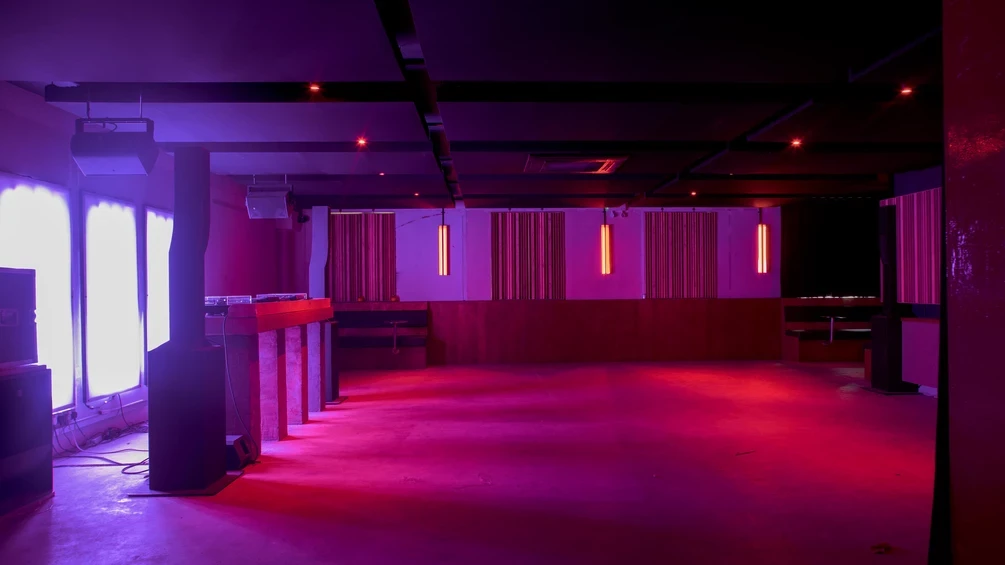
The initial phase of the Promoter Promise will focus primarily on TOPP — The Other People Place, renae’s intimate upstairs club venue. Opened in March of this year, TOPP was christened in honor of Detroit electro pioneer James Stinson’s most celebrated solo moniker (under his work with Drexciya). Stinson’s alias, The Other People Place, represents a foundational pillar of underground electronic music history—a fitting namesake for a room explicitly dedicated to championing alternative, forward-thinking, and counter-cultural voices in Manchester.
+-------------------------------------------------------------------+
|                        PROMOTER PROMISE                           |
|                      [Financial & Support]                        |
+-------------------------------------------------------------------+
         |                                           |
         v                                           v
+-----------------------+                   +-----------------------+
|  Financial Package    |                   |   Holistic Support    |
| • £1,000 Curatorial   |                   | • 1-to-1 Mentorship   |
| • £350 Personal       |                   |   (Beau-Azra Scott)   |
| • £300 Marketing      |                   | • On-the-Ground Staff |
+-----------------------+                   | • Free Future Space   |
                                            +-----------------------+
                                                         |
                                                         v
                                            +-----------------------+
                                            |  Executed at TOPP     |
                                            |  (The Other People    |
                                            |   Place Venue)        |
                                            +-----------------------+
Supporting Context & Metrics: The State of UK Music
To fully appreciate the urgency behind renae’s Promoter Promise, one must examine the broader socio-economic landscape of the UK music and nightlife industries. Over the past twelve years, a series of independent reports, governmental inquiries, and academic studies have painted an uncompromising picture of an industry built upon deep systemic imbalances regarding gender, ethnicity, and socio-economic background.
The Gender Imbalance and Endemic Misogyny
In 2024, the release of the inaugural UK Music Census—conducted by Help Musicians and the Musicians’ Union—sent shockwaves through the creative sector. The data revealed that more than half of all women working within the UK music industry had experienced direct discrimination. While women make up a significant portion of performers, they remain drastically underrepresented across technical, managerial, and promotional specialisms.
This qualitative data was reinforced by the UK Government’s Women and Equalities Committee (WEC) inquiry, Misogyny In Music. The parliamentary report described misogyny and gender-based discrimination within the industry as "endemic," famously characterizing the corporate and live music sectors as an exclusionary "boys club."
This systemic rot is not confined to the British Isles; it is a global crisis. Author Samantha Parsley’s landmark book, Minor Keys, published following a rigorous six-year research period incorporating input from 63 electronic music artists worldwide, mirrors these findings. Parsley’s work exposes how institutional gatekeeping systematically sidelines women and non-binary artists, producers, and promoters, restricting their career trajectories from grassroots scenes to global festival main stages.
The Racial Disconnect in British Music Revenue
Parallel to gender disparities, racial inequities continue to plague the UK music infrastructure. Earlier this year, the comprehensive study Black Music Means Business: Driving Economic Growth In The UK laid bare a staggering structural contradiction.
The report revealed that an overwhelming 80% of all British music revenue is derived directly from genres of Black origin—including grime, drill, hip-hop, R&B, and electronic subgenres rooted in dancehall, house, and techno. Despite this immense cultural and economic output, just 22% of senior professionals in the UK music industry identify as Black, Asian, or from other global majority backgrounds. Furthermore, the study documented a persistent 20% pay gap between Black music creators and workers compared to their white counterparts.
Drawing from contributions of approximately 80 Black music creators and industry workers, the report highlighted "persistent patterns of inequality and barriers to progression," demonstrating that while Black culture bankrolls the commercial viability of British music, ownership and curation remain tightly guarded by homogenous corporate elites.
Official Statements & Industry Perspective
At the core of the Promoter Promise is a profound philosophical critique of how cultural spaces operate. Speaking directly to DJ Mag, Beau-Azra Scott unpacked the sociological realities that inspired the initiative.
"A lack of representation impacts the event’s experience as a whole; if the people onstage don’t have anyone backstage they can relate or connect to, it’s going to impact their experience," Scott stated. "It’s the same for audience members, staff, everyone alike. Our industry is fuelled by art and music, often centering around genres that originated from global majority cultures. The industry should look a whole lot different and it’s a systemic issue that it doesn’t."
Scott emphasized that the homogeneity seen in event programming rooms across the country is not an accident of history, but the byproduct of structural barriers documented in successive industry studies.
"I do think there is a disproportionate representation on who is running and producing events due to the systemic issues that have been discussed in the various reports that fuelled Promoter Promise," Scott explained. "It’s not as easy to ensure diversity across your promoters, which is something that us here at renae became hyper-aware of. This is why this project exists."
Addressing the wider industry ecosystem—acknowledging both those who will benefit from the scheme and those who sit outside its targeting criteria—Scott offered a clear and unifying message:
"For the people who this isn’t targeted at, I hope they know why it exists and I hope they support what comes out of the back of it. For the people who this is for, I hope they’re creatively galvanised by it."
Future Outlook: A Blueprint for Grassroots Reform
As the music industry continues to debate the best paths toward recovery and modernization in the post-pandemic era, initiatives like renae’s Promoter Promise offer a pragmatic roadmap. By moving beyond performative social media solidarity and investing capital directly into the hands of underrepresented creatives, independent venues can act as incubators for genuine cultural democratization.
The success of the inaugural Promoter Promise cohort will likely be measured not merely by ticket sales or bar revenue at TOPP, but by the long-term career trajectories of the three selected promoters. By equipping them with financial literacy, curatorial independence, mentorship, and operational backing, renae is building a sustainable pipeline of diverse leadership.
For independent venues across the United Kingdom, renae’s model serves as a vital challenge: to look inward at their own rosters, staff directories, and programming boards, and to recognize that diversity in nightlife is not an aesthetic checkbox, but a operational necessity for creative survival.
How to Apply
Applications for the inaugural Promoter Promise scheme are open now and will officially close at 4:00 PM BST on Monday, 28th September.
Eligible creatives based in Greater Manchester who meet the criteria are encouraged to submit their proposals via the official application portal: Access the Promoter Promise Application Form Here.