Executive Overview
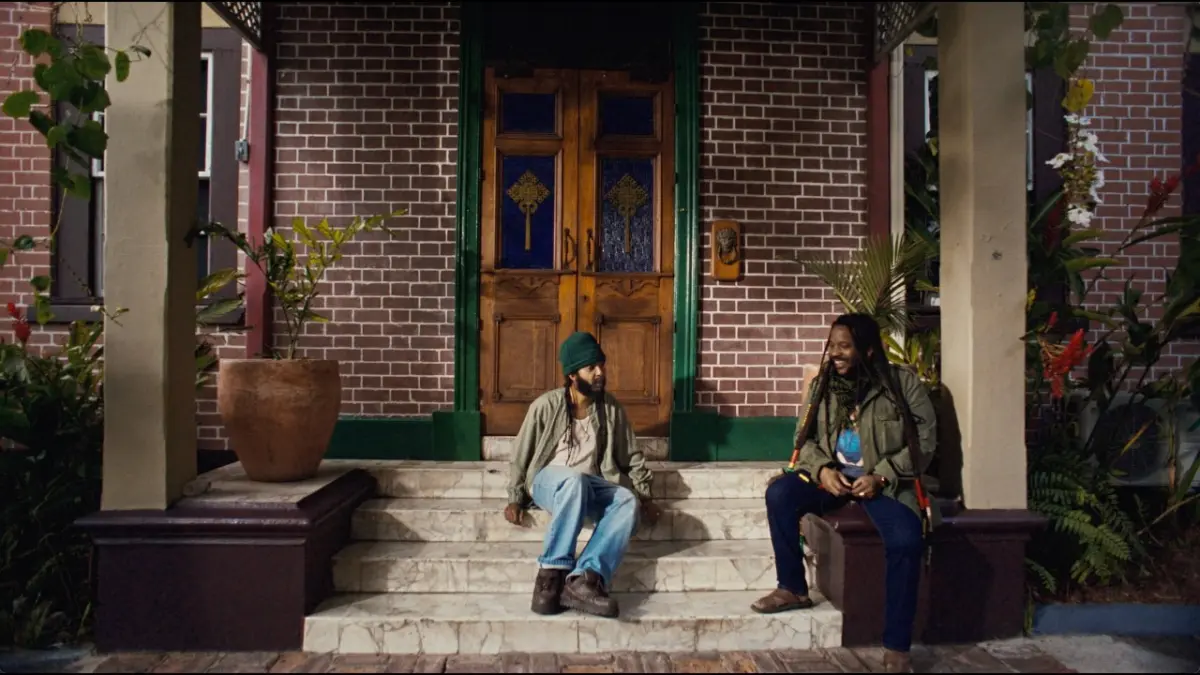
In an era where contemporary popular music often prioritizes fleeting trends, viral hooks, and superficial escapism, rare is the release that bridges profound historical consciousness with urgent, modern geopolitical critique. Enter "1000 Lashes," a powerful collaboration between two giants of modern roots reggae: Jamaican singer-songwriter Protoje and legendary vocalist and producer Stephen Marley. Directed by SAMO, the accompanying music video is a sweeping, transnational visual statement. It was filmed across two deeply symbolic, historically charged locations: the Adwa Victory Memorial Museum in Addis Ababa, Ethiopia—built upon the sacred ground where indigenous forces heroically defeated invading Italian troops in 1896, preserving the nation’s unyielding sovereignty against European colonial rule—and the historic steps of 56 Hope Road in Kingston, Jamaica, the former residence of the Marley family and now a global sanctuary for reggae history.
At its core, "1000 Lashes" serves as an uncompromising mirror held up to the moral cost of global inequality. Protoje, born in Saint Elizabeth, Jamaica, and twice nominated for the prestigious Grammy Award for Best Reggae Album (for A Matter of Time and Third Time’s the Charm), wastes no time establishing an atmosphere of stark introspection. He navigates a complex emotional landscape, opening with a raw, unflinching examination of his own relative privilege. With lines like, "I’ve got my blessings and I’m feeling no pain," Protoje confronts the dissonance between domestic comfort and the systemic suffering that quietly fuels the modern global economy.
This internal dialogue expands outward when Stephen Marley enters, lending his iconic, weathered vocals to a resonant, emotionally stirring chorus: "All the children are ours." The stark juxtaposition between Protoje’s momentary peace and Marley’s universal maternal-paternal plea sets the stage for a sweeping indictment of institutionalized exploitation. The subsequent verses systematically dismantle the sanitized facades of modern globalization, shedding light on generational injustice, corporate resource extraction, child labor in mineral mines, and the tragic recruitment of youth into armed conflict.
As the track reverberates globally, Protoje is matching its heavy thematic gravity with a rigorous international touring schedule. He is slated to headline major European festivals—including Ruhr Reggae Summer in Mülheim an der Ruhr, Germany, and the Uprising Festival in Bratislava, Slovakia—before embarking on an extensive tour across the United States through September, culminating in a highly anticipated appearance on the Welcome to Jamrock Reggae Cruise in November. This article provides a comprehensive, investigative look at the creation, thematic depth, historical resonance, and future trajectory of "1000 Lashes," exploring how Protoje and Stephen Marley continue to weaponize reggae music in the eternal pursuit of social justice and global equity.
Detailed Chronology and Visual Narrative: From the Battle of Adwa to the Heart of Kingston
To fully understand the weight of "1000 Lashes," one must trace the deliberate geographical and historical roadmap laid out by director SAMO and the artists. The music video is not merely a backdrop for performance; it is an active participant in the song’s narrative, drawing unbroken lines between African anti-colonial resistance, Caribbean emancipation struggles, and modern-day systemic oppression.
The Sacred Grounds of Addis Ababa
The visual journey begins—and finds its spiritual anchor—inside the Adwa Victory Memorial Museum in Addis Ababa, Ethiopia. Inaugurated to honor the historic Battle of Adwa on March 1, 1896, the site marks a monumental turning point in world history. Here, poorly equipped yet fiercely determined Ethiopian forces, under the leadership of Emperor Menelik II and Empress Taytu Betul, decisively defeated the invading Italian army. This victory shattered the nineteenth-century myth of European military invincibility, preserved Ethiopia’s sovereign independence during the height of the "Scramble for Africa," and transformed the East African nation into a global beacon of hope and anti-colonial resistance for the African diaspora.
By filming within these hallowed halls, Protoje consciously roots his critique of modern neo-colonialism in the ultimate triumph of African sovereignty. The museum’s architecture, statues, and historical archives create an imposing, reverent atmosphere. As Protoje moves through the space, his lyrics about structural exploitation and global inequality resonate against monuments dedicated to those who successfully repelled foreign aggression. It serves as a visual reminder that the battles fought today against economic imperialism, corporate exploitation, and human trafficking are direct descendants of the 1896 struggle against physical colonization.
The Steps of 56 Hope Road
From the birthplace of African resistance, the video bridges continents, transitioning to the iconic steps of 56 Hope Road in Kingston, Jamaica. Formerly the home of reggae patriarch Bob Marley and now the Bob Marley Museum, this address is hallowed ground for the global reggae community. It was here that Bob Marley crafted anthems of resistance, unity, and spiritual liberation that continue to shape global consciousness.
By pairing the Adwa Memorial Museum with the steps of 56 Hope Road, director SAMO constructs a powerful visual dialogue between the African continent and its Caribbean diaspora. Kingston and Addis Ababa are united through the shared legacy of resistance against systemic subjugation. Stephen Marley’s presence on the track and within this lineage deepens this connection, effortlessly bridging the foundational work of first-generation reggae royalty with the incisive, contemporary lyricism of Protoje’s generation.
The Lyrical Unfolding
The narrative progression within the song mirrors this geographical duality. Protoje initiates the journey in the private sphere. He reflects on his own successes, acknowledging the comfort of his domestic life in Jamaica. Yet, this confession of peace is immediately troubled by an acute moral awareness. Once he closes his front door, he is confronted by the ghosts of global supply chains: the invisible hands that mine rare earth minerals, the generational debt trap nations, and the human cost of unchecked corporate greed.
When Stephen Marley delivers the chorus—"All the children are ours"—the song shifts from a personal confession to a collective summons. It challenges the listener’s complacency, suggesting that localized comfort in the Global North or within privileged pockets of the Global South is subsidized by the suffering of the vulnerable elsewhere. Protoje’s subsequent verses hammer this point home, itemizing the invisible injuries of late-stage capitalism: backs lashed a thousand times by economic desperation, communities fractured by displacement, stolen opportunities, and systemic wrongdoing shielded by corporate and political immunity.
Supporting Context and Metrics: The Weight of "The Art of Acceptance" and Protoje’s Artistic Evolution
"1000 Lashes" arrives as a standout piece within Protoje’s broader artistic and cultural ecosystem, anchored by his latest creative chapter and his enduring legacy within the international music landscape.
A Legacy of Critical Acclaim
Protoje (born Oje Ken Ollivierre) has spent well over a decade cementing his status as a vanguard of the "reggae revival" movement. Emerging from Jamaica with a distinct blend of traditional roots reggae, hip-hop cadence, soul, and dancehall sensibilities, he quickly captured international attention. His critically acclaimed albums—most notably A Matter of Time (2018) and Third Time’s the Charm (2022)—both earned him Grammy nominations for Best Reggae Album, solidifying his reputation not just as a hitmaker, but as an uncompromising album artist with a sharp sociological eye.
His recent body of work, highlighted by releases like The Art of Acceptance, demonstrates an artist deeply engaged in personal and political maturation. Where early records often tackled socio-political themes with youthful urgency, his latest compositions exhibit a refined, reflective maturity. "1000 Lashes" exemplifies this evolution; it avoids simplistic protest-song tropes in favor of a nuanced, self-examining critique that implicates the artist himself within the very global systems he interrogates.
The Socio-Economic Backdrop of "1000 Lashes"
To appreciate the urgency of Protoje and Stephen Marley’s message, one must examine the socio-economic metrics framing modern global inequality:
- The Wealth Gap: According to reports by international advocacy organizations such as Oxfam, the richest 1% of the global population has amassed nearly twice as much wealth as the rest of the world combined over the past decade, driven heavily by exploitative labor practices in developing nations.
- Child Labor and Mineral Mining: The International Labour Organization (ILO) estimates that roughly 160 million children remain trapped in child labor worldwide, with significant percentages working in hazardous conditions within the artisanal mining sectors of sub-Saharan Africa—extracting minerals essential for the global technology and automotive industries.
- The Legacy of Neocolonialism: Economic analyses frequently highlight how unequal trade agreements, structural adjustment programs enforced by international financial institutions, and unchecked resource extraction continue to siphon trillions of dollars annually from the Global South to the Global North, mirroring the exploitative dynamics of the colonial era.
By engaging with these grim realities, "1000 Lashes" functions as an artistic counter-weight to economic data. It transforms abstract statistics about global disparity into a visceral, human narrative, forcing listeners to reckon with the human faces behind the products they consume and the comforts they enjoy.
Official Statements and Artistic Perspectives
While formal press statements surrounding the release of "1000 Lashes" have been precise, the collaborative synergy between Protoje and Stephen Marley speaks volumes about the ideological alignment driving the project.
Protoje on Privilege and Introspection
In various interviews discussing his creative process for recent projects, Protoje has frequently emphasized the necessity for artists from the Global South—particularly those who have achieved international success—to maintain an unvarnished view of their own positioning. Writing from a place of domestic comfort carries an ethical responsibility. By admitting, "I’ve got my blessings and I’m feeling no pain," Protoje breaks away from the often-performative posture of the infallible revolutionary. Instead, he positions himself as a flawed observer navigating a deeply compromised world, making his critique of child labor, corporate immunity, and generational trauma far more potent and relatable.
Stephen Marley and the Collective Conscience
Stephen Marley’s contribution to the track extends his lifelong commitment to using music as a vehicle for Pan-African unity and social upliftment. Carrying the heavy mantle of the Marley family legacy, Stephen has consistently utilized his production prowess and soulful vocal delivery to amplify messages of justice and human rights. His delivery of the chorus—"All the children are ours"—draws directly from the foundational Rastafari philosophy of universal brotherhood and communal responsibility. In voicing this line, Marley bridges generations of reggae advocacy, reinforcing the genre’s historic role as the voice of the dispossessed and marginalized.
Future Outlook: Global Tour Dates and the Road Ahead
The release of "1000 Lashes" and its accompanying visual masterpiece marks not a destination, but a launchpad for an intensive period of global engagement for Protoje. As fans digest The Art of Acceptance and unpack the layers of his latest work, the artist is preparing to bring these urgent themes directly to international audiences.
European Summer Festival Circuit
Protoje’s late-August itinerary highlights his enduring appeal across European markets, where reggae, dub, and sound-system culture retain a deeply dedicated following. His performances at:
- Ruhr Reggae Summer in Mülheim an der Ruhr, Germany—one of Europe’s premier open-air celebrations of Caribbean music and culture.
- Uprising Festival in Bratislava, Slovakia—Central Europe’s largest reggae festival, known for its politically conscious lineup and diverse international attendance.
These festival sets will offer European fans a chance to experience the live renditions of his latest material, translating the introspective studio energy of tracks like "1000 Lashes" into high-energy, collective live performances.
Fall US Tour and the Jamrock Cruise
Following his European run, Protoje will cross the Atlantic in September for an extensive series of tour dates across the United States, bringing his signature blend of conscious lyricism and infectious riddims to American venues.
The touring year will culminate in November with a high-profile appearance on the annual Welcome to Jamrock Reggae Cruise. Sailing through the Caribbean, the cruise represents the ultimate pilgrimage for reggae enthusiasts worldwide, making it a fitting backdrop for an artist whose work so deeply interrogates the historical and contemporary realities of the region.
The Enduring Relevance of Conscious Reggae
As the world grapples with escalating geopolitical tensions, widening economic divides, and ecological crises, the release of "1000 Lashes" serves as a timely reminder of the enduring power of conscious music. Protoje and Stephen Marley have crafted a piece of art that refuses to offer easy answers or cheap consolations. Instead, they invite listeners on a demanding yet necessary journey—from the historic victory halls of Addis Ababa to the front porches of Kingston, and ultimately, into the unmapped territory of our own individual and collective consciences.
For fans looking to dive deeper into Protoje’s current musical chapter, copies of The Art of Acceptance are available across major streaming and purchase platforms via official distribution links, and comprehensive ticketing information for upcoming global tour dates can be accessed directly through Protoje’s official digital portals.