In September 2010, the progressive metal landscape experienced a monumental seismic shift. Mike Portnoy—co-founder, primary spokesman, co-producer, and powerhouse drummer of Dream Theater—announced his immediate departure from the band he had helped build over a quarter-century. In the lineage of progressive rock, few lineup fractures carry such destabilizing weight. While drum replacements in rock history have occasionally redefined bands—such as Cozy Powell stepping into Emerson, Lake & Palmer or Bill Bruford transitioning out of Yes—the sudden exit of a founding architect who managed fan relations, setlists, and artistic direction threatened to unravel the very identity of Dream Theater.
Facing an existential crossroads under intense public and critical scrutiny, remaining members John Petrucci, James LaBrie, Jordan Rudess, and John Myung chose not to falter. Instead, they launched an exhaustive global search for a replacement, ultimately recruiting virtuoso Mike Mangini. The true test of this new era arrived with their eleventh studio album, 2011’s A Dramatic Turn of Events.
Far from being a compromised recovery effort, the album proved to be an artistic triumph and a commercial reclamation. Retrospectively, vocalist James LaBrie and keyboardist Jordan Rudess acknowledged a striking irony: Portnoy’s original diagnosis—that the band’s internal dynamics had stagnated and required radical transformation—was correct. However, the necessary catalyst for that transformation was not the long hiatus Portnoy had proposed, but his permanent exit. The resulting power shift eliminated long-standing interpersonal friction, decentralized the songwriting process, and empowered dormant creative forces within the group.
+-----------------------------------------------------------------------------------+
|                        DREAM THEATER TRANSITION TIMELINE                          |
+-----------------------------------------------------------------------------------+
|  SEPT 2010         OCT 2010              EARLY 2011          SEPT 2011            |
|  Mike Portnoy      Auditions held in     Recording of 'A     'A Dramatic Turn     |
|  announces exit    NYC; Mike Mangini     Dramatic Turn of    of Events' released  |
|  from band         selected as drummer   Events' under way   to critical acclaim  |
+-----------------------------------------------------------------------------------+
Detailed Chronology: From Rupture to Resurgence
The 2010 Fracturing and Hiatus Proposal
The rift within Dream Theater culminated during the tail end of the tour supporting 2009’s Black Clouds & Silver Linings. Exhausted by twenty-five years of an unrelenting cycle of writing, recording, and global touring, Portnoy proposed a five-year hiatus. He argued that the band was becoming formulaic and burned out, needing extended time apart to refresh their artistic drive.
The remaining four members, however, did not share his desire to stall the band’s momentum. When they declined the proposed break, Portnoy tendered his resignation in September 2010. Shortly thereafter, Portnoy attempted to rescind his departure and rejoin the group, but the band held firm in their decision to move forward without him, opting for definitive closure rather than prolonged uncertainty.
The New York Auditions
In October 2010, Dream Theater convened in New York City for a closely watched, three-day audition process to select a new drummer. Seven of the world’s most accomplished percussionists were invited:
Mike Mangini (ex-Extreme, Steve Vai, Annihilator)
Marco Minnemann (Steven Wilson, The Aristocrats)
Peter Wildoer (Darkane)
Virgil Donati (Planet X)
Aquiles Priester (Angra)
Derek Roddy (Hate Eternal)
Thomas Lang (stunt drum virtuoso)
The audition evaluated technical mastery, speed, sight-reading, jam composition, and personal chemistry. Mike Mangini delivered a flawless technical performance while demonstrating an immediate, visceral emotional connection to the band’s catalog, securing his place as Dream Theater’s new drummer.
+-----------------------------------------------------------------------------------+
|                            2010 DRUMMER AUDITION CANDIDATES                       |
+-----------------------------------------------------------------------------------+
|  • Mike Mangini (Selected)                  • Aquiles Priester                    |
|  • Marco Minnemann                          • Derek Roddy                         |
|  • Peter Wildoer                            • Thomas Lang                         |
|  • Virgil Donati                                                                  |
+-----------------------------------------------------------------------------------+
Studio Production Under Legal and Public Scrutiny
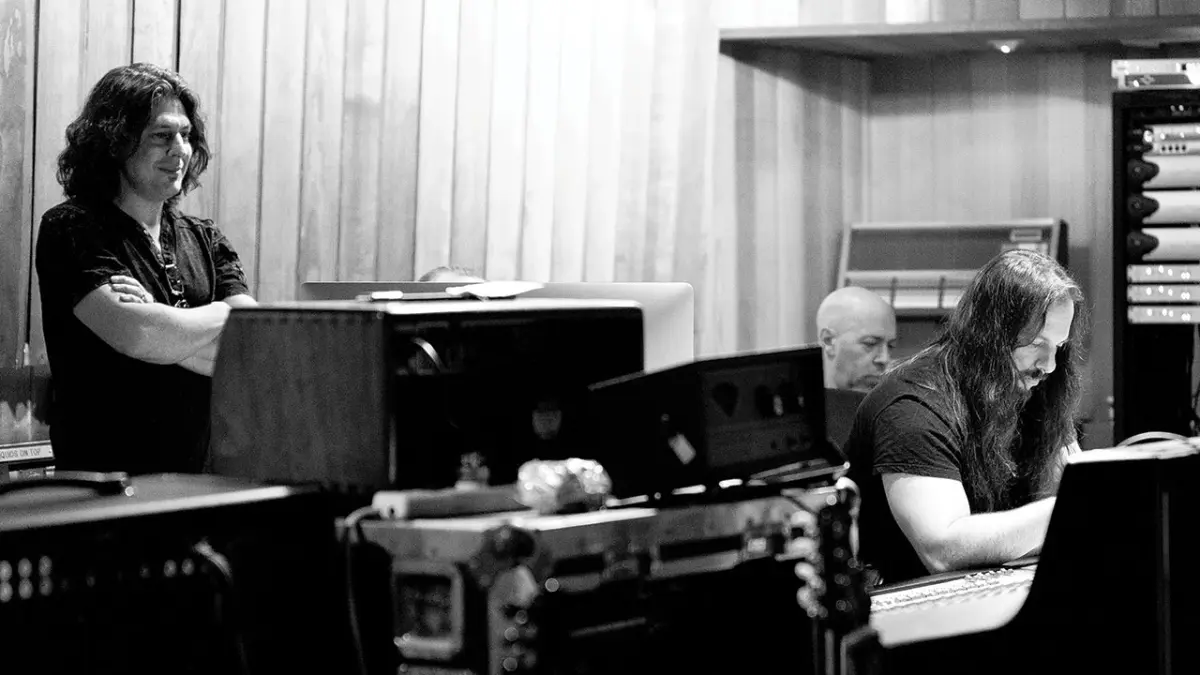
In early 2011, the band entered Cove City Sound Studios in Glen Cove, New York, to track their landmark album. Writing sessions occurred amid background legal negotiations regarding corporate entity restructuring and trademark separations stemming from Portnoy’s exit.
Despite these external pressures, Petrucci assumed sole responsibility as producer, working closely with Rudess to construct the album’s thematic framework before Mangini laid down his drum tracks based on pre-programmed compositions.
Release and Industry Validation
Released on September 13, 2011, A Dramatic Turn of Events debuted at No. 8 on the US Billboard 200 chart and hit the Top 10 in over fourteen countries. The lead single, "On the Backs of Angels," earned Dream Theater their first-ever Grammy nomination for Best Hard Rock/Metal Performance at the 54th Annual Grammy Awards, providing industry validation of their choice to press onward.
Supporting Context & Analytical Metrics
Shift in Studio Dynamics and Governance
For over two decades, Portnoy acted as Dream Theater’s primary executive officer, managing everything from studio scheduling to setlist variation and track sequencing. While highly efficient, this centralized leadership style often sidelined other members’ creative input.
PORTNOY ERA DYNAMIC (Pre-2010)       POST-2010 DYNAMIC (A Dramatic Turn of Events)
+-------------------------------+    +-------------------------------+
|  • Centralized direction      |    |  • Sole Producer: J. Petrucci |
|  • High-tempo studio sessions | vs |  • Collaborative arrangement  |
|  • Heavy metal emphasis       |    |  • Democratic lyric writing   |
|  • Single-author setlists     |    |  • Resurgence of bass solos   |
+-------------------------------+    +-------------------------------+
The post-Portnoy dynamic brought structural changes to the band’s workflow:
Democratic Lyric Writing: Bassist John Myung and vocalist James LaBrie took on expanded lyric-writing responsibilities.
Sonic Decoupling: Guitar and keyboard arrangements were written in a quieter studio environment without live drums present, allowing for intricate harmonic detail.
Rebalanced Musicality: The heavy, thrash-oriented metal elements that dominated 2000s albums like Train of Thought were rebalanced with classical progressive rock textures reminiscent of Images and Words (1992) and Awake (1994).
Key Performance Metrics for A Dramatic Turn of Events
Metric
Historical Value / Impact
Billboard 200 Debut
No. 8 (36,000 copies sold first week in the US)
Global Chart Position
Top 5 in Germany, Finland, Japan, Sweden, and Switzerland
Grammy Recognition
Best Hard Rock/Metal Performance Nomination ("On the Backs of Angels")
Track Count / Runtime
9 Tracks / 77 Minutes, 05 Seconds
Epic Length Composition
3 tracks exceeding 10 minutes ("Bridges in the Sky", "Outcry", "Breaking All Illusions")
Official Statements & Key Perspectives
James LaBrie on Cosmic Irony and Internal Healing
Looking back on the album’s production, vocalist James LaBrie spoke candidly about the underlying strain that had affected the band for over a decade, and how Portnoy’s exit unintentionally revitalized the group.
"We knew we were swimming into uncharted waters. The legal situation was definitely going on when we were in the studio, and that can be a distraction, but you’ve got to put everything in perspective. We knew it was going to come with the territory. We all realised it was going to be an exceptionally important album for us, and that there’d be scepticism. So I don’t think it was what most people would call a stressful period—it was just us accepting our situation and handling it with grace."
Addressing Portnoy’s original assertion that the group needed a fundamental break to regain vitality, LaBrie observed the profound irony in how events unfolded:
"Oh yes, it’s really ironic. I believe the universe has a way of orchestrating things to happen for a reason. Ultimately, I think the universe wants to give us back positive energy and vibes, and that’s exactly what’s happened here. A lot of people are saying you can really feel and see the spirit on stage every night. I think it’s been missing for quite some time, though we did a good job of camouflaging it."
LaBrie acknowledged that internal dynamics had been strained long before the split became public:
"I think it’s been a little challenging, off and on, for the past 12 years, maybe more. You just keep finding ways to keep things in check—or worse, you start to accept it. You think that maybe this is the only way that it can exist. It’s not until you’re flipped upside down, and somebody gives you a fresh perspective, you even see it in that light. I think that if anything, what’s happened to us in the last year has proved to be a good thing. The bottom line is that we really love what we’re doing, and this has only enhanced our appreciation of our lives."
+-----------------------------------------------------------------------------------+
|                        JAMES LABRIE ON THE BAND'S REBIRTH                         |
+-----------------------------------------------------------------------------------+
|  "It’s not until you’re flipped upside down, and somebody gives you a fresh       |
|  perspective, that you even see it in that light... this has only enhanced our    |
|  appreciation of our lives."                                                      |
+-----------------------------------------------------------------------------------+
Jordan Rudess on Compositional Space and the Rise of John Myung
Keyboardist Jordan Rudess highlighted how the absence of an overpowering presence in the studio opened up new creative space for the rest of the band.
"Even though Mike was very involved, it’s really about John Petrucci and I, with some help from the others, writing the music. The biggest change that happened is that we put even more energy into making sure that everything we wrote was as fantastic as we could make it. We knew things were going to be under a microscope."
Rudess noted that bassist John Myung experienced a notable creative resurgence during this period:
"Another thing is the freeing of John Myung’s spirit. He’s been more involved than he has been in a while. He’s writing some lyrics and he had a lot of riff ideas; he was very excited about going forward with the new situation. He really presented a lot of energy, whereas in past albums he was more in his quiet world doing his thing."
The structural environment of the studio writing sessions also shifted dramatically:
"The studio was a whole lot quieter as we didn’t have any drums in the room when we were writing! For me as a composer, having that space really helps. I mean, it’s kind of fun to write when there’s a drummer in the room. They can certainly add something. But I prefer to write in a peaceful place. There was an atmosphere of patience surrounding the writing of this album; we’d give each other the time and space. I think it was productive."
Acknowledging the inevitable fan divide, Rudess remained philosophical about the transition:
"Obviously we’ll have people who love Mike Portnoy, who won’t be able to accept the change; won’t be able to just listen to the music, and will probably still be bitter. I guess that’s just one of the things we’ll have to accept. That’s just real life. Mangini could be God’s gift to drumming and it wouldn’t matter. People will still miss Mike, which is understandable. I mean, with his personality he was such a big part of our situation, and yeah, I’m going to miss him too. But musically speaking, we’re all happy—the music lives on and I’m very pleased with how this new album turned out."
Future Outlook & Legacy
A Dramatic Turn of Events served as a foundational reset for Dream Theater, establishing a operational model that sustained the band for the next decade. The album demonstrated that the group’s identity was defined by its collective songwriting, intricate arrangements, and technical precision, rather than any single individual.
Key Outcomes of the 2011 Transition
Sustained Institutional Stability: The success of A Dramatic Turn of Events allowed Dream Theater to transition smoothly into the 2010s, launching world tours and delivering follow-up releases like Dream Theater (2013), The Astonishing (2016), and Distance Over Time (2019).
Grammy Recognition: The Grammy nomination for "On the Backs of Angels" earned the band long-overdue mainstream industry recognition, proving their commercial and critical viability post-split.
Creative Rebalancing: The album restored a sense of balance between heavy metal aggression and classical progressive elegance, establishing a musical template that defined Mike Mangini’s tenure with the band.
Ultimately, the period surrounding A Dramatic Turn of Events illustrates how crisis can spark creative renewal. By navigating high-stakes legal challenges, fan skepticism, and the loss of a key founding member, Dream Theater preserved their legacy while proving their resilience as leaders of the progressive metal genre.