Executive Overview
In an era dominated by micro-trends, ephemeral digital footprints, and cultural pastiche, true idiosyncrasy has become an endangered commodity. Contemporary music criticism is frequently over-saturated with hyperbole, applying descriptors like “genre-defying” or “epochal” to works that barely ripple the surface of modern consciousness. Yet, every so often, an artist emerges whose mere existence defies the rigid categorizations of the modern entertainment complex. Enter Baby Dee—a singular luminary, multi-instrumentalist, vocalist, and mythic storyteller whose creative output demands a recalibration of how we measure artistic longevity and emotional resonance.
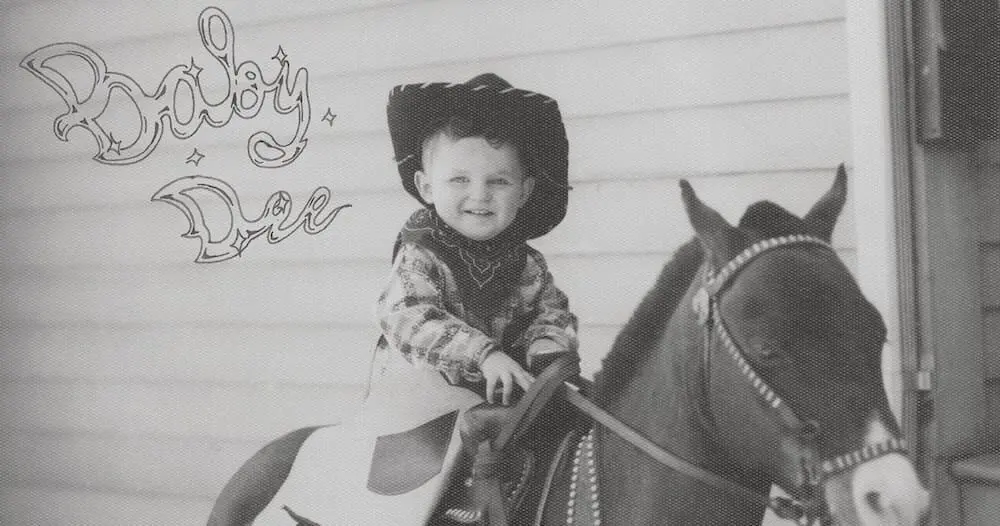
On September 25th, Tin Angel Records will release Child of Joy, Baby Dee’s first studio album in eleven years. For an artist who has spent the better part of two decades alternating between high-profile collaborations and voluntary seclusion in rural Holland, this long-awaited return is nothing short of a seismic cultural event. Comprising twelve tracks that recast and elevate material drawn from across her storied discography—stretching from her 2001 debut, Tiny Windows, to 2015’s I Am A Stick—Child of Joy is not merely a retrospective exercise. Instead, it represents a radical reinvention.
In place of the billowing pianos and stately harps that once defined these compositions, Dee has transposed the entire collection to the accordion. The result is a paradox: music that feels both preciously intimate and impossibly vast, possessing the contrapuntal complexity of Renaissance polyphony and the symphonic grandeur of Gustav Mahler. This executive overview establishes Child of Joy not only as a career-defining triumph for Baby Dee, but as a vital, haunting antidote to the sensory overload and emotional detachment of the twenty-first-century cultural landscape.
Detailed Chronology: The Lives and Epochs of Baby Dee
To understand the crushing emotional weight and virtuosic architecture of Child of Joy, one must first chart the labyrinthine trajectory of its creator. To say that Baby Dee has lived multiple lives is to understate the sheer scope of her earthly incarnations. Indeed, she has worn more professional and existential hats than the Dalai Lama, moving fluidly through worlds that most would consider mutually exclusive.
The Formative Years and Ecclesiastical Apprenticeships
Long before she was championed by luminaries such as Marc Almond, Bonnie “Prince” Billy, David Tibet, and Annie Lennox, Dee’s musical education was forged in the cavernous, resonant acoustics of houses of worship. As a young church organist, she did not merely perform sacred music; she inhabited it so deeply that she half-believed she was possessed by the ghost of Renaissance master Giovanni Pierluigi da Palestrina. This early immersion in counterpoint, sacred harmony, and liturgical drama left an indelible mark on her compositional DNA. Her melodies do not follow the predictable verse-chorus-verse structures of modern pop; rather, they unfurl with the organic, breath-based architecture of choral chants and cathedral improvisations.
The Interdisciplinary Wanderjahr
From the hallowed sanctity of the organ loft, Dee’s life branched out into a kaleidoscopic series of vocational adventures that read like a picaresque novel. She worked as a tree surgeon—a profession requiring both physical fortitude and an intimate, arboreal understanding of weight, height, and natural architecture—traits that would later manifest in the structural sturdiness of her songwriting.
From the canopy of trees, she descended into the carnivalesque underworld of freak-show performance, embracing the margins of society with characteristic grace and fearlessness. She famously roamed the streets as a bumblebee-themed street musician, transforming urban concrete into a whimsical theater of the absurd. These disparate identities—sacred organist, arboreal worker, carnival performer, and street busker—converged to form an artist whose empathy spans the entire spectrum of human experience, from the divine to the grotesque.
The Critical Ascendancy and Collaboration Epoch
The turn of the millennium marked Dee’s transition into the recorded music sphere. Her 2001 debut, Tiny Windows, introduced audiences to a voice that combined fragile vulnerability with operatic power. Throughout the 2000s and 2010s, albums like Safe Inside The Day (2008) cemented her reputation as a critical darling and a peerless songwriter’s songwriter. Her collaborations with Current 93, Antony and the Johnsons, and Will Oldham placed her at the vanguard of the burgeoning freak-folk and avant-garde cabaret movements, even as her work persistently resisted easy genre pigeonholing.
The Dutch Exile and the Genesis of Child of Joy
In recent years, Dee retreated from the relentless churn of the international touring circuit, settling into rural Holland. There, she assumed the persona of a respectable, retired citizen—a quiet domesticity that masked an undimmed creative fire. Yet, true creative genius cannot be permanently contained by rural tranquility. Tin Angel Records, a long-term collaborator, managed to coax Dee out of her Dutch sanctuary to curate and record Child of Joy. The eleven-year hiatus between albums dissolved the moment she picked up her accordion, resulting in a masterwork that distills decades of lived experience into forty-some minutes of breathtaking auditory art.
Supporting Context & Metrics: The Architecture of Child of Joy
Child of Joy stands as a monumental achievement in acoustic arrangement and thematic depth. Analyzing the mechanics of the album reveals why these reimagined songs resonate with such staggering force.
The Accordion as a Symphonic Engine
Historically, the accordion has often been relegated to the margins of popular music—associated either with jovial sea shanties, French café ambiance, or localized folk traditions. On Child of Joy, however, Baby Dee weaponizes the instrument’s unique mechanical properties to achieve orchestral breadth.
Because the accordion relies on the physical pumping of bellows to force air across internal reeds, every note is tethered directly to human breath and muscle movement. Dee exploits this limitation to create infinite expressive possibilities. Her accordion lines do not merely accompany her vocals; they function as a consort of viols in Renaissance polyphony. The droning, contrapuntal, harmonically rich, and deeply romantic complexity of her playing evokes the quote from her 2008 masterpiece Safe Inside The Day: "a gift that’s bigger than the box it came in."
Track-by-Track Thematic Analysis
- "My Heart’s Come Home To Me": The album opens with a cyclical, wheezing motif that slowly unfurls from a deceptive three-note refrain into an elaborate, sweeping ode to yearning. The symphonic grandeur matches the emotional scale of Gustav Mahler. When Dee sings, "To make men seem as good as gods / that God himself smiled down to say ‘My heart’s come home to me’," the lyrics possess an ancient, Homeric gravity. It is as if the words have been ventriloquized through countless generations of human mouths before settling into hers.
- "Half A Chance": An aching, propulsive composition driven by rapidly arpeggiated accordion figures and lusty backing vocals that function like the barbershop quartet of the listener’s heart. Dee’s query—"How many treetops in the wind / would rustle every leaf with hope / if I could hear you laughing there?"—captures the agonizing intersection of memory and absence.
- "Lilacs" & "A Compass Of The Light": These tracks pivot toward our fundamental human instincts for connection, serving as tender cartographies of interpersonal devotion. They acknowledge that love is not a static state of bliss, but an ongoing, courageous navigation through emotional darkness.
- "So Bad" & "When I Get Home": These songs telescope the listener directly into the bruised territory of traumatic childhood memories. Dee confronts her past with unblinking candor, rendering scenes of domestic tension—such as an imagined confrontation between her mother and Jesus in a confessional box—with harrowing psychological realism.
- "The Robin’s Tiny Throat": Hovering over the speakers like a benevolent ghost, this track rattles its existential chains with an unforgettable inquiry: "I woke up this morning and asked the sky; ‘How can you bear such emptiness?’" It is a moment of pure, unadulterated metaphysical despair transformed into transcendent beauty.
Official Statements and Industry Perspectives
The announcement of Child of Joy has sent ripples of anticipation across the international independent music community. Long-term champions and label executives have offered profound insights into the significance of Dee’s return.
The Label and Collaborator Perspective
Tin Angel Records, which has nurtured a symbiotic relationship with Dee over numerous releases, views Child of Joy as the definitive statement of her artistic philosophy. In a joint promotional statement accompanying the album’s rollout, label representatives emphasized the organic nature of the recording process:
"This project was never about chasing commercial viability or pandering to contemporary algorithmic trends. Baby Dee works on a completely different temporal plane. When she presented these twelve transformed pieces to us, performed entirely on the accordion, we realized we were witnessing an artist stripping away all non-essentials to reveal the pure, beating heart of her catalog. It is a masterclass in economy and emotional intensity."
The Role of the Ensemble
While Baby Dee remains the undeniable focal point of the enterprise, critics and industry observers have been quick to praise the supporting ensemble. Accompanying Dee is no small feat; her sense of rhythm is intensely emotive, operating according to an internal metronome synchronized to the galloping rhythm of her own heart rather than a rigid click track.
The backing musicians on Child of Joy display an astonishing degree of telepathic empathy. They do not merely keep time; they breathe with the bellows, matching the dynamic swells and sudden recessions of Dee’s accordion playing. This collaborative synchronicity is precisely what elevates Child of Joy from an intellectually admirable experiment into a deeply lovable, visceral experience.
Future Outlook: The Legacy of a Living Myth
As the release date of September 25th approaches, the cultural landscape braces for impact. In a world saturated with hyper-processed audio, auto-tuned perfection, and content designed exclusively for fleeting social media consumption, Baby Dee stands as a monumental monolith of authenticity.
The Antidote to Modern Fatigue
Child of Joy arrives precisely when society needs it most. It is an unapologetic, slow-burning antidote to modern sensory fatigue. By taking songs written over a fifteen-year period and transmuting them through the breath-driven machinery of the accordion, Dee has proven that true art does not age—it merely deepens in hue, much like aged wine or deeply weathered wood.
Long-Term Cultural Impact
Looking forward, Child of Joy is poised to cement Baby Dee’s status not merely as a cult favorite, but as one of the essential American song-poets of the twenty-first century. Her ability to chronicle everyday miracles in alphabets of light ensures that her work will outlive the fleeting trends of the current musical epoch.
She has the eye of a poet and the hands of a carpenter—a rare synthesis of visionary imagination and rigorous structural craftsmanship. Whether she is residing in her quiet Dutch sanctuary or conjuring cathedral-sized grief out of a humble accordion box, Baby Dee remains that rarest of human phenomena: an artist who genuinely contains multitudes. And while internet-addicted arts professionals may overuse that phrase until it loses all meaning, when applied to Baby Dee, it is not hyperbole—it is simply the undeniable truth.
Album Details:
- Child of Joy
- Release Date: September 25th
- Label: Tin Angel Records
- Format: Vinyl, CD, Digital Streaming Platforms