Executive Overview
For devoted followers of the British underground folk scene, the evolution of Brighton-based trio Sairie has been a masterclass in atmospheric patience. When the group first emerged in 2019 with a chilling, spectral interpretation of the traditional Scottish ballad The Gairdner, they hit the ground running. They established a sonic blueprint that immediately recalled a lo-fi Pentangle filtered through an unmistakable layer of modern hauntological strangeness.
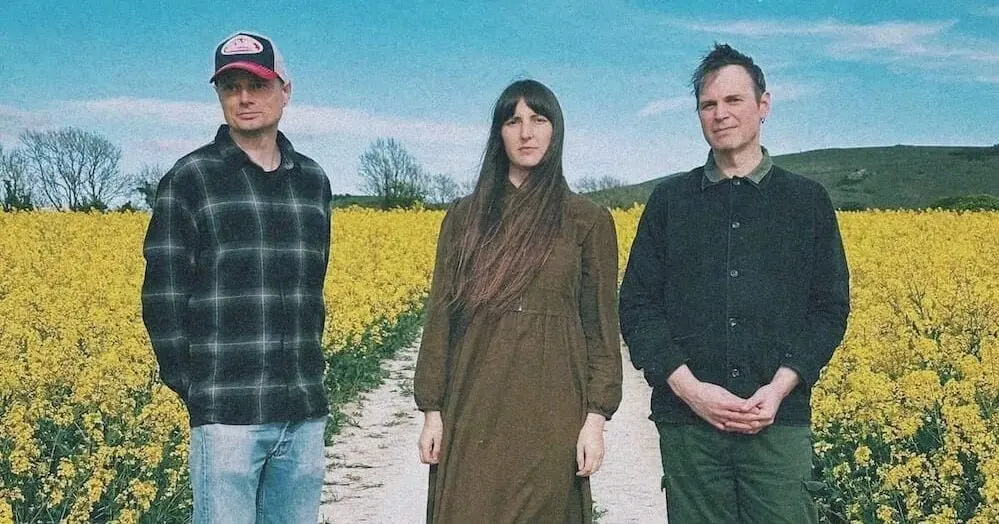
Over the seven years bridging that initial release and their current full-length arrival, the ensemble—comprising vocalists and instrumentalists Emma Morton and Jon Griffin, alongside bassist Andy Thomas—cultivated an air of whispered mystery. They doled out a sparse yet striking collection of EPs and standalone singles. Highlights along this winding path included the eerie, winter-bound folk offering The Cherry Tree and a hypnotic, English-language homage to Françoise Hardy’s 1960s classic Tous Les Garçons et Les Filles. These releases felt structurally akin to the fragile, mid-60s home demos of Vashti Bunyan.
Anticipation among early adopters reached a fever pitch over the years, leaving fans eager to see how the band would expand their micro-tonal palette across a cohesive LP. Now, with the official arrival of Beneath the Spreading Tree via Hollow Hill Records, those prolonged expectations have not only been met, but thoroughly subverted and rewarded.
The album is a starkly beautiful, richly rewarding collection that captures the chill of November mists and January frosts. It bridges traditional British folk psychogeography with subtle Appalachian undertones, dark baroque arrangements, and lysergic soundscapes. This definitive review explores the anatomy of Sairie’s landmark debut, charting their journey from promising balladeers to fully realized architects of modern gothic folk.
Detailed Chronology: From 2019’s The Gairdner to Beneath the Spreading Tree
To fully appreciate the artistic triumph of Beneath the Spreading Tree, one must trace the deliberate, unhurried trajectory Sairie has maintained since their inception.
The Genesis: 2019 and the Traditional Roots
When Sairie introduced themselves to the contemporary folk landscape in 2019, they did so by looking backward. Their rendition of The Gairdner was an immediate statement of intent. Rather than offering a sterile, museum-piece preservation of traditional British songcraft, they injected it with an uncanny, restless spirit. They operated with the intricate acoustic interplay of classic folk-revival icons like Pentangle and Trees, yet underpinned their arrangements with a lo-fi, haunted aesthetic that resonated with contemporary hauntology—the artistic exploration of lost futures and lingering cultural memories.
The Interim Years: EPs, Singles, and Growing Mystique
Rather than rushing into the grueling album-cycle machine, Sairie spent the intervening half-decade refining their craft in micro-doses. They built a dedicated following through carefully curated digital and physical releases:
- The Cherry Tree: A winter-centric traditional exploration that showcased the group’s uncanny ability to evoke seasonal dread and seasonal beauty in equal measure.
- Tous Les Garçons et Les Filles: A bold translation and reimagining of the Françoise Hardy standard. This track cemented Emma Morton’s facility with delicate, cut-glass vocal phrasing and highlighted the band’s knack for evoking the timeless intimacy of 1960s bedroom pop and early folk-vault recordings.
Full-Circle Realization: September 2026
With the release of Beneath the Spreading Tree on September 12th, 2026, the band symbolically and sonically comes full circle. Notably, the album features a brand-new recording of The Gairdner. This updated version boasts a crisper, cleaner mix that allows the intricate interplay of guitars and vocals to breathe, yet it fiercely preserves the original’s unsettling, atmospheric core. It serves as a bridge connecting their earliest impulses to their current compositional maturity.
Supporting Context & Metrics: The Sound, The Players, and The Tradition
Beneath the Spreading Tree succeeds because Sairie has mastered the specific brand of folk music that activates primal, physiological responses—the kind of record that literally sends shivers down your spine during cold-weather listening.
Compositional Techniques and Vocal Alchemy
The structural brilliance of the album is laid bare on its very first track, the aptly titled Song For Winter. Across this brief, atmospheric opener, Sairie establishes a vocal technique that defines much of the record: lead vocals sung in unison by Emma Morton and Jon Griffin.
When Morton and Griffin blend their voices—a recurring motif throughout the tracklist—the effect is profound. The songs appear haunted by their own flickering shadows. It is a deceptively simple stylistic choice, yet it yields monumental emotional dividends, creating a dual-bodied narrator observing events from both inside and outside the narrative.
Arrangement and Instrumentation: Expanding the Palette
Beyond their vocal interplay, Sairie deploys a sophisticated array of instrumentation across the album’s runtime:
- Baroque and Psychedelic Textures: On Harder Than It Seemed, Morton delivers a breathtaking lead vocal performance while Griffin’s acoustic guitar traces searching, intricate patterns in the background. Backed by Andy Thomas’s wiry, propulsive basslines, the track evolves from a delicate baroque melody into a heady, intoxicating psychedelic brew.
- Textural Contrast and Volte-Face: The tender, autumnal Three Knots finds Griffin and Morton trading verses in a conversational folk style, only for the track to undergo a mid-way volte-face, launching into wild, uncharted instrumental waters.
- Chamber-Folk Expansions: The lysergic, droning highlight The Breeze on the Meadow brings in guest luminaries Maria Marzaioli on violin and Alice Eldridge on cello. The resulting string arrangements evoke the pastoral, avant-garde chamber-folk of Philadelphia psych-folkers Espers, standing shoulder-to-shoulder with British touchstones like Pentangle and Trees.
Transatlantic Influences and British Psychogeography
While the album’s overarching aesthetic is deeply rooted in British psychogeography—the study of the precise geographical environment’s effects on the emotions and behavior of individuals—subtle American threads run through the fabric of the work.
Most notably, Morton’s utilization of the autoharp introduces an unmistakable Appalachian hint to several tracks, marrying the modal folk traditions of the British Isles with early American mountain music. Yet, the physical and emotional landscapes described in the lyrics remain stubbornly British. They describe locations that feel simultaneously mundane and otherworldly.
Tracks like You Can’t Go Back—a Griffin-led exploration of love and yearning—adopt a contemporary indie-folk slant while retaining a dark, mysterious undercurrent. When Morton’s verse cuts through the mix, it ignites a heightened sense of dramatic, unresolved tension that flirts with the gothic. Similarly, How Many juxtaposes a sweetly sung melody against a dark, humming harmonium drone, whereas The Green Light foregrounds Morton’s crystalline vocals over an arrangement defying easy categorization, weaving together noirish alt-folk, 1960s psychedelia, and sweeping, anthemic indie-pop.
The Epic Centerpiece: The Title Track
The ultimate proof of Sairie’s artistic maturation arrives in the form of the album’s nine-minute title track. Here, the band truly spreads its wings. Operating as a ghostly, inevitable narrative, the song unfolds against high-wire swathes of strings and sustained acoustic tension. It stands as definitive proof that Sairie understands the architecture of immersive songwriting—constructing pieces that encourage the listener to bundle up against both physical cold and the invisible threats lingering in seemingly innocent, pastoral landscapes.
Official Statements & Production Notes
The rollout of Beneath the Spreading Tree via Hollow Hill Records reflects an independent, fiercely dedicated approach to modern folk music distribution. While major-label mechanisms often sanitize and compress acoustic acts for streaming optimization, Sairie and their partners have ensured that the physical editions—spanning digital download, compact disc, and vinyl LP formats—prioritize dynamic range and tactile engagement.
Early critical reception from prominent underground curators highlights the album’s unique positioning:
"Sairie have perfected the specific brand of folk music that sends shivers down your spine… This long-awaited, ageless-sounding debut is starkly beautiful and richly rewarding."
Retail partners such as Norman Records (noting incoming restocks due to high initial demand) and Brighton’s independent institution Resident Music have championed the release as a vital local and national triumph. The accompanying visualizers and promotional assets—such as the cinematic YouTube presentation for The Green Light—further underscore a band deeply invested in world-building and visual aesthetics that match their audio output.
Future Outlook
With Beneath the Spreading Tree, Sairie has graduated from being one of the British underground’s best-kept secrets to an essential pillar of contemporary modern-traditional folk. The central question facing the trio moving forward is not whether they can sustain this level of quality, but rather how far they can stretch the boundaries of their self-imposed stylistic parameters.
Having successfully mapped out the eerie intersection between traditional British balladry, Appalachian autoharp textures, and hauntological psych-folk, Sairie has laid down a formidable benchmark. As live dates and festival appearances roll out in support of the LP, audiences will undoubtedly look forward to seeing how these intricate studio arrangements—featuring collaborative contributions from Marzaioli, Eldridge, and Thomas—translate to the stage.
For now, Beneath the Spreading Tree stands as one of the most compelling, ageless-sounding debut albums of the decade. It is a mandatory acquisition for anyone who finds beauty in the shadows, comfort in the frost, and deep historical resonance in the quiet corners of the British landscape.
Album Information & Purchasing Guide
- Artist: Sairie
- Album Beneath the Spreading Tree
- Release Date: September 12th, 2026
- Label: Hollow Hill Records
- Formats Available: Digital Download (DL), Compact Disc (CD), Vinyl LP
Order Links: