Executive Overview
In an era dominated by maximalist production, hyper-compressed audio dynamics, and the relentless pursuit of viral attention, true artistic impact often emerges from the opposite pole: restraint, stillness, and profound intentionality. British saxophonist Andy Sheppard has spent decades embodying this philosophy. Quietly defying the boundaries that confine contemporary jazz, Sheppard has cultivated a distinct, globally resonant voice that bridges traditional acoustic jazz, folk idioms, world music lineages, and contemporary European chamber composition.
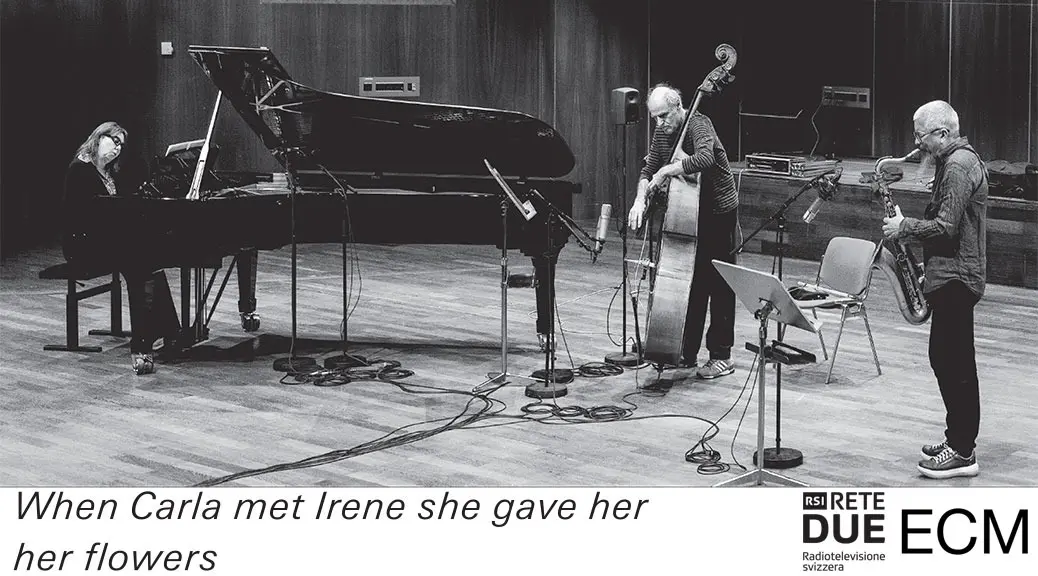
His latest release for the prestigious ECM Records imprint, Salt Catchers, stands as a masterclass in distilled musical storytelling. Recorded in the acoustic sanctuary of Lugano in March 2025 under the legendary production guidance of Manfred Eicher, the album finds Sheppard uniting with two longtime peers with whom he has never previously recorded as a dedicated trio: Italian pianist Rita Marcotulli and French bassist Michel Benita.
Stripping away the percussion to embrace a drummerless, chamber-jazz configuration, Salt Catchers captures a conversation among three master improvisers operating at the height of their powers. Infused with the bittersweet Portuguese concept of saudade—a direct byproduct of Sheppard’s relocation to the Lisbon area—and visually and conceptually inspired by the salt works of Aveiro and the humanist photography of Sebastião Salgado, the album is a triumph of textural space. This comprehensive review examines the biographical foundations, artistic motivations, collaborative dynamics, and overarching cultural significance of one of the most compelling jazz releases of the decade.
Detailed Chronology: From Bristol to ECM
To fully understand the sublime maturity of Salt Catchers, one must trace the evolutionary arc of Andy Sheppard’s career—a journey defined by an innate refusal to be pigeonholed.
Formative Years and the Discovery of the Horn
Sheppard’s entry into jazz was not the result of a traditional conservatory upbringing, but rather a late-adolescent epiphany. At nineteen, after first encountering the transcendent recordings of John Coltrane, Sheppard picked up the saxophone. The impact was immediate and transformative. He immersed himself in the instrument, developing an approach that prioritized breath, emotional resonance, and lyrical phrasing over mechanical flash.
During the late 1970s and early 1980s, Sheppard became a vital fixture of the vibrant UK regional jazz scene, notably cutting his teeth with Bristol’s forward-thinking collective, Sphere. As he integrated himself into the broader European jazz circuit, his reputation for a distinct, singing saxophone tone spread rapidly.
High-Profile Collaborations and Global Horizons
Throughout the 1980s and 1990s, Sheppard’s unique musical signature drew the attention of jazz royalty. He stepped onto international stages alongside visionary avant-garde orchestrator Gil Evans and towering composer-arranger George Russell. These experiences expanded Sheppard’s harmonic and structural palette, teaching him how to navigate vast sonic spaces without losing his intimate lyricism.
Simultaneously, Sheppard maintained a deep-seated love for song-based forms, tracing a direct line from the British folk tradition to collaborations with icons like singer-songwriter John Martyn. Yet, perhaps the most decisive chapter in Sheppard’s stylistic maturation came through his enduring partnership with pianist Carla Bley and bassist Steve Swallow. Performing extensively as a chordless, drummerless trio (documented on acclaimed ECM albums such as Trios and Andando el Tiempo), Sheppard learned the unique responsibilities inherent in sparse arrangements. In this configuration, the absence of a driving drum kit shifts the burden of momentum entirely onto collective listening, micro-timing, and harmonic implied motion—lessons that directly paved the way for Salt Catchers.
The European Sanctuary and Salt Catchers
In recent years, Sheppard’s relocation to the Lisbon area introduced a new emotional vocabulary into his work. The Portuguese concept of saudade—a deep, melancholic yearning for an absent something or someone that one loves, infused with the haunting acceptance that the object of longing might never return—began to color his tonal choices.
This geographical and emotional transition culminated in March 2025 in Lugano, Switzerland. Gathering in the pristine acoustic environment favored by ECM Records, Sheppard, Marcotulli, and Benita convened to record what would become Salt Catchers. Produced by Manfred Eicher, whose curatorial ear has defined modern European jazz for over half a century, the sessions resulted in a breathtakingly intimate document that synthesizes Sheppard’s rich history into a single, cohesive statement.
Supporting Context & Metrics: The Anatomy of a Trio
To appreciate the sonic architecture of Salt Catchers, one must analyze the specific structural choices made by Sheppard and his collaborators, as well as the conceptual inspirations behind the repertoire.
The Drummerless Chamber-Jazz Paradigm
One of the most consequential decisions governing Salt Catchers is the deliberate abandonment of a percussionist. While many modern jazz ensembles rely on a drummer to anchor time and drive intensity, Sheppard deliberately sought a more transparent, piano-based, chamber-music aesthetic.

- Sonic Breathing Room: Without a drum kit dictating a rigid rhythmic grid, the music gains an organic elasticity. The interplay between Sheppard’s tenor and soprano saxophones, Marcotulli’s resonant piano, and Benita’s woody, subterranean double bass allows notes to decay naturally into silence.
- Shared Responsibility: Drawing directly from his years with the Bley-Swallow trio, Sheppard utilizes the drummerless format to distribute the rhythmic pulse across all three instruments. Benita’s bass provides an agile, foundational heartbeat, while Marcotulli’s left-hand voicings and rhythmic accents weave seamlessly beneath Sheppard’s breathy lines.
Conceptual and Visual Inspirations
The album’s title and underlying thematic framework stem from a specific geographic and artistic encounter:
- The Salt Pans of Aveiro: Sheppard’s visit to the traditional salt pans near Aveiro, Portugal, left a profound visual mark. Observing the workers harvesting salt through patient, elemental labor served as a metaphor for the musical process itself—a distillation of raw elements into something pure and enduring.
- Sebastião Salgado: The track "Salgado" serves as a direct homage to the renowned Brazilian social documentary photographer. Salgado’s stark, beautifully composed monochrome imagery mirrors the sonic aesthetic of Salt Catchers: unadorned, deeply human, and acutely focused on dignity and labor.
- Personal Dedications: The album closes with "Irene," a tender, elegiac piece dedicated to Sheppard’s mother, performed on the soprano saxophone. The track encapsulates the emotional core of the recording, channeling grief and reverence into pure melody.
Repertoire Breakdown
| Track Title | Primary Instrument / Role | Stylistic Influence / Context |
|---|---|---|
| "Elevation" | Tenor Saxophone / Piano / Bass | Establishes spatial awareness; Marcotulli’s open chords frame Sheppard’s long-form phrasing. |
| "Lawns" | Tenor Saxophone | Composed by Carla Bley; a poignant bridge connecting Sheppard’s past trio work to his present iteration. |
| "Salt Catchers" | Ensemble Interaction | Introduces heightened rhythmic momentum, directly inspired by the salt pans of Aveiro. |
| "Encantos" | Chamber-Jazz Triad | Highlights deep listening and telepathic harmonic navigation between the three veterans. |
| "Draw You in Stars" | Lyricism & Space | Showcases the melancholic, folk-inflected beauty central to Sheppard’s current European aesthetic. |
| "This Too – Three Hills" | Spacious Ensemble | Demonstrates structural restraint and patient tempo unfolding. |
| "Salgado" | Dynamic Groove | Direct homage to the humanist photographer Sebastião Salgado. |
| "Irene" | Soprano Saxophone | Dedicated to Sheppard’s late mother; a tender, emotionally charged conclusion. |
Official Statements and Artistic Philosophy
Reflecting on the philosophy driving Salt Catchers, Andy Sheppard and his collaborators have consistently emphasized the primacy of emotional authenticity over technical display. In various interviews surrounding the album’s rollout, Sheppard has articulated his desire to strip away unnecessary sonic clutter.
"British jazz—and European jazz more broadly—has never needed to shout to be heard," Sheppard notes when discussing his aesthetic evolution. "When you remove the safety nets of excessive instrumentation and high-volume amplification, you are left with the raw truth of what you are playing and how deeply you are listening to the people in the room with you."
Producer Manfred Eicher, whose artistic vision has long championed the intersection of silence and sound (often encapsulated by his famous maxim, "The most important music is the silence between the notes"), found an ideal partner in Sheppard for this project. Eicher’s production on Salt Catchers avoids any artificial over-polishing, allowing the natural resonance of the Lugano studio to act as a fourth member of the ensemble.
Pianist Rita Marcotulli, celebrated for her deeply cinematic touch and ability to blend Mediterranean folk traditions with modern harmonic sophistication, has highlighted the telepathic nature of the trio sessions:
"Playing with Andy and Michel feels less like performing pre-composed arrangements and more like entering a shared room where the furniture is already arranged just the way you like it. There is an immediate trust that allows us to explore extreme stillness without ever losing the thread of the narrative."
Michel Benita echoes this sentiment, pointing to the unique freedom afforded by the absence of percussion:
"Without a drummer, the bass has to occupy a very specific, fluid space. It isn’t just about walking a traditional time; it’s about sketching harmony and driving the pulse simultaneously, leaving enough air for Andy’s saxophone to float effortlessly above."
Future Outlook & Critical Legacy
As Salt Catchers circulates among critics, jazz aficionados, and contemporary music enthusiasts worldwide, its long-term impact on the contemporary European jazz landscape is becoming increasingly clear.
Redefining Maturity in Modern Jazz
In an industry that often youth-obsessively chases novelty and high-velocity technical exhibitionism, Salt Catchers serves as a vital corrective. It demonstrates that artistic growth continues deep into maturity, with life experience, geographical displacement, and emotional introspection yielding richer, more distilled artistic expressions. Sheppard, Marcotulli, and Benita—all seasoned veterans of the international scene—demonstrate that technical mastery is most powerful when placed in the service of emotional resonance and spatial economy.
Live Performance and Touring Prospects
Following the critical acclaim of the album, plans are underway for selective international appearances throughout the upcoming concert season. Promoters across Europe and beyond are eager to present the trio in acoustically pristine venues—ranging from specialized jazz clubs to high-end chamber concert halls—where the nuance, breath, and fragile beauty of Salt Catchers can be fully realized in a live environment. Given the telepathic chemistry displayed on the ECM recording, these upcoming performances promise to be among the most anticipated live jazz events of the year.
A Definitive Addition to the ECM Canon
Ultimately, Salt Catchers secures Andy Sheppard’s legacy not merely as a distinguished British saxophonist, but as a truly global artist whose musical language transcends borders. By wedding the lyrical sensitivity of British folk traditions with the sophisticated harmonic architecture of European chamber jazz and the profound emotional depth of Portuguese saudade, Sheppard has crafted a timeless work. It is an album that demands to be listened to in its entirety—preferably in a quiet room, with the volume high, as the notes rise, breathe, and gently dissolve into the silence from which they came.