Executive Overview
In a dramatic escalation of one of the most high-profile legal battles of the decade, Prince Harry and six other prominent public figures have been ordered to pay up to £34.5 million in legal costs to Associated Newspapers Limited (ANL), the publisher of the Daily Mail. The exceptional High Court ruling follows the dismissal of the claimants’ high-stakes privacy lawsuit, which alleged widespread unlawful information-gathering by the publisher’s titles—allegations that ANL consistently and vehemently denied.
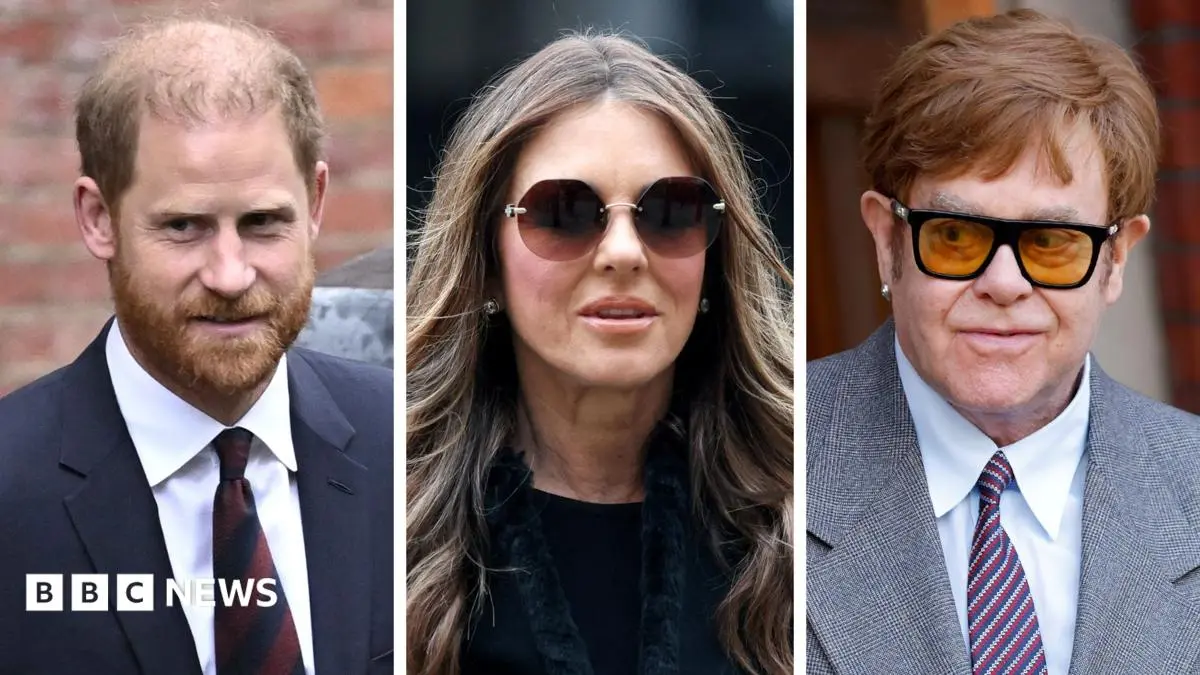
Mr Justice Nicklin handed down the extraordinary costs order, ruling that the claimants must pay an initial, staggering sum of £9.54 million by Friday of next week. The judgment represents a crushing financial blow to the group of high-profile litigants, which includes pop icon Sir Elton John, his husband David Furnish, actress Elizabeth Hurley, actress Sadie Frost, former Liberal Democrat deputy leader Sir Simon Hughes, and racial justice campaigner Baroness Doreen Lawrence.
While the claimants had previously secured insurance policies designed to cover up to £16.2 million of ANL’s legal expenses in the event of a defeat, the publisher has stated that defending the action ultimately cost upwards of £34.5 million. Consequently, the litigants face the daunting prospect of covering a devastating £18 million shortfall out of pocket.
Mr Justice Nicklin delivered a scathing critique of the claimants’ legal conduct during the proceedings, specifically highlighting their refusal to voluntarily withdraw severe allegations of criminality and grave impropriety when their evidentiary basis waned. Although the judge acknowledged that the £34.5 million figure requested by ANL appeared “excessive on its face,” he declined to impose a hard ceiling on recoverable costs, ruling instead that ANL’s expenses should be assessed on a highly favorable indemnity basis.
The Duke of Sussex and his co-claimants have until October 2 to determine whether they will launch an appeal against both the substantive dismissal of their claims and the subsequent costs judgment. Meanwhile, the ruling has reignited intense public debate over the financial accessibility of the British justice system, the proportionality of modern litigation costs, and the ongoing, deeply personal war between high-profile figures and the British tabloid press.
Detailed Chronology and Legal Proceedings
The Genesis of the Lawsuit
The legal saga began when Prince Harry, Sir Elton John, Baroness Lawrence, and several other public figures banded together to launch a sweeping legal assault against Associated Newspapers Limited. The claimants accused journalists, editors, and executives associated with the Daily Mail and the Mail on Sunday of orchestrating and executing decades of unlawful information-gathering activities.
These grave accusations included private investigators hacking voicemails, intercepting landline communications, obtaining confidential financial and medical records through deception (known as "blagging"), and commissioning clandestine surveillance. The claimants argued that these illicit tactics caused profound psychological distress, reputational damage, and an egregious violation of their private lives.
The Trial and the July 7 Dismissal
The courtroom drama reached a crescendo earlier this year when dozens of witnesses took the stand during a grueling trial at the High Court. Notably, Prince Harry flew in from his home in California to participate in person, drawing an international media circus. Scores of current and former ANL journalists, editors, and executives also gave evidence under oath, steadfastly denying any involvement in systemic illegal activity.
On July 7, the legal tide turned definitively against the claimants. Mr Justice Nicklin dismissed the claims of unlawful information-gathering in their entirety, finding that the claimants had failed to establish a sufficient evidentiary basis to support their expansive allegations within the statutory limitation periods and legal frameworks governing the case.
The Costs Battle and the Exceptional Order
Following the dismissal, ANL petitioned the court for its legal expenses to be reimbursed. Under standard English civil litigation conventions, the losing party is typically required to pay the "reasonable" legal costs of the winning party, though these costs are usually capped and agreed upon prior to trial to prevent financial ruin.
In this instance, however, ANL revealed that its total defense bill had ballooned to a staggering £34.5 million—far exceeding the initial agreed cost budget cap of £16.2 million. The publisher initially requested an interim payment of over £9.9 million to cover immediate outlays while detailed assessments take place.
Mr Justice Nicklin acceded to ANL’s requests in large part, issuing an exceptional order that removed the standard budgetary constraints. He ruled that ANL’s costs would be assessed on an indemnity basis, a mechanism that significantly tilts the scale in favor of the recovering party by removing the burden of proving that every single expense was strictly proportional. The judge ordered the claimants to pay an initial £9.54 million by the end of the following week.
Crucially, the judge justified this departure from normal judicial practice by pointing directly to the claimants’ litigation conduct. He noted that it was "striking" that "not a single allegation of serious wrongdoing was voluntarily withdrawn" by the group as the trial progressed and evidence unfolded.
"Serious allegations of criminality or grave impropriety cannot properly be left hanging over individuals in that way," Mr Justice Nicklin remarked in his judgment. "If a party no longer advances such an allegation, or no longer has a proper evidential basis for advancing it, the allegation should be withdrawn clearly and in terms. The claimants’ failure to do so was not ordinary forensic judgment… It was unreasonable to a high degree."
Supporting Context and Financial Metrics
Breaking Down the Numbers
The financial metrics underpinning this judgment illustrate the immense economic stakes involved in modern media litigation:
- Total Claimants: 7 high-profile figures (Prince Harry, Sir Elton John, David Furnish, Elizabeth Hurley, Sadie Frost, Sir Simon Hughes, and Baroness Doreen Lawrence).
- Initial Payment Due: £9.54 million, payable by Friday of next week.
- Maximum Potential Exposure: Up to £34.5 million, the total sum claimed by ANL for its defense.
- Insurance Coverage Cap: £16.2 million, the maximum payout provided by the claimants’ existing legal expense insurance policies.
- Potential Out-of-Pocket Deficit: Approximately £18.3 million, which the claimants may be forced to shoulder collectively if ANL successfully recovers its total declared costs.
The Judicial Tightrope: Scrutiny vs. Discretion
While Mr Justice Nicklin ruled heavily in favor of ANL regarding the indemnity basis of the cost recovery and the removal of standard caps, he did not give the publisher a completely uncritical blank check. The judge openly questioned the sheer scale of the defense bill.
"I regard a claim for costs in excess of £34 million as, on its face, excessive and as giving rise to real concerns as to whether all of the costs now claimed by Associated were reasonably incurred and are reasonable in amount," the judge stated.
However, he explained that attempting to impose an arbitrary judicial ceiling on those costs at this juncture would "be too broad-brushed, would risk unfairness, and would be vulnerable to the charge that it was arbitrary."
Legal experts suggest this caveat leaves the door slightly ajar for future challenges. Colin Campbell, a former specialist costs judge now affiliated with the law firm Kain Knight, offered a nuanced analysis of the ruling:
"The order is a significant win for Associated Newspapers. It means the publisher will no longer be constrained by the costs budget previously approved by Mr Justice Nicklin… Notably, [it] came despite the judge expressly finding that none of the claimants had been dishonest in their evidence.
However, this is far from game, set and match for Associated Newspapers. The judge was scathing about their projected £34.5m costs bill, branding it exceptionally high and excessive and describing it as a matter of real concern. That criticism could prove highly significant when the publisher ultimately seeks to recover its costs."
Official Statements and Reactions
Associated Newspapers Limited
In the wake of the High Court’s ruling, Associated Newspapers released a triumphant and uncompromising statement, framing the judgment as a vindication of its journalists and an indictment of its high-profile adversaries.
"This ruling is a devastating critique of an attempt to destroy a newspaper and the reputations of its journalists, editors, and executives," the publisher declared. "For years, these claimants sought to cast aspersions on the integrity of our newsrooms through sweeping and unfounded allegations. The court has recognized not only the baseless nature of these claims but also the wholly unreasonable manner in which they were pursued."
The Claimants and Their Legal Representatives
Reaction from the losing parties was swift, marked by deep disappointment and a sense of institutional grievance.
Sir Simon Hughes, the former Liberal Democrat deputy leader and one of the seven co-claimants, spoke directly to the BBC following the judgment.
"I am naturally disappointed by the judgment," Sir Simon said. "I am now taking the time necessary to consider both the substantive and the costs judgment and whether to pursue appeals against decisions in either judgment or both."
This sentiment echoed a joint statement issued previously by Prince Harry and Baroness Doreen Lawrence—whose public profile rose profoundly following the tragic racially motivated murder of her son, Stephen Lawrence, in 1993. Following the initial July dismissal, the pair expressed deep disillusionment with the British legal apparatus:
"We came to court seeking justice and accountability. But we have received neither. It is a complete and obvious whitewash, but sadly not altogether unexpected."
The profound friction between the claimants’ perception of systemic media wrongdoing and the judiciary’s strict application of evidentiary rules and limitation periods underscores the deep ideological chasm that has characterized this litigation from its inception.
Future Outlook and Broader Implications
The October 2 Appeal Deadline
As the dust settles on the financial ruling, all eyes turn to the rapidly approaching calendar deadline. Prince Harry, Sir Elton John, Baroness Lawrence, and their co-claimants have until October 2 to formally lodge paperwork with the Court of Appeal.
Legal analysts note that mounting an appeal against both a complex substantive judgment and a heavily discretionary costs order is an uphill battle. To succeed, the appellants must demonstrate that Mr Justice Nicklin made a clear error of law, misconstrued the evidence, or abused his judicial discretion in assessing the conduct of the parties. Given the judge’s explicit findings regarding the unreasonable persistence of unwithdrawn allegations, any appellate challenge will face formidable procedural hurdles.
Financial and Personal Fallout
For the Duke of Sussex, this legal setback compounds an already complex period of transition. The cost judgment arrives just days after Prince Harry and his wife, Meghan Markle, announced plans for a significant family shift, signaling an intent to re-engage with aspects of life connected to the UK. Their children, Prince Archie, seven, and Princess Lilibet, five, are reportedly enrolled to start school in the United Kingdom this September, suggesting a potential recalibration of their international living arrangements.
However, the shadow of an eight-figure legal debt threatens to cast a pall over these personal developments. While the claimants’ insurance policies will absorb the first £16.2 million of ANL’s costs, the remaining exposure of up to £18 million represents a massive financial liability, even for individuals of significant wealth and public standing.
Broader Ramifications for Press Freedom and Litigation
Beyond the immediate personal and financial toll on the litigants, this landmark costs ruling carries profound implications for the future of civil litigation in the United Kingdom.
By penalizing the claimants heavily for failing to prune or withdraw unproven allegations of criminality, the High Court has sent a clear, authoritative signal to future litigants: the judicial system will not tolerate sweeping, speculative claims against media organizations—or any corporate entities—that are left hanging without rigorous, ongoing evidentiary support.
At the same time, the court’s pointed acknowledgment that ANL’s £34.5 million bill is “excessive” highlights a growing crisis within the British legal landscape regarding the runaway costs of civil trials. As corporate defense bills continue to scale unprecedented heights, legal scholars and practitioners are increasingly questioning whether access to justice is becoming an exclusive preserve of the ultra-wealthy, while ordinary citizens—and even wealthy public figures—are priced out of holding powerful institutions accountable.
As the October 2 appeal deadline looms, the final chapter of this extraordinary legal war remains unwritten, but its legacy for British media law, judicial costs, and the accountability of the press will resonate for years to come.