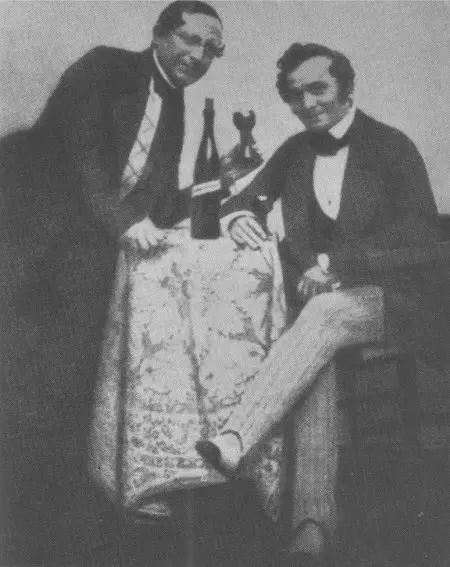
The upcoming year 2026 marks a profound milestone in the annals of European classical music: the double anniversary of Albert Lortzing, the foundational architect of the Spieloper—the distinctively German brand of comic opera. Born in Berlin 225 years ago and passing away in the same city 175 years ago, Lortzing’s life was defined by the relentless rhythms of the traveling player, the pressures of theatrical management, and a visionary approach to musical dramaturgy. While his masterpieces—including Zar und Zimmermann (1837), Der Wildschütz (1842), and Undine (1845)—once enjoyed ubiquitous placement on German-speaking stages, contemporary global programming reveals a stark geographical divide. A modern check of international databases like Operabase indicates zero scheduled performances of his works in the United Kingdom for the foreseeable future, prompting a critical reassessment of why a composer once foundational to the European repertory has receded from the Anglo-Saxon mainstream.
This relative neglect stands in sharp contrast to Lortzing’s historical stature. As the German counterpart to the French opéra comique, the Spieloper developed out of the native Singspiel tradition, seamlessly integrating spoken dialogue with sophisticated musical numbers in a direct lineage extending from Dittersdorf and Mozart. Yet, despite his pivotal placement at a grand crossroads of German musical history—bridging the stylistic worlds of Carl Maria von Weber and Wolfgang Amadeus Mozart on one side, and prefiguring the monumental paths of Richard Wagner and Johann Strauss II on the other—Lortzing remains an underappreciated figure outside central Europe.
Fortunately, the approach of his 2026 double anniversary is catalyzing a renaissance of sorts, most notably through archival preservation. Deutsche Grammophon has stepped into the breach, bringing four historic opera highlights recordings of major Lortzing works—including Der Wildschütz, Der Waffenschmied, and Undine—to digital platforms for the first time, or presenting them in complete form. Featuring mid-century luminaries such as Rita Streich, Irmgard Seefried, Wolfgang Windgassen, Gundula Janowitz, and Josef Greindl, these releases serve as a timely reminder of a golden era of German-language operatic performance. This article offers an exhaustive investigation into Lortzing’s life, his revolutionary yet accessible musical style, his surprising political radicalism, and the enduring legacy of a man who was equal parts actor, kapellmeister, and revolutionary.
Detailed Chronology: The Itinerant Life and Times of Albert Lortzing
To understand Albert Lortzing’s music, one must first understand the theater of the early-to-mid 19th century—a world of damp dressing rooms, capricious theater directors, strict censors, and perpetual travel. Born in Berlin on October 23, 1801, Lortzing was immersed in the dramatic arts from early childhood. Like Carl Maria von Weber before him, he was born into a theatrical family; his parents were actors who operated itinerant troupes, dragging the young boy across the disparate principalities and city-states of a fragmented Germany.
The Early Stage Career and Leipzig Breakthrough
Lortzing made his formal debut on the theatrical stage at the tender age of twelve. Lacking formal, systematic composition training in the academic sense, his musical education was instead forged in the crucible of the working theater. He absorbed the mechanics of stagecraft, vocal pacing, and audience psychology by osmosis, performing a vast array of acting roles while concurrently teaching himself composition, counterpoint, and orchestration.
By his twenties, Lortzing was a seasoned stage professional, eventually securing a prized engagement alongside his wife—also an actress—at the Hoftheater in Detmold, and subsequently at the prestigious Leipziger Stadttheater. It was in Leipzig that Lortzing’s career as a composer crystallized. Surrounded by a vibrant, if frequently conservative, cultural milieu, he began turning his theatrical instincts toward the lyric stage.
In 1837, Lortzing unveiled Zar und Zimmermann (Tsar and Carpenter), an opera based on a comic theatrical adaptation involving Peter the Great working incognito as a shipwright in the Dutch town of Saardam. The work faced immediate bureaucratic headwinds, running afoul of the notoriously suspicious Leipzig censors. Lortzing himself took the stage to sing the principal role of the carpenter, yet the opera initially met with a muted public response. It was only following a subsequent, triumphant production in Berlin in 1839 that Zar und Zimmermann caught fire, swiftly spreading across German-speaking theaters to become an unmitigated popular success.
The Capellmeister Years and Restless Wanderings
Buoyed by his rising fame, Lortzing assumed formal leadership roles within the musical establishment. He served as Kapellmeister in Leipzig, took the podium at the renowned Theater an der Wien in Vienna, and finally accepted a post in Berlin at the newly inaugurated Friedrich-Wilhelmstädtisches Theater.
However, Lortzing’s temperament and financial instability prevented him from maintaining long-term stability. Periodic administrative disputes, artistic disagreements, and chronic money troubles forced him out of permanent posts, repeatedly driving him back to the grueling life of a touring actor and freelance musician. Observers of the era noted that Lortzing was rarely an easy man to get along with; his sharp wit, uncompromising artistic vision, and impatience with institutional bureaucracy frequently alienated benefactors and managers.
Despite these personal friction points, his death on January 21, 1851, in Berlin, was marked by genuine public mourning and professional respect. Prominent figures from the international musical world, including Giacomo Meyerbeer, attended his funeral—a testament to the deep affection in which he was held by his peers, even as his star began to be eclipsed by the burgeoning, high-Romantic aesthetic of the late 19th century.
Supporting Context & Metrics: Musical Style, Evolution, and Political Radicalism
The Evolution of the Spieloper
Lortzing’s historical significance rests primarily on his refinement of the Spieloper. Fifteen years younger than Carl Maria von Weber, Lortzing took the traditional Singspiel—characterized by musical numbers interspersed with spoken dialogue—and infused it with a sophisticated symphonic palette, deft characterization, and a distinctly German brand of bourgeois humor. Where French opéra comique often relied on glittering sophistication and Italian opera buffa on fleet-footed vocal agility, Lortzing’s Spieloper captured the warmth, domesticity, and social eccentricities of the Biedermeier era.
His musical architecture occupies a fascinating nodal point in German operatic history. Looking backward, one hears the clear structural debts to Mozart’s comic ensembles and Weber’s atmospheric orchestration. Looking forward, one can trace a direct line toward the comic masterpieces of Albert Lortzing’s successors, most notably Richard Wagner—who would later draw upon the historical figure of Hans Sachs for his monumental Die Meistersinger von Nürnberg, a subject Lortzing had already treated in his own earlier opera Hans Sachs (1840)—as well as the sparkling operettas of Johann Strauss II.

Masterworks: Beyond the Surface Comedy
While Zar und Zimmermann remains his most internationally recognized calling card, Lortzing’s output extended into works of remarkable stylistic diversity:
- Der Wildschütz oder Die Stimme der Natur (1842): Premiered in Leipzig, this comic opera is adapted from a play by the prolific dramatist August von Kotzebue. Satirizing the pretensions of rural bureaucracy and the hypocrisies of high society, Der Wildschütz features some of Lortzing’s most sparkling melodic writing and intricate ensemble work, cementing his reputation as a master of musical comedy.
- Undine (1845): Premiered in Magdeburg, Undine represents a departure into more serious artistic territory. Designated as a romantische Zauberoper ("romantic magic opera"), it is based on Friedrich de la Motte Fouqué’s famous novella—a dark, water-spirit myth that also attracted the creative energies of E.T.A. Hoffmann (1816), Pyotr Ilyich Tchaikovsky, and, in the 20th century, Hans Werner Henze. Lortzing’s setting brilliantly balances spooky romantic orchestral writing with folk-inspired melodies, dramatic vocal confrontations, and effective ballet sequences, all while appending comic characters (Veit and Hans) and concluding with an ambivalent, psychologically rich "happy" ending.
The Revolutionary Composer: Regina (1848)
Perhaps the most surprising facet of Lortzing’s legacy is his active engagement with the turbulent political currents of his time. At the direct behest of the burgeoning German Freedom Movement, Lortzing composed Regina in 1848—the watershed year of democratic revolutions across the German states.
Uniquely for the composer, Lortzing authored his own libretto, naming the title character after his wife. The plot was breathtakingly bold for the era: it centered upon an industrial factory whose workforce stages a strike, defiantly marching and chanting freedom songs against capitalist exploitation.
Unsurprisingly, the political climate of post-revolutionary Prussia ensured that the opera was suppressed. It did not receive its premiere until 1899, and then only in a heavily bowdlerized, conservative revision. The original, uncompromised score did not see the light of day until 1998, when director Peter Konwitschny mounted a landmark production in Gelsenkirchen.
In the modern era, Regina has received scholarly attention, including a critical edition published by Ricordi and a 2011 studio recording on the CPO label conducted by Ulf Schirmer. Critical reception of the recording has been nuanced—characterized by Musicweb International as "Not the unknown masterpiece we always hope for, but pleasant enough"—yet the work stands as a monumental historical document: a rare instance of an established operatic composer throwing his creative weight directly behind the barricades of 1848.
Official Statements & Archival Initiatives
The impending 2026 double anniversary has galvanized cultural institutions and recording labels to reevaluate Lortzing’s catalog. Most notably, Deutsche Grammophon has launched a major archival initiative to digitize and make available for the first time—or in complete form—four historic opera highlights recordings dedicated to the composer’s masterworks.
Conceived and produced during the mid-20th century specifically for the LP format—which was instrumental in bringing curated scenes and musical highlights to a broad post-war public—these archival releases capture a vanished golden age of German-language operatic performance. The recordings boast an extraordinary roster of legendary vocalists, including:
- Rita Streich, celebrated for her crystalline coloratura and stylistic elegance;
- Irmgard Seefried, revered for her luminous warmth and dramatic sincerity;
- Wolfgang Windgassen, later famed as the preeminent heroic tenor of the Bayreuth Festival;
- Gundula Janowitz, possessing one of the most sublime, silvery sopranos of the 20th century;
- Josef Greindl, whose cavernous bass brought dramatic weight to numerous central European stages.
The rollout of these historic treasures has already begun. The highlights recording of Undine has been officially released via the Deutsche Grammophon Catalogue, offering modern listeners a chance to experience the atmospheric depth of Victor Reinshagen’s conducting. This was followed last month by Der Waffenschmied, conducted by Christoph Stepp (DG Catalogue Link), with Der Wildschütz—featuring the baton work of Ferdinand Leitner and Wolfgang Sawallisch—slated for release soon (DG Catalogue Link).
These releases provide an invaluable bridge between past performance traditions and modern digital accessibility, offering today’s opera enthusiasts a masterclass in how this repertoire was championed by mid-century titans.
Future Outlook: Reclaiming Lortzing for the 21st-Century Stage
As the classical music world looks ahead to the 2026 double anniversary, the central challenge facing Albert Lortzing’s legacy is one of international re-engagement. While opera houses across Germany, Austria, and Switzerland continue to mount occasional regional productions of Zar und Zimmermann or Der Wildschütz, the composer remains virtually unperformed in major Anglophone territories. As noted in international casting trackers like Operabase, British and North American houses currently list zero upcoming productions of his works.
This absence is regrettable. Lortzing’s mastery of musical timing, his infectious melodic inventiveness, and his unique ability to balance lighthearted bourgeois comedy with genuine orchestral sophistication offer rich potential for contemporary directors seeking alternatives to the standard, heavily recycled 19th-century canon. Furthermore, rediscovering works like Regina provides opera companies with an opportunity to engage directly with historical socio-political themes—worker solidarity, class struggle, and revolutionary fervor—framed within an accessible, mid-19th-century musical idiom.
Whether adventurous international houses will take up the mantle during the 2026 anniversary year remains an open question. At present, the primary custodians of his legacy are recording engineers and archival labels rescuing historic interpretations from the vaults. Yet, as Deutsche Grammophon’s new digital releases prove, the intrinsic charm, theatrical vitality, and structural brilliance of Lortzing’s music have lost none of their capacity to delight. For those willing to look beyond the standard international repertoire, the bicentennial-plus-twenty-five offers an ideal invitation to rediscover the man who gave the German-speaking world its definitive operatic voice.