Executive Overview
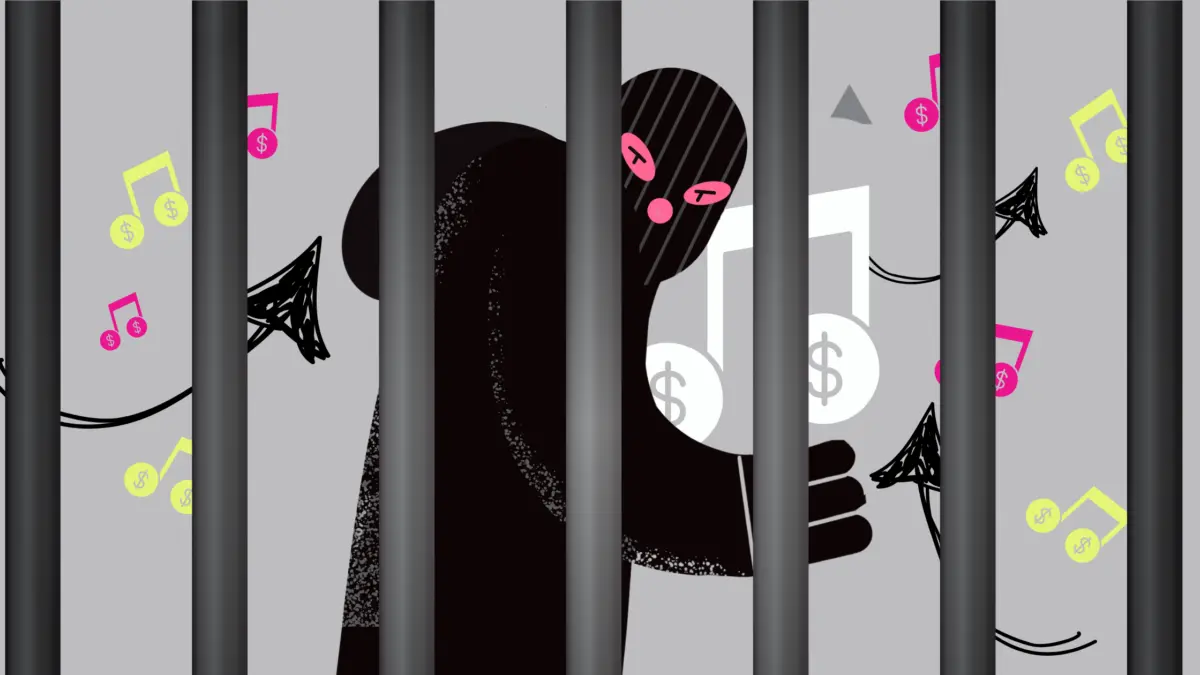
In a landmark legal victory for the global music community, a federal court has sentenced Michael Smith to 18 months in prison for orchestrating an unprecedented $8 million artificial intelligence and bot-driven streaming fraud scheme. Handed down by US District Judge John G. Koeltl, the sentence marks a historic milestone: the first-ever criminal conviction of a streaming fraudster in the United States and one of the very first enforcement actions of its kind worldwide.
Operating a sophisticated automated scheme from 2017 to 2024, Smith exploited the technological convergence of generative AI and automated streaming botnets. He flooded major digital service providers (DSPs) with thousands of artificially generated tracks, systematically manipulating play counts to siphon millions of dollars intended for human creators, songwriters, and independent labels.
While federal prosecutors advocated for a custodial sentence closer to four years—and defense attorneys aggressively argued for probation, claiming the scam caused no tangible harm—the court’s decision to hand down prison time sends a powerful, unmistakable message. Music industry advocacy groups, including the Recording Industry Association of America (RIAA) and the Music Fights Fraud Alliance (MFFA), have universally lauded the verdict. For years, stakeholders have warned that the digital music ecosystem suffers from a "perceived lack of legal risk" regarding stream manipulation. This high-profile sentencing fundamentally alters that landscape, establishing a vital judicial precedent that criminalizes large-scale royalty theft and asserts that exploiting technology for systemic fraud carries severe, real-world consequences.
Detailed Chronology of an $8 Million Digital Heist
The investigation and subsequent prosecution of Michael Smith unraveled a calculated, multi-year operation that weaponized technological automation against the modern music economy. The scheme’s timeline exposes the methodical escalation of digital manipulation:
Phase One: Inception and Scaling (2017–2019)
Long before generative AI tools became ubiquitous in mainstream discourse, Michael Smith recognized the vulnerabilities embedded within the revenue-share models of major streaming platforms. Between 2017 and the early 2020s, Smith initiated a blueprint to maximize digital real estate. Rather than collaborating with human musicians, recording studios, or lyricists, he turned to automated processes to generate massive volumes of brief, low-quality audio tracks.
To maximize the footprint of these tracks, Smith established relationships with shady intermediary entities and digital distributors. By bypassing traditional creative pipelines, he managed to secure thousands of unique artist profiles and song titles across platforms like Spotify, Apple Music, Amazon Music, and YouTube Music.
Phase Two: The Botnet Automation (2020–2023)
Uploading content was only the first hurdle; generating millions of streams required heavy computational artillery. To achieve this, Smith deployed automated bot farms—networks of thousands of virtual devices programmed to stream his AI-generated catalog continuously, 24 hours a day, 7 days a week.
Because streaming royalties are paid out on a fractional per-stream basis determined by a platform’s total revenue pool, millions of daily artificial streams generated fractions of pennies that quickly accumulated into astronomical sums. To avoid detection by DSP security algorithms, Smith deliberately dispersed his bot-driven traffic across thousands of distinct tracks rather than concentrating the streams on a single viral hit. This "long-tail" strategy successfully masked his activities from basic algorithmic tripwires for years, allowing him to pull millions of dollars out of the royalty pool undetected.
Phase Three: Detection, Investigation, and Crackdown (2023–2024)
As the scale of the operation expanded into the millions of dollars, sophisticated anti-fraud detection systems utilized by streaming platforms and music distributors began to flag anomalies in the consumption patterns of Smith’s catalog. When compliance officers and platform investigators queried Smith regarding the sudden surges in traffic and the unnatural listening behaviors associated with his profiles, Smith systematically lied, fabricating justifications to protect his illicit revenue stream.
However, the mounting evidence eventually caught the attention of federal authorities. The case was taken up by the Office of the US Attorney for the Southern District of New York, spearheaded by prosecutor Nicholas Chiuchiolo under the leadership of Jamie McDonald. In 2024, federal agents moved in, formally charging Smith with wire fraud conspiracy, mail fraud, and money laundering conspiracy. Facing overwhelming evidence compiled by federal investigators, Smith ultimately pleaded guilty to one count of wire fraud conspiracy and agreed to forfeit the entire $8 million generated throughout the lifespan of the scam.
Phase Four: Sentencing and Accountability (2025)
The legal saga culminated in a tense sentencing hearing before Judge John G. Koeltl in a New York federal courtroom. Prosecutor Nicholas Chiuchiolo dismantled the defense’s minimization of the crime, emphasizing that Smith lied repeatedly to streaming executives when confronted and maintained his fraudulent enterprise for nearly a decade.
During the hearing, a visibly emotional Smith broke down in tears, directly addressing the court. "I broke the law, I lied, I cut corners, I did things the wrong way in every aspect," Smith admitted, adding, "I am deeply sorry for what I did and I accept whatever punishment the court imposes." Smith’s legal counsel attempted to keep him out of prison by arguing that the immense media coverage of his arrest had already acted as a sufficient deterrent for other bad actors. Judge Koeltl flatly rejected this argument, condemning the scheme as "extremely serious" and noting that the defendant had meticulously orchestrated an enterprise designed to steal millions from the pockets of legitimate artists.
Supporting Context & Metrics: The Mechanics of Streaming Fraud
To fully grasp the gravity of Michael Smith’s conviction, one must understand the economic architecture of the modern streaming economy and the mechanics of digital fraud.
The Pro-Rata Revenue Share Model
The modern streaming economy functions primarily on a pro-rata (revenue-share) distribution model. Unlike a user-centric payment system—where an individual subscriber’s monthly fee goes directly to the specific artists that individual listens to—the pro-rata model pools all subscription and advertising revenue collected by a DSP in a given month.
After accounting for operational costs and platform cuts, the remaining pool is distributed to rightsholders based on their overall share of total streams on the platform. For example, if a major pop star accounts for 1% of all streams on a platform in a given month, they receive roughly 1% of the royalty pool.
This macro-economic pool structure creates a severe vulnerability: zero-sum dilution. When bad actors like Michael Smith inject millions of fake, bot-generated streams into the ecosystem, they do not create new money; rather, they capture a slice of the existing revenue pool. Every dollar paid out to an AI-generated bot farm is a dollar stolen directly from human artists, independent songwriters, session musicians, and independent record labels whose legitimate art was crowded out.
The Rise of Generative AI in Fraud
Smith’s case represents a terrifying convergence of two emerging technological threats: generative AI and sophisticated botnets. Historically, streaming fraud—often referred to as "stream padding" or "click-farm fraud"—involved human operators paying low-cost human laborers or rudimentary scripts to loop real songs.
However, generative AI democratized the creation of infinite, disposable audio content. Smith did not need to commission songwriters, hire producers, rent studios, or secure licensing for samples. He could use automated AI generation tools to instantly produce thousands of tracks that met the bare-minimum structural requirements of digital aggregators. Paired with botnets, this represented a fully industrialized, end-to-end fraud pipeline: AI generated the product, and bots consumed it, maximizing output while minimizing operational friction.
The Global Fight Against Stream Manipulation
While the US prosecution of Michael Smith is a milestone, it is part of a broader, international effort to criminalize and dismantle streaming fraud networks.
- Denmark: European authorities have similarly pioneered aggressive legal action against digital fraudsters. Most notably, the Danish High Court previously handed down a landmark ruling against streaming fraudsters, subsequently increasing sentences upon appeal review to establish a zero-tolerance baseline across Scandinavian territories.
- Industry Coalitions: Groups like the Music Fights Fraud Alliance (MFFA)—a cross-industry coalition encompassing major and independent labels, music publishers, and DSPs—have collaborated extensively to share threat intelligence, identify compromised metadata, and lobby legislative bodies worldwide.
In their amicus curiae and court submissions regarding the Smith sentencing, MFFA stakeholders emphasized that the historical absence of custodial sentences created a "perceived lack of a legal risk" that actively incentivized tech-savvy criminals to view royalty fraud as a low-risk, high-reward enterprise.
Official Statements and Industry Reactions
The sentencing has elicited strong statements from key stakeholders across the legal, regulatory, and musical landscapes, highlighting a unified front against digital exploitation.
The US Attorney’s Office
Jamie McDonald, representing the US Attorney’s Office for the Southern District of New York, issued a blistering critique of Smith’s actions, emphasizing the federal government’s commitment to policing emerging technological crimes:
"Michael Smith exploited super intelligence technology to generate a fraud. By flooding music streaming platforms with automated bots in the place of consumers, and fake songs in the place of creativity, Smith robbed millions in royalty payments from genuine artists and their fans. This office is committed to ensuring the integrity of all markets and protecting the public from those who use super intelligence for fraud."
Prosecutor Nicholas Chiuchiolo reinforced this sentiment during court proceedings, noting that Smith’s longevity and deceit separated his crimes from casual misdemeanors:
"He knew from the very beginning that what he was doing was wrong. This was a serious crime that lasted for many years."
The Recording Industry Association of America (RIAA)
The RIAA released an official statement welcoming the judicial outcome, underscoring the real-world human cost of algorithmic manipulation:
"Streaming fraud harms creators and deceives fans. We appreciate the court recognising the significance of this harmful conduct and the ill-gotten gains that come from the pockets of real artists, songwriters, and their label partners."
Judicial Commentary
When delivering his verdict, Judge John G. Koeltl underscored the deliberate nature of the crime and the necessity of deterrence. Rejecting the defense’s claims of minimal impact, Judge Koeltl classified the activity as an "extremely serious" offense, noting:
"The defendant orchestrated a scheme to steal millions of dollars of musical royalties."
Future Outlook: What the Smith Verdict Means for the Music Industry
The imprisonment of Michael Smith serves as a watershed moment for the digital music industry, but industry experts agree that it is merely the opening salvo in a much larger, ongoing war against algorithmic exploitation.
1. Re-evaluating Legal Deterrence
The most immediate impact of the 18-month custodial sentence is the shattering of the "perceived lack of legal risk." For years, digital fraudsters operated under the assumption that getting caught would result in civil lawsuits, account bans, or minor financial clawbacks—rarely prison time. By crossing the threshold into criminal wire fraud and securing a custodial sentence, federal prosecutors have provided law enforcement agencies worldwide with a viable prosecutorial blueprint. Future fraudsters can no longer view digital royalty theft as a victimless white-collar crime insulated from penal consequences.
2. Heightened Technical Defenses and ‘Know Your Customer’ Protocols
Streaming platforms, digital aggregators, and independent distributors are under intense pressure to overhaul their internal security architectures. Moving forward, the industry is accelerating the adoption of robust "Know Your Customer" (KYC) verification standards for all digital distributors and uploaders. By requiring verifiable identities, tracking digital wallets, and cross-referencing metadata against known AI-generation signatures, platforms aim to choke off fraudulent accounts before they can distribute content or collect payouts.
3. The Generative AI Regulatory Frontier
As generative AI tools become increasingly sophisticated, the line between legitimate artistic innovation and algorithmic fraud will continue to blur. The music industry must grapple not only with outright fraud (like Smith’s bot-driven farms) but also with unauthorized training data, copyright infringement, and automated sound-alike tracks designed to divert casual listeners. The Smith case proves that existing statutes—such as wire fraud conspiracy—can be effectively leveraged to combat AI-enabled exploitation, even as lawmakers debate dedicated federal legislation governing artificial intelligence.
4. Economic Reclamation for Creators
For human artists, songwriters, and independent labels, the verdict represents a measure of restorative justice, backed by Smith’s agreement to forfeit the $8 million he amassed. During his sentencing, Smith expressed a desire to work in audio production following his release specifically to pay back the funds he scammed out of the system. While the road to full economic recovery for the broader streaming royalty pool is complex, the legal validation of creators’ rights ensures that the integrity of the streaming ecosystem remains fiercely defended.
Ultimately, the Michael Smith case draws a hard line in the digital sand. As artificial intelligence reshapes the boundaries of human creativity, the federal judiciary has made it clear: while technology may evolve, stealing from the pockets of real artists remains a federal crime punishable by real time behind bars.