Executive Overview
As the autumn of 2026 settles across Europe, the underground music scene continues to thrive through boundary-pushing curation. In the latest installment of Rebel Up’s Nightshop for October 2026, listeners are taken on a sprawling, cross-continental auditory journey. True to its reputation as an indispensable platform for global underground sounds, this month’s episode spans continents, bridging traditional folk expressions with contemporary electronic soundscapes, hypnotic dub, and avant-garde jazz-rock fusions.
The October 2026 broadcast opens with a deliberate focus on trans-global dialogue, highlighting standout tracks from London, Brazil, and beyond, before delving into a meticulously curated roster of Albums of the Month. From the chill, sun-drenched chicha-cumbia of Peru to the powerhouse folk-pop of Ghana, and the deep archival excavations of Caribbean Zouk and Réunionese Maloya, this edition underscores the interconnectivity of modern global music. Furthermore, the episode rounds out with cutting-edge experimental works from Brussels producers, Turkish psychedelic pioneers, and Iranian-Irish electronic provocateurs.
This comprehensive report examines the structural highlights, cultural significance, and sonic textures of the October 2026 Nightshop release, providing a detailed breakdown of the featured artists, their respective regional movements, and the broader implications for contemporary music curation.
Detailed Chronology: A Track-by-Track Sonic Expedition
The October 2026 broadcast of Rebel Up’s Nightshop is structured to guide the listener from immediate, groove-driven introductions into deep, thematic album showcases, concluding with an insider’s look at the Brussels underground live agenda.
Introduction and Songs of the Day
The episode commences with an introductory sequence designed to set a global, rhythm-centric tone. The "Songs of the Day" segment pulls from eclectic international hubs, starting with a collaborative powerhouse track: Abelardo Carbono & Frente Cumbiero delivering the hypnotic “Kambamba Liki.” This is swiftly followed by the conceptual and rhythmically intricate stylings of Matthew Herbert with "Pasta (is not a luxury)," offering a sharp socio-political nod wrapped in sophisticated electronic production. The opening triad rounds out with the timeless Brazilian warmth of Dorival Caymmi and "Canoeiro (Pescaria)," grounding the opening minutes in rich historical tradition.
The Albums of the Month: Deep Dives into Global Modernity
Following the introduction, the broadcast transitions into its core feature: a multi-tiered exploration of October’s most vital album releases.
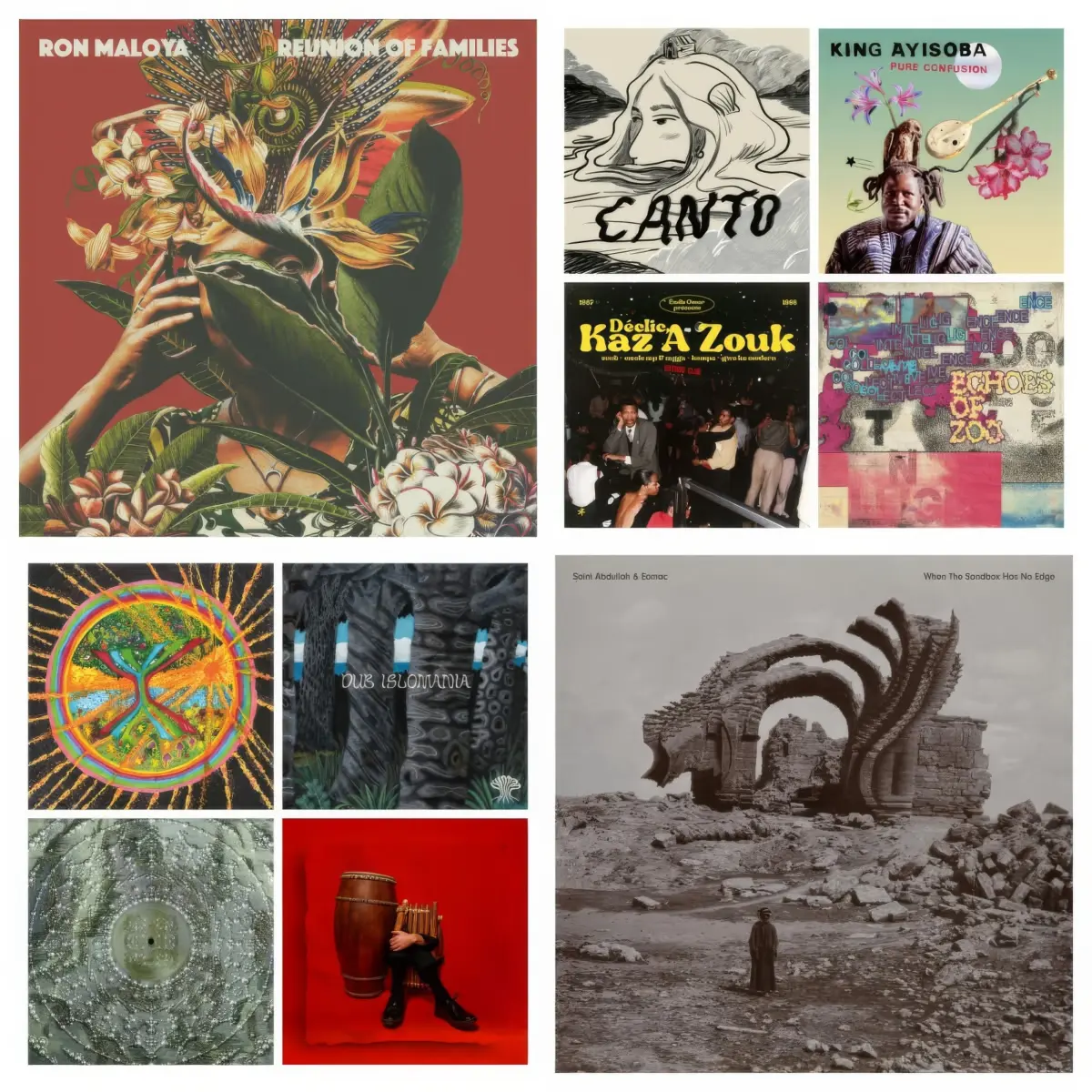
1. Oriente Tio – Canto (Self-Released)
Representing the vibrant musical landscape of Peru, Oriente Tio anchors the first album spotlight with their self-released album, Canto. The featured cuts—“Ballon,” “Cumbia del Desierto,” and “Cumbión Del Fin”—showcase the band’s mastery of chill chicha-cumbia. Merging traditional Amazonian psychedelic guitar lines with relaxed, hypnotic rhythms, Oriente Tio captures the dusty, sun-bleached atmosphere of the desert while maintaining a modern indie-folk sensibility.
2. King Ayisoba – Pure Confusion (Mais Um)
From South America, the broadcast travels to West Africa with Ghanaian minstrel King Ayisoba. Signed to the Mais Um imprint, Pure Confusion is a masterclass in raw, unfiltered power. Tracks like “Property,” “Dey Come,” and “Memsoh” highlight Ayisoba’s signature instrument—the kologo (a traditional two-stringed lute)—interlocking with heavy vocal chants and driving percussion. His folk-pop sound is both deeply rooted in ancestral traditions and startlingly urgent for contemporary audiences.
3. Various Artists – Ron Maloya: Reunion of Families (JuJu Sounds)
The exploration of regional folk traditions continues with a profound archival and contemporary compilation titled Ron Maloya: Reunion of Families, released via JuJu Sounds. Maloya, the traditional music of Réunion Island, is celebrated here through generational lineages. The selection features stunning performances such as Maëlle Philéas on “Namouniman,” Kozman Ti Dalon with “Goïnda ilé,” and Etinsèl Maloya delivering “Amize Marmaille.” This compilation serves as both an anthropological archive and a vibrant celebration of familial musical transmission.
4. Émile Omar présente – Déclic, Kaz A Zouk: Zouk – Creole Rap & Ragga – Kompa – Gwo Ka Modern (1987 – 1998) (Heavenly Sweetness)
Shifting focus to the Caribbean basin and its diaspora during its golden age of experimentation, curator Émile Omar presents a dazzling retrospective via Heavenly Sweetness. Spanning the late ’80s to the late ’90s, the tracks selected—including Van Lévé’s “Invitation à la Danse,” Sylviane Cédia’s “La Guyanaise,” and Zshea’s “Rozalie, Rozalie”—paint a vivid picture of a culturally rich era. The record captures the collision of slick Zouk production, early Creole rap, raw ragga, smooth Kompa, and modern Gwo Ka rhythms.
5. Echoes Of Zoo – Collective Intelligence (Zephyrus & Rebel Up)
Moving into contemporary jazz-fusion and global groove, Belgian band Echoes Of Zoo present selections from Collective Intelligence (released jointly via Zephyrus and Rebel Up). Tracks like “Higher Levels,” “Wolf Pack Telepathy,” and “Multicellularity” demonstrate the ensemble’s unique ability to blend the improvisational freedom of jazz with the unyielding drive of rock and the polyrhythmic complexities of global music traditions.
6. BaBa ZuLa – XXX (Glitterbeat)
Turkish psych-rock royalty BaBa ZuLa return with their landmark release XXX, courtesy of Glitterbeat Records. Known worldwide for their electrifying stage presence and genre-defying ethos, the band presents “Cäırtlak 9,” “Kutsal Zeytin Halayı,” and “Hak Bitmez Güç Bitee.” The tracks are monumental offerings of Anadolu psychedelic trance-rock, characterized by heavy electric saz riffing, dub-inflected mixing, and deep, trance-inducing basslines.
7. Harikuyamaku – Dub Islomania (Self-Released)
Sailing eastward to the sub-tropical shores of Okinawa Island, Japanese producer Harikuyamaku presents Dub Islomania. The self-released album bridges traditional Okinawan folk melodies with deep, spacious sound system culture. Cuts like “Kubagasa Gwaa,” “Turubaimun,” and “Pacific Dub” showcase an exquisite mastery of global dub techniques, where Sanshin (Okinawan banjo) melodies float effortlessly across heavy sub-bass and cavernous echo chambers.
8. Le Motel – Pozo de Agua (Constellation Tatsu)
Providing a meditative, textural counterbalance, Brussels-based producer Le Motel shares selections from his ambient-leaning electronic record Pozo de Agua (Constellation Tatsu). Tracks such as “Mangrove,” “Sundogs,” and “Cabane” utilize delicate field recordings, soft synthesizer pads, and subtle rhythmic pulses to create an immersive, highly cinematic listening experience.
9. Saint Abdullah & Eomac – When The Sandbox Has No Edge (Planet Mu)
For those seeking a grittier, more abrasive sonic confrontation, the Iranian-Irish duo Saint Abdullah join forces with producer Eomac for their Planet Mu release, When The Sandbox Has No Edge. Featuring collaborations with Armand Hammer on “As We Are” and Seraphim on “Willing In The Name Of,” alongside the instrumental “Eyes See What The Camera Cannot Feel,” this project delivers a fierce, broken-beat collage that seamlessly welds Middle Eastern sonic textures with brutal, avant-garde club electronics.
10. Roscius & Loya – B‐Sides (Nomadic Recordings)
The album showcases conclude with a collaborative project between Roscius and Loya via Nomadic Recordings. B‑Sides reimagines regional acoustic traditions through a futuristic lens, highlighted by the driving momentum of “Grit (club rework)” and the hypnotic depth of the “Carnawar (Loya Remix).” The release provides an ideal bridge between traditional island sounds and peak-time club floor utility.
Supporting Context & Cultural Metrics
The October 2026 edition of Rebel Up’s Nightshop is more than just a playlist; it is a snapshot of current global circulation patterns within independent music distribution. Examining the geographical and institutional origins of the featured releases reveals several notable trends:
- Decentralization of Production: While European capitals like Brussels and London remain crucial distribution and broadcasting hubs (hosting labels like Rebel Up, Heavenly Sweetness, and Planet Mu), the primary creative impulses originate from secondary markets and global South epicenters—ranging from Lima (Oriente Tio) and Accra (King Ayisoba) to Okinawa (Harikuyamaku) and Réunion Island (Ron Maloya).
- Archival Revival vs. Forward-Looking Electronics: A distinct macro-trend in late 2025/early 2026 music consumption is the parallel growth of deep-digging archival compilations (such as Émile Omar’s Déclic, Kaz A Zouk) and hyper-modern, genre-colliding electronic music (such as the Saint Abdullah & Eomac collaboration). Listeners increasingly demand both historical contextualization and radical sonic futurism.
- Cross-Border Collaboration: Projects like those by Roscius & Loya, and Saint Abdullah & Eomac, emphasize that contemporary underground music is built on cooperative networks rather than isolated regional scenes. Producers are actively breaking down geographical boundaries to forge transnational sonic identities.
Official Statements and Curatorial Philosophy
While Rebel Up operates primarily as an independent grassroots cultural platform rather than a corporate media giant, the curatorial philosophy driving Nightshop has remained consistent since its inception. In past manifestos and ongoing broadcast notes, the collective has emphasized:
"Our mission has always been to break down the artificial walls erected by mainstream commercial radio. Music does not recognize geopolitical borders, linguistic barriers, or genre purism. By placing traditional Ghanaian folk-pop next to avant-garde Irish-Iranian noise and Peruvian chicha-cumbia, we are not just playing songs—we are mapping a shared human experience rooted in rhythm, resistance, and joy."
This commitment to borderless curation is vividly reflected in the October 2026 tracklist, where every geographic shift feels natural, guided by an underlying respect for groove and sonic exploration.
Future Outlook and Brussels Live Agenda
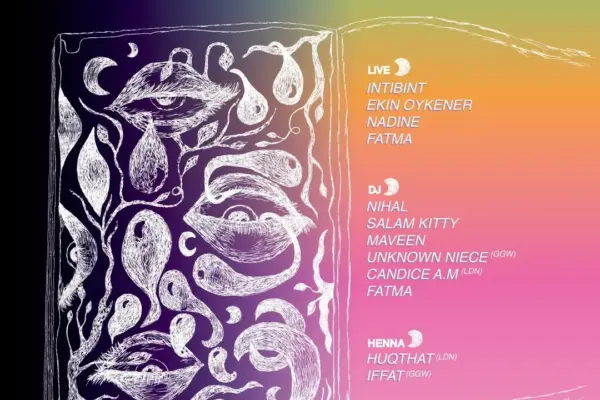
As the broadcast shifts toward its final segment—the monthly concert and party agenda for Brussels—attention turns to how these recorded sounds translate into physical, communal spaces. The Belgian capital continues to function as a crucible for global underground music, hosting intimate club nights, DIY warehouse events, and cultural center showcases that platform many of the artists featured in this month’s episode.
For local enthusiasts, the October 2026 agenda serves as a vital field guide for navigating the city’s upcoming live music offerings. Whether experiencing the driving momentum of global jazz-rock live or catching immersive ambient sets in localized art spaces, Brussels audiences remain uniquely positioned to experience these transnational movements firsthand.
Listeners wishing to dive deeper into the sonic universe of Rebel Up’s Nightshop can download the complete episode via the official archive link at https://tinyurl.com/Night142, and explore all previous episodes through the comprehensive Rhythm Passport podcast portal. As the winter season approaches, platforms like Nightshop ensure that the global underground remains brilliantly illuminated, vibrant, and relentlessly connected.