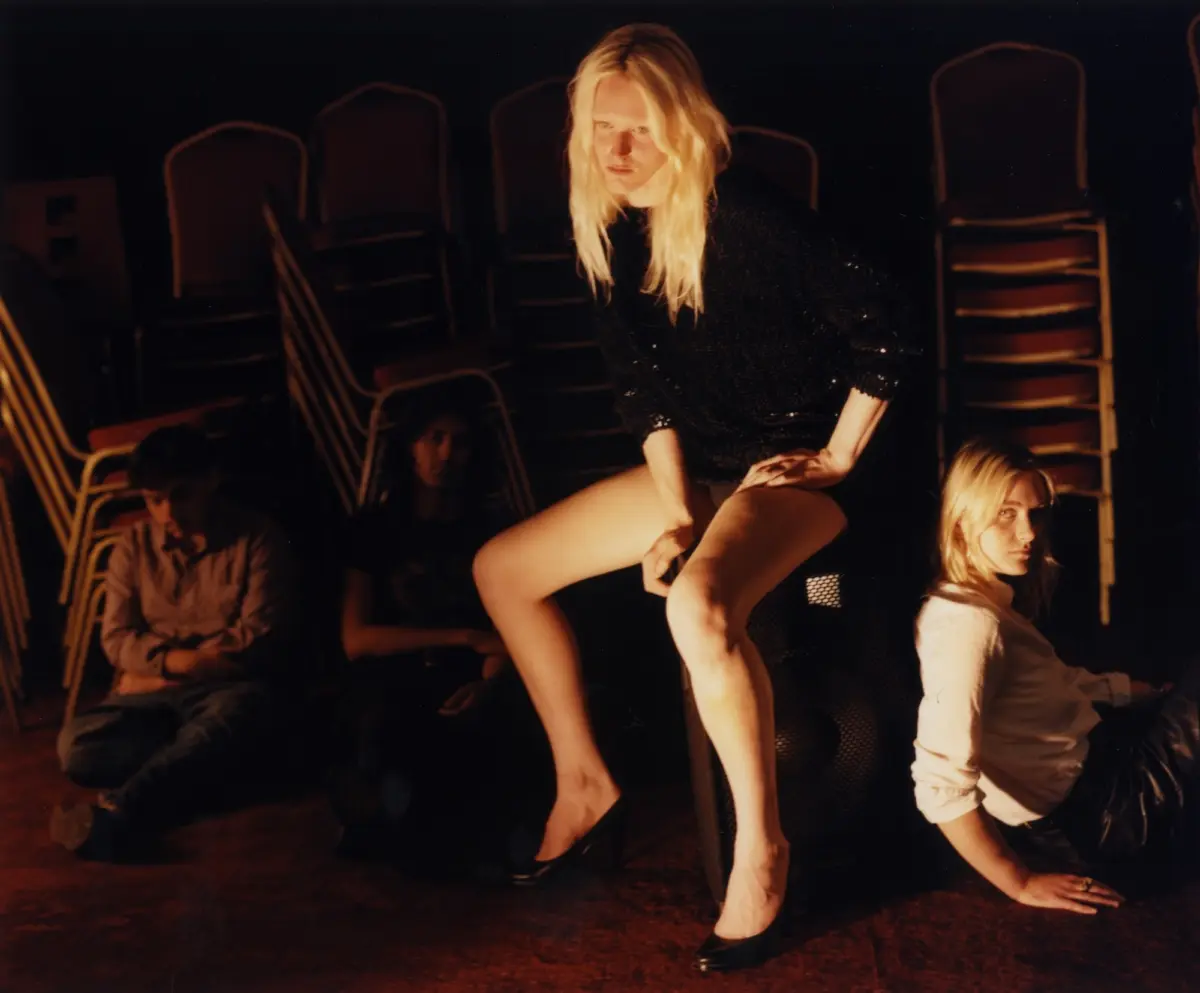
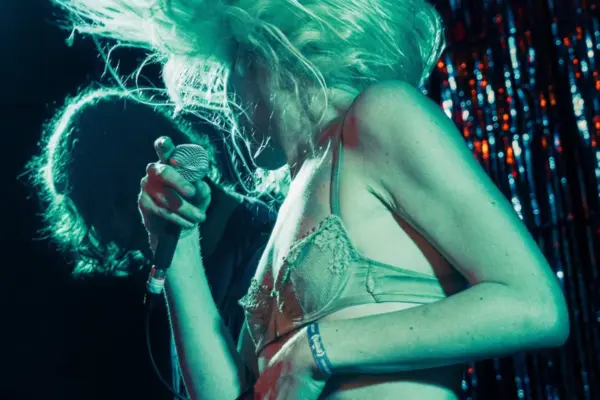
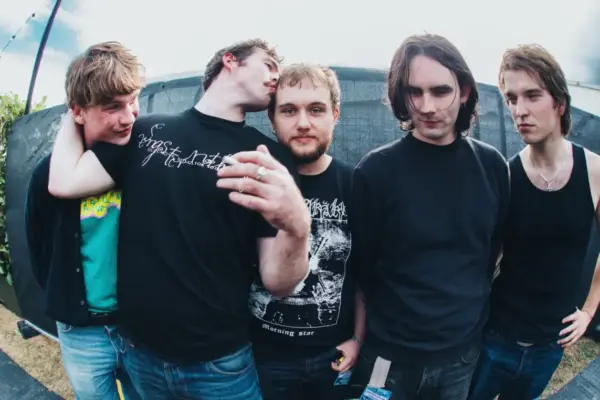
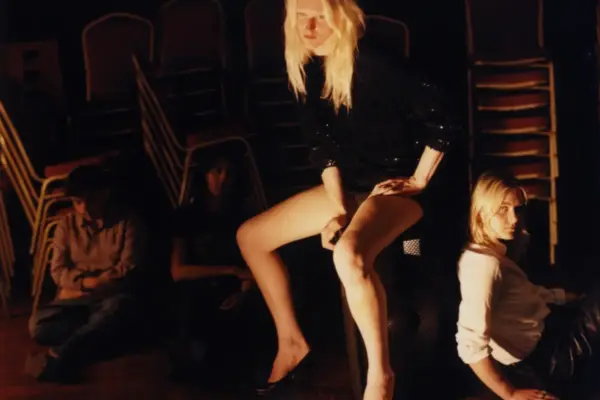
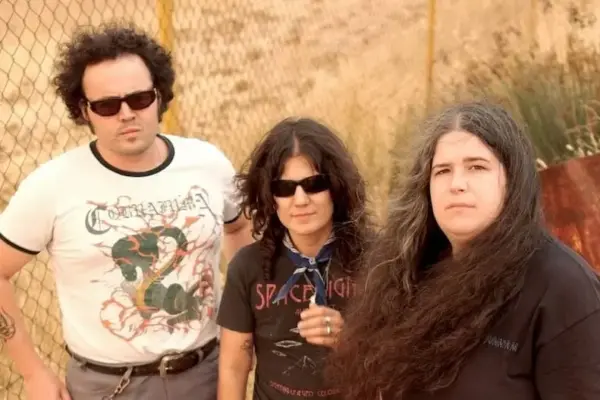
In an era where independent UK guitar music often struggles under the dual burdens of social media virality and hyper-polished commercialism, Leeds-formed quartet Bathing Suits have emerged as a visceral antidote. Blending raw post-industrial friction with the subversion of high-bpm pop hooks, the group—comprising vocalist and drum machine operator Freyja Blevins, bassist Elise Hughes, and guitarists Alex Mulholland and George Dickinson—has constructed a sonic identity they term "industrial freak pop."
Rising from the hyper-local confines of the West Yorkshire underground circuit in 2024, Bathing Suits have rapidly expanded their footprint across the UK live ecosystem. Characterized by high-intensity live performances that frequently collapse the traditional barrier between performer and audience, the band’s trajectory reflects a broader generational shift within alternative music. Rather than adhering to conventional post-punk tropes, Bathing Suits leverage low-end sub-bass, atonal guitar textures, and transgressive stagecraft to reclaim noise as a controlled artistic medium.
As the group transitions from regional DIY venues to high-profile festival slots and national supporting tours—such as their recent dates alongside Man/Woman/Chainsaw—they face a pivotal evolution: refining their volatile stage presence and translating their chaotic live energy into a sustainable, scalable recording career without diluting their foundational confrontation.
Detailed Chronology: From Leeds DIY Underground to National Prominence
+-----------------------------------------------------------------------------------+
|                            BATHING SUITS: KEY MILESTONES                          |
+-----------------------------------------------------------------------------------+
| 2024            | Band forms in Leeds; Hughes, Dickinson, & Mulholland establish  |
|                 | 'Wisecrack' promotion outfit; Blevins joins as frontwoman.      |
|                 |                                                                 |
| Late 2024       | Guerilla gigging era; legendary rigged Battle of the Bands at   |
|                 | O'Neill's; early track iterations tested live.                  |
|                 |                                                                 |
| April           | Release of debut EP 'Kill Bathing Suits'; features break-out    |
|                 | track 'I Can Be a Freak' and set-closer 'Empathy'.             |
|                 |                                                                 |
| Mid-Year        | Standout performance at The Great Escape (Brighton); release    |
|                 | of 'I Can Be a Freak' remix with Mandy, Indiana's Caulfield.    |
|                 |                                                                 |
| Late Autumn     | UK Tour supporting Man/Woman/Chainsaw; venue stops including    |
|                 | Gorilla (Manchester); announce transition to darker club sound. |
+-----------------------------------------------------------------------------------+
Phase I: Formation and the "Wisecrack" Collective (2024)
Bathing Suits materialized within the dense, student-driven DIY ecosystem of Leeds in 2024. Bassist Elise Hughes (originally from Sunderland), along with guitarists George Dickinson (Hadfield) and Alex Mulholland (Milton Keynes), initially connected while attending university. Recognizing a systemic lack of infrastructure for fringe, experimental music in the region, the trio established Wisecrack, an independent promotion outfit designed to curate alternative bills outside mainstream commercial channels.
It was through this self-built network that they crossed paths with Freyja Blevins, a Peterborough native who had relocated to Leeds following a stint in the local underground scene. Blevins’ background as a marginalized, queer youth in the East Midlands, combined with a distinct aesthetic background that had previously seen her photographed by fashion designer Hedi Slimane, provided the necessary front-of-house polarity to match the instrumentalists’ harsh, rhythmic noise. Bonding over a shared fascination with hyper-pop pioneer A.G. Cook’s PC Music imprint and late-1970s proto-punk, the four formalized Bathing Suits.
Phase II: The "Favours Economy" and Early Live Volatility
In their foundational months, Bathing Suits relied on what Mulholland describes as a regional "favours economy" to secure bookings. Lacking institutional backing, the band engaged in strategic, often absurd guerilla tactics to finance equipment and studio time. A notable turning point involved a collaborative agreement with fellow Leeds outfit Normal Village during a battle-of-the-bands competition at a local branch of the Irish pub chain O’Neill’s. The bands agreed to split the monetary prize regardless of the judges’ verdict, performing abrasive, uncompromised material in front of bewildered pub regulars—an event that served as an early proving ground for their chaotic live dynamic.
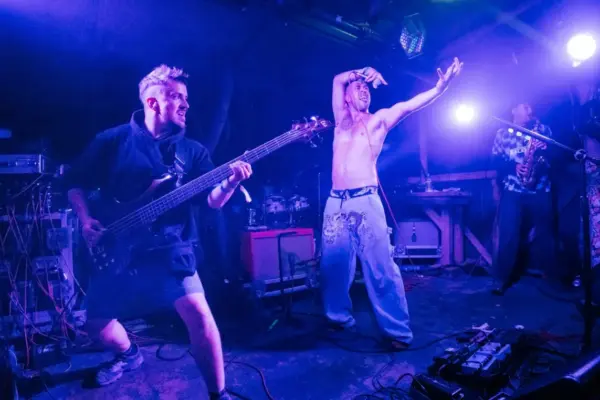
During this period, the group’s live shows became notorious for physical violence and instrument destruction. Stage brawls, shattered pedals, and collapsing amplifiers were commonplace, lending the group a reputation for unvarnished, high-risk performance art.
Phase III: ‘Kill Bathing Suits’ and Festival Breakout
In April, Bathing Suits consolidated their live material into their debut EP, Kill Bathing Suits. Written entirely on stage during their relentless touring schedule, the five-track release captured the group’s frantic rhythm section and atonal guitar work. The EP’s flagship single, "I Can Be a Freak"—a heavy-duty track sampling pop singer Estelle—garnered immediate critical traction. The track’s footprint was subsequently enlarged through a high-profile remix collaboration featuring Valentine Caulfield of experimental industrial band Mandy, Indiana.
By mid-year, the industry took notice. A performance at The Great Escape festival in Brighton marked their national breakthrough. During the show, Blevins scaled the venue’s overhead rigging before plunging into the audience, cementing Bathing Suits as one of the most volatile live propositions in the UK underground. This momentum culminated in a late-autumn support tour alongside emerging post-punk group Man/Woman/Chainsaw, culminating in headline-adjacent dates at key regional hubs including Gorilla in Manchester.
To understand Bathing Suits requires analyzing the deliberate tension at the core of their instrumentation. While music critics frequently resort to reductive descriptors—ranging from "Gilla Band if they looked good" to "Idles if they were brat"—the band’s actual arrangements draw from a more complex lineage.
       [ NOISE / INDUSTRIAL ]                     [ DANCE / HYPER-POP ]
   Sonic Youth ('Confusion Is Sex')               PC Music (A.G. Cook)
       Suicide / Gilla Band                       Kesha / Bassvictim
                                                    /
                                                   /
                    --> [ BATHING SUITS ] <--
                            |
                     "Industrial Freak Pop"
                     - Atonal Guitar Riffs
                     - High-BPM Drum Machines
                     - Subversion of Pop Hooks
Rhythmic Foundation: Abandoning traditional rock acoustic drum kits in favor of engineered drum machine patterns, the band anchors its tracks in persistent, mechanical dance tempos.
Low-End Dynamics: Hughes’ bass lines provide the harmonic and rhythmic spine, heavily distorted to bridge the gap between club sub-bass and post-punk rhythm sections.
Atonal Guitar Interplay: Dickinson and Mulholland trade duties using extensive effects chains to eliminate traditional chord structures, producing metallic feedback, pitch-shifted textures, and rhythmic white noise.
Vocal Subversion: Blevins utilizes a style that shifts fluidly between deadpan spoken-word delivery, piercing screams, and rhythmic dance-pop cadences, frequently employing pop tropes (such as Kesha-esque vocal inflections) over harsh industrial backdrops.
Pop structures, heavy effects processing, rhythm-guitar distortion
The Micro-Economics of Underground Touring
The transition from local DIY spaces to established venues has forced Bathing Suits to confront the financial realities of physical performance art. The band’s commitment to chaotic live shows carries a steep material cost:
Equipment Depreciation: Constant gear destruction—ranging from basses broken during French tour dates to smashed pedalboards—creates ongoing financial friction for an unsigned act.
Structural Adaptation: To sustain longer regional and international tours, the band has been forced to shift from spontaneous physical destruction toward calculated, musical tension.
The Independent Complex: Operating without major label backing, the group relies on organic crowd expansion, merch sales, and cross-genre collaborative remixes (e.g., the Mandy, Indiana feature) to sustain their operations.
Official Statements and Performance Philosophy
The members of Bathing Suits articulate a clear, highly self-aware philosophical framework regarding their work, rejecting both industry hype cycles and overly academic genre classification.
On Genre and Classification
Addressing the media’s insistence on labeling their sound, guitarist Alex Mulholland clarifies the band’s core thesis:
"We got asked once what the words ‘post-industrial trance’ mean to us, and I’m still trying to figure that one out… We’re shoving abrasive sounds into a pop format. If we could have a mission statement, if we could be pegged down to one thing, it would be that."
Bassist Elise Hughes echoes this pushback against reductive comparisons to contemporary UK post-punk acts:
"People say things like ‘Gilla Band if they looked good’ or ‘Idles if they were brat.’ [Gilla Band] don’t look bad! But we’re doing something fundamentally different with pop structures."
On Live Performance and the Dissolution of Barriers
For frontwoman Freyja Blevins, the live stage is not a platform for ego, but an arena for reclaiming agency and breaking down the spectator-performer divide:
"I think [being an outsider] is why I make the music that I make. Part of the performance for me is watching the audience, and I think that they all forget that. The live shows are the most important part of it all. People should expect chaos."
Guitarist Alex Mulholland notes the cathartic, almost functional utility of their violent set dynamics:
"It’s good if I’ve had a really shit week, and then I just get to punch my guitar, and then I feel a bit better."
                  [ PERFORMANCE PHILOSOPHY ]
                             |
         +-------------------+-------------------+
         |                                       |
  [ THE AUDIENCE ]                       [ THE BAND ]
  - Dissolution of barrier               - Cathartic catharsis
  - Reverse observation (gaze)           - Destruction of equipment
  - Unexpected immersion                 - Physical release
Regarding the practical realities of their volatile stage reputation, Hughes confirms a tactical recalibration:
"Yeah, we had to stop [starting stage brawls]. I think George broke a pedal. My amp fell off a huge stool. All our clothes were ripped. I completely destroyed my bass at our gigs in France… it’s literally on life support right now."
Future Outlook: Controlled Dissonance and Sonic Evolution
As Bathing Suits prepare to release their next body of work, all indicators point toward a deliberate shift in creative strategy. Rather than relying solely on volume and raw physical violence, the band is actively integrating dark, club-oriented electronic dynamics that trade in controlled tension.
1. Sonic Refinement and Electronic Integration
The upcoming material, slated for release in late autumn, leans heavily into grimy, dynamic dance textures. By utilizing drum machine sequencing more aggressively and refining their use of dynamic silence, the band aims to make their sound more psychologically unnerving rather than merely loud.
As Blevins notes regarding this artistic pivot:
"We’re still noisy, but we want to know how to control the noise. We want to have it as a tool. We don’t want the noise to control us. We want to control the noise."
2. Industry Trajectory and Market Positioning
Bathing Suits occupy a crucial junction in the current UK alternative landscape:
Bridging Scene Divides: By successfully bridging the gap between heavy noise-rock circles and the electronic/hyper-pop underground, the band has unlocked a wider demographic than traditional post-punk acts.
Cross-Pollination: Continued collaborations with acts like Mandy, Indiana suggest a future aligned with Europe’s avant-garde electronic-industrial circuit, expanding their touring avenues into dance and experimental festivals alike.
Scale vs. Volatility: The central challenge for Bathing Suits moving forward will be preserving the threat of unpredictability that defined their early DIY shows while performing on larger, highly regulated festival stages.
If their current trajectory is any indication, Bathing Suits are not merely surviving the chaos they generate—they are systematically shaping it into one of the most compelling musical movements in modern British independent music.