LONDON — In a curious metadata mishap that has left linguistic and country music fans alike shaking their heads, music streaming giant Spotify mistakenly categorized the Welsh-language lyrics of Dolly Parton’s posthumous single Jolene as Irish.
The track, which blends English and Welsh, was released on October 9 as the second posthumous offering from the legendary American country singer, who passed away on August 25 at the age of 79. The collaboration features Welsh singer-songwriter Bronwen Lewis and Parton’s niece, Jada Star. However, users tuning into the platform were met with a baffling error: while the vocals gracefully alternated between English and the Celtic language of Wales (Cymraeg), the accompanying lyric display explicitly designated the language as Irish (Gaeilge).
The blunder was swiftly rectified following inquiries from the BBC, with Spotify quietly removing the errant text. Yet, the oversight has ignited broader conversations about automated metadata handling, the digital representation of minority languages, and the enduring, cross-cultural legacy of one of country music’s most decorated icons.
Executive Overview
The release of the bilingual Jolene was intended as a heartfelt nod to Parton’s deep, long-standing affinity for Wales—a country whose heritage she proudly claimed during her lifetime. Recorded prior to her passing in a transatlantic collaboration spanning Nashville and the United Kingdom, the single serves as a poignant reminder of Parton’s creative vitality right up until her final days.
However, the streaming rollout hit an immediate technical snag. Spotify’s algorithmic lyric integration—often reliant on third-party providers and automated language recognition tools—failed to distinguish between two distinct Celtic branches, misidentifying Welsh text as Irish.
While minor in the grand scheme of global tech glitches, the error highlights persistent challenges within the digital music ecosystem regarding regional languages, where automated systems frequently default to broader categories or make erroneous classifications due to limited linguistic training data. Following media outreach, Spotify removed the lyrics entirely, though the platform has yet to issue a formal technical explanation or timeline for when accurate bilingual lyrics will be reinstated.

Detailed Chronology: From Social Media Sensation to Posthumous Release
The journey of the Welsh Jolene is a modern fairy tale of digital collaboration that transcends international borders and crosses generations.
The Genesis in Neath
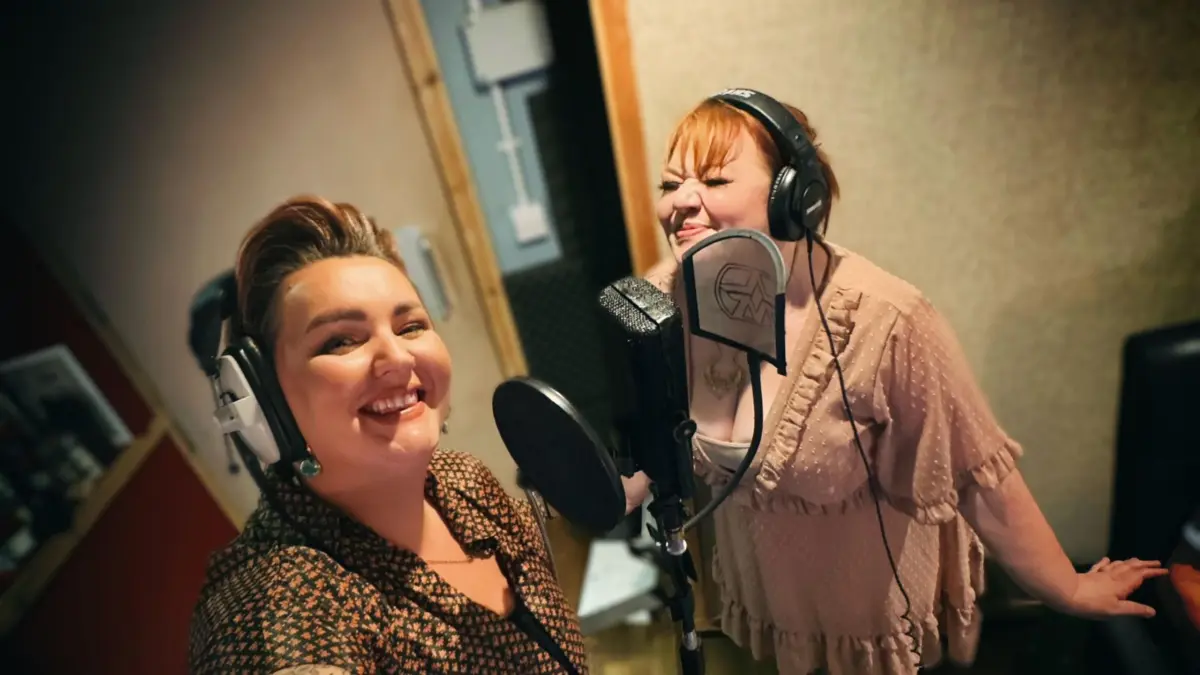
The project originated with Bronwen Lewis, an independent singer-songwriter hailing from Neath, South Wales, who rose to prominence following her appearance on The Voice UK. Driven by a passion for her native tongue and a lifelong admiration for American country music, Lewis took it upon herself to translate the lyrics of Parton’s seminal 1973 hit into Welsh. She recorded a rendition and uploaded it to social media, where it quickly captured the imagination of online audiences, resonating deeply within Welsh-speaking communities and far beyond.
The Parton Family Connection
The video’s viral momentum did not go unnoticed across the Atlantic. Jada Star, a talented vocalist and Parton’s niece, caught wind of the Welsh interpretation. Recognizing both its artistic merit and the personal chord it would strike with her famous aunt—who frequently spoke of her Welsh ancestry—Star reached out to Lewis.
What began as an informal digital interaction swiftly evolved into a formal studio project. The collaboration expanded to include Dolly Parton herself, who laid down her signature vocals from her home base in Nashville, Tennessee. Meanwhile, Lewis and Star recorded their respective parts in the UK.
The Posthumous Launch and Metadata Glitch
The single officially dropped on October 9, marking the second posthumous release from the legendary artist’s estate following her death in late August. Fans flooded streaming platforms to hear the country queen breathe new life into her defining classic, interwoven with the lyrical cadence of the Welsh language.
Joy turned to amusement and mild frustration among bilingual listeners, however, when Spotify’s live-lyrics feature rolled out. The platform displayed the lyrics alongside a clear label indicating "Irish." Screenshots quickly circulated across social media platforms like X (formerly Twitter) and Reddit, highlighting the recurring algorithmic challenge platforms face when parsing lesser-spoken European languages. By the time the BBC approached Spotify for comment, the streaming giant had pulled the lyrics down from the application interface.

Supporting Context & Metrics: A Literary and Musical Milestone
To understand the cultural weight of this bilingual release, one must examine the staggering historical footprint of Jolene and Parton’s legendary career, alongside her verified connection to the Welsh nation.
The Legacy of Jolene
Released in late 1973 as the title track to her thirteenth solo studio album, Jolene remains one of the most recognizable songs in modern music history. Parton famously wrote the song about an episode of marital jealousy early in her marriage to Carl Dean, sparked by a red-headed bank clerk who appeared overly friendly with her husband.
- Chart Performance: The track became Parton’s second solo number-one single on the Billboard Hot Country Singles chart in early 1974 and made a notable crossover into the Billboard Hot 100, peaking at number 60.
- Critical Acclaim: It earned a Grammy nomination in 1974 and has since been inducted into the Grammy Hall of Fame.
- Streaming Milestones: In the digital age, Jolene crossed the coveted one-billion-stream threshold on Spotify alone, cementing its status as an immutable pop-culture touchstone covered by artists ranging from Miley Cyrus and Beyoncé to The White Stripes and Olivia Newton-John.
Dolly Parton’s Career in Numbers
The Welsh Jolene stands as a testament to a career that spanned seven decades:
- Grammy Success: Parton amassed 10 competitive Grammy Awards out of 50 nominations, alongside a prestigious Recording Academy Lifetime Achievement Award.
- Record Sales: She sold more than 100 million records worldwide, making her one of the best-selling music artists of all time.
- Songwriting Output: A prolific writer, Parton penned upwards of 3,000 songs throughout her lifetime, including global anthems like I Will Always Love You and 9 to 5.
Tracing the Welsh Roots
Parton’s affection for Wales was more than just a passing fancy; it was rooted in genealogical reality. During a memorable 2008 concert at the Cardiff International Arena, the country legend openly shared with her Welsh fans that genealogical research had traced her lineage back to Wales.
Following her passing in August, further historical digging by archivists at Conwy Council revealed intricate details regarding her maternal heritage. While initial family lore pointed toward Conwy in North Wales—specifically tied to the lineage of her mother, Avie Lee Owens—subsequent archival research suggested her ancestral roots actually trace further south to Machynlleth in Powys. This genealogical connection makes the Welsh-language recording of her signature song a deeply poetic final chapter.
Official Statements and Industry Silence
As of press time, Spotify has offered no official statement addressing the root cause of the language categorization error. Representatives for the streaming platform acknowledged the BBC’s inquiries by swiftly removing the incorrect lyric feed from the application, but declined to answer specific questions regarding:

- The exact date and time the single and its associated metadata were ingested into their catalog.
- Whether the error originated from automated tagging tools, third-party lyric aggregators (such as Musixmatch), or human data-entry oversight.
- A definitive timeline for when properly attributed Welsh-language lyrics will be restored to the platform.
Representatives for Dolly Parton’s estate and Bronwen Lewis have not yet commented on the software glitch, though fans online have largely treated the mishap with good-natured humor, urging the streaming giant to prioritize linguistic accuracy for regional releases.
Future Outlook: The Digital Frontier for Minority Languages
The incident involving Jolene casts a wider lens on how major technology corporations handle linguistic diversity within global media catalogues. As streaming platforms increasingly rely on automated content moderation and AI-driven metadata tagging, regional languages—particularly Celtic tongues like Welsh, Irish, and Scottish Gaelic—frequently suffer from misclassification or total erasure due to smaller digital footprints in machine-learning training datasets.
For cultural advocates in Wales, the visibility of the Welsh language on global platforms is paramount. While the removal of the Irish lyrics fixed an immediate factual error, fans and purists alike are now watching closely to see how quickly Spotify and its backend partners will restore the lyrics properly tagged as Cymraeg.
Ultimately, the technical hiccap does little to diminish the artistic triumph of the release. The bilingual Jolene remains a shining example of cross-cultural artistic collaboration—a bridge built between the Appalachian mountains of Tennessee and the valleys of South Wales, ensuring that Dolly Parton’s timeless voice continues to echo in every corner of the world, in every language she touched.