Executive Overview
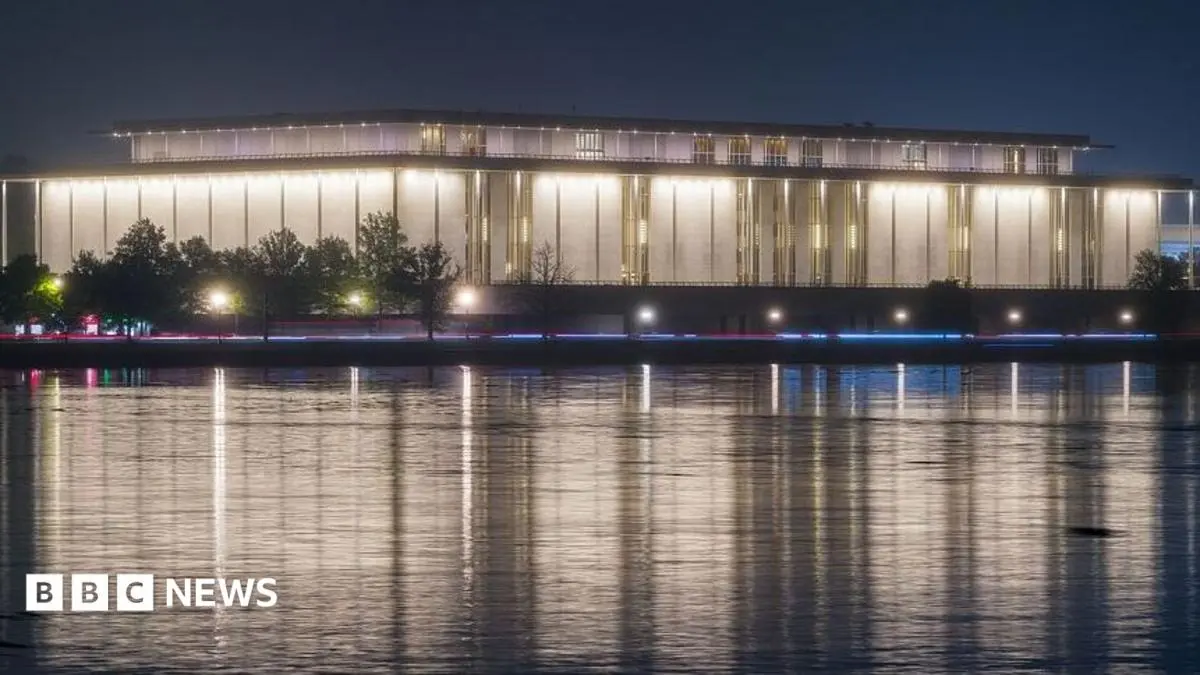
The long-running ideological and legal tug-of-war over the John F. Kennedy Center for the Performing Arts reached a dramatic crescendo on Tuesday when the institution’s board of trustees voted overwhelmingly to shutter the iconic venue for a two-year period. The decision, announced immediately following a decisive ruling by a federal judge, compounds months of institutional turmoil, financial distress, and intense partisan conflict.
Just an hour before the board’s vote, US District Judge Christopher Cooper issued a sharp written order blocking the administration from affixing President Donald Trump’s name back onto the building and campus. This latest judicial roadblock reinforces a previous injunction issued in May, which initially ordered the removal of Trump’s name and halted an earlier attempt to shutter the facility for sweeping renovations.
The conflict centers on a fundamental disagreement over executive authority, federal statute, and the legacy of the nation’s premier living memorial to assassinated President John F. Kennedy. While President Trump—who chairs the Kennedy Center board—insists that the sweeping closures and proposed rebranding initiatives are necessitated by pressing safety concerns, crumbling infrastructure, and a "virtual state of collapse," critics and legal challengers view the actions as a self-serving vanity project. Democratic lawmakers, performing artists, and concerned trustees argue that the maneuvers violate congressional mandates established when the memorial was dedicated in 1963.
Despite the board’s Tuesday vote approving the closure "almost unanimously" for safety reasons, the physical doors of the center may remain open for the time being. Under the terms of Judge Cooper’s injunction, the facility cannot officially close until the federal judiciary formally lifts the temporary block. Legal teams aligned with the administration are widely expected to file expedited appeals—with President Trump vowing to take the battle all the way to the Supreme Court if necessary—leaving the future of the nation’s cultural capital hanging precariously in the balance.
Detailed Chronology: A Timeline of Escalating Conflict
The institutional crisis engulfing the Kennedy Center is not an isolated event; rather, it is the culmination of a systematic effort to reshape the governance, appearance, and branding of Washington, D.C.’s preeminent arts venue.
The Takeover and Initial Rebranding (Late 2024 – February 2025)
The roots of the current controversy date back to late 2024, when President Trump announced plans to introduce various rebranding measures across the nation’s capital, explicitly targeting the Kennedy Center. In February 2025, the administration exercised executive leverage to replace several key trustees on the Kennedy Center board, installing loyalists and cabinet members.
Empowered by this newly reconstituted leadership, the board voted in December 2025 to officially rename portions of the institution. The following day, physical alterations were made swiftly: new metallic lettering bearing Donald Trump’s full name was affixed directly to the center’s front portico, sparking immediate public outcry, a wave of cancellations by booked artists, and a noticeable plunge in ticket sales.
Legal Pushback and the May Injunction
The unilateral rebranding swiftly drew legal scrutiny. A coalition of stakeholders, spearheaded by Democratic board member and Ohio Congresswoman Joyce Beatty, filed a federal lawsuit arguing that the executive branch had overstepped its bounds.
In May, US District Judge Christopher Cooper sided with the plaintiffs. He issued an emergency injunction ordering the immediate removal of Trump’s name from the portico and blocking a simultaneous board proposal to temporarily close the facility for purported renovations. Judge Cooper ruled that the administration lacked the statutory authority to alter a memorial specifically established by Congress to honor John F. Kennedy.
The Summer Escalation (June – August 2026)
Undeterred by the judicial setback, the board doubled down on its strategy throughout the summer months. In August, the board approved a dual-pronged resolution. First, it passed a measure to officially add the inscription, "Renovated and Restored by President Donald J. Trump" to the venue. Second, it approved a lucrative renaming scheme stipulating that the entire surrounding campus would be christened the "President Donald J. Trump Plaza" on the condition that $100 million was successfully raised for ongoing renovations.
The September Showdown
As the calendar turned to September 2026, internal administrative documents leaked to The Washington Post revealed that the Kennedy Center was careening toward insolvency. Administrators warned the board that the institution was in a "precarious fiscal position," facing imminent bankruptcy that would render it unable to cover routine maintenance contracts or payroll obligations within weeks.
Capitalizing on these fiscal warnings, the board convened on Tuesday to vote on closing the center for two years. The vote marked the third time since February that the board had approved such a closure amid ongoing litigation. Yet, in a dramatic display of judicial timing, Judge Cooper issued his comprehensive written block less than an hour before the board’s resolution passed, setting the stage for an unprecedented constitutional showdown between the federal judiciary and the executive-led board.
Supporting Context & Metrics: Finances, Infrastructure, and Legal Hurdles
Beneath the swirling political rhetoric lies a web of complex financial, structural, and legal realities that threaten the viability of the arts institution.
Financial Instability and Bankruptcy Warnings
The fiscal health of the Kennedy Center has deteriorated sharply over the past year. Leadership has pointed to a combination of factors driving the institution toward bankruptcy:
- Box Office Freefall: Following the initial installation of Trump’s name in late 2025 and the subsequent controversies, ticket sales plummeted drastically as major touring acts, orchestras, and theater companies canceled their engagements in protest.
- Cash Flow Crisis: Internal documents reviewed by media outlets in September 2026 indicate that the center lacks the operational liquidity to sustain payroll and basic facility maintenance obligations.
- Injections of Capital: President Trump claimed on Truth Social that he has personally raised $17 million to "keep it afloat." Additionally, Congress has previously approved more than $250 million earmarked specifically for physical renovations at the facility.
Structural Concerns vs. Political Pretense
The administration has aggressively framed the two-year shutdown as an absolute necessity driven by infrastructure failures. Citing safety hazards—including a recent incident where a portion of the building’s interior ceiling collapsed—officials argue that the facility is in a "virtual state of collapse" and unsafe for continued public occupancy.
Conversely, detractors argue that the safety concerns are being weaponized to force a closure that accomplishes two primary political goals:
- Circumventing federal court orders by shuttering the building so physical architectural modifications can proceed out of public view.
- Punishing or sidelining an institution that has resisted executive overreach.
The Statutory Debate
At the heart of the legal battle is a fundamental question of legislative intent. Congress established the Kennedy Center as a living, national memorial to President John F. Kennedy following his assassination in 1963.
Judge Cooper’s written decision emphasized this foundational principle:
"Simply put, Defendants cannot install memorials for President Trump or anyone or anything else at the Kennedy Center without Congress’s blessing."
The judge further noted that the board’s proposal to amend the center’s name directly "bucks a federal court order and a statute Congress enacted" specifically to memorialize Kennedy, "and no one else, at the Center bearing his name."
While Trump’s legal team contends that executive powers grant broad oversight capabilities over federal cultural properties, constitutional scholars and congressional plaintiffs maintain that only an act of Congress can legally alter the naming or commemorative designation of a federally mandated memorial.
Official Statements and Stakeholder Perspectives
The polarization surrounding the Kennedy Center is vividly reflected in the public statements issued by key figures on both sides of the aisle.
The Administration’s Stance
President Trump took to Truth Social following the Tuesday board meeting to defend the closure and signal his intent to fight the judicial block through every available legal channel.
- "The board voted almost unanimously to close the venue for safety reasons," Trump wrote, asserting that the closure would take effect immediately, even as he acknowledged that physical renovation work remains stalled until the courts rule on the validity of the board’s approved naming conventions.
- Signaling an escalation to the highest court, Trump stated that if the federal appeals court issues a negative ruling, the administration is fully prepared to take the case to the Supreme Court. Furthermore, he noted that the U.S. Department of Justice would formally petition for an expedited appeal process.
Congressional Resistance
Congresswoman Joyce Beatty (D-OH), who serves on the board and acts as the primary plaintiff in the ongoing federal lawsuit, offered a scathing critique of the administration’s actions during interviews on Tuesday. Beatty argued that the administration’s narrative of sudden, catastrophic failure is a smokescreen for vanity-driven policy.
- "The Kennedy Center had planned for years to undergo phased renovations while still putting on some performances, instead of fully shutting down," Beatty told the BBC.
- She laid the blame for the institution’s financial hemorrhaging and artist boycotts squarely at the feet of the board chair, asserting that Trump "only cares about the Kennedy Center for his vanity."
- "That is wrong and it is a breach of his fiduciary duty as a trustee," Beatty continued. "Congress established the Kennedy Center as a living memorial to President Kennedy, and I am proud to defend this cherished institution."
Future Outlook: What Lies Ahead for the Cultural Landmark?
As the dust settles on Tuesday’s dramatic developments, the immediate future of the Kennedy Center remains shrouded in legal ambiguity and operational paralysis.
The Procedural Road Ahead
The immediate hurdle for the administration lies in Judge Cooper’s existing injunction. For the two-year closure to legally take effect, the board must formally petition the federal judge to lift the temporary block. Legal analysts expect this formal request to be filed as early as Friday, following signals reported by CNN.
However, Judge Cooper previously stipulated that any request to lift the block must be arrived at "in a prudent manner." Given the judge’s skepticism regarding the board’s motivations and its disregard for statutory frameworks, securing that judicial approval is by no means guaranteed.
The Legal Battlegrounds
If Judge Cooper declines to lift the injunction, the case will immediately escalate to the U.S. Court of Appeals for the D.C. Circuit. With the Department of Justice coordinating an expedited appeal, and President Trump explicitly threatening a Supreme Court petition, the litigation promises to establish landmark precedents regarding the limits of executive power over federal cultural institutions and congressional memorials.
The Fate of Artists and Audiences
Beyond the courtroom battles, the human and cultural cost of the crisis continues to mount. Arts administrators, patrons, and performers watch with mounting anxiety as the institution struggles to maintain its core mission. Whether the Kennedy Center can successfully navigate its current financial insolvency, resolve its infrastructure deficits, and restore its reputation as a unified temple of American arts—free from partisan infighting—remains one of the most pressing cultural questions of the decade.