Executive Overview
In an era where global music is frequently homogenized through digital production and cross-continental sampling, authentic grassroots collaboration remains a rare and precious art form. Enter Bamako Express, a Ghent-based quartet that transcends geographic, cultural, and stylistic divides by fusing the rich traditions of European folk with the vibrant, polyrhythmic heart of West African Mande music.
The ensemble’s debut single, “Yira Ye”—derived from a Bambara phrase translating roughly to “that’s how it is”—serves as the opening manifesto for their eagerly anticipated debut album, L’Ombre du Croco. Scheduled for release via Trad Records on October 30, this landmark project encapsulates a musical dialogue years in the making.
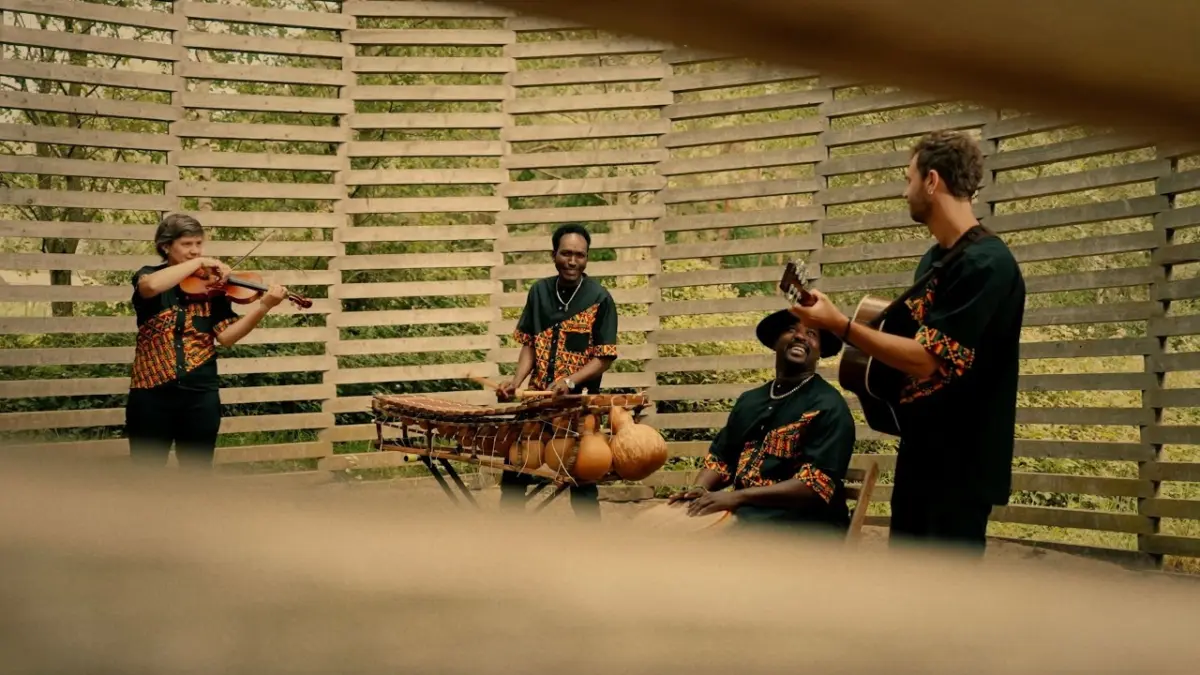
Bamako Express is not a transient studio project born of corporate matchmaking; it is a living, breathing synthesis of seasoned musicianship. The quartet pairs the intricate string work of Belgian folk instrumentalists Anouk Sanczuk (violin) and Florian De Schepper (guitar) with the soulful vocals and masterful balafon artistry of Malian virtuoso Joël Massa Diarra, alongside the thunderous, grounding percussion of Burkinabè master drummer Ousmane Dembélé (djembe and calabash).
Sung entirely in Bambara, their repertoire is a testament to the universal language of rhythm and melody. Over the past year, the band has captivated audiences across Flanders, moving seamlessly between prestigious concert halls and the sweaty, intimate dance floors of balfolk nights—where couples twirl to live acoustic instrumentation. Their meteoric rise was officially recognized in 2026 when they took home the coveted Best Live Band trophy at the Flanders Folk Awards.
With “Yira Ye,” Bamako Express demonstrates how disparate musical heritages can converse on equal footing. By trading melodic responsibilities between Sanczuk’s European fiddle and Diarra’s West African balafon, the track offers a masterclass in intercultural composition. This in-depth report explores the genesis of Bamako Express, the cultural weight of L’Ombre du Croco, the mechanics of their genre-bending sound, and what the future holds for one of Europe’s most innovative acoustic ensembles.
Detailed Chronology: The Evolution of Bamako Express
To understand the sound of Bamako Express, one must trace the winding path that brought four distinct artists from different corners of the globe together in the artistic hub of Ghent, Belgium.
Phase 1: The Roots of the Collaborative Impulse (Pre-2023)
Long before the moniker "Bamako Express" was coined, Sanczuk and De Schepper were already deeply entrenched in the Belgian acoustic and folk revival scene. Sanczuk’s violin playing is characterized by a lyrical grace honed through years of studying traditional European dance tunes, while De Schepper brings a progressive acoustic guitar style that bends the boundaries of folk accompaniment, incorporating elements of jazz and contemporary fingerstyle.
Simultaneously, Joël Massa Diarra and Ousmane Dembélé were navigating their own artistic journeys within the West African diaspora in Europe. Diarra, a custodian of the Mande balafon tradition, carries centuries of oral history and musical technique passed down through generations of West African griots (jeliw). Dembélé, hailing from Burkina Faso, commands the djembe and calabash with an authority that commands both the listener’s ear and the dancer’s feet.
Phase 2: The Ghent Convergence and Live Circuit Conquering (2023–2025)
The quartet’s formation in Ghent was less a calculated industry maneuver and more an inevitable collision of kindred spirits within Belgium’s thriving multicultural music underground. Jam sessions in local acoustic dens quickly revealed an uncanny synergy. While European folk and West African traditions may seem disparate on paper, their shared reliance on modal structures, cyclical rhythms, and communal participation created an instant bridge.
Throughout 2024 and 2025, Bamako Express took their show on the road, testing their material in the crucible of live performance. They conquered two vastly different environments: the seated, attentive audiences of traditional concert halls, and the high-energy, participatory domain of balfolk scenes. In balfolk culture, dancers lock arms and move in synchrony to live bands. Introducing a Malian balafon and a Burkinabè djembe to this ecosystem electrified the dancers, proving that the groove of West Africa is a natural partner to European folk dance steps.
Phase 3: Critical Acclaim and the 2026 Breakthrough
The band’s relentless touring schedule and undeniable live chemistry culminated in early 2026 when they were awarded Best Live Band at the prestigious Flanders Folk Awards. This accolade validated their unique sonic experiment, thrusting them into the upper echelon of the Benelux roots music scene.
With momentum at an all-time high, the quartet entered Studio Trad, collaborating with producer and engineer Jeroen Geerinck. Their goal: to capture the raw, electrifying energy of their live performances while carving out a pristine, studio-quality soundscape. The result of these sessions is their debut album, L’Ombre du Croco, heralded by the October release of lead single “Yira Ye.”
Supporting Context & Metrics: Cultural Synthesis and Musical Anatomy
To fully appreciate the achievement of “Yira Ye” and the broader L’Ombre du Croco album, one must examine the musical mechanics and cultural contexts that make this collaboration so groundbreaking.
The Instrumentarium: Dialogue Across Continents
At the core of Bamako Express’s appeal is the fascinating interplay between their traditional instruments. In a traditional European balfolk setting, the violin traditionally carries the primary melodic weight, driving the dancers forward. Similarly, in Mande music from Mali and Guinea, the balafon—a wooden-keyed percussion instrument with gourd resonators—serves a parallel melodic and rhythmic function.
On “Yira Ye,” this functional synergy is exploited to breathtaking effect. The melody is not monopolized by either culture; instead, it is fluidly passed back and forth between Sanczuk’s violin and Diarra’s balafon. This creates a mesmerizing conversation where European phrasing and West African ornamentation dance around one another.
Beneath this melodic dialogue lies the rhythmic foundation provided by Ousmane Dembélé. Utilizing the djembe and the deep, resonant thump of the calabash (a hollowed-out gourd used as a percussion instrument), Dembélé locks in with De Schepper’s acoustic guitar. De Schepper acts as a bridge between the rhythm section and the melody, providing rhythmic comping before stepping forward for a virtuosic acoustic guitar solo—captured with pristine warmth by Jeroen Geerinck.
Language and Narrative: The Power of Bambara
The choice to sing exclusively in Bambara—a lingua franca spoken by millions across Mali and neighboring West African nations—is a deliberate artistic statement. It grounds the music in an authentic West African storytelling tradition, even when paired with European string arrangements.
The title phrase, “Yira Ye” (“that’s how it is”), reflects a philosophical acceptance of life’s realities, a common theme in traditional Mande griot songs. By delivering these lyrics over a sonic landscape that bridges Ghent and Bamako, the band creates a poignant metaphor for global interconnectedness: despite our geographic and cultural differences, the human experience—expressed through grief, joy, resilience, and dance—remains fundamentally shared.
Production and Distribution Metrics
- Release Date (Lead Single): Available now across major streaming platforms via Bandcamp.
- Album Release Date: October 30, via Trad Records.
- Recording Location: Studio Trad, under the engineering and production helm of Jeroen Geerinck.
- Geographic Footprint: Rooted in Ghent, Belgium, with deep ancestral and artistic ties to Mali and Burkina Faso.
- Key Recognition: 2026 Best Live Band Winners at the Flanders Folk Awards.
Official Statements & Artist Perspectives
The members of Bamako Express have been vocal about the philosophy driving their collaboration, emphasizing mutual respect, artistic curiosity, and the dismantling of rigid genre boundaries.
"When we play together, the borders on the map simply vanish. The violin and the balafon speak the exact same emotional language, even if they learned their vocabulary in different hemispheres."
— Anouk Sanczuk (Violin)
Reflecting on the cultural fusion inherent in the project, the rhythm section notes that the project is built on shared groove rather than forced experimentation.
"In our cultures, music is never isolated from life, from community, or from movement. When we brought our rhythms to the balfolk scene in Flanders, the dancers didn’t care where the beat came from—they just felt it in their feet. That is the true victory of Bamako Express."
— Ousmane Dembélé (Percussion)
Producer Jeroen Geerinck, speaking on the recording sessions at Studio Trad, highlighted the unique challenges and rewards of capturing such a diverse acoustic lineup:
"Recording Bamako Express required a delicate balance. You have the percussive attack of the djembe and calabash, the wooden warmth of the balafon, the intricate fingerpicking of the guitar, and the soaring timbre of the violin. Our goal at Studio Trad was to ensure that every single voice retained its acoustic integrity while breathing together as a single organism. ‘Yira Ye’ is the ultimate proof that we achieved that balance."
Future Outlook: The Road Ahead for Bamako Express
As the music world turns its eyes toward the October 30 release of L’Ombre du Croco, the trajectory of Bamako Express points toward an expansive international future. Winning the Best Live Band award at the 2026 Flanders Folk Awards was not a culmination, but rather a springboard for the quartet.
Upcoming Tour and Live Expansion
Following the rollout of L’Ombre du Croco, Bamako Express is slated to embark on an extensive touring cycle that will take them beyond the borders of Flanders. Plans are underway for showcase performances across major European world music festivals, as well as exploratory cultural exchange projects aimed at bringing their collaborative workshop model back to West Africa.
Redefining the Boundaries of "Folk"
The success of Bamako Express signals a broader shift in how modern audiences and programmers define folk music. No longer confined to strict regional nationalisms, the modern folk movement is increasingly embracing transnational dialogues. By proving that Belgian fiddle tunes and Malian balafon runs can coexist not just harmoniously, but dynamically, Bamako Express has carved out a unique blueprint for twenty-first-century acoustic music.
As listeners stream “Yira Ye” and await the full-length unveiling of L’Ombre du Croco, they are invited into a sonic space where tradition meets innovation, and where two distinct musical worlds become one. As the Bambara phrase reminds us—Yira Ye—that’s just how it is: a natural, undeniable convergence of rhythm, melody, and soul.