Executive Overview
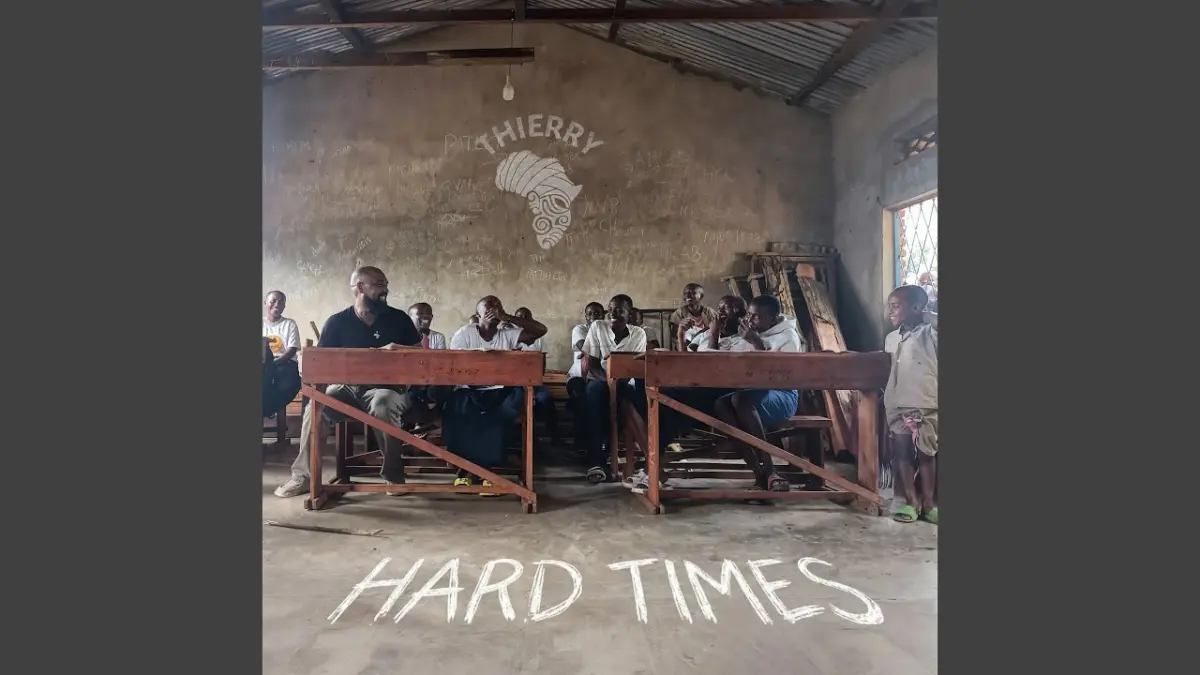
In an era defined by geopolitical friction, shifting borders, and a profound crisis of empathy across the Western world, music remains one of our most potent tools for cultural translation. Enter Thierry Kiranga, a multi-instrumentalist, vocalist, and composer whose personal odyssey spans the fertile shores of Lake Kivu, the urban landscapes of Bujumbura, and the artistic epicenters of Italy. Following the momentum of his March release, "Ciao," Kiranga returned on July 17 with his latest single, "Hard Times," released via Roble Records.
Recorded at the prestigious Roble Factory Studio in Alghero, Sardinia, "Hard Times" is far more than a standard addition to the global-fusion catalog. It is an urgent socio-political commentary wrapped in lush, cross-cultural arrangements. Produced and mixed by Antonio Leardi and mastered by Simone Squillario, the track serves as a sonic bridge between the rhythmic traditions of Central Africa, the harmonic complexities of Afro-Cuban jazz, and the structural elegance of European choral music.
The single arrives on the heels of Kiranga’s critically acclaimed 2023 debut album, Asante, cementing his status as a vital voice in contemporary world music. Yet, what sets "Hard Times" apart is its lyrical directness. Kiranga tackles the systemic failures of modern globalized societies, specifically interrogating a world that markets itself as a beacon of safety, opportunity, and universal human rights, while simultaneously marginalizing and criminalizing the "Other."
Driven by soaring choral harmonies and polyrhythmic percussion, the song offers a profound critique of broken promises. Faced with a hostile socio-political climate, Kiranga’s artistic prescription is neither cynicism nor despair; rather, it is a deliberate return to communal roots, ancestral wisdom, and intergenerational guidance. Backed by his powerhouse eight-piece international ensemble, The Backyard Embassy, Kiranga is not merely releasing a song—he is initiating an urgent dialogue about belonging, displacement, and the shared human condition.
Detailed Chronology: From the Shores of Lake Kivu to the European Stage
To fully comprehend the depth and resonance of "Hard Times," one must trace the winding, often harrowing geographical and artistic trajectory of its creator. Thierry Kiranga’s life story is a testament to resilience, shaped by the tumultuous geopolitical realities of the Great Lakes region of Africa and the realities of modern migration.
Early Foundations in the Heart of Africa
Kiranga’s story begins in Katana, a scenic locality nestled on the western shores of Lake Kivu in the Democratic Republic of Congo (DRC). Born into a region rich in natural beauty yet perpetually bruised by instability, his early childhood was steeped in the vibrant musical ecosystem of Central Africa. However, as civil conflict rippled through the region, Kiranga’s family was forced to cross the border into Bujumbura, the capital of neighboring Burundi.
It was in Bujumbura that Kiranga’s musical identity began to take definitive shape. Surrounded by a culturally diverse urban environment, he immersed himself in the local music scene. Recognizing an insatiable appetite for rhythm and melody, he sought out mentorship from two towering figures of Burundian music: Jean Christophe Matata and Canjo Amissi. Under the tutelage of these masters, Kiranga honed his craft, mastering not only the human voice but also the guitar, drums, and traditional percussion instruments. These formative years instilled in him a deep reverence for musical lineage—a foundational belief that music is a sacred transmission passed down from elders to the youth.
A Rich Musical Pedigree
Music was not merely an extracurricular pursuit for Kiranga; it was his birthright. His familial lineage is deeply intertwined with choral and classical traditions on both sides of his heritage. His mother founded and continues to direct the renowned Santa Cecilia choir, instilling in a young Kiranga an early appreciation for multi-part vocal harmonies and spiritual communal singing.
On his father’s side, the musical pedigree is equally illustrious. His father was not only a skilled tenor who sang with the legendary SOSAT choir (Coro della SOSAT), but also a talented violinist whose artistry reached national audiences during some of Italy’s earliest television broadcasts. This dual exposure to East African rhythmic sensibilities and European classical vocal traditions created a unique artistic synthesis that would define Kiranga’s later career.
Displacement and European Assimilation
The specter of civil war, which had previously driven his family from the DRC to Burundi, eventually forced Kiranga to make another monumental transition—this time across the Mediterranean to Italy. Relocating to a new continent presented the classic immigrant paradox: the promise of physical safety juxtaposed against the cultural dislocation, bureaucratic hurdles, and systemic alienation familiar to many who traverse the Global South-North divide.
Rather than allowing displacement to silence him, Kiranga channeled his experiences into rigorous academic and artistic pursuits. He enrolled in Milan’s prestigious CPM Music Institute (Centro Professione Musica), a premier conservatory founded by Franco Mussida. There, Kiranga dedicated himself to the study of Afro-Cuban jazz, specializing in drums and percussion. This academic immersion allowed him to deconstruct and reconstruct the transatlantic journey of rhythms—tracing the echoes of African percussion as they traveled through the Caribbean and back into contemporary European jazz fusion.
The Rise of Asante and Roble Records
For years, Kiranga operated within the vibrant underground and collaborative circuits of the European world music scene, absorbing influences, refining his compositional voice, and building a network of world-class musicians. This decade-plus period of gestation culminated in the summer of 2023 with the release of his debut full-length album, Asante.
A rich tapestry of Afro-jazz, global folk, and contemporary soul, Asante established Kiranga as a formidable composer and bandleader. The album’s critical success opened doors to wider European touring and caught the attention of Roble Records, a label known for championing boundary-pushing, culturally rich artistry. This partnership set the stage for his 2024 output, beginning with the contemplative single "Ciao" in March, and culminating in the explosive, politically charged release of "Hard Times" on July 17.
Supporting Context & Metrics: The Making and Meaning of "Hard Times"
Production and Sonic Architecture
"Hard Times" was meticulously crafted at the state-of-the-art Roble Factory Studio located in Alghero, Sardinia—a setting that mirrors the island’s historic role as a crossroads of Mediterranean cultures. The recording process was a collaborative triumph, helmed by producer and mix engineer Antonio Leardi, whose deft touch balances organic instrumentation with modern sonic clarity. The track was subsequently mastered by Simone Squillario, ensuring that the dynamic range—from the intimate warmth of the acoustic guitar plucks to the soaring crescendos of the choral arrangements—translates flawlessly across high-end studio monitors and mobile streaming platforms alike.
Musically, "Hard Times" is a masterclass in global fusion. The song’s backbone relies on polyrhythmic percussion structures drawn directly from Kiranga’s Afro-Caribbean and European influences. Beneath the driving rhythms lie lush, call-and-response choral harmonies that evoke the sacred traditions of the Santa Cecilia choir and the communal spirit of East African village gatherings. The result is a soundscape that feels both ancient and aggressively modern.
Lyrical Themes: Interrogating the Global Social Contract
While the groove is undeniably infectious, the lyrical core of "Hard Times" strikes a somber, deeply reflective chord. The song serves as a direct indictment of the contemporary global social contract. Kiranga interrogates the fundamental hypocrisy of a Western-dominated global order that markets itself as a sanctuary of universal human rights, economic prosperity, and democratic safety, yet routinely treats migrant populations, cultural outsiders, and marginalized communities as existential threats.
In lines that resonate with the current sociopolitical climate across Europe and the Americas, Kiranga calls out the broken promises of institutional protection. He highlights the jarring dissonance between official rhetoric—which preaches integration, humanitarianism, and multiculturalism—and the lived reality of xenophobia, systemic disenfranchisement, and border violence.
However, "Hard Times" refuses to wallow in cynicism. Kiranga’s proposed antidote to the alienation of modern life is deeply rooted in his personal history: the act of looking backward to move forward. Just as he sought out the wisdom of Jean Christophe Matata and Canjo Amissi as a teenager in Bujumbura, and just as he observed his parents honoring their artistic and communal traditions, Kiranga urges contemporary society to reconnect with older generations and ancestral wisdom. In a world hurtling blindly toward technological isolation and cultural homogenization, the song argues that salvation lies in communal memory, intergenerational dialogue, and radical empathy.
The Backyard Embassy: A Transnational Collective
Translating the complex arrangements of "Hard Times" and his broader repertoire from the studio to the live stage requires an extraordinary ensemble. Kiranga achieves this with The Backyard Embassy, a dynamic eight-piece band that serves as a microcosm of global unity.
Based across multiple countries, the members of The Backyard Embassy represent a true cross-section of artistic talent from Italy, France, the United States, and Bulgaria. Featuring a robust lineup of bass, guitars, keyboards, complex percussion setups, a blistering horn section, and soaring backing vocals, the band performs with a telepathic synergy. On stage, The Backyard Embassy transforms Kiranga’s deeply personal compositions into sprawling, high-energy celebrations of transnational solidarity. Each member brings their distinct regional and stylistic flavor to the mix, resulting in a live performance that is as musically educational as it is emotionally exhilarating.
Official Statements and Industry Perspectives
The release of "Hard Times" has sparked significant discourse within the European world music community, drawing praise from critics, ethnomusicologists, and industry insiders alike.
Reflecting on the overarching philosophy of the track, Thierry Kiranga emphasizes the necessity of looking beyond the superficial comforts of modern consumerist societies to confront uncomfortable historical and contemporary realities:
"We live in a society that constantly sells the illusion of safety, promising that if you follow the rules, the system will protect you and welcome you," Kiranga explains. "Yet, for millions of people—especially those forced to move, those whose histories are erased or viewed with suspicion—that promise is broken every single day. ‘Hard Times’ is a reflection on that betrayal, but it is also a call to remember who we are. When the modern world fails us, we must look to our elders, to our roots, and to the communities that came before us. That is where true resilience lives."
Producer Antonio Leardi, speaking on the collaborative recording process at Roble Factory Studio, noted the unique challenges and rewards of capturing Kiranga’s expansive sonic vision:
"Working with Thierry is an exercise in cultural listening," Leardi remarked during post-production wrap meetings in Sardinia. "He doesn’t just write songs; he curates conversations between continents. On ‘Hard Times,’ our goal was to ensure that every layer—from the Afro-Cuban percussion grooves to the delicate European choral arrangements—had its own distinct breathing room while serving the larger emotional and political weight of the lyrics. Simone Squillario’s mastering elevated those dynamics, ensuring that the song hits you both in your hips and in your conscience."
Industry analysts have similarly noted the timing of Kiranga’s release. As debates surrounding immigration, national identity, and cultural integration continue to dominate political landscapes across the European Union and beyond, artists like Kiranga provide an essential counter-narrative. By embedding socio-political critique within highly danceable, universally resonant world-jazz arrangements, Kiranga bridges the gap between intellectual discourse and grassroots community engagement.
Future Outlook: What’s Next for Thierry Kiranga
With "Hard Times" now streaming globally across all major platforms, Thierry Kiranga is showing no signs of slowing down. The single represents a crucial stepping stone in the rollout of his post-Asante artistic evolution, signaling a more explicitly sociopolitical and stylistically refined direction for his upcoming musical endeavors.
Upcoming Tour Dates and Live Productions
Throughout the remainder of the year and into the upcoming concert season, Kiranga and The Backyard Embassy are slated to bring their high-energy, politically charged live show to festival stages and cultural centers across Europe. Industry insiders anticipate a heavily expanded touring schedule that will showcase the eight-piece ensemble’s transnational prowess, with particular focus on major world music festivals in Italy, France, and neighboring European territories.
Collaborative Horizons and Sophomore Album Speculation
Beyond the immediate live circuit, sources close to Roble Records hint that Kiranga is already back in the studio conceptualizing his sophomore full-length album. Building upon the foundational success of Asante and the sharp, focused critiques of singles like "Ciao" and "Hard Times," the upcoming project is expected to further dissolve the boundaries between traditional African instrumentation, jazz improvisation, and European classical composition.
As global migrations continue to reshape the cultural fabric of the twenty-first century, artists like Thierry Kiranga are essential navigational guides. By translating personal displacement and historical trauma into universal anthems of resilience and unity, Kiranga proves that music remains humanity’s most resilient bridge.
Stream "Hard Times" now on Spotify, Apple Music, and all major digital platforms, and experience the transnational power of Thierry Kiranga and The Backyard Embassy.