Executive Overview
In the canon of modern music history, few aesthetic divides appeared as vast on the surface as the one separating the snarl of mid-1970s British punk rock from the hypnotic, avant-garde improvisations of West Germany’s Kosmische Musik—disparately known as Krautrock. While 1976 punk iconoclasm was publicly defined by a scorched-earth rejection of art rock, behind closed doors the boundaries were vastly more porous.
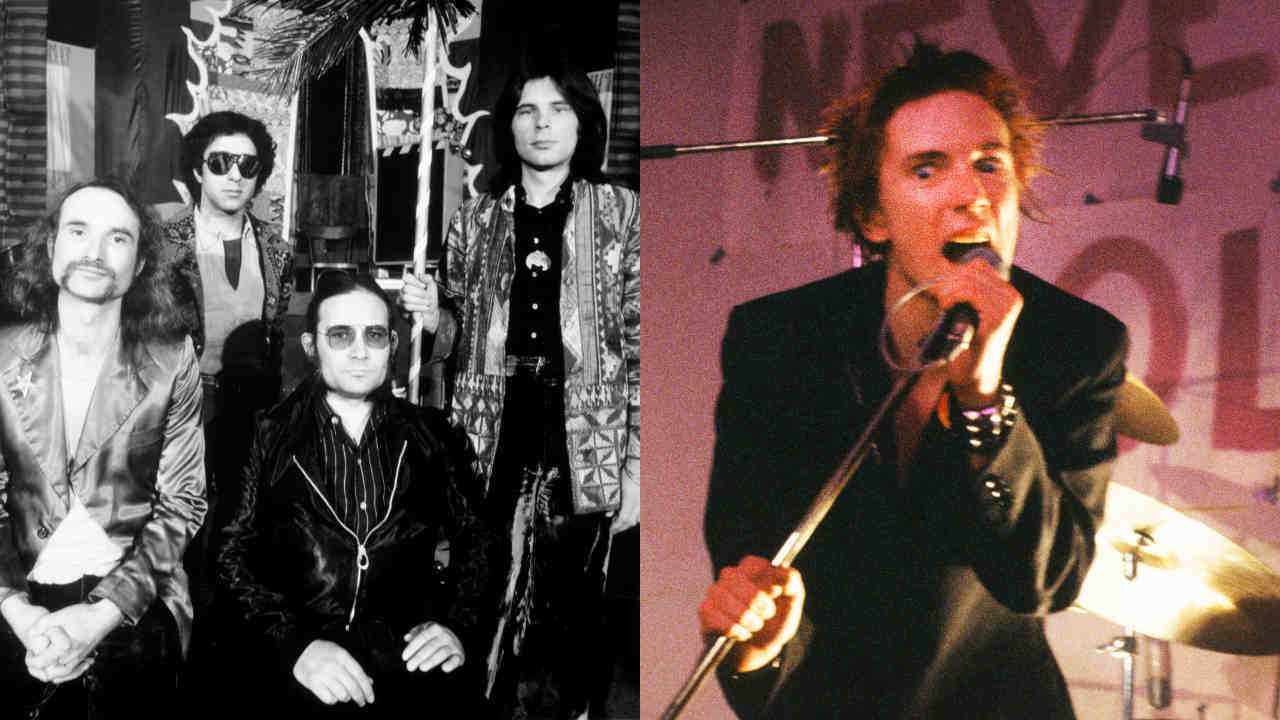
A newly published interview in Prog magazine with Can co-founder and keyboardist Irmin Schmidt has exposed one of the most tantalizing "what-if" scenarios in contemporary music history: immediately following the catastrophic dissolution of the Sex Pistols in early 1978, front man John Lydon (formerly Johnny Rotten) intensely lobbied to become the new lead singer of Can.
Lydon made persistent late-night phone calls attempting to secure an audition as front man for the Cologne-based experimental collective. The prospective union was ultimately thwarted not by stylistic disagreements or industry sabotage, but by simple, immutable timing: Can had already made the internal decision to disband.
Although this cross-cultural supergroup never materialized on stage or vinyl, the revelation offers a compelling lens through which to re-examine the structural DNA of post-punk, Lydon’s subsequent creation of Public Image Ltd (PiL), and the deep sonic debt that 1980s alternative music owed to the German avant-garde.
       [ 1975–1977 ]                               [ Early 1978 ]                           [ Late 1978–1979 ]
 Sex Pistols Rise / Public Antipathy        Sex Pistols Collapse (Winter US Tour)        Lydon Launches Public Image Ltd
 Toward Prog (Pink Floyd T-Shirt)      --->  Lydon Reaches Out to Can Co-Founder   --->   Re-channels Avant-Garde Energy
                                             Irmin Schmidt via Nighttime Calls           into 'First Issue' & 'Metal Box'
       [ 1968–1977 ]                               [ Mid-to-Late 1978 ]
 Can Pioneers Avant-Garde Sound         ---> Can Disbands; Schmidt Declines
 (Mooney / Suzuki Eras)                      Lydon's Request ("It's Too Late")
Detailed Chronology: The Parallel Trajectories of 1978
The Punk Catalyst and the Hidden Record Shelf (1975–1977)
In 1975, a young John Lydon walked into Malcolm McLaren and Vivienne Westwood’s "SEX" boutique wearing a customized Pink Floyd T-shirt over which he had handwritten the words "I HATE". That garment became a founding artifact of British punk rock, signaling a generational revolt against the bloated, multi-keyboard-rigged progressive rock acts dominating the era’s stadium circuits, such as Yes, Genesis, and ELP.
Yet Lydon’s public posture was a strategic exaggeration designed to dismantle a complacent music industry. Privately, Lydon possessed an eclectic, highly sophisticated vinyl collection that extended far beyond three-chord garage rock. He was an avid consumer of:
- Progressive space-rock pioneers Hawkwind
- Dark avant-prog outfits like Van der Graaf Generator (particularly Peter Hammill’s solo output)
- Dub reggae masters like Lee "Scratch" Perry
- German experimental acts, most notably Can, Neu!, and Kraftwerk
Lydon recognized that while British prog had, in his view, largely descended into self-indulgent classical pastiche, the West German underground was forging an entirely new musical language rooted in trance-like repetition, tape manipulation, and radical sonic improvisation.
The Collapse of the Sex Pistols and the Midnight Calls (1978)
By January 1978, the Sex Pistols were disintegrating under the pressures of internal conflict, substance abuse, and management disputes. Following a disastrous U.S. tour that culminated at San Francisco’s Winterland Ballroom on January 14, 1978—where Lydon famously uttered his parting shot, "Ever feel like you’ve been cheated?"—the vocalist formally abandoned the band and discarded his "Johnny Rotten" stage monicker.
Now a free agent stripped of his original platform, Lydon sought an artistic vehicle capable of matching his radical vocal expression and expanding musical vision. He turned his sights toward Cologne, Germany, home to Can’s legendary Inner Space Studio.
As Irmin Schmidt reveals in Prog magazine, Lydon initiated a direct campaign to join the German band:
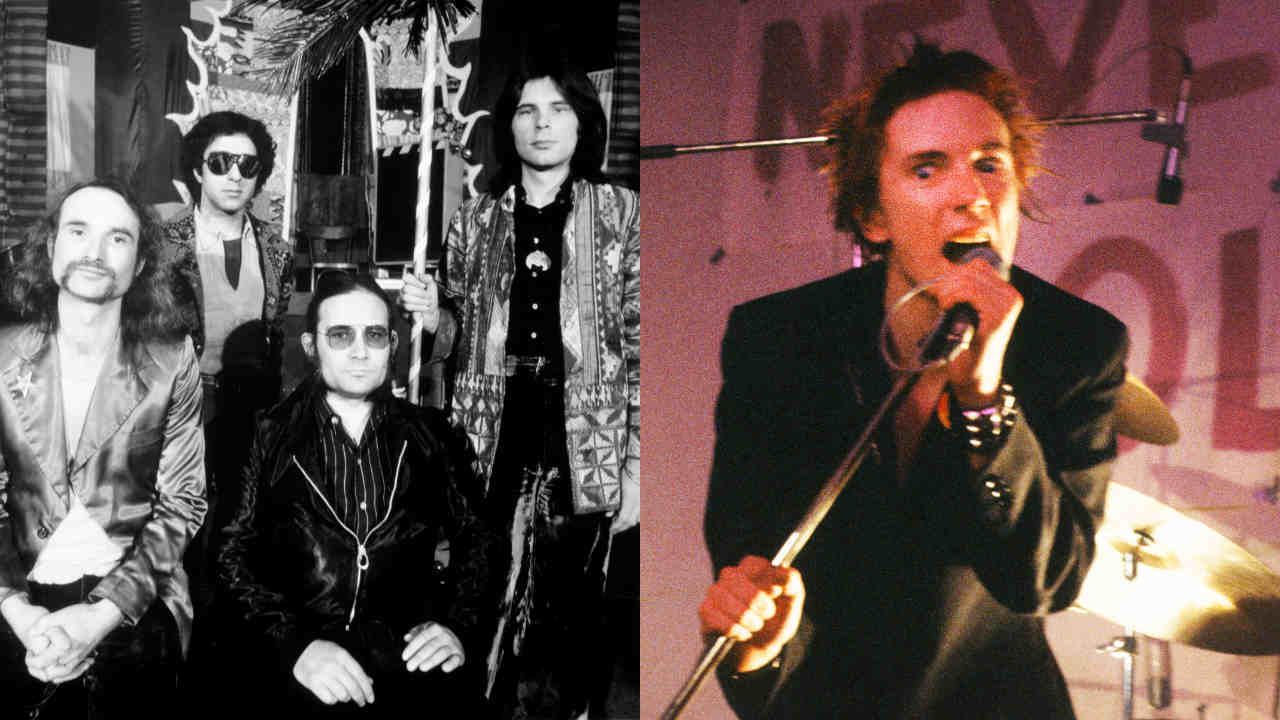
"He was phoning and leaving messages at night, and he really wanted to become the singer of Can," Schmidt recalled. "And I had to tell him, ‘It’s too late. We finished together. We don’t get onstage anymore.’ I know he wanted to sing with us, it was a brilliant idea. In life, there are situations where you can say, ‘What if?’ What would have happened if Johnny Rotten had become the singer? It’s an interesting thought."
The Disbanding of Can: A Door Closed
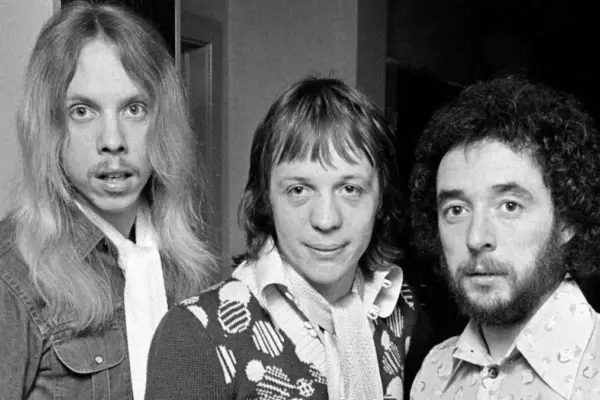
By the time Lydon’s phone calls began reaching Schmidt, Can had reached its natural terminus. Founded in 1968 by Schmidt, bassist Holger Czukay, drummer Jaki Liebezeit, and guitarist Michael Karoli, the group had pushed rock music into uncharted territory across masterpieces such as Tago Mago (1971), Ege Bamyasi (1972), and Future Days (1973).
However, by late 1977 and early 1978, following the addition of former Traffic members Rosko Gee and Rebop Kwaku Baah and the release of albums like Saw Delight and Out of Reach, internal creative fatigue had set in. Czukay had shifted away from active bass playing toward live tape mixing, and the core members agreed that the band’s foundational spirit of collective, unprompted composition could no longer be sustained.
When Schmidt answered Lydon’s calls, the decision was absolute: Can was no longer an active performing or recording unit.
Supporting Context & Musical Analysis: The Vocal and Rhythmic Blueprint
To understand why a Lydon-fronted Can was, in Schmidt’s words, a "brilliant idea," one must analyze the unique role vocalists played within Can’s instrumentation, as well as Lydon’s vocal lineage.
Malcolm Mooney, Damo Suzuki, and the Johnny Rotten Connection
Unlike traditional rock bands where the singer leads the rhythm section, Can treated the human voice as an equal, improvisational instrument within a dense, polyrhythmic soundscape.
               CAN'S VOCAL AND RHYTHMIC EVOLUTION

   [ Malcolm Mooney Era ]            [ Damo Suzuki Era ]           [ The Unrealized Axis ]
        (1968–1970)                      (1970–1973)                      (1978)
  • Percussive, obsessive         • Stream-of-consciousness,      • Snarl, rhythmic attack,
    repetition                      ambient, hypnotic cadence        proto-dub cadence
  • Raw emotional intensity       • Fluid vocal texture           • Abrasive social commentary
            │                                │                                │
            └────────────────────────────────┴────────────────────────────────┘
                                             │
                                             ▼
                             [ John Lydon / PiL Realization ]
                                        (1978–1980)
                             • Bass-heavy *Motorik* groove
                             • Industrial, studio-as-instrument ethos
Can’s primary vocalists each defined an era for the band:
- Malcolm Mooney (1968–1970): An African-American sculptor whose frantic, percussive, and emotionally raw delivery grounded early tracks like Yoo Doo Right and Father Cannot Yell. Mooney’s style relied heavily on mantra-like repetition and rhythmic angst.
- Damo Suzuki (1970–1973): A Japanese street performer whose fluid, stream-of-consciousness delivery shifted seamlessly between whispered melodies, invented languages, and explosive vocal bursts on tracks like Halleluwah and Vitam C.
Lydon’s vocal technique—a rhythmic, abrasive, pitch-shifting attack heavily inspired by dub reggae sound systems and Krautrock intensity—was the spiritual heir to both Mooney and Suzuki. His delivery relied on cadence, sustained sibilance, and dynamic tension rather than conventional blues-based singing, making his voice a natural fit for Jaki Liebezeit’s hypnotic "motorik" rhythms.
| Vocalist | Active Years / Era | Vocal Characteristics | Key Tracks |
|---|---|---|---|
| Malcolm Mooney | 1968–1970 | Rhythmic, obsessed repetition, visceral angst, percussive shouting | Yoo Doo Right, Outside My Door |
| Damo Suzuki | 1970–1973 | Ambient, stream-of-consciousness, fluid lingual shifts, dynamic swells | Halleluwah, Spoon, Vitamin C |
| John Lydon | 1978 (Proposed) | Abrasive sibilance, proto-dub cadences, satirical snarl, rhythmic chanting | Anarchy in the U.K. (Pistols), Theme (PiL) |
Public Image Ltd as the Alternative Reality
Rebuffed by Can’s disbandment, Lydon redirected his radical creative energy into forming Public Image Ltd (PiL) alongside guitarist Keith Levene (formerly of The Clash), bassist Jah Wobble (John Wardle), and Canadian drummer Jim Walker.
The sound PiL debuted on their late-1978 debut single Public Image and their seminal albums First Issue (1978) and Metal Box (1979) served as an explicit bridge between West German experimentalism, Jamaican dub, and post-punk minimalism:
- Bass Centricity: Jah Wobble’s deep, sub-bass grooves mimicked Holger Czukay’s spatial dub mixing techniques.
- Metallic Guitar Work: Keith Levene’s custom aluminum Veleno guitar produced stark, non-traditional textures that echoed Michael Karoli’s work on Tago Mago.
- Rhythmic Rigor: The insistence on unrelenting, non-blues rhythmic structures directly referenced Jaki Liebezeit’s human-clockwork drumming.
Metal Box, housed in an industrial aluminum film canister and recorded at low frequencies designed to rattle speaker cabinets, was essentially Lydon building his own domestic equivalent of Can’s Inner Space Studio.
Official Statements: Insights from Irmin Schmidt and the Krautrock Taxonomy
The "What If?" Scenario
Speaking from his home in France ahead of the release of his solo album Requiem, Irmin Schmidt reflected warmly on Lydon’s attempted audition, viewing it as an organic meeting of minds rather than an absurd mismatch.
"I know he wanted to sing with us, it was a brilliant idea," Schmidt emphasized in the Prog interview. "In life, there are situations where you can say, ‘What if?’ What would have happened if Johnny Rotten had become the singer? It’s an interesting thought."
The statement confirms that Can’s surviving leadership did not view British punk as an enemy, but rather recognized Lydon as an avant-garde artist trapped within the confines of a sensationalist media spectacle.
       HISTORICAL PERSPECTIVE ON GENRE LABELS

   "KRAUTROCK"               "FAUVISM"
   Originally derogatory     Originally derogatory ("Wild Beasts")
   British music press term  French art critic Louis Vauxcelles (1905)

            │                         │
            ▼                         ▼
   Adopted globally as       Adopted globally as a respected
   a neutral descriptor      historical movement

   "I don't care about this term: it's like lemonade, now it's used
    all over the world... It's just a category and journalists
    need categories." — Irmin Schmidt
On the Term "Krautrock" and Categorization
During the interview, Schmidt also addressed the broad, often contentious taxonomy of "Krautrock"—a label originally coined by the British music press (notably Melody Maker and NME) in the early 1970s to categorize disparate German acts like Can, Neu!, Kraftwerk, Faust, and Tangerine Dream.
Schmidt dismissed the semantic debates surrounding the label, drawing a direct parallel to early 20th-century art history:
"I don’t care about this term: it’s like lemonade, now it’s used all over the world," Schmidt explained. "There were a bunch of painters called the Fauvists, which was pejorative, but now nobody thinks about it. It’s just a category and journalists need categories."
Schmidt’s reference points to the 1905 Salon d’Automne in Paris, where critic Louis Vauxcelles derided Henri Matisse and his contemporaries as "les Fauves" ("the wild beasts"). Much like the Fauvists, the German underground absorbed a reductive media descriptor and transformed it into a world-historical artistic movement.
Future Outlook: Legacy, Solo Endeavors, and Historical Reassessment
The revelation of Lydon’s midnight phone calls to Can fundamentally shifts the narrative surrounding post-punk’s birth. It demonstrates that the transition from punk to post-punk was not merely a reaction against punk’s musical limitations, but a deliberate effort by its central figures to merge punk’s raw energy with the structural innovations of European avant-garde art rock.
Upcoming Releases and Legacy Projects
- Irmin Schmidt’s Requiem: The Can co-founder continues to push boundaries well into his eighties. His new solo project, Requiem, set for release on September 26, blends classical orchestration, choral arrangements, and electro-acoustic processing, continuing the lifelong sonic exploration that began at Inner Space Studio.
- The Can Archive Project: Spoon Records and Mute continue to curate live recordings and remastered archival releases from Can’s peak era, providing younger generations of listener with pristine audio documents of the band’s improvisational prowess.
- John Lydon and PiL: Lydon continues to tour and record under the Public Image Ltd moniker, maintaining the fiercely independent, rhythmically focused ethos he formulated in the wake of the Sex Pistols’ collapse and his unsuccessful bid to join Can.
Ultimately, while rock history never got to hear a John Lydon-fronted Can album, the lost connection illuminated by Irmin Schmidt proves that the ideological bridge between London’s 1976 punk explosion and Cologne’s experimental avant-garde was far sturdier than music history previously recorded. The "what if" remains unrecorded on vinyl, but its echo reverberates across the entire post-punk landscape.