In the fast-evolving landscape of electronic music production, the intersection of portability and creative firepower has always been fiercely contested. For over a decade, Akai Professional’s MPK Mini series has reigned supreme as the undisputed champion of portable MIDI controllers, serving as the gateway to beatmaking for countless bedroom producers, touring artists, and studio professionals. Now, the legendary manufacturer is raising the stakes once again with the official launch of the MPK Mini Plus II.
Priced competitively at $169.99 / £134.99 / €159.99 and available immediately, the MPK Mini Plus II is not merely a minor refresh; it represents a comprehensive reimagining of what a 37-key compact controller can achieve. By injecting advanced hardware tools—such as dedicated generative composition modes, a full-color visual display, and robust hardware connectivity including CV/Gate outputs—Akai has engineered a device that bridges the gap between quick, sketch-pad ideation and profound studio integration.
Designed to help modern producers develop ideas, experiment with unexpected variations, and take absolute control of both software and hardware ecosystems, the MPK Mini Plus II arrives as a major statement of intent from a company that continues to define the rhythm-production genre. This comprehensive deep-dive explores the architecture, feature set, workflow integrations, and market positioning of Akai’s latest flagship mini-controller.
Detailed Chronology: The Evolution of the MPK Line and the Birth of the Plus II
To understand the significance of the MPK Mini Plus II, it is essential to trace the evolutionary arc that brought Akai Professional to this juncture. The original MPK Mini revolutionized the market by packing tactile velocity-sensitive pads and a mini-keybed into a bus-powered footprint small enough to slip into a backpack alongside a laptop. Over successive generations, Akai refined the keybeds, improved the pad response, and integrated tighter software ties.
However, the introduction of the original MPK Mini Plus marked a turning point. It expanded the keybed to 37 notes (three full octaves), added dedicated pitch and modulation wheels, and introduced hardware connectivity for modular gear—features historically reserved for larger, more expensive master keyboards.
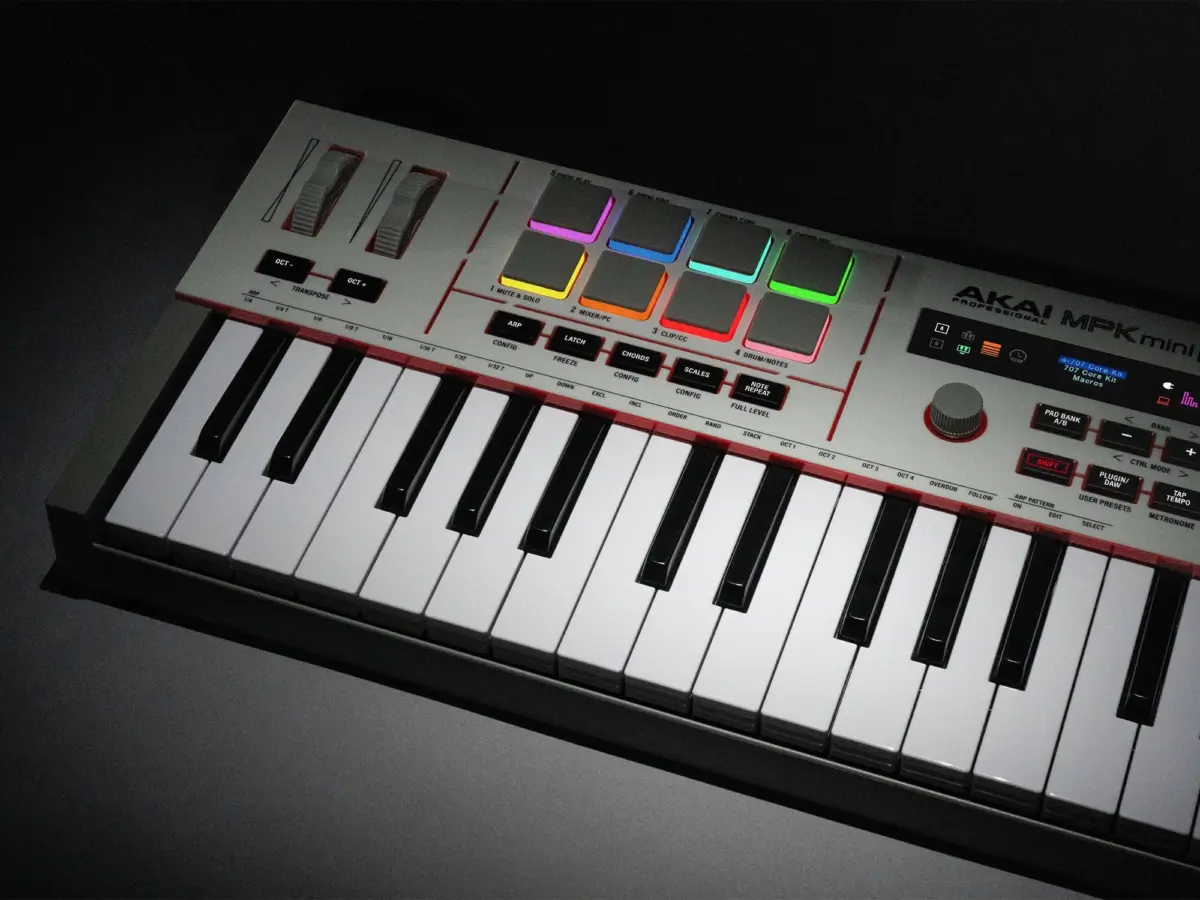
The launch of the MPK Mini Plus II takes this trajectory to its logical conclusion. The device adopts the sleek, streamlined aesthetic language first established by Akai’s MPK Mini IV keyboards a year prior. Gone are the dated industrial contours of earlier iterations; in their place is a refined, modern control surface that feels right at home next to contemporary hardware synthesizers and sleek laptop stands.
Key Hardware Refinements:
Redesigned Control Surface: The front panel has undergone a complete ergonomic overhaul, featuring smoother, more responsive pitch and modulation wheels that offer superior tactile feedback during live performances.
Upgraded 37-Key Mini Keybed: Engineered for improved expression, the new keybed balances tight action with enough resistance to make detailed melodic playing feasible.
RGB Performance Pads: Eight velocity- and pressure-sensitive MPC pads now feature vibrant RGB backlighting, providing clear visual feedback for clip launching, finger drumming, and sample triggering.
Full-Color Display: A crisp, high-resolution color screen eliminates guesswork, providing real-time parameter feedback for internal tools, routing, and device status.
Deep Dive: Inside the Creative Engine and Connectivity Suite
What truly sets the MPK Mini Plus II apart from its predecessor and rival products is its suite of built-in generative and performance tools. Akai has packed the controller with algorithms designed to combat writer’s block and spark spontaneous musical breakthroughs.
Innovative Creative Tools
Glitch & Mutate: These algorithmic tools allow producers to dynamically fracture and transform MIDI sequences on the fly, creating unexpected rhythmic variations and avant-garde glitches with the push of a button.
Strum: Perfect for keyboardists looking to inject organic guitar-like or harp-like strumming patterns into chord progressions effortlessly.
Freeze: Captures and sustains current arpeggiated or sequenced phrases, freeing up the producer’s hands to tweak filters, effects, or macro controls.
Expanded Arpeggiator & Note Repeat: Building on Akai’s legendary MPC heritage, the updated Note Repeat and advanced Arpeggiator modes give users precise rhythmic control over patterns, swings, and octave spreads.
Unprecedented Connectivity
In an era where hybrid setups—combining software Digital Audio Workstations (DAWs) with analog modular hardware—are the norm, the MPK Mini Plus II acts as a central nervous system.
For modular and hardware enthusiasts, the inclusion of three CV/Gate outputs is a game-changer at this price point. Users can sequence vintage analog synthesizers and Eurorack modular gear directly from the keyboard’s internal sequencer or arpeggiator, bypassing the need for expensive MIDI-to-CV converter boxes. Furthermore, the inclusion of a full-size 5-pin MIDI output ensures seamless compatibility with hardware drum machines, grooveboxes, and desktop synth modules.
Supporting Context & Metrics: Software Integration and Value Proposition
Hardware is only as good as the software it commands, and Akai has ensured that the MPK Mini Plus II is universally fluent across the modern production landscape.
DAW and Ecosystem Compatibility
MPC Desktop & MPC 3 Integration: Functions seamlessly as a standalone controller or as an extension of the iconic MPC software workflow, allowing producers to bring the legendary MPC groove-box experience directly to a portable format.
Universal DAW Support: Out-of-the-box, dedicated mapping and integration profiles are provided for industry heavyweights including Ableton Live, Logic Pro, Cubase, and FL Studio.
Native Instruments NKS Compatibility: Full support for Native Instruments’ Komplete Kontrol ecosystem ensures instant, hands-on control over thousands of virtual instruments and effects plug-ins.
The Included Studio Instrument Collection
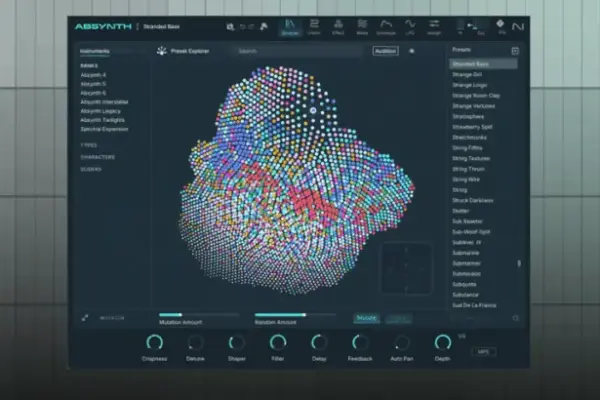
To ensure buyers can make music straight out of the box, every MPK Mini Plus II ships with a robust software bundle featuring over 1,000 professional sounds curated from legendary audio pioneers:
AIR Music Technology: Cutting-edge virtual instruments, synthesizers, and effects processors.
Moog Music: Authentic emulation and sonic shaping tools honoring analog synthesis royalty.
Akai Professional: Signature drum kits, acoustic elements, and modern electronic presets.
With a global retail price point of $169.99 / £134.99 / €159.99, the MPK Mini Plus II offers an extraordinary price-to-performance ratio, undercutting many specialized modular sequencers while offering a fully realized MIDI controller keyboard into the bargain.
Official Statements and Industry Perspective
The philosophy driving the development of the MPK Mini Plus II speaks directly to the needs of modern musicians who demand deep functionality without sacrificing mobility.
"MPK Mini has introduced a lot of creators to hands-on making music, and MPK Mini Plus II is built for the creator who’s ready for the next step," explains Andy Mac, Executive Manager of Content, Artist Relations and Business Development at Akai Professional.
"Tools like Glitch, Mutate, and Strum help turn simple ideas in new directions, while deeper MPC, DAW, MIDI and CV integration gives creators room to build a much bigger setup around one compact keyboard."
Echoing these sentiments, the development team emphasizes that the core objective was to keep creative decisions directly in the hands of the artist. By shifting algorithmic generation and pattern variation onto the physical hardware surface, Akai aims to pull producers away from computer screens and mouse clicks, restoring a tactile, visceral connection to the music-making process.
Future Outlook: The New Standard for Hybrid Production
As the boundaries between hardware performance and software-based production continue to blur, controllers like the Akai MPK Mini Plus II point the way forward for instrument design. By successfully packing advanced generative tools, modular CV connectivity, and a gorgeous color display into a 37-key chassis that costs less than $170, Akai has raised the bar high for competing manufacturers.
For the bedroom producer building their first serious rig, the travelling touring musician needing a reliable master keyboard on the road, or the modular enthusiast looking for a compact sequencing brain, the MPK Mini Plus II delivers an exceptionally compelling package. It honors the legacy of its predecessors while fearlessly charting a course into the future of hybrid electronic music creation.
The Akai MPK Mini Plus II is available now. For full specifications, software details, and retail availability, visit the official Akai Professional website.