Executive Overview
The modern music industry is often perceived as an impenetrable fortress, guarded by gatekeepers, nepotism, and rigid hierarchies. For aspiring producers located far from the traditional epicenters of London, Los Angeles, or New York, the barrier to entry can seem insurmountable. Yet, history repeatedly proves that audacity, combined with unyielding self-belief, can shatter even the most formidable walls.
This is the narrative of Caesar Edmunds, a Singapore-born producer whose journey from a geography far removed from the global music trade to the upper echelons of British recording studios serves as a masterclass in tenacity. Told he had "no chance" of making a career in music, Edmunds forged his own path through sheer persistence. His career-defining break came not through a prestigious internship program or industry showcase, but through a classic, high-stakes gambit: a relentlessly pursued cold email to legendary producer Alan Moulder.
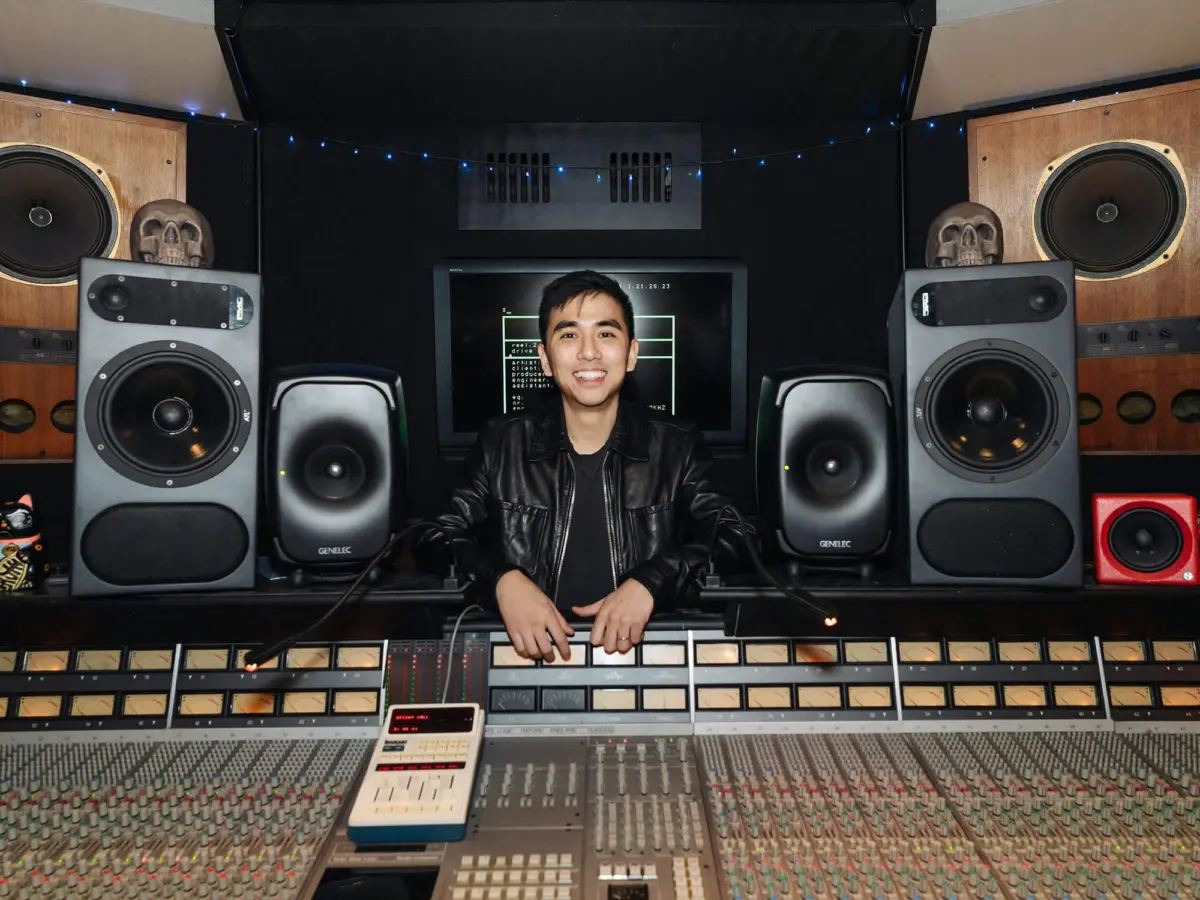
Appearing as a guest on Season 8 of MusicTech’s My Forever Studio podcast, Edmunds reflected on the improbable series of events that transitioned him from an ambitious outsider to working alongside rock royalty like Foals and Led Zeppelin within his first fortnight in the professional arena. Today, Edmunds operates out of his own meticulously realized creative sanctuary at London’s historic Battery Studios. However, this triumph of endurance is tempered by contemporary urban realities. Battery Studios—a legendary incubator of British rock and pop history that hosted acts ranging from AC/DC and Iron Maiden to Robbie Williams—is currently facing the existential threat of demolition to make way for residential flats.
This feature explores Edmunds’ remarkable ascent, the philosophy of professional audacity that propelled him, the rich sonic legacy housed within Battery Studios, and the wider industry battle to preserve the physical spaces where modern music history was forged.
Detailed Chronology: The Making of a Producer
Overcoming the Odds in Singapore
Growing up in Singapore, Caesar Edmunds faced a cultural and geographical vacuum regarding a viable pathway into the Western-dominated commercial music industry. To many around him, the aspiration to work behind the mixing console of a world-class recording studio was dismissed as a pipe dream. Traditional academic and career advice pointed toward conventional, risk-averse professions.
Rather than succumbing to these limitations, Edmunds cultivated a resilient self-belief. With zero prior professional experience and no familial connections to the trade, he took a monumental leap of faith: he applied for a Sound Technology course in the United Kingdom. Relocating to the UK marked the first major turning point in his life, placing him physically within the crucible of the British music scene, though the challenge of securing practical, high-level industry experience still loomed large.
The Art of the Cold Email: Hounding Alan Moulder
Entering the UK education system was merely the first hurdle; breaking into commercial recording studios required a different caliber of strategy. Edmunds identified Alan Moulder—the legendary producer and mix engineer renowned for his seminal work with Nine Inch Nails, My Bloody Valentine, The Smashing Pumpkins, and Arctic Monkeys—as his ultimate sonic hero.
Determined to work under Moulder, Edmunds initiated a campaign of persistent networking. Recognizing that formal application routes rarely yielded results for unknowns, he targeted peers who had previously completed work experience with the producer.
"A few of my friends had done work experience with [him] and then I hounded them," Edmunds recalls with a candid laugh. "One of them broke and gave me his email."
Armed with the coveted contact address, Edmunds drafted a direct, unpolished, but deeply earnest cold email. Bypassing standard protocol, he laid his ambitions bare: "I just emailed saying, ‘Hey, Alan, big hero of mine… Can I come round and do work experience, please?’"
Remarkably, Moulder responded favorably to the raw enthusiasm of the outreach, inviting the young hopeful into his studio environment.
Thrown into the Deep End: Foals and Led Zeppelin
Edmunds’ entry into professional studio life was baptism by fire. There was no gentle acclimatization period involving coffee runs or cable coiling; he was thrust immediately into high-pressure production environments.
On his very first day on the job, Edmunds found himself assisting with the mixing sessions for Foals’ acclaimed track Inhaler. The sheer velocity of the transition—moving from a student in Singapore to engineering sessions for one of indie-rock’s most vital modern bands—was dizzying. Yet, the pinnacle of his introductory week defied belief.
Impressed by his work ethic and technical aptitude during the initial days, Moulder pulled Edmunds aside at the end of the week.
"Alan asked me, ‘Hey, do you wanna, do you wanna stick around [for another project]?’" Edmunds recounts. The conditions were shrouded in strict secrecy: "The terms were that I couldn’t tell anyone or my parents anything… Then when he pressed play [on the track], and it was Good Times Bad Times by Led Zeppelin."
The experience of working on archival material for arguably the greatest rock band of all time was, in Edmunds’ words, "mind-blowing." What began as a one-month work placement snowballed into an enduring professional relationship. Moulder encouraged Edmunds to complete his university degree, promising him a welcome return upon graduation. That fateful cold email had effectively launched a career.
Supporting Context & Metrics: The Anatomy of a Modern Studio Hub
To understand the weight of Edmunds’ current workspace, one must examine the institutional lineage of Battery Studios. Originally established as Advision Studios before becoming part of the Battery complex operated by Zomba, the facility has occupied a mythic status within the global recording landscape for decades.
A Legacy in Brick and SSL
Located in North London, Battery Studios has borne witness to the creation of some of the most enduring recordings in popular music history. Its tracking and mixing rooms have hosted an eclectic pantheon of artists, crossing genres from heavy metal to synth-pop and alternative rock.
- Rock Royalty: Legendary acts such as AC/DC, Iron Maiden, and Black Sabbath have tracked pivotal material within the complex’s acoustic spaces.
- Pop and Alternative Milestones: The facility has been instrumental in shaping modern radio staples. Edmunds frequently recounts local studio lore regarding his primary workspace: "I’ve heard stories that like Robbie Williams’ Angels was mixed in my room. It was made on my SSL 4000G."
The Technical Heartbeat
The Solid State Logic (SSL) 4000G series console referenced by Edmunds is not merely a piece of hardware; it is an industry-defining artifact. Introduced in the late 1980s, the SSL 4000G became the undisputed gold standard for commercial mixing throughout the 1990s and 2000s. Its proprietary Total Recall system, coupled with the legendary punch of its VCA bus compressor, helped define the radio-ready sheen of modern rock and pop.
For Edmunds, sitting behind the very desk that shaped multi-platinum records provides an unbroken lineage connecting him to the engineers and producers he idolized during his youth in Singapore.
Official Statements & Industry Perspectives
The discourse surrounding studio preservation has reached a critical juncture in major metropolitan areas across the globe, particularly in London. Real estate pressures frequently prioritize residential development over cultural infrastructure.
Caesar Edmunds on the Threat to Battery Studios
During his appearance on My Forever Studio, Edmunds did not shy away from addressing the precarious future of his current professional home. Developers have tabled planning applications aimed at converting the historic studio complex into residential apartments.
"Right now, landlords are putting in planning permission to try to turn it into flats," Edmunds states with palpable frustration. "While London might need more flats, we also need more recording studios!"
His sentiment echoes a broader industry alarm. The systematic eradication of commercial recording spaces forces creators into isolation, stripping away the collaborative ecosystem that physical studios provide. A recording studio is not merely a collection of walls and acoustic treatment; it is a creative incubator where accidental collisions between artists, engineers, and producers yield cultural breakthroughs.
The My Forever Studio Philosophy
Edmunds’ reflections on studio architecture and gear curation form the core of his participation in MusicTech’s podcast series. Season 8 of My Forever Studio challenges top-tier producers and songwriters to conceptualize their ultimate, uncompromised workspace.
While the exercise allows for boundless creativity, it operates under stringent rules:
- Guests are allocated a strictly limited inventory of items for their dream space.
- Selections must be curated with extreme precision, balancing operational utility with personal sentiment.
- The format heavily emphasizes retrospection, sharing industry anecdotes, and dissecting the philosophical choices behind gear acquisition—all while operating under a strict ban on generic plugin bundles.
Future Outlook: Protecting the Sonic Blueprint
As Caesar Edmunds looks toward the future, his trajectory serves as both an inspiration to emerging producers and a cautionary tale regarding the state of music infrastructure.
The Persistence of the Human Element
In an era dominated by in-the-box production, laptop bedroom studios, and algorithmic composition tools, Edmunds’ career underscores the irreplaceable value of physical studio spaces and mentorship. His journey from an isolated music fan in Singapore to a trusted collaborator of Alan Moulder proves that technical skills can be acquired, but relentless drive and interpersonal audacity are innate.
The Battle for London’s Studios
The immediate threat facing Battery Studios is emblematic of a wider urban crisis. If London—historically recognized as one of the world’s primary music capitals—continues to permit the demolition of its acoustic landmarks for real estate profit, the pipeline for future generational talent risks drying up. Without physical spaces where engineers can learn the craft from masters, the tacit knowledge embedded in rooms like Battery’s SSL-equipped control rooms will be lost.
Industry advocates, musicians, and producers are mobilizing to halt the conversion of these cultural spaces. Public petitions, such as the campaign to save Battery Studios hosted via Change.org, represent the frontline defense against the sanitization of music cities.
For Edmunds, the fight to preserve Battery Studios is personal. It is about defending the room where Angels was mixed, where the legacy of British rock was continually refined, and where a kid from Singapore ultimately found his forever studio.
To support the ongoing preservation of London’s recording heritage, concerned fans and professionals can sign the petition to save Battery Studios via Change.org.
Catch Caesar Edmunds’ full episode on Season 8 of MusicTech’s My Forever Studio, available now on Apple Podcasts, Spotify, and the official MusicTech platform.