Executive Overview
In the dynamic landscape of 1970s jazz, few moments capture the kinetic synergy of hard bop and modal exploration quite like the March 26, 1975, Paris performance of the Clifford Jordan Quartet. Led by legendary tenor saxophonist Clifford Jordan alongside pianist Cedar Walton, bassist Sam Jones, and drummer Billy Higgins, the concert has long held a near-mythic status among crate-diggers, vinyl enthusiasts, and jazz historians. Now, this seminal performance is receiving the high-fidelity resurrection it has long deserved.
Spearheaded by producer Zev Feldman under Time Traveler Recordings’ Muse Master Edition Series, the archival release of Night of the Mark VII brings listeners back to an intimate Parisian room where roughly 300 devotees witnessed jazz royalty at the peak of their creative powers. Named after the brand-new Selmer Mark VII tenor saxophone that awaited Jordan upon his arrival in the French capital, this album marks the historic recorded debut of his signature horn.
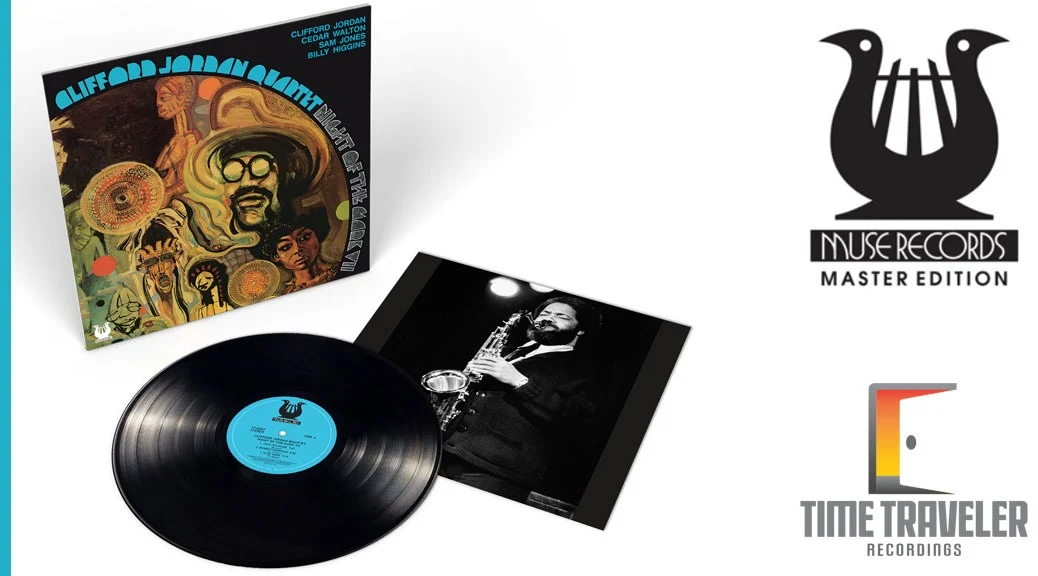
Mastered directly from the original analog tapes by Matthew Lutthans at The Mastering Lab, pressed on 180-gram vinyl at Furnace, and housed in a deluxe, hand-numbered Stoughton tip-on jacket, the release is a masterclass in audiophile curation. It includes fresh liner notes by renowned jazz journalist Willard Jenkins and rare period photography by Raymond Ross. More than just a nostalgic reissue, Night of the Mark VII offers an unfiltered, historically vital window into the working chemistry of a legendary ensemble operating at the absolute height of its collective powers.
Detailed Chronology
March 1975: The Arrival in Paris and the Birth of a New Sound
When Clifford Jordan touched down in Paris in March 1975, he was riding a profound mid-decade career resurgence. The European jazz circuit had always embraced him with open arms, but this particular tour carried a distinct air of anticipation. Waiting for him was a brand-new instrument: a Selmer Mark VII tenor saxophone.
Selmer’s Mark VII release was a major talking point in the woodwind community at the time, and Jordan was among the first elite jazz artists to put the instrument through its paces in a live setting. On the night of March 26, before an intimate audience of just over 300 people, Jordan debuted the horn. The chemistry on stage was instantaneous and fierce. Joined by his frequent collaborators Cedar Walton on piano, Sam Jones on bass, and Billy Higgins on drums, Jordan utilized the performance not merely as a test run for new hardware, but as a crucible for improvisational combustion.
The Setlist and the Live Experience
According to Jordan’s later recollections, the quartet did not ease the Parisian audience into the evening. Instead, they opened "out of left field" with Cedar Walton’s mesmerizing modal composition, "Midnight Waltz." Jordan described the effect as feeling as though "eight o’clock had suddenly turned into midnight," kick-starting the concert from the middle out.
However, when the performance was originally pressed to LP, the sequencing was restructured. Side one boldly opened with Bill Lee’s soulful, Latin-tinged tribute "John Coltrane," followed by Jordan’s knotty 1965 composition "Highest Mountain" and Thelonious Monk’s perennial swaggering standard, "Blue Monk." "Midnight Waltz" was held back for the dramatic opening of side two, paired with Sam Jones’s rip-roaring bop masterclass, "One For Amos."
This sequence showcased the quartet’s expansive stylistic range. On "John Coltrane," the band layered a vocal chant of the saxophone legend’s name over a hypnotic bassline, creating a spiritual atmosphere that British saxophonist Nat Birchall would later explicitly echo on his 2014 double album Live In Larissa.
Conversely, "Highest Mountain" presented technical hurdles. Comprising two 23-bar sections, the complex tune famously took even its composer, Cedar Walton, five years to master comfortably. On this recording, listeners can hear Jordan wrestling with the upper and lower registers of his brand-new Selmer Mark VII, digging deep into a guttural tone before yielding the floor to Billy Higgins’s sparkling drum solo. The tune famously concludes with a rapid-fire succession of "Amens"—a fitting benediction for a rapturous performance.
Supporting Context & Metrics
The Interconnected Web of 1970s Jazz Collectives
To fully understand the gravity of Night of the Mark VII, one must map the sprawling web of associations connecting Jordan, Walton, Jones, and Higgins during this era. These four musicians were not a pick-up band assembled for a European tour; they were core architects of the post-bop and modal jazz canon, frequently crossing paths in recording studios and underground jazz haunts.

- The Strata-East Connection: Just over a year prior, in October 1973, Jordan, Jones, and Higgins—alongside pianist Kenneth Barron—recorded the monumental double album Glass Bead Games for the independent cooperative label Strata-East. That record featured early iterations of tunes like "One For Amos" and "John Coltrane," cementing the telepathic musical bond shared by the rhythm section.
- Eastern Rebellion Precursors: In 1974, Cedar Walton founded his legendary working band, Eastern Rebellion. The original touring line-up featured Jordan, Walton, Jones, and Louis Hayes on drums. By the time the group entered the studio to record their debut album in December 1975, George Coleman had taken over the tenor chair, making the Paris recording a rare snapshot of Jordan holding the tenor seat in the earliest gestation of that historic unit.
- Muse Records & Boomer’s Residencies: The Muse label had also documented this creative ecosystem, capturing Jordan, Walton, and Jones playing "Highest Mountain" and "Blue Monk" live during Walton’s infamous two-volume A Night at Boomer’s residencies, featuring Louis Hayes on the kit.
Audiophile Specifications and Archival Preservation
The meticulous restoration process behind Time Traveler Recordings’ edition bridges the gap between historical preservation and modern audiophile demands.
| Production Metric | Technical Specification |
|---|---|
| Source Material | Original Analog Master Tapes |
| Mastering Engineer | Matthew Lutthans at The Mastering Lab |
| Vinyl Pressing | 180-Gram Heavyweight Vinyl at Furnace |
| Packaging | Deluxe Hand-Numbered Stoughton Tip-On Jacket |
| Accompanying Media | New Essay by Willard Jenkins & Rare Photography by Raymond Ross |
Despite the state-of-the-art remastering, the recording retains the raw, unvarnished charm of its original club environment. The audio engineer’s notes and critical reviews point to the distinct, woody timbre of an upright piano cutting through the mix—a reminder of the humble, grass-roots settings where some of the greatest jazz history was written. It falls somewhat short of a pristine Rudy Van Gelder studio session, but its documentary value and sheer emotional intensity far outweigh any acoustic limitations.
Official Statements and Industry Reception
The revival of Night of the Mark VII is part of a broader cultural reckoning with the deep vaults of 1970s independent jazz, driven largely by reissue coordinator Zev Feldman. Known throughout the industry as the "Jazz Detective," Feldman has made a career out of unearthing lost tapes and giving overlooked masterpieces a second life.
Speaking on the curation of the Muse Master Edition Series—which has previously spotlighted lost or rare gems by Woody Shaw (Love Dance), Roy Brooks (The Free Slave), Carlos Garnett (Cosmos Nucleus), and Kenny Barron (Sunset to Dawn)—Feldman emphasizes the urgency of preserving these dynamic live performances before the physical tapes degrade entirely.
Jazz critics and historians have similarly lauded the release. Veteran writer Willard Jenkins, who penned the definitive new liner notes for the package, underscores the contextual importance of Jordan’s late-career renaissance:
"Clifford Jordan was a musician who never chased trends; he let his tone, his phrasing, and his profound compositional intellect speak for themselves. Capturing him at this precise juncture—with a brand-new horn in his hands and his most trusted collaborators at his flank—is nothing short of a historical gift."
Future Outlook
As the vinyl revival continues to mature, the demand for authentic, historically rigorous jazz reissues shows no sign of slowing down. Projects like Time Traveler Recordings’ Muse Master Edition Series are establishing a new gold standard for archival releases, proving that modern consumers crave not only superior sound quality through analog mastering and 180-gram pressings, but also deep contextual storytelling via comprehensive liner notes and rare visual ephemera.
For Clifford Jordan fans and collectors of 1970s modal and hard bop, Night of the Mark VII acts as a crucial missing puzzle piece. It chronicles the exact moment an established master chose to reinvent his physical approach to the instrument, pushing his quartet to new heights of collective expression in front of a mesmerized Parisian audience.
As further tapes from this golden era of independent jazz are sought, restored, and pressed for future generations, releases like Night of the Mark VII stand as a towering reminder of a time when jazz was forged in the heat of the moment, fueled by brotherhood, craftsmanship, and unyielding artistic integrity.