Executive Overview
Artificial intelligence has established a profound foothold within the modern music production landscape, arriving with a disruptive velocity that has radically altered creative workflows, generation techniques, and sound design. In a shockingly compressed timeline, machine learning has evolved from a novelty into an inescapable infrastructure underpinning contemporary audio software. Yet, this rapid technological expansion has been accompanied by a deep sense of unease. For many artists, producers, and engineers, the prevailing narrative of AI in music has been defined by an amoral ethos and deeply dubious legal justifications. The overarching methodology of several major tech developers has relied on ingesting the sum total of human-made musical history without authorization, effectively vacuuming up copyrighted works to train opaque algorithms, only to belch out derivative outputs that threaten the livelihoods of the human creators who inspired them.
This extractive model—often summarized by a casual "sucks to be you" industry attitude—has drawn sharp opposition from the creative community. However, a parallel movement is quietly gathering momentum. A growing cohort of audio developers, software engineers, and forward-thinking companies are proving that machine learning and artistic integrity are not mutually exclusive. These innovators are charting a different path: building tools designed collaboratively with musicians, compensating rights-holders fairly, and strictly refusing to harvest user data for background training.
This guide explores the current ecosystem of ethical AI music plugins and workstations. By examining brands that prioritize artist-authorized data, revenue-sharing models, and transparent development practices, we highlight the tools that allow creators to harness the power of artificial intelligence without compromising their ethics.

Detailed Chronology: The Evolution of Ethical Audio AI
The trajectory of AI in music did not begin with the controversial text-to-song generators that dominate today’s media headlines. Its origins trace back more than a decade, laying the groundwork for the current generation of creator-focused tools.
2014: The Canary in the Coal Mine
Long before vocal deepfakes and full-track generation algorithms entered the public lexicon, automated audio processing was quietly emerging. In 2014, the launch of algorithmic mastering platforms—most notably LANDR—introduced computer-driven audio finishing to the market. Initially met with skepticism by traditional audio engineers, early systems demonstrated that computational models could successfully analyze and enhance commercial mixes. Over the ensuing decade, rather than relying on uncredited data scraped from the web, pioneering companies began refining their neural networks by training algorithms directly on the work of consenting, professional mastering engineers, establishing an early precedent for collaborative technological development.
The Shift Toward Real-Time Timbral Transformation
As machine learning frameworks advanced beyond simple frequency balancing, developers turned their attention to timbre, synthesis, and vocal manipulation. The introduction of platforms like Neutone marked a pivot toward real-time audio transformation. Recognizing the ethical minefield of unauthorized voice and style cloning, these companies deliberately sourced their training datasets exclusively from in-house recordings, public domain archives, and direct artist collaborations. This era established the legal and operational framework of revenue-sharing models, ensuring that creators contributing to AI models received direct financial compensation.

The Rise of Artist-Authorized Voice Cloning
The mid-2020s witnessed an explosion of generative voice models, which quickly gained a notorious reputation due to unauthorized pop-star ripoffs and deepfakes circulating online. In direct defiance of this predatory trend, specialized developer ecosystems like Voice-Swap emerged. By partnering directly with vocalists to build authorized models, and implementing automatic 50% revenue splits from subscription fees, these platforms proved that high-performance voice cloning could operate legally within the commercial music industry.
The Present Day: DAW Integration and Smart Stems
Today, ethical AI is no longer confined to experimental fringe projects; it is deeply embedded in everyday production environments. From specialized stem separation tools—such as those pioneered by Moises AI, which count major producers and multi-instrumentalists among their chief officers—to intelligent, prompt-driven plugin chains like Safari Audio’s Meaw Chain, ethical machine learning is reshaping DAWs. Modern platforms now treat consent, credit, and compensation as foundational requirements rather than afterthoughts, paving the way for a sustainable coexistence between human artistry and machine intelligence.
Supporting Context & Metrics: The Anatomy of Ethical AI
To understand what separates exploitative tech from ethical innovation, one must examine the specific mechanics of how these software solutions are built, monetized, and deployed.

Defining "Ethical AI" in Audio Production
In the context of modern music software, an ethical AI tool is characterized by three core pillars:
- Consensual Data Sourcing: Models are trained exclusively on audio data that has been explicitly licensed, recorded in-house, or sourced from the public domain. Creators are compensated for their contributions.
- User Privacy and Data Sovereignty: Ethical tools do not siphon off the audio exported from your DAW to silently train future versions of the software. Your creative output remains strictly your own.
- Collaborative Workflow Integration: Rather than attempting to replace human songwriters with "make a track that sounds like Artist X" generators, ethical tools act as augmentative instruments. They expand timbral palettes, streamline tedious technical tasks, and empower human decision-making.
Key Platforms Leading the Charge
1. LANDR
LANDR remains a cornerstone of algorithmic audio processing. While its early days faced industry pushback, the platform has evolved into an indispensable tool for independent creators seeking rapid, high-quality audio mastering. By learning from consenting human engineers over many years, LANDR achieves a remarkable balance of affordability and flexibility. While some users note frustrations regarding bundle structures—where online mastering services are tied to distribution platforms and auxiliary plugins—its standalone mastering solutions remain top-tier.
2. Neutone
Neutone focuses on pushing the boundaries of sound design through tone morphing. Its flagship plugin, Morpho, takes real-time audio input—such as a vocal line or a guitar riff—and mutates its timbre based on unique AI models. Neutone shares 50% of its model profits directly with the contributing artists. Furthermore, the platform offers unprecedented transparency: users can inspect the exact training provenance of every model directly inside the plugin interface. This commitment to ethics has also paved the way for hardware integration, including a notable partnership with Roland on Project LYDIA, bringing neural audio processing into physical stompboxes.

3. Voice-Swap
Addressing the controversies of voice cloning head-on, Voice-Swap partners directly with singers to create legal, artist-authorized vocal models for commercial production. Operating on a transparent subscription model that channels half of its revenue back to participating vocalists, Voice-Swap delivers pristine vocal conversion quality via standard VST plugins, allowing producers to transpose melodic ideas across different vocal textures ethically.
4. ACE Studio
Stepping boldly into uncharted territory, ACE Studio offers a comprehensive, AI-centric digital audio workstation environment. While its text-to-music generation features remain a work in progress, its vast library of approximately 140 artist-compensated vocal models stands out. These models offer stunning realism and deep customization, allowing producers to blend and tinker with tones inside a unified workspace without stepping on intellectual property rights.
5. Moises AI
Stem separation has quietly become one of the most universally accepted applications of audio AI, valued immensely by DJs, remixers, and audio restoration engineers. Moises AI stands out by fully licensing the data powering its stem separation models through direct partnerships with artists, record labels, and platforms. Bolstered by high-profile industry figures joining its leadership and advisory boards—including chart-topping producer Charlie Puth, keyboard virtuoso Cory Henry, and theater/prog-rock legend Jordan Rudess—Moises provides a focused, lightweight, and ethical toolset for separating and analyzing audio stems.

6. Safari Audio Meaw Chain
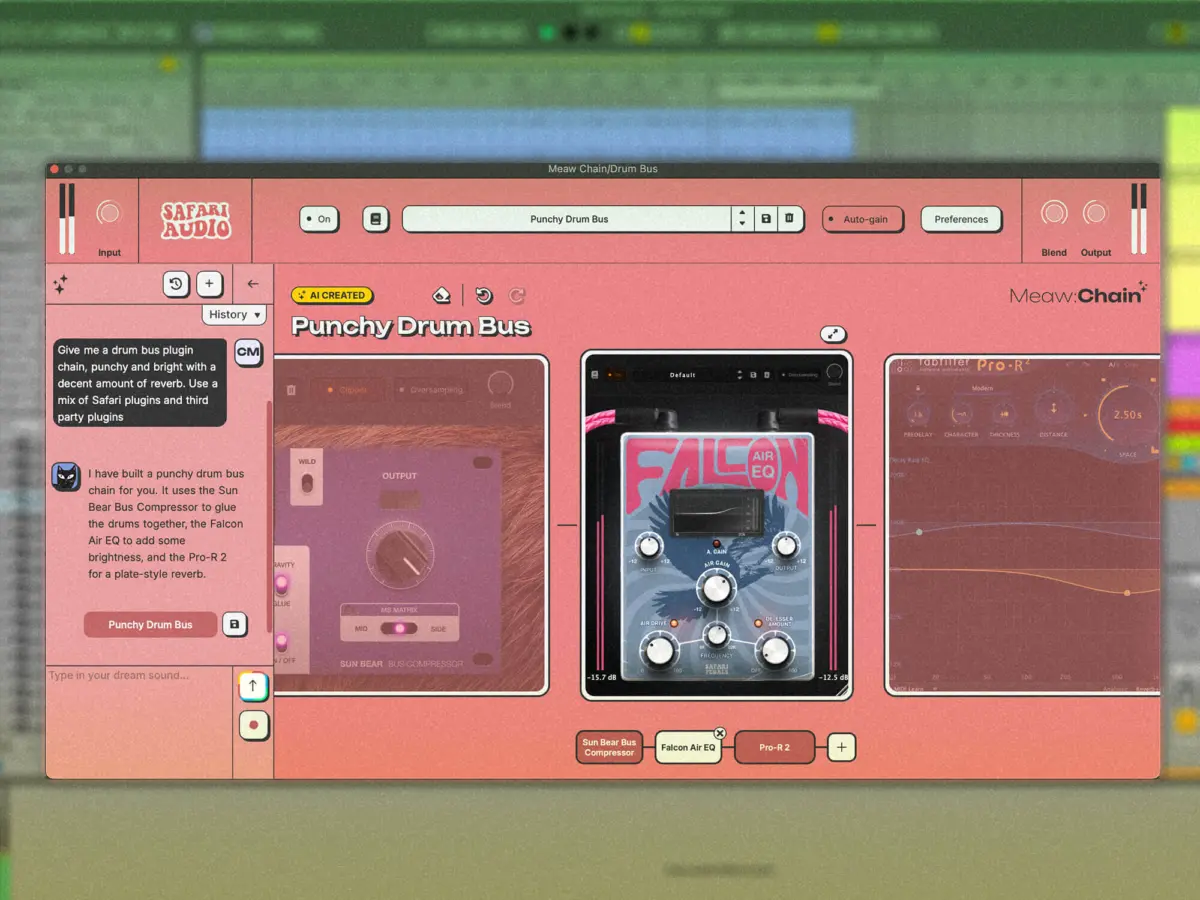
Representing the cutting edge of workflow automation, Safari Audio’s Meaw Chain allows producers to play audio into their DAW, input text prompts, and receive an optimized, full plugin chain within seconds. Built entirely on proprietary, in-house AI models with a strict pledge never to train on customer audio, Meaw Chain interacts dynamically with third-party plugins, offering a glimpse into how AI can intelligently manage complex mixing workflows without compromising user privacy.
Official Statements & Industry Perspectives
The debate surrounding artificial intelligence in music has drawn impassioned commentary from creators, technology developers, and industry leaders alike.
Advocates for ethical AI emphasize that technology should serve as an extension of human creativity rather than its executioner. Developers at platforms like Neutone have consistently maintained that the future of sound design depends on mutual respect between software engineers and musicians: "We cannot build the future of audio by stripping away the identities of the people who built the foundation of music. True innovation requires collaboration, consent, and a fair share of the value created."

Similarly, artists who have aligned themselves with ethical platforms view these tools as a way to extend their reach while retaining control over their likeness and output. The involvement of established musicians and producers in leadership roles at companies like Moises AI signals a broader industry realization: rather than attempting to halt technological progress through outright prohibition, creators are choosing to steer the ship from the inside. By actively participating in governance, licensing, and model design, artists are ensuring that the tools of tomorrow respect the copyright and dignity of the workforce that fuels them.
Future Outlook: Where Do We Go From Here?
As the audio software industry looks toward the horizon, the fault lines between extractive, unregulated AI and collaborative, ethical frameworks are becoming increasingly clear. The legal challenges facing major tech conglomerates over copyright infringement will likely take years to resolve through international courts, but the immediate marketplace is already voting with its wallets.
In the coming years, we can expect several defining trends to shape the landscape of AI in music production:

- Hardware Integration: As demonstrated by Roland and Neutone’s Project LYDIA, ethical neural processing is moving out of the box and onto the pedalboard and studio rack, allowing musicians to utilize real-time AI timbral shifts in live performance environments.
- Granular Provenance Tracking: Transparency features—such as in-plugin disclosures detailing training data origins—will likely become an industry standard, demanded by consumers who refuse to use "black box" software of dubious origin.
- Stricter Regulatory Standards: Regulatory bodies worldwide are beginning to draft frameworks addressing voice cloning, likeness rights, and data scraping. Ethical platforms that already have transparent licensing agreements in place will be uniquely positioned to thrive under upcoming legal compliance requirements.
Ultimately, artificial intelligence in music is neither an unmitigated utopia nor an absolute dystopia; it is a powerful instrument shaped entirely by the intentions of its creators. By championing software that respects consent, compensates artists fairly, and safeguards user data, the modern production community can ensure that technology remains a vehicle for human expression rather than a substitute for it.