Executive Overview
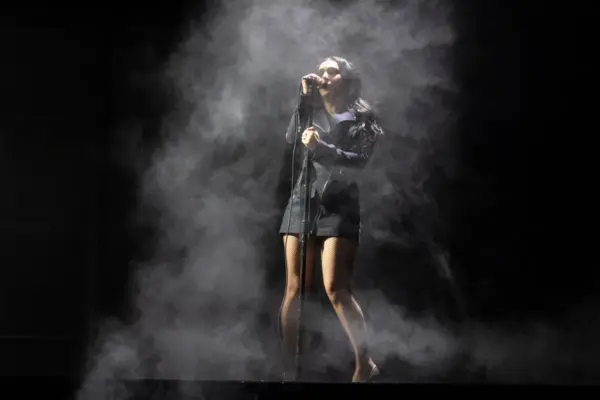
The contemporary landscape of Latin American alternative music is defined by porous borders, genre-fluid experimentation, and a voracious appetite for cross-pollination. At the vanguard of this movement sits Girl Ultra, the moniker of Mexico City-born singer-songwriter Mariana de Miguel. Evolving rapidly from the hazy, nocturnal confines of the mid-2010s SoundCloud R&B underground, Girl Ultra has methodically constructed a sonic identity that bridges the nostalgic warmth of 1980s pop, the raw urgency of Latin rock, and the sleek, chrome-plated finish of modern electronic soul.
Her trajectory reached a pivotal juncture with the announcement of RRRomeo, an ambitious, fully collaborative studio album produced alongside David "Dave 1" Macklovitch of the legendary electro-funk duo Chromeo. Slated for release on October 9 via the influential indie imprint Big Dada, the project represents more than a mere cross-continental collaboration; it is a masterclass in aesthetic synthesis. Co-produced alongside Chromeo and featuring high-profile guest appearances from Buscabulla, Empress Of, and Jean Tonique, RRRomeo encapsulates the nocturnal romance and gritty underground energy of two distinct musical worlds colliding.
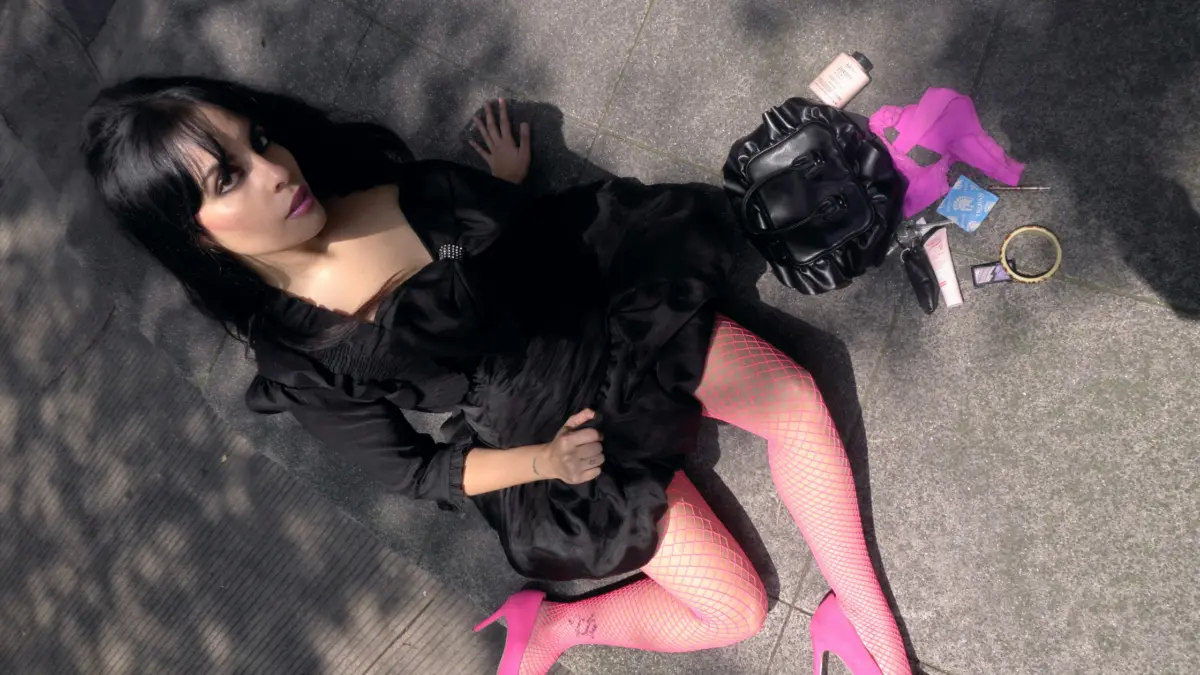
The album campaign is anchored by its lead single, "Te Caigo," a bassline-heavy transmission of kinetic energy that marries orchestral stabs with the sultry, kinky new-wave sensibilities of the 1980s, filtered through the kaleidoscopic, lo-fi aggression reminiscent of Jai Paul. Accompanying the single is a characteristically irreverent, self-directed music video that subverts traditional visual tropes with deadpan humor—featuring a surreal narrative involving a pink thong, a handsome Mexican defense attorney, and a stylized ballet fight staged outside a courthouse.
This deep-dive analysis explores the intricate architecture of Girl Ultra’s career, tracing her roots in the vibrant cultural ecosystem of Mexico City, the organic genesis of her partnership with Chromeo, the precise sonic anatomy of RRRomeo, and the broader cultural implications of her ascent as a defining voice of her generation.
Detailed Chronology: From SoundCloud Wave to the Zócalo
The Sonic Imprint of Mexico City’s Megalopolis
To understand Girl Ultra’s musical vocabulary, one must first examine the labyrinthine soundscapes of Mexico City, a metropolis where disparate decades and genres bleed into one another on public transit, in sprawling open-air markets, and through aging transistor radios. Growing up, de Miguel absorbed an eclectic diet of sounds: the driving rhythms of classic Latin rock, the ubiquitous gloss of 1980s pop radio, and the subterranean thrum of the city’s burgeoning electronic dance floors.
As an adolescent, her dedication to contemporary music transcended casual consumption. Like countless music obsessives of her generation, she saved her meager earnings to experience live music firsthand, braving dense crowds to witness canonical indie-electro and dance-punk acts such as Chromeo and Bloc Party during their Latin American tours. Little did she know that the artists she admired from the audience would one day become her peers and collaborators.
The SoundCloud R&B Renaissance and Early Breakthroughs
By the mid-2010s, global internet culture had dismantled traditional gatekeeping, allowing localized scenes to broadcast their output directly to a worldwide audience. Girl Ultra emerged during the crest of the SoundCloud R&B wave—a decentralized, atmospheric movement characterized by pitched-down vocals, trap-influenced percussion, and heavy doses of 90s nostalgia. While many contemporaries drifted into anonymity, Girl Ultra anchored her digital-era aesthetics in tangible musicianship and raw vocal vulnerability.
Her early independent releases quickly caught the attention of regional tastemakers, setting the stage for broader visibility. Before long, her distinctive fusion of sultry R&B vocal delivery and alternative song structures propelled her onto some of the most competitive stages in contemporary music. Most notably, she secured a coveted slot at Coachella, introducing her bilingual, genre-blurring artistry to an international festival audience.
The validation of her hometown was equally emphatic. In a career-defining milestone, Girl Ultra stepped onto the massive stage at Mexico City’s historic Zócalo—the political and cultural heart of the nation—to open for legendary Argentine-Mexican singer-songwriter Julieta Venegas in front of an astonishing crowd of 80,000 people. This baptism by fire proved that her intimate, bedroom-studio origins were entirely compatible with stadium-sized grandeur.
Supporting Context & Metrics: The Anatomy of a Transnational Partnership
Serendipity in the Digital Age: Connecting with Dave 1
The genesis of RRRomeo defies the typical, highly calculated A&R maneuvers that govern modern pop and alternative collaborations. Instead, the partnership between Girl Ultra and Chromeo’s Dave 1 blossomed organically out of mutual respect and casual internet camaraderie. Following initial digital interactions around 2017, the two artists maintained a creative dialogue that spanned continents and production suites.
However, it required an unprecedented global disruption to turn casual mentorship and online friendship into a fully realized collaborative album. The extended periods of isolation and downtime during the COVID-19 pandemic provided a rare luxury in the modern music industry: unhurried time.
Metrics of Influence and Collaborative Ecosystem
The collaborative ecosystem surrounding RRRomeo reflects a sophisticated web of indie-pop royalty and electronic innovators. By bringing in entities such as Puerto Rican synth-pop duo Buscabulla, Honduran-American indie-pop visionary Empress Of, and French house producer Jean Tonique, Girl Ultra and Chromeo constructed an expansive sonic universe that resists geographical pigeonholing.
| Project Element | Detail / Contributor | Significance |
|---|---|---|
| Release Date | October 9 | Timed for the autumn festival and critical cycle. |
| Label | Big Dada | Historic imprint known for championing boundary-pushing alternative and electronic artists. |
| Core Producers | Girl Ultra & Chromeo (Dave 1) | Bridges contemporary Latin R&B with 80s electro-funk lineage. |
| Featured Artists | Buscabulla, Empress Of, Jean Tonique | Expands the album’s pan-American and transatlantic indie credibility. |
| Lead Single | "Te Caigo" | Serves as the primary thesis statement for the album’s sonic and thematic direction. |
Official Statements: Behind the Scenes of ‘RRRomeo’
The collaborative dynamic between Mexico City and the established production houses of North America is often fraught with imbalances, but RRRomeo was forged in an environment of absolute creative parity.
Reflecting on the unexpected timeline that brought the project to life, Dave 1 of Chromeo offered intimate insight into their creative synergy during lockdown:
"We had so much time on our hands," Dave recalls, casting his mind back to the quiet months of studio experimentation. "We were just like, ‘Yo, let’s do a project together’."
What began as a casual proposition evolved into a rigorous, immersive sonic exploration. For Girl Ultra, the album represents a crystallization of her lifelong fascination with nocturnal excess, tactile instrumentation, and emotional directness.
This philosophy is laid bare on the lead single, "Te Caigo," which serves as a lyrical and ideological manifesto. Rather than indulging in the tropes of passive longing or prolonged hesitation that often dominate R&B songwriting, Girl Ultra demands immediate emotional and physical agency:
"It’s about arriving unexpectedly at someone’s house to stop talking and get to action," she explains of the track’s underlying narrative. "This is my manifesto for living in the moment and starting to wildly make out today."
Visualizing the Manifesto: The "Te Caigo" Music Video
True to her multifaceted artistic vision, Girl Ultra took the directorial reins for the music video accompanying "Te Caigo." Rejecting standard, overly polished performance tropes, the visual piece leans heavily into deadpan surrealism and high-fashion absurdity. The narrative weaves together disparate, cinematic vignettes: a striking pink thong, a stoic and handsome Mexican defense attorney, and a fiercely choreographed ballet fight staged unceremoniously outside the austere concrete walls of a courthouse. This juxtaposition of high-art dance and irreverent comedy mirrors the music itself—polished yet unpretentious, deeply emotional yet fiercely fun.
Future Outlook: A New Paradigm for Latin Alternative Music
As the music industry continues to dismantle rigid genre taxonomies, artists like Girl Ultra are proving that cultural authenticity and global pop ambitions are not mutually exclusive. RRRomeo stands as a watershed moment not only for its creator—solidifying her transition from SoundCloud experimentalist to international vanguard—but also for the shifting dynamics of cross-border collaboration.
By fusing the analog warmth of Chromeo’s vintage synthesizers and funk-inflected basslines with the nocturnal, bleeding-edge R&B sensibilities of Mexico City’s underground, RRRomeo establishes a new benchmark for Latin alternative pop. As the album hits streaming platforms and record store shelves worldwide on October 9 via Big Dada, its ripple effects will likely be felt across festival lineups, indie playlists, and dance floors globally.
Girl Ultra is no longer just absorbing the culture of her city and the world through the radio and the internet; she is actively dictating its frequency, proving that the future belongs to those who act on their desires—both in life and in art.