Executive Overview
In a historic convergence of classical architecture and cutting-edge electronic music, Belgian techno vanguard Amelie Lens delivered a monumental open-air performance outside Antwerp’s Royal Museum of Fine Arts (KMSKA) last weekend. Drawing an impassioned crowd of 14,000 revellers, the three-hour marathon set served as a triumphant homecoming for the internationally acclaimed DJ and producer. More than just a local showcase, the landmark event functioned as the centerpiece celebration for the release of her long-awaited debut studio album, AURA.
The open-air spectacle made history as the first time the public square surrounding the prestigious 19th-century art institution has ever been utilized for a large-scale electronic music event. Transforming the neoclassical steps of the museum into an open-air cathedral of sound, Lens delivered a masterclass in driving, hypnotic techno, cementing her status as one of the genre’s most formidable global ambassadors.
The concert was organized in collaboration with Chaos in the City events, HighScream, WeCanDanceFest, and the EXHALE family, featuring supporting performances from a carefully curated lineup of underground selectors. Beyond its immediate sensory impact, the event marked the inaugural chapter of a specialized two-part cultural series designed to bring world-class electronic music to landmark public spaces across Belgium. As Lens prepares to take her AURA live concept on an extensive international tour spanning Europe and North America—including a high-profile showcase at the upcoming Amsterdam Dance Event (ADE)—this historic Antwerp gathering will long be remembered as a defining moment in modern dance music culture.
Detailed Chronology: Anatomy of a Historic Homecoming
The Build-Up and Setting the Stage
Months of intense anticipation preceded the event, fueled by the simultaneous rollout of AURA, Lens’ debut full-length studio album released via her influential EXHALE imprint. Choosing her home country—and specifically her hometown of Antwerp—for the album’s launch party carried deep personal and symbolic resonance.
The chosen venue, the Royal Museum of Fine Arts (KMSKA), provided an awe-inspiring backdrop. Founded in 1810, the institution houses a magnificent, centuries-old collection of masterpieces ranging from the 14th to the 20th century. Transforming the pristine public plaza framing this bastion of high culture into a pulsing industrial dance floor required unprecedented logistical coordination. Local authorities, event promoters, and production teams worked around the clock to ensure that the structural integrity of the landmark was respected while engineering a world-class touring-grade production setup, complete with state-of-the-art sound arrays and immersive lighting rigs designed to play off the museum’s majestic facade as twilight descended.
The Support Lineup and Opening Sequences
As early afternoon transitioned into evening, the crowds began to flood the cordoned-off square, creating a vast sea of black attire and fervent anticipation. The sonic journey commenced with a series of meticulously curated warm-up sets from a roster of respected underground artists.
Selectors including Regal, Anne Gr, Blonde, Herton, and other key figures within the broader EXHALE family took to the decks, steadily escalating the tempo and building the rhythmic tension. The musical programming bridged the gap between deep, atmospheric grooves and relentless, peak-time industrial techno, preparing the ground for the headliner’s grand entrance. The atmosphere was palpable; generations of Belgian dance music enthusiasts, international travelers, and local residents stood shoulder-to-shoulder, united by a shared appreciation for the uncompromising sound that Lens has championed throughout her career.
The Three-Hour Masterclass
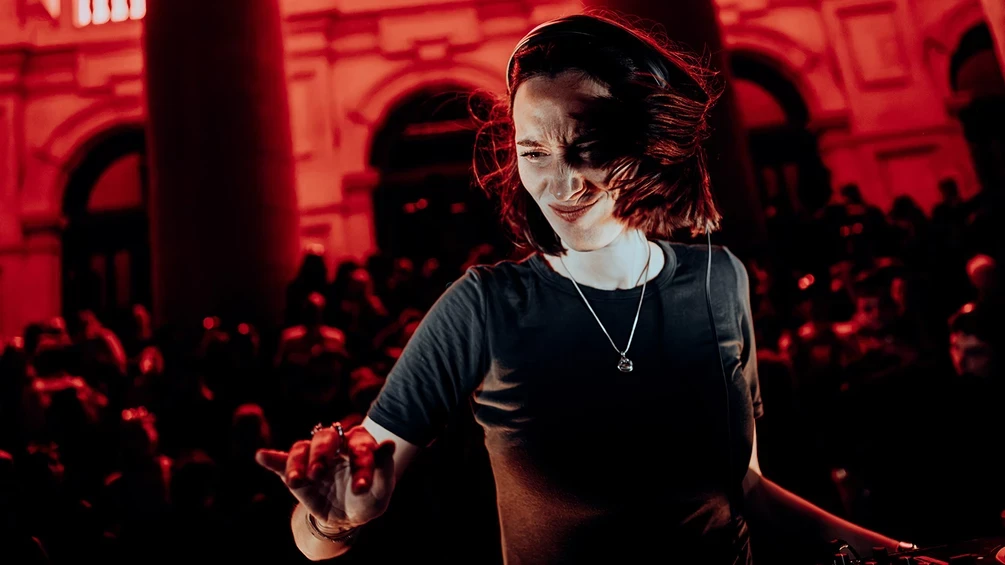
When Amelie Lens stepped up to the booth as dusk settled over the Antwerp skyline, a roar erupted from the 14,000-strong crowd that could likely be heard blocks away. Launching straight into the visceral, high-octane sonic landscape characteristic of her productions, Lens delivered a masterclass in dynamic set sequencing.
Weaving tracks from her newly released AURA album seamlessly with unreleased dubs and heavy-hitting contemporary techno cuts, she maintained an unrelenting momentum over the course of three hours. The visual production matched the intensity of the audio: strobe lights cut through the Belgian night air, casting dramatic shadows against the neoclassical pillars of the KMSKA, while lasers mapped the contours of the square. For three uninterrupted hours, the crowd moved as a singular, synchronized organism, validating the meticulous planning and emotional weight invested in the performance.
Supporting Context & Metrics: The AURA Phenomenon and Cultural Impact
Unpacking the AURA Era
The Antwerp homecoming was intrinsically tied to the commercial and artistic rollout of AURA. Released on Lens’ proprietary EXHALE label—an imprint that has grown from a local party brand into a globally recognized tastemaker institution—the album represents a significant milestone in her artistic evolution. While Lens has spent the better part of the last decade dominating festival mainstages and underground warehouses with relentless club tracks, AURA showcases a broader compositional scope, blending peak-time floor-fillers with more textured, atmospheric soundscapes.
The title AURA is not merely an album name; it serves as the overarching conceptual framework for Lens’ current global touring schedule. Over the past few months, the AURA live concept has been road-tested across select international markets, continually adapting to diverse architectural and cultural environments. However, bringing the concept to Antwerp elevated the tour from a standard club or festival date into a profound cultural statement.
Breaking New Ground at KMSKA
The choice of the Royal Museum of Fine Arts as a venue underscores a broader contemporary trend: the integration of electronic music culture into mainstream civic and historical spaces. Traditionally reserved for classical concerts, civic ceremonies, or quiet contemplation of fine art, public art museums are increasingly recognizing the cultural relevance and economic vitality of electronic music.
By securing permission to host a 14,000-capacity open-air techno event directly outside the KMSKA, Lens and her partners—including Chaos in the City events, HighScream, and WeCanDanceFest—have broken new ground for nightlife advocacy in Belgium. The event demonstrated that high-energy electronic music events can be executed safely, responsibly, and respectfully within sensitive urban heritage zones, setting a valuable precedent for future cultural programming in Antwerp and beyond.
Official Statements and Artist Reflections
The emotional resonance of the evening was deeply felt by both the artist and the operational teams behind the scenes. In the immediate aftermath of the event, Amelie Lens took to social media to share her gratitude and disbelief at the scale of the reception.
"Antwerp, you left us with tears in our eyes, what an absolute dream coming true," Lens posted on Instagram. "14,000 of you dancing as one in front of the museum was something we could never have dreamt of. We couldn’t have wished for a better way to celebrate this special moment, you’ve made this dream come true."
The sentiment of collective achievement extended to the numerous collaborators and artists who contributed to the success of the open-air gathering. Lens made a point of acknowledging the extensive network of promoters, technical directors, and support acts who brought the vision to life:
"Endless thanks to everyone who danced with us, and to all the artists and organisers who made it unforgettable," she added. "Regal, Anne Gr, Blonde, Herton, WeCanDanceFest, Chaos in the City events, HighScream, and of course you, the EXHALE family."
Industry observers noted that the humility and community-focused language in Lens’ statements reflect the ethos that has sustained her career. Despite achieving global superstardom, selling out arenas across multiple continents, and helming one of the most successful independent techno labels in the world, her roots in the Belgian underground remain firmly intact.
Future Outlook: The Next Phase of the AURA Journey
The Brussels Sequel and the Chaos in the City Programme
While the dust is still settling on the historic Antwerp open-air, the machinery of the broader cultural programme continues to turn. The KMSKA event marked the first leg of a specialized two-part series spearheaded by Chaos in the City.
The second chapter of this ambitious programme is scheduled for Saturday, September 26th, in Brussels. Promising to maintain the high standards set in Antwerp, the Brussels installment will feature a highly anticipated, special back-to-back (b2b) performance by innovative electronic producer HAAi, accompanied by an as-yet-unannounced guest artist. Industry insiders are already speculating on the identity of the secret guest, ensuring high demand and rapid ticket sales for the upcoming capital-city date.
International Expansion and ADE Showcase
Beyond the Belgian borders, the AURA tour is poised for an intensive autumn campaign. With routing locked in across major cultural hubs throughout Europe and North America, Amelie Lens will spend the coming months translating the energy of the Antwerp homecoming onto international stages.
Of particular note is her upcoming appearance during the Amsterdam Dance Event (ADE), where the AURA live concept will take center stage amidst a city swelling with global electronic music professionals, artists, and fans. ADE—which recently announced an initial wave of over 250 artists for its upcoming edition—serves as the ultimate litmus test for global electronic music trends. Lens’ presence at the summit of this year’s programming cements her position at the vanguard of the global techno community.
As the AURA album continues to resonate on dance floors worldwide and the tour gathers unprecedented momentum, the landmark afternoon outside Antwerp’s Royal Museum of Fine Arts will stand as a watershed moment. It proved definitively that electronic music is not merely a transient nightlife phenomenon, but a vital, unifying cultural force capable of transforming historical civic spaces into temples of modern art and communal expression.