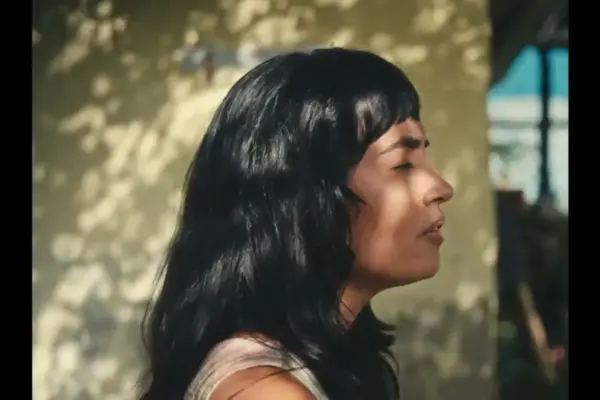
Few sonic artifacts capture the kinetic, sweaty euphoria of late-2000s British underground club culture quite like "Go." Released in 2007 at the absolute zenith of the UK Funky movement, the track possessed a magnetic pull that transcended the fleeting lifespan of most club records. Nearly two decades later, that same magnetism is fueling a massive second life. Driven by viral digital rediscovery—peaking at number one on TikTok and pulling in upwards of 120,000 daily streams—and a striking live orchestral reimagining, "Go" is once again dominating cultural conversations.
Yet, behind the iconic vocal lines and undulating polyrhythms lies a narrative far more compelling than mere nostalgic resuscitation. The woman behind the microphone is Malika (formerly known as Meleka)—a vocalist, songwriter, and formidable businesswoman whose roots in the British music ecosystem run extraordinarily deep. Born into a musical lineage that spans pirate radio pioneers and Lovers Rock royalty, Malika’s journey is a masterclass in creative patience, sharp industry literacy, and unyielding artistic evolution.
From navigating complex contract law as a teenager to independently retaining 100% ownership of her master recordings, she represents a rare, enduring bridge between the tangible, boot-strap era of physical UK club culture and today’s algorithm-driven digital landscape. In an expansive conversation with VIPER, Malika unpacks what it means to inherit a culture, the true weight of legacy, and why, after seventeen years in the game, she feels she is only just getting started.
Detailed Chronology: From Pirate Radio to UK Funky Royalty
To understand Malika’s calculated approach to the music industry today, one must trace her trajectory back to its roots. Long before she stepped into a professional recording booth to lay down the vocals for "Go," music was not merely a career aspiration; it was the native language of her household.
Growing up in North West London—navigating the intersections of Harlesden, Wembley, and Kensal Green—Malika’s home was saturated with sonic history. Her father operated Time Radio, a seminal North West London pirate radio station that served as an essential lifeblood for underground sounds, while her aunt, Sonia Ferguson, recorded iconic Lovers Rock. When asked whether she actively chose a career in music or simply inherited its cultural vocabulary, her response is instantaneous:
"100%, I inherited it. There was no choice; I had no choice."
This foundational immersion shaped her worldview early on. By the time the UK Funky movement began bubbling up from basement clubs, pirate radio frequencies, and community dancefloors in the mid-2000s, Malika was not a spectator watching from the sidelines; she was an active participant living inside the machinery of the genre.
When "Go" dropped in 2007, its ascent was entirely physical and grassroots. The track’s initial life cycle required relentless pavement-pounding: traveling the length and breadth of Britain, cultivating relationships with regional DJs, dropping dubplates at pirate radio stations, and convincing club promoters to take a chance on a burgeoning sound.
Yet, as the years rolled on, the industry shifted dramatically. The physical distribution of mixtapes and vinyl gave way to programmatic algorithms, short-form video platforms, and hyper-targeted digital campaigns. When "Go" experienced its recent viral renaissance—climbing to the top of TikTok’s charts and racking up staggering streaming metrics—Malika viewed the technological shift not as a departure from the past, but as its digital parallel.
"In my opinion, it’s all the same," she reflects, comparing the grind of the past to the hustle of the present. "The way people discover music now is the same way they discovered it back in the day. You might get hot on pirate radio or in your local area, and then that filters through to other areas. Now, you might get hot on TikTok or Instagram, and it filters through. One is digital and one is physical, but both require you to put boots on the ground and do the work repeatedly—whether handing out CDs back then or posting online now."
Supporting Context & Metrics: Decoding the UK Funky Revival
The resurgence of "Go" provides a fascinating lens through which to examine the historiography of modern dance music. As underground movements are inevitably absorbed into the mainstream historical canon, certain narratives risk being sanitized, misremembered, or entirely erased.
When asked about the common misconceptions surrounding the UK Funky era today, Malika points directly to the myth of its commercial ubiquity:
"I think the misconception is partly in the idea of it being ‘mainstream.’ Funky has always lived in a space of penetrating the masses without ever fully crossing the line into a mainstream ecosystem the way Grime or Garage did. There are maybe five core Funky songs that everybody knows, but even within this resurgence, there are so many tracks. The misconception is that Funky ‘made it,’ but it really hasn’t had its full moment yet."
That cultural underappreciation makes the enduring footprint of "Go" all the more remarkable. Achieving number one status on TikTok and sustaining over 120,000 daily streams seventeen years after its initial release is a statistical anomaly in a pop landscape obsessed with instantaneous turnover.
To bridge this generational gap, recent iterations of the track have embraced expansive live instrumentation. The modern live presentation brings together classical composers, a house gospel choir, and contemporary Afrobeats textures, placing the foundational DNA of UK Funky into a sophisticated, forward-facing orchestral framework.
Yet, Malika resists the trap of nostalgic self-mythologizing. Asked how she honors the artist who recorded the track nearly two decades ago without becoming creatively imprisoned by her own history, she remains strikingly pragmatic:
"I don’t feel I need to ‘honour’ her, because she was simply the foundation for the woman I am now in so many ways."
Official Insights: Business Acumen, Ownership, and the Evolution of Malika
While many vocalists from the golden era of underground dance music found themselves stripped of their rights, royalties, and masters, Malika charted a radically different course. Her journey offers an essential masterclass in industry literacy and self-preservation.
Long before the current wave of creator-economy independence advocates urged artists to own their work, Malika was studying the fine print.
"I grew up in music, so my brain has always been focused on business; I just happened to have a really good voice. Everything worked in tandem," she explains. "I went to university, studied Music and Media Management, and got my degree. While studying, we covered contract law, so before I had even released anything, I understood its importance. On top of that, my dad was instrumental—he brought me to studios, taught me about rewriting, and had me register with PRS and PPL when I was 13. So those foundations were planted in me very early."
This early education empowered her to retain 100% ownership of her master recordings—a rare feat for an artist breaking through in the mid-2000s major-label ecosystem. However, absolute legal ownership brought its own philosophical paradox, particularly given how deeply the track resonates with the public.
"What I’ve learned is that my personal experience of ‘Go’ and Funky House isn’t the important part," she notes. "The only thing that really matters is that because I own it 100%, I have 100% of the responsibility to honour how important it is to everybody else. The journey of ‘Go’ hasn’t been simple, but it taught me that I’m just a conduit for the song for everybody else."
This evolution also required a shedding of identities. Early in her career, operating primarily behind the scenes as a songwriter and vocal arranger, she utilized the pseudonym Meleka (spelled with an ‘e’ and an ‘i’). Stepping out as a primary solo artist prompted a return to her birth name—a spelling adjustment that occasionally caused administrative friction, but signaled a deeper psychological alignment.
"Younger Meleka had to learn patience in a way I didn’t have back then," she admits. "There are things I navigate now that I couldn’t have done at 20 when ‘Go’ first came out. Patience is understanding that everything happens in its own time."
Future Outlook: Legacy, Transcending Boundaries, and What Lies Ahead
Today, Malika sits at a unique intersection of the music industry: a seasoned veteran who operates simultaneously as a legacy rights-holder, an independent businesswoman, and an active creator advising the next wave of talent.
Reflecting on the evolution of her mindset, she draws a clear distinction between transient metrics of success and enduring legacy:
"Success means different things to different people and changes over time. For a long time, I felt like a failure, and only recently have I acknowledged that I’ve done successful things. Legacy is a currency you can always trade on; maintaining your reputation and legacy is deeply important."
When dispensing wisdom on the mechanics of the business, her philosophy is rooted in strategic generosity:
"As for ownership, 100% of nothing is still nothing. It’s about knowing when to hold space and when to share space. In business, you have to understand that you sometimes give up a piece of your personal time, image, or creativity to reach the next level. An open hand receives more blessings than a closed one."
This expansive, multicultural worldview is deeply informed by her upbringing—not just by the geography of North West London, but by the rich tapestry of her familial heritage.
"My music is inspired by the blended nature of my family—specifically my grandmothers. Having one Black Jamaican grandmother and one white English grandmother from Yorkshire, and the equal love they gave me, is my main inspiration."
That rich synthesis of influences, coupled with a robust foundational understanding of business law and modern digital strategy, ensures that Malika is far from resting on her past laurels. When asked if she feels she is still transcending her past achievements, her answer leaves zero room for ambiguity:
"For sure, I haven’t even fully started yet! I’m only just getting off the ground."
Interview conducted by Dejee Baptiste for VIPER Magazine.