Executive Overview
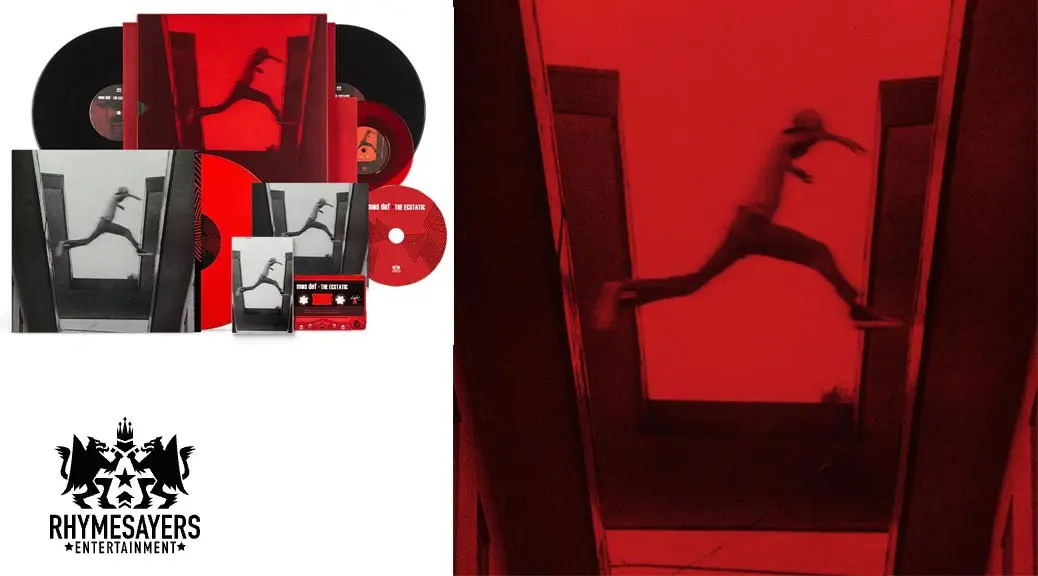
Seventense years after its initial rollout through Downtown Records, Mos Def’s critically acclaimed fourth studio album, The Ecstatic, is finally receiving a long-overdue, premium vinyl reissue via independent powerhouse Rhymesayers Entertainment. When the album first landed on shelves in 2009, it arrived at a fascinating crossroads in the artist’s multifaceted career. Balancing a burgeoning, highly respected trajectory in Hollywood with an increasingly complex relationship with the mainstream music industry, Mos Def—now globally recognized under his chosen name, yasiin bey—delivered a project that defied contemporary hip-hop formulas.
While its commercial footprint was modest compared to the booming, ringtone-heavy rap landscape of the late 2000s, The Ecstatic was met with widespread critical reverence. It served as a vital bridge between his groundbreaking 1999 solo debut, Black on Both Sides, and his subsequent evolution as a global citizen, thinker, and iconoclast.
Now, sitting proudly alongside catalog heavyweights from MF DOOM, Digable Planets, and Homeboy Sandman on the Rhymesayers roster, this new vinyl pressing offers both longtime devotees and a younger generation of listeners the chance to experience a masterclass in eclectic hip-hop production and lyrical dexterity. This retrospective examines the historical weight of The Ecstatic, the tumultuous industry backdrop against which it was forged, its transcendent sonic architecture, and its enduring legacy in modern music history.
Detailed Chronology: From Black on Both Sides to The Ecstatic
To truly understand the triumph of The Ecstatic, one must map the trajectory of Dante Terrell Smith—known to the world as Mos Def. Emerging onto the scene as a fierce, socially conscious lyricist with deep roots in Brooklyn’s underground soil, Mos Def captivated listeners as part of the legendary collective Native Tongues offshoot Black Star alongside Talib Kweli, as well as the dynamic underground group Urban Thermo Dynamics (UTD).
The Pinnacle and the Plateau
In 1999, Rawkus Records released Black on Both Sides. Universally hailed as a classic, the album established Mos Def as a vital voice in the golden era of conscious hip-hop. It combined live instrumentation, poignant socio-political commentary, and soulful introspection.
However, the ensuing decade saw the rapper transition into a turbulent chapter marked by major-label friction. Signing with Geffen Records, Mos Def released The New Danger (2004) and True Magic (2006). While both albums featured brilliant flashes of his signature genre-bending brilliance—blending rock, blues, and traditional boom-bap—they suffered from uneven production, lack of promotional momentum, and growing creative friction between the artist and executive suites.
Disillusioned by the rigid commercialism, assembly-line mentality, and creative constraints of the major-label system, Mos Def began pivoting heavily toward his acting career. Roles in critically acclaimed films and television projects demonstrated that his artistic curiosity could not be contained within a 16-bar verse. Yet, music remained an undeniable pulse point for the polymathic creator.
The 2009 Renaissance
By the time 2009 rolled around, Mos Def had parted ways with Geffen and partnered with Downtown Records. Working under a rejuvenated creative freedom, he channeled his frustrations, global travels, and expanding musical palette into what would become The Ecstatic.
Far from a desperate bid for commercial radio play, the album was a celebration of artistic independence. It signaled the birth of yasiin bey’s mindset—an uncompromising, worldly perspective that looked past American borders to draw inspiration from African, Middle Eastern, and European sonic traditions. The Ecstatic proved that when stripped of corporate interference, Mos Def could produce work that matched, and at times exceeded, the promise of his iconic debut.
Supporting Context & Metrics: Parallels, Influences, and the Industry Exodus
The narrative of Mos Def stepping back from the traditional hip-hop machine bears a striking resemblance to the career trajectory of another foundational southern luminary: André 3000 of OutKast.
The Parallel Path: Mos Def and André 3000
Both artists emerged as generational talents in the mid-to-late 1990s, redefining what it meant to be a Black man in hip-hop through eccentric style, soaring intellect, and deeply philosophical lyricism. Both men eventually grew weary of the industry’s industrial complex.
While André 3000 famously retreated from the spotlight, only to re-emerge decades later as a celebrated spiritual jazz flautist—candidly noting that he felt too old to authentically connect with modern hip-hop on a competitive level—Mos Def channeled his alienation into global activism, acting, and uncompromisingly eclectic musical excursions. Both represent a distinct archetype of the "free-thinker" in modern music: artists who chose creative integrity over chart placement, eventually stepping outside the boundaries of rap entirely when the culture no longer matched their spiritual frequencies.

A Global Sonic Architecture
Musically, The Ecstatic was a testament to curation. Although sharp-eared hip-hop historians noted that certain album productions utilized beats or instrumental fragments previously circulated via producer mixtapes or limited releases, the cohesive sequencing made them feel entirely brand new.
The album’s production lineup reads like a Hall of Fame ballot for underground and avant-garde hip-hop:
- Chad Hugo: Bringing his trademark minimalist, futuristic funk sensibilities.
- Madlib & Oh No: Infusing the tracks with dusty, psychedelic jazz loops and eccentric drum programming.
- J Dilla (Jay Dee): Providing a breathtaking posthumous beat for "History," a masterclass track that reunited Mos Def with his Black Star brother, Talib Kweli.
- Georgia Anne Muldrow: The eclectic multi-instrumentalist from Los Angeles who reimagined "Roses" alongside bey, delivering an exquisite vocal duet that stands as a shimmering emotional peak of the tracklist.
From a commercial metrics standpoint, The Ecstatic debuted at number nine on the US Billboard 200, selling roughly 30,000 copies in its first week. While these figures were modest compared to the blockbuster pop-rap crossover hits of the era, the critical metrics told a entirely different story. Review aggregators and specialized music publications lauded the album for its fearless blending of funk, Afrobeat, jazz, and Middle Eastern instrumentation, cementing its status as a critical darling of the late 2000s era.
Official Statements and Industry Perspective
Reflecting on the cultural impact of The Ecstatic, independent tastemakers have long advocated for its physical preservation. Imran Mirza of UK Vibe captured the sentiment surrounding the project’s enduring footprint:
"With their affections for hip-hop established since the mid-90s, Rhymesayers’ reissue of ‘The Ecstatic’ places the album alongside a selection of greats for the label by MF DOOM, Digable Planets and Homeboy Sandman. A definitively strong inclusion amidst Mos Def’s own catalogue, the reissue serves as an excellent opportunity to introduce the album to listeners who may have missed it first go-round."
The choice of Rhymesayers Entertainment as the home for this new vinyl pressing is no accident. As one of independent hip-hop’s most enduring and respected imprints, Rhymesayers shares a philosophical alignment with yasiin bey’s career ethos. Placing The Ecstatic next to foundational works by the late, great MF DOOM or jazz-rap pioneers Digable Planets honors the album’s hybrid nature—it is hip-hop as high art, literature, and global anthropology wrapped into one.
Industry insiders note that physical reissues of this caliber are driven not merely by nostalgic cash grabs, but by a cultural imperative to correct historical oversights. In an era where streaming algorithms often flatten musical complexity into background noise, a tangible, heavyweight vinyl package forces the listener to sit down, examine the gatefold artwork, read the production credits, and absorb the album as a singular, unified statement.
Future Outlook: The Legacy of yasiin bey and The Ecstatic Today
As music consumers and vinyl collectors unbox the 2026 reissue of The Ecstatic, the cultural landscape looks vastly different than it did in 2009. The boundary-pushing genre-blending that Mos Def championed on the album—seamlessly sliding from dusty boom-bap to afrobeat grooves and spiritual jazz undertones—is now the standard operating procedure for a new generation of alternative rap artists.
Artists like Kendrick Lamar, Little Simz, Earl Sweatshirt, and Tyler, The Creator owe a stylistic debt to pioneers who proved that a rapper could be both fiercely political and deeply experimental without sacrificing musicality. yasiin bey’s refusal to stay neatly inside a corporate box paved the way for modern hip-hop’s embrace of maximalist, borderless artistry.
Looking forward, the reissue of The Ecstatic does more than fill a gap in record store bins; it acts as a cultural anchor. It reminds us of a moment when hip-hop was actively searching for its soul amidst a corporate sea change, and found it in the eclectic, worldly mind of a Brooklyn visionary.
Whether discovered anew by university students spinning their first records or revisited by veteran heads who wore out their original 2009 CDs, The Ecstatic remains a towering achievement. Seventeen years later, the music has lost none of its urgency, beauty, or intellectual rigor. It stands tall—unbothered by passing trends, untethered by industry expectations, and forever ecstatic in its pursuit of artistic truth.