Executive Overview
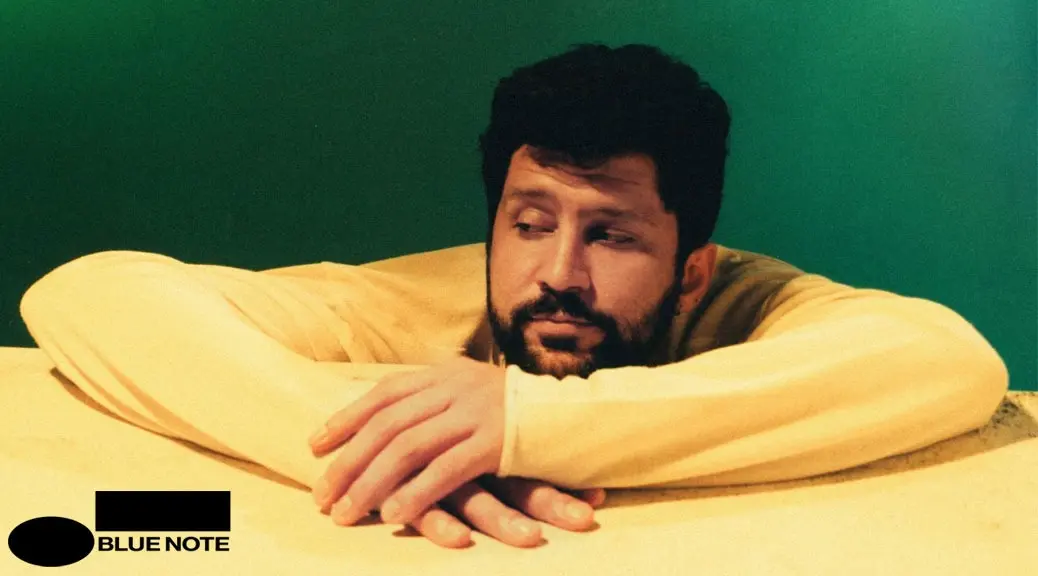
The contemporary landscape of jazz exists in a state of perpetual reinvention, suspended gracefully between the acoustic traditions of the mid-20th century and the hyper-digital, genre-agnostic rhythms of the modern era. At the epicenter of this renaissance stands Los Angeles-based pianist, composer, and producer Kiefer Shackelford—universally known simply as Kiefer. Following a defining, critically acclaimed multi-album tenure with Stones Throw Records, Kiefer has officially made his grand debut on Blue Note Records with his latest full-length masterwork, Memory Bomb.
This landmark release represents far more than a mere label transition; it is a cultural convergence. Blue Note Records, historically synonymous with the definitive hard bop and post-bop idioms sculpted by legends such as Herbie Hancock, Donald Byrd, and Horace Silver, has increasingly positioned itself as a champion of forward-thinking, progressive jazz hybrids. By welcoming artists who blur the lines between golden-era hip-hop, neo-soul, electronic production, and traditional improvisation—artists like Tom Misch & Yussef Dayes, Domi & JD Beck, and Blue Lab Beats—the legendary imprint proves that its historical reverence is matched only by its curatorial vision for the future.
In Memory Bomb, Kiefer has synthesized his encyclopedic knowledge of jazz harmony with the laid-back, sun-drenched swagger of the West Coast beat scene. Exploring the fragile topography of dream states and subconscious memories, the album is a masterclass in atmospheric storytelling. Bolstered by an elite roster of collaborators—including the Mothers quartet (featuring Kenny Beats, Nate Smith, and Ben “Carrtoons” Carr), R&B visionary Rae Khalil, Moonchild’s Amber Navran, Canadian hip-hop innovators Planet Giza, and British yacht-rock auteur Gareth Donkin—Memory Bomb firmly establishes Kiefer not merely as a jazz traditionalist, but as a principal architect of the modern musical consciousness.
Detailed Chronology: From Stones Throw Stalwart to Blue Note Luminary
To understand the weight of Kiefer’s arrival at Blue Note, one must trace the meticulous trajectory of his career thus far. Raised in a musically rich environment and formally trained in jazz composition, Kiefer’s artistic identity was forged within the crucible of Los Angeles’s vibrant underground beat scene. While his technical fluency at the piano stems from rigorous academic study, his rhythmic sensibility and textural choices are deeply indebted to the boom-bap era of 1990s hip-hop and the lo-fi electronic explorations catalyzed by institutions like Brainfeeder and Stones Throw.
The Stones Throw Years and Foundational Works
Kiefer’s partnership with Stones Throw Records served as his breakout runway. Over several years, he carved out a signature sonic footprint defined by warm acoustic piano chords, crisp electronic drum programming, and deeply emotional, introspective arrangements.
- Superbloom (2019): A watershed moment for the artist, Superbloom encapsulated the cyclical nature of grief, healing, and personal growth. The album married intricate jazz voicings with undulating hip-hop grooves, earning him widespread critical acclaim and cementing his status as a premier voice in modern instrumental music.
- It’s Ok, B U (2023): Continuing his exploration of emotional resilience, this project leaned further into synthesizer textures and expansive arrangements, showcasing an artist growing increasingly comfortable with vulnerability and space.
- Something For Real (2024): Released shortly before his transition, this body of work showcased a producer operating at the absolute peak of his technical powers, effortlessly transitioning between complex rhythmic motifs and soothing melodic hooks.
Industry Demand and High-Profile Collaborations
Kiefer’s singular ability to traverse sonic boundaries has made him one of the most sought-after collaborators in contemporary music. Rather than existing in a jazz silo, he has embedded himself into the very fabric of modern popular music:
- Hip-Hop and R&B Integration: His delicate yet driving piano work has graced blockbuster projects across genres, most notably contributing to Anderson .Paak’s critically adored albums Oxnard and Ventura, as well as DJ Harrison’s ElectroSoul.
- Pop and Commercial Peak: His dexterity caught the attention of global mega-stars, leading to vital production and instrumental contributions on Drake’s chart-dominating Certified Lover Boy.
These diverse experiences equipped Kiefer with a holistic understanding of record-making that extends far beyond standard jazz idioms. When the opportunity arose to join forces with Blue Note Records—culminating first in his involvement with the collaborative Mothers quartet project and now fully realized in Memory Bomb—it felt less like a pivot and more like an inevitability.
Supporting Context & Metrics: The Anatomy of Memory Bomb
Memory Bomb is structurally and sonically distinct from anything Kiefer has released previously. Conceptually, the album serves as an auditory exploration of the subconscious—a sonic translation of how memory operates, flickering between hyper-vivid, cinematic clarity and hazy, dreamlike abstraction.
The Mothers Quartet Connection
A cornerstone of the album’s dynamic energy is the involvement of the Mothers quartet. This progressive supergroup pairs Kiefer with powerhouse producer Kenny Beats, legendary drummer Nate Smith, and virtuosic multi-instrumentalist Ben “Carrtoons” Carr. Having made waves earlier in the year with their self-titled debut on Blue Note, the quartet brings an intuitive, telepathic chemistry to Memory Bomb. Nate Smith’s immaculate, polyrhythmic percussion anchors compositions that might otherwise float away into ether, while Kenny Beats and Carrtoons inject a meticulous, beat-conscious ear for low-end frequency and spatial arrangement.
Vocalists and Guest Features
While Kiefer’s previous works leaned heavily into purely instrumental expressions, Memory Bomb utilizes a carefully curated cast of vocalists to flesh out its emotional narratives:

- Rae Khalil: Brings a fierce, charismatic vocal delivery to standout tracks like "Nowhere," effortlessly bridging the gap between underground neo-soul and sharp-edged R&B.
- Amber Navran (Moonchild): Lends her signature breathy, ethereal harmonies to cuts like "Get to the Moon," casting a lush, hypnotic spell over the proceedings.
- Planet Giza: The Canadian hip-hop trio infuses the record with an undeniable urban grit, showcasing Kiefer’s comfort in blending acoustic sophistication with contemporary rap production.
- Gareth Donkin: The London-based singer-songwriter introduces a breezy, yacht-rock sensibility that expands the album’s geographical and stylistic palette.
Tracklist Architecture: Instrumental Purity vs. R&B Crossover
The tracklist is deliberately balanced to showcase both sides of Kiefer’s artistic identity.
- The Instrumentals: Tracks such as "As She Was" and "Overture" stand as monuments to harmonic sophistication. Here, Kiefer’s piano work is front and center—percussive yet lyrical, complex yet profoundly accessible. These off-kilter instrumental interludes allow the listener space to breathe, mirroring the unpredictable transitions of human thought.
- The Vocal Cuts: Conversely, numbers like "Nowhere" and "Get to the Moon" weaponize groove and melody, pulling the listener out of abstract introspection and directly onto the dancefloor or late-night boulevard.
Official Statements & Industry Perspectives
The signing and subsequent release of Memory Bomb have generated considerable dialogue within both jazz circles and the broader independent music community. Industry insiders have universally praised the partnership as a masterstroke of modern label curation.
Reflecting on his transition to Blue Note Records, Kiefer has noted the profound responsibility—and liberation—that comes with stepping into such a storied lineage:
"Joining a house like Blue Note isn’t just about a logo on a record sleeve; it’s about connecting with a century of musical bravery. The giants who built this label—Hancock, Silver, Shorter—were innovators who pushed the boundaries of what society expected from Black American music in their time. My goal with Memory Bomb was to honor that spirit of fearless experimentation while speaking fluently in the language of the world I live in today—one shaped by hip-hop, electronic production, and contemporary soul."
Critics have been quick to echo this sentiment. Prominent jazz journalist Imran Mirza highlights the organic nature of the shift:
"With the release of Fathers and now Memory Bomb, this year signifies a true ascent for Kiefer. Yet, rather than a departure from the qualities that have long defined his work, the move to Blue Note feels like a natural progression for an artist whose musical language has always existed as part of a nuanced complexity. With Memory Bomb, Kiefer finds himself in good company, but more importantly, is able to deliver another self-assured piece of work."
Furthermore, executives at Blue Note Records have repeatedly pointed to artists like Kiefer as vital proof of the genre’s ongoing vitality. By providing a platform for producers who cut their teeth in beat tapes and hip-hop sessions, the label ensures that jazz remains a living, breathing youth culture rather than a preserved museum piece.
Future Outlook
As Memory Bomb establishes its footprint across global streaming platforms, vinyl pre-orders, and critical year-end lists, the horizon for Kiefer shines brilliantly. This dual-album year—anchored first by the Mothers quartet project and crowned by his solo Blue Note debut—marks an undeniable inflection point in his career.
Looking forward, Kiefer’s integration into the Blue Note ecosystem opens up unprecedented avenues for cross-pollination. The boundaries that once strictly separated the jazz club from the hip-hop studio and the electronic festival are increasingly obsolete, and Kiefer is stationed comfortably at ground zero of this cultural erasure.
Upcoming tour cycles supporting Memory Bomb promise to bring the album’s intricate dreamscapes to life on international stages, likely featuring an rotating cast of the genre’s finest contemporary instrumentalists. For an artist who has spent years quietly and persistently elevating everyone around him—from Anderson .Paak to Drake—Memory Bomb serves as a resounding declaration: Kiefer is no longer just the secret weapon of modern production. He is a primary voice, a visionary composer, and a vital steward of jazz’s unwritten future.