By Lizo Mzimba, Entertainment Correspondent
Executive Overview
For decades, the United Kingdom has enjoyed an unassailable reputation as a global powerhouse in the music industry. From the Beatles and David Bowie to Adele, Ed Sheeran, and Dua Lipa, British artists routinely dominate international charts, sell out stadiums across continents, and shape the very fabric of modern pop culture. Yet, when it comes to the Eurovision Song Contest—the world’s most-watched non-sporting television event—that domestic pedigree has routinely failed to translate into international success.
Now, the UK’s persistent struggles on the Eurovision stage are moving out of the Saturday night living rooms and squarely into the halls of power. In an extraordinary intersection of pop culture and parliamentary oversight, cross-party MPs have confirmed that the UK’s "dismal" selection record and chronic underperformance at the contest are to be scrutinized in a formal parliamentary inquiry.
Led by the Digital, Culture, Media and Sport (DCMS) committee, the forthcoming hearings will examine how the BBC—working alongside commercial record labels and music management companies—selects the nation’s musical acts. Parliament intends to interrogate whether the UK’s string of embarrassing finishes stems from inherently flawed song choices, weak stage performances, systemic structural flaws in the selection pipeline, or a combination of all three.
As the nation approaches a sobering milestone—marking three decades since its last victory in 1997—this article provides an in-depth look at the upcoming parliamentary inquiry, the chronology of the UK’s modern Eurovision disasters, the isolated bright spots, and the structural debate over how Britain chooses to present itself to Europe.
Detailed Chronology: A Decade of Disappointment and Rare Triumphs
To understand why Parliament is stepping in, one must examine the stark trajectory of the UK’s recent Eurovision history. While the contest remains a massive ratings juggernaut for the BBC, drawing millions of viewers eager for high camp and pop spectacles, the domestic public has grown accustomed to a familiar cycle of hope followed by crushing disappointment on scoreboard night.

2019: The End of Public Democracy
The last time the British public was given a direct say in choosing their representative through a televised national selection show was back in 2019, via the BBC’s Eurovision: You Decide. Singer-songwriter Michael Rice was selected to fly the flag in Tel Aviv, Israel, with his soaring ballad "Bigger Than Us." Despite high production values and a strong vocal performance, Rice finished dead last in the grand final, capturing the wooden spoon and highlighting early systemic cracks in how the UK marketed its entries.
2021: "Nul Points" in Rotterdam
Following the cancellation of the 2020 contest due to the COVID-19 pandemic, the internal selection method—where the BBC partners with major music industry executives to scout talent—returned with a vengeance. Songwriter James Newman was internally selected to perform "Embers."
What followed was a harrowing night in Rotterdam. As the jury votes and televotes rolled in, the UK suffered the ultimate humiliation of scoring "nul points" from both professional juries and the European public, finishing rock bottom. The image of Newman bravely smiling inside his oversized jacket became an iconic symbol of the UK’s widening disconnect with contemporary European tastes.
2022: The Sam Ryder Phenomenon
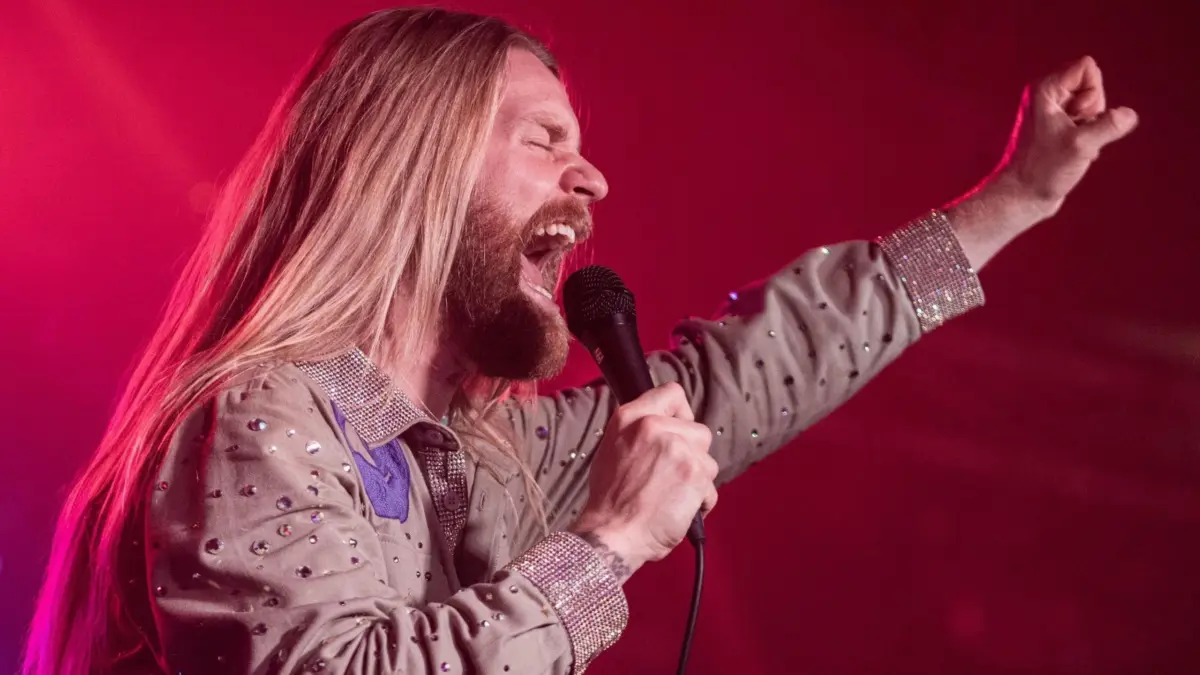
If 2021 was the nadir, 2022 proved that lightning could, in fact, strike. TikTok sensation Sam Ryder was internally selected by the BBC’s music consultants, spearheaded by industry veteran Lee Smith, with the anthemic pop-rock track "Space Man."
With his soaring multi-octave vocals, dazzling sparkly jumpsuit, and irrepressible charm, Ryder captured the hearts of Europe. He finished in a sensational second place with 466 points—the UK’s highest placement in over two decades—losing only to Ukraine’s Kalush Orchestra in an emotionally charged contest held in Turin. Ryder’s triumph proved conclusively that the UK could succeed at Eurovision if it aligned world-class songwriting with charismatic, authentic performance.
2023–2025: A Return to Mediocrity
The momentum generated by Sam Ryder, however, proved difficult to sustain. In 2023, when the UK proudly hosted the contest in Liverpool on behalf of war-torn Ukraine, Mae Muller represented the host nation with her sassy pop track "I Wrote A Song." Despite a spirited home crowd and heavy promotion, Muller finished second from bottom, underlining that the 2022 success was an outlier rather than a systemic turning point. Subsequent entries over the next two years continued to flounder in the lower half of the scoreboard.

2026: The "Look Mum No Computer" Experiment
Most recently, at the 2026 Eurovision Song Contest, the UK selected eccentric electronic musician and internet creator Sam Battle—performing under his moniker Look Mum No Computer—to represent the nation with the quirky, high-concept track "Eins, Zwei, Drei."
Clad in a striking pink jumpsuit, backed by performers wearing furry, monitor-shaped headgear, Battle delivered a performance that was deeply authentic to his underground electronic roots. However, it failed to resonate with mainstream European voters. Battle finished in last place in the grand final, securing a meager single point. It was this latest result that finally prompted parliamentarians to ask whether the UK’s talent-scouting model is fundamentally broken.
Supporting Context & Metrics: The Scale of the Problem
The disconnect between the UK’s domestic music market—valued in the billions and responsible for launching global superstars—and its Eurovision scorecard is one of the most baffling anomalies in modern entertainment.
The 15-Year Scoreboard Reality
- Above 15th Place: Over the past 15 years, the UK has only managed to finish higher than 15th place on one single occasion (Sam Ryder’s second-place finish in 2022).
- Bottom Finishes: In that same timeframe, the UK has finished in last place multiple times (2010, 2021, 2026) and near the bottom on numerous other occasions.
- The Title Drought: The upcoming contest in Burgas, Bulgaria, will mark exactly 30 years since the UK last lifted the glass microphone trophy. That victory came in 1997 in Dublin, when pop-rock group Katrina and the Waves triumphed decisively with "Love Shine A Light," scoring 227 points. Since then, three decades of near-misses, strategic voting complaints, and critical re-evaluations have followed.
The Internal Selection vs. National Final Debate
A central point of contention for music critics and fans alike is how the UK chooses its acts. For decades, the debate has swung back and forth between two distinct models:
- The Internal Selection Model (Current): Driven by the BBC in collaboration with commercial record labels and music management companies (such as TaP Music in recent years). Proponents argue this shields artists from brutal, hyper-critical televised talent shows and allows industry professionals to handpick seasoned artists who understand modern radio trends. Critics, however, argue that this process lacks transparency, fosters an insular "jobs-for-the-boys" culture, and detaches the public from the artist long before they hit the international stage.
- The Public National Selection Model (Previous): Formats like Eurovision: You Decide put the power directly into the hands of British TV viewers. While democratic, past iterations frequently suffered from low budgets, dated staging, underwhelming song catalogs, and a self-deprecating national attitude that treated the process as a joke rather than a serious competition.
Official Statements: What Parliament and the BBC Are Saying
The investigation stems from the DCMS committee’s "State of Play" inquiry mechanism, which allows members of the public and industry stakeholders to petition for parliamentary sessions on subjects of public concern or cultural significance.
Dame Caroline Dinenage, chair of the cross-party DCMS committee, did not mince words when outlining the scope of the inquiry.

"We want to get to the bottom of who chooses our entrant, on what basis, and whether our dismal record of achievement in recent years—Sam Ryder to one side—is the result of bad song choice, weak performance, structural failures within our selection pipeline, or something else entirely," Dame Caroline told BBC News.
"This application interested us because of the UK’s reputation for scoring ‘nul points’, coming bottom, or close to bottom in recent years at Eurovision, despite having world-class songwriters and musicians who conquer the rest of the globe every single day."
Over the coming months, the committee is expected to summon senior executives from the BBC’s entertainment commissioning department, prominent commercial music managers, independent music industry analysts, and former UK Eurovision contestants. Written submissions from songwriters, fan associations, and broadcasting experts will also be collected and evaluated.
The BBC has historically defended its selection procedures, emphasizing that Eurovision has evolved into a hyper-competitive, modern television spectacle where musical trends shift rapidly year-on-year. Network representatives are expected to use the parliamentary hearings to highlight the complexities of competing against nations that treat Eurovision as a matter of immense national pride and state-backed cultural investment.
Future Outlook: What Happens Next?
While no strict timeframe has been officially announced for the hearings, the inquiry is expected to convene over the next several months.
Once all oral and written evidence has been thoroughly analyzed, the DCMS committee will publish a formal parliamentary report. While select committee reports do not carry the binding weight of primary legislation, they hold immense persuasive power. The report is widely anticipated to feature a series of concrete, actionable recommendations addressed directly to the BBC and the broader UK music industry.

Potential recommendations could include:
- Overhauling the Talent Scouting Framework: Introducing greater transparency into how commercial partners and BBC executives evaluate prospective entries.
- Revisiting Hybrid Selection Formats: Exploring whether a hybrid model—combining professional industry songwriting camps with public voting—could bridge the gap between artistic credibility and public engagement.
- Increased Long-Term Investment: Re-evaluating the financial and promotional resources dedicated to staging, choreography, and international pre-party touring for the chosen UK act.
For millions of British viewers who tune in every May with a mixture of patriotic hope and defensive humor, the inquiry signals a welcome acknowledgment that the UK’s relationship with Eurovision is worth taking seriously. Whether Westminster can successfully untangle the complexities of Europe’s favorite pop contest remains to be seen, but one thing is certain: the UK’s path to Eurovision redemption is about to face its most rigorous cross-examination yet.