Executive Overview
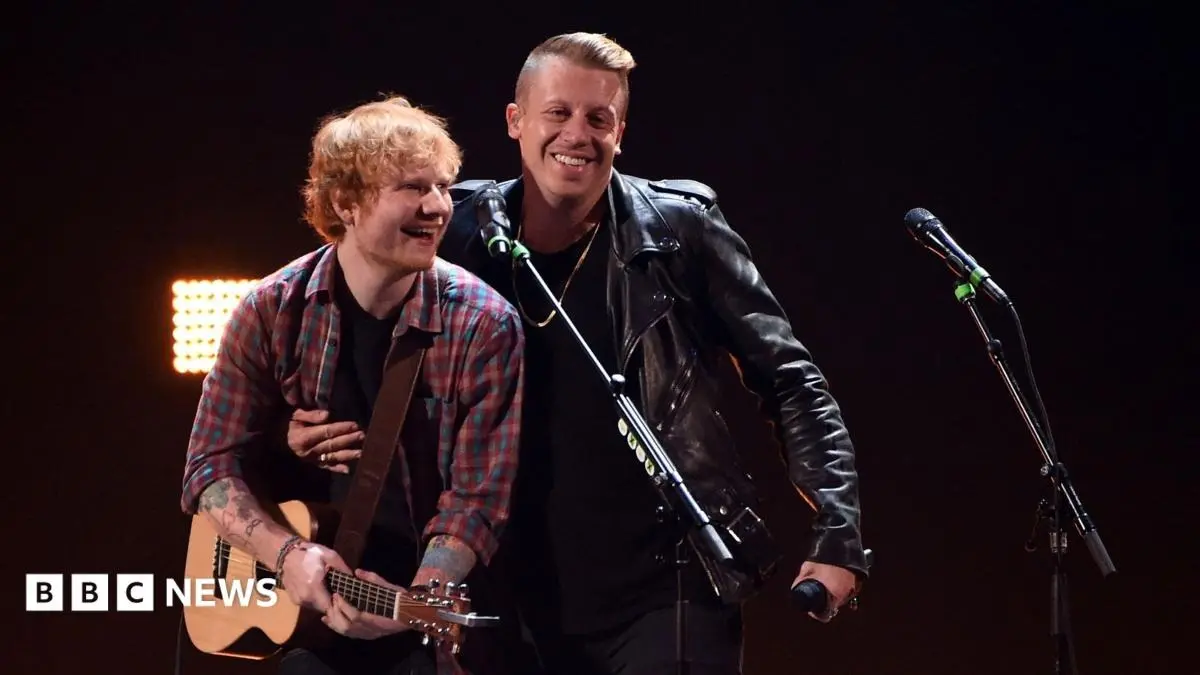
The intersection of mainstream popular music and geopolitical activism has once again resulted in high-profile fallout, culminating in the abrupt removal of American rapper Macklemore from Ed Sheeran’s ongoing high-capacity United States stadium tour. The decision, orchestrated by tour promoters and venue stakeholders following days of intense public pressure, highlights the volatile landscape artists navigate when addressing the ongoing Israel-Hamas conflict from major performance platforms.
The controversy centers on Benjamin Haggerty—better known as Macklemore—and his vocal pro-Palestinian advocacy during consecutive performances in New Jersey. His inclusion on the bill drew immediate backlash from Jewish advocacy organizations and venue operators, culminating in his dismissal after just two dates. While Ed Sheeran has released a detailed statement clarifying that the removal was a promoter-driven decision rather than his own, the incident has ignited a broader industry-wide debate regarding artistic freedom, corporate venue ownership, political neutrality, and the responsibilities of global music superstars in times of international crisis.
This report provides a comprehensive examination of the events leading up to Macklemore’s dismissal, the conflicting perspectives of the primary figures involved, the institutional pressures exerted by venue stakeholders, and the wider implications for live entertainment tours operating in an increasingly polarized sociopolitical climate.
Detailed Chronology: From MetLife Stage to Tour Dismissal
The sequence of events that led to Macklemore’s expulsion from the tour unfolded rapidly over a matter of days in early September, transforming standard concert dates into flashpoints of international political discourse.
September 4: The MetLife Stadium Opening
The controversy ignited on the evening of September 4, during the opening night of Macklemore’s run as a supporting act on Ed Sheeran’s tour at the MetLife Stadium in East Rutherford, New Jersey. Taking the stage before a massive audience, Macklemore delivered a direct address regarding his motivations for joining the tour.
"A big part of the reason why I wanted to do this tour in the first place is so that I could stand up in stadiums like this and say two words that are very, very dear to my heart: Free Palestine," he told the crowd.
Following these remarks, the rapper performed his track "Hind’s Hall," a song written in tribute to pro-Palestinian student activists at Columbia University. The song explicitly condemns Israel’s military campaigns in the Gaza Strip. As the performance proceeded, synchronized video footage depicting the physical devastation and human toll in Gaza was projected onto the stadium’s massive jumbotrons. While segments of the audience responded with vocal cheers, the reaction beyond the stadium was swift and critical.
September 5: The Second Night and Escalating Backlash
Despite the immediate digital fallout from his opening night statements, Macklemore returned to the MetLife Stadium stage the following evening, September 5. During this second performance, he sought to address critics directly, specifically appealing to the Jewish members of the audience.
"Criticism of Israel, criticism of apartheid, being against genocide, is in no way a criticism of you," he stated from the stage, adding an expression of solidarity with civilians in Gaza and the West Bank.
Concurrently, external pressure mounted online and within institutional circles. The Israeli American Council initiated a formal petition demanding the rapper’s immediate removal from the remainder of the tour. Simultaneously, the civil rights and antisemitism monitoring group StopAntisemitism accused the artist of ambushing concertgoers with political propaganda—a narrative subsequently amplified across social media platforms by pop star Pink, who reposted the organization’s statements on Instagram.
September 8–9: Promoter Intervention and Public Fallout
By the beginning of the following week, venue operators and tour promoters intervened. Following consultations between venue executives and the Messina Touring Group (MTG)—the primary promoters behind Sheeran’s US itinerary—it was determined that Macklemore’s continued presence on the bill was untenable.
On Monday, September 9, Macklemore took to Instagram to formally announce his removal from the line-up. In his statement, the rapper asserted that the boycott had been spearheaded by billionaire Robert Kraft, owner of the New England Patriots and the Gillette Stadium in Massachusetts, who had reportedly exercised leverage to bar the artist from performing at specific venues.
Shortly thereafter, Ed Sheeran published his own extensive statement on Instagram, clarifying his position, detailing his behind-the-scenes attempts to mediate between venues and the tour management, and explaining his rationale for maintaining professional political neutrality.
Supporting Context & Metrics: The Conflict, Venues, and Industry Pressures
To fully understand the gravity of Macklemore’s removal, it is essential to examine the underlying geopolitical conflict that inspired his music, the architecture of the live music industry that enabled his dismissal, and the stark human costs associated with the war in the Middle East.
The Geopolitical Catalyst
The current hostilities in the Middle East trace their most recent escalation to October 7, 2023, when Hamas-led militants launched an unprecedented, multi-pronged attack on southern Israel. According to Israeli tallies, approximately 1,200 people were killed during the assault, and 251 individuals were abducted and taken into Gaza as hostages.
In response, the Israel Defense Forces (IDF) launched an extensive military campaign across the Gaza Strip with the stated objectives of dismantling Hamas’s governing and military infrastructure and securing the release of the hostages. Israel has consistently rejected allegations of genocide brought before international bodies, maintaining that its armed forces operate in strict adherence to international law and engage in legitimate self-defense operations in both Gaza and the occupied West Bank.
The human toll of the ensuing military campaign has been catastrophic. According to health authorities in the Hamas-administered territory—figures that the United Nations and international humanitarian agencies deem statistically reliable—more than 73,780 Palestinians have been killed since October 2023, accompanied by widespread displacement, infrastructural collapse, and severe shortages of food, clean water, and medical supplies. This staggering loss of civilian life has served as the focal point for international protests, campus demonstrations, and artistic interventions worldwide.
Corporate Power and Venue Infrastructure
The mechanics of modern stadium tours rely heavily on intricate contractual relationships between headline artists, booking agencies, independent promoters, and venue owners. Unlike smaller clubs or independent theaters, massive sports stadiums and arenas are frequently owned or operated by major corporate entities, sports conglomerates, or high-net-worth individuals.
In this instance, the intervention of venue stakeholders proved decisive. The Messina Touring Group stated to Rolling Stone magazine that multiple venue operators made it explicitly clear they would refuse to host events featuring Macklemore. According to MTG, acquiescing to these venue bans was the only alternative to the total cancellation of the tour—an outcome that would have jeopardized the livelihoods of hundreds of touring crew members, support acts, and musicians.
Robert Kraft, addressing his role in the decision, defended his venue’s policy in a public statement:
"I agree with Macklemore, too many lives have been lost and there has been too much suffering, but only sharing selective information and ignoring the actions of Hamas is not honest and only advances more divisiveness and hate. We will not provide a platform for hate speech."
Kraft’s explicit reference to Macklemore’s "broader history of antisemitic rhetoric" points to prior controversies in the rapper’s career, notably a 2014 incident where he wore a costume featuring a caricature deemed antisemitic during a concert performance—an event for which he subsequently issued a detailed apology.
Official Statements and Divergent Philosophies
The public commentary issued by the central figures in this controversy reveals a profound philosophical divide regarding the responsibilities of artists, the limits of free expression within commercial spaces, and the most effective pathways to achieving peace.
Ed Sheeran: The Case for Neutrality and Sanctuary
Ed Sheeran’s statement emphasized his role as an entertainer dedicated to fostering a universal space for his audience. Having spent the week attempting to broker a compromise behind closed doors, Sheeran expressed frustration at the promoters’ ultimate decision while distancing himself from the administrative mechanics of the tour contracts.
"Macklemore coming off tour was the promoter’s decision, it was not mine," Sheeran wrote. "Macklemore’s contract for the tour was with the promoter, not me. I would never let down the fans who had made plans, nor would I abandon the touring crew and the other support acts and musicians who rely on me for work and to make a living."
Addressing his personal stance on political commentary, Sheeran articulated a deliberate boundary between private conviction and public platform utilization:
"I am not complicit. I have my personal views on this devastating conflict. Just because I choose not to speak publicly, it doesn’t mean I don’t have them, and it doesn’t mean I don’t care. Nor does it mean I don’t support causes in my own, personal way."
He continued by highlighting the demographics of his audience:
"There is a reason I do not use my professional platform for politics—my audience includes young people, often children, of all backgrounds. Those who come to my shows do not expect a political forum. I respect Macklemore’s strength of purpose to stand up and shout for what he believes. However, there is room for multiple approaches to the same end: Peace. I choose to use my fame and platform to be a place of safety and sanctuary, to maintain diplomacy and keep conversations open, not closed."
Macklemore: The Cost of Conviction
In contrast, Macklemore’s response underscored an uncompromising view of political engagement, arguing that neutrality in the face of systemic suffering is morally untenable. While acknowledging the difficult position in which Ed Sheeran was placed, the American rapper expressed sharp disappointment over the British singer’s refusal to take a public stand alongside him.
"Taking a side can cost you. Money, brand deals, sponsorships, festivals, private shows, relationships and access. I’ve lost all of those things. But there is no neutral position between the oppressor and the oppressed," Macklemore wrote in his statement.
Despite his removal from the remaining dates, the rapper framed his brief tenure on the tour as a strategic success, asserting that his primary objective was to inject the realities of the Palestinian crisis into high-profile public spaces. "If my words succeeded in turning the conversation back to Palestine, then it was the most successful tour I’ve ever been on," he concluded.
Future Outlook: The Intersection of Music and Geopolitics
The removal of Macklemore from Ed Sheeran’s US tour serves as a watershed moment for the live entertainment industry, signaling an era where corporate venue management, heightened public sensitivity, and geopolitical polarization intersect with unprecedented force.
As major tours continue to navigate multi-city itineraries across diverse political jurisdictions, several key implications emerge for the future of live performance:
- Tightening Venue Contracts: Promoters and venue operators are increasingly likely to implement rigorous compliance clauses regarding on-stage political speech, aiming to insulate corporate stakeholders from boycott threats and public relations crises.
- The Burden on Headliners: Supporting acts and headliners face delicate negotiations regarding creative autonomy versus contractual obligations. Major headliners like Sheeran may find it increasingly difficult to remain neutral when ideological clashes involve their handpicked touring partners.
- The Weaponization of Cultural Platforms: Both activist networks and corporate stakeholders have demonstrated a capacity to leverage economic pressure—ranging from consumer petitions to venue lockouts—to shape the discourse within entertainment spaces.
Ultimately, the incident illustrates that stadium stages are no longer insulated from the geopolitical conflicts dominating global headlines. Whether artists choose Macklemore’s path of direct political confrontation or Sheeran’s philosophy of musical sanctuary, the live music industry has entered a complex new reality where the business of touring and the ethics of global advocacy are inextricably linked.