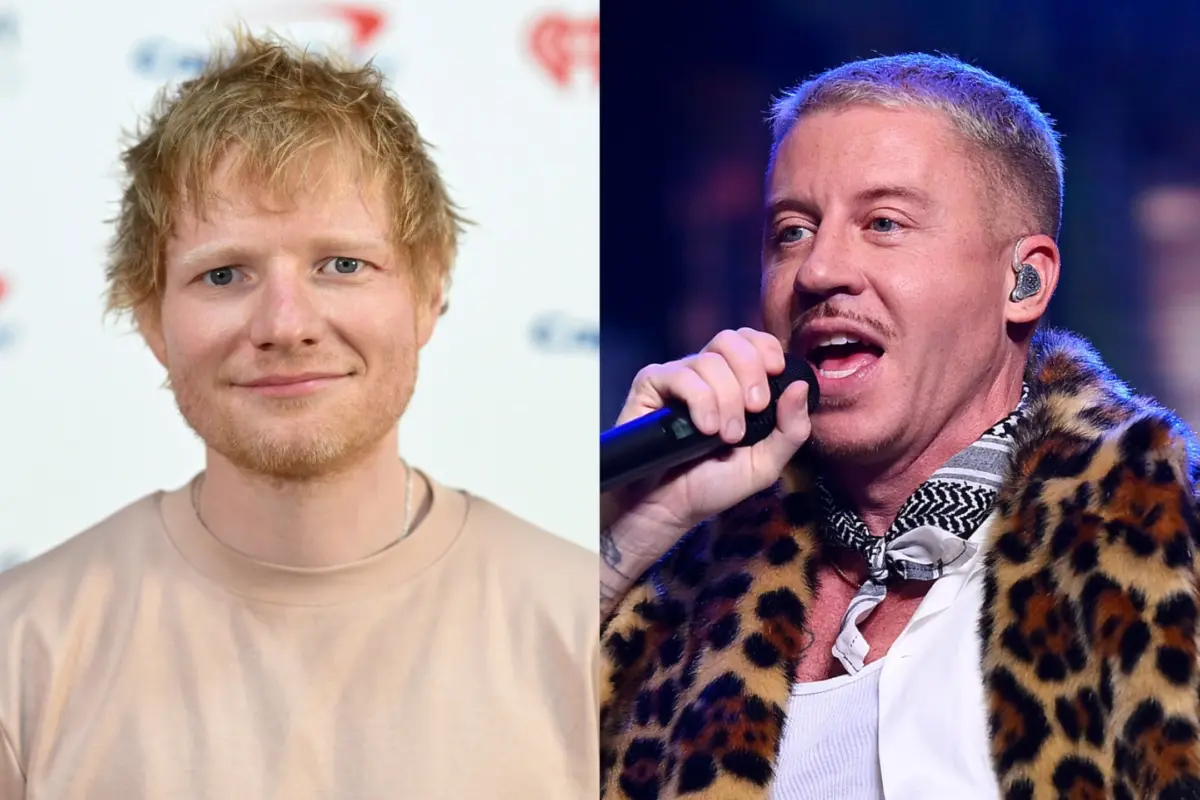
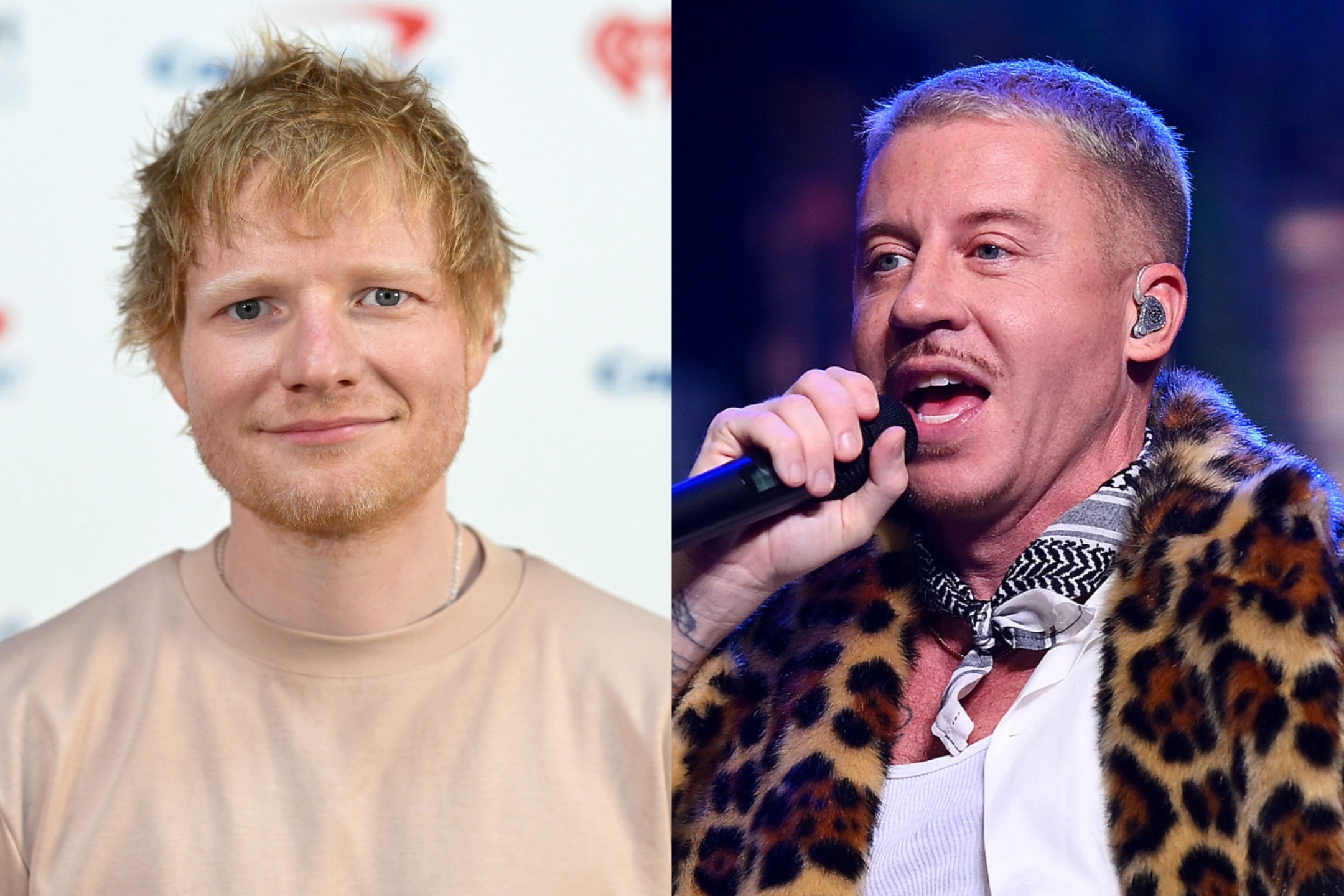
The intersection of modern music, celebrity influence, and geopolitics has once again ignited a fierce public debate, centering around British singer-songwriter Ed Sheeran and American rapper Macklemore. What began as a routine opening act collaboration on a high-profile U.S. concert tour has devolved into a high-stakes controversy involving venue bans, political advocacy, and accusations of censorship.
The crisis unfolded when Macklemore—legally named Benjamin Haggerty—was abruptly dropped from the remaining dates of Sheeran’s U.S. tour. The cancellation followed a performance in New Jersey earlier this month, during which Macklemore vocalized explicit support for Palestinians in Gaza and the West Bank, performing his politically charged 2024 protest track, "Hind’s Hall."
The fallout rapidly escalated from an artistic disagreement into a complex corporate and political maneuver. Macklemore revealed that high-profile figures, including New England Patriots owner Robert Kraft, intervened to bar him from performing at major venues like Gillette Stadium. Following days of intense public scrutiny, silence from tour organizers, and mounting pressure from advocacy groups on both sides of the aisle, Ed Sheeran broke his silence. In an official statement, Sheeran attempted to distance himself from the direct decision to oust his peer, placing the ultimate responsibility on tour promoters and venue executives. At the same time, the British pop star defended his choice to maintain an apolitical public posture during live performances.
This comprehensive report examines the events leading up to the cancellation, the exact mechanics of the tour’s fracturing, the divergent philosophies on celebrity activism held by the two artists, and the broader implications for free speech within the live entertainment industry.
Detailed Chronology: From the Stage to the Ultimatum
The Catalyst: The New Jersey Performance
The seeds of the controversy were planted during a stadium stop in New Jersey earlier this month. Macklemore, serving as a supporting act for Ed Sheeran’s expansive U.S. tour, took the stage and used his platform to address the ongoing Israel-Hamas conflict. During his set, the rapper performed "Hind’s Hall"—a song explicitly written to protest the humanitarian crisis in Gaza and university crackdowns on pro-Palestinian demonstrations—and led the audience in chanting "Free Palestine," while displaying Palestinian imagery.
The performance immediately polarized the concertgoers and drew swift corporate blowback. Within hours of the show, digital petitions began circulating online, demanding Macklemore’s immediate removal from the tour. Critics argued that large-scale music concerts should remain neutral spaces, free from polarizing geopolitical rhetoric, while supporters championed the rapper’s right to free speech and human rights advocacy.
The Ultimatum and Venue Bans
As the digital backlash gained momentum, the logistical realities of touring large multi-purpose stadiums began to close in on the production. According to statements released by both artists, venue executives and stakeholders quickly mobilized against Macklemore’s continued participation.
The turning point arrived when New England Patriots owner Robert Kraft reportedly intervened. Gillette Stadium in Foxborough, Massachusetts—owned by Kraft—was a major scheduled stop on the tour itinerary. Macklemore alleged in an Instagram statement that Ed Sheeran personally informed him that Kraft had issued a definitive ultimatum: Macklemore would not be permitted to perform at Gillette Stadium under any circumstances following his pro-Palestinian statements in New Jersey.
Faced with similar resistance from other venues across the tour route, the pressure on the production team multiplied. Negotiations behind the scenes reportedly stalled as venue operators threatened cancellations, putting the entire logistical framework of the multi-million dollar tour at risk.
The Official Statements and Falling Out
On Monday, Macklemore took to Instagram to share his side of the narrative. He described finding himself in a deeply complicated dynamic with Sheeran, whom he characterized as a personal friend despite their ideological divide. Macklemore revealed that the two artists had engaged in difficult private conversations regarding the conflict, ultimately hitting a wall of "fundamental disagreement."
According to the rapper, Sheeran relayed that the words "Free Palestine" and the display of Palestinian flags were deemed deeply hurtful to various stakeholders and community members. Macklemore’s counter-response was direct: he told Sheeran that if those words were viewed as more offensive than the massive casualties suffered by Palestinian civilians, it underscored an irreconcilable moral disconnect.
Following days of mounting public criticism accusing Sheeran of complicity and cowardice, the British megastar responded via Instagram on Tuesday under the banner, "It’s important that I set out some facts." Sheeran clarified that while he was aware of the stakeholder pressure and venue ultimatums, the final decision to remove Macklemore was executed by the tour promoter, not himself.
Supporting Context & Metrics: The Anatomy of a Tour Cancellation
To fully understand the gravity of the decision to drop an opening act from a major stadium tour, one must examine the economic and operational scale of modern live music enterprises.
The Scale of Stadium Tours: Ed Sheeran’s tours consistently rank among the highest-grossing in global music history, frequently moving hundreds of thousands of tickets per leg across massive open-air venues and NFL stadiums.
Promoter Dynamics: Major tours are rarely managed by artists alone. They are intricate partnerships involving global promoters (such as Live Nation or AEG), local venue syndicates, corporate sponsors, and stadium ownership groups (such as Kraft Sports + Entertainment).
The Radius and Indemnity Clauses: Standard stadium contracts include strict moral turpitude and public safety clauses. Venue owners retain the legal right to refuse entry to artists, staff, or supporting acts whose public actions are deemed capable of sparking civil unrest, compromising venue security, or damaging the corporate reputation of the facility.
The Economic Impact on Crews: As Sheeran noted in his defense, abruptly altering a tour lineup involves cascading financial consequences. Hundreds of touring personnel, lighting technicians, sound engineers, independent musicians, and opening acts rely on the seamless execution of these dates to sustain their livelihoods.
The Geopolitical Context of "Hind’s Hall"
Macklemore’s track "Hind’s Hall"—named after Hind Rajab, a six-year-old Palestinian girl killed in Gaza, and Columbia University’s renaming of Hamilton Hall during student protests—has become an anthem for the global pro-Palestinian movement. Released in May 2024, the song explicitly critiques American foreign policy, media framing of the Middle East, and the commercialization of the music industry’s silence. By choosing to perform this specific track on a mainstream pop tour, Macklemore knowingly stepped into a volatile geopolitical arena, guaranteeing that his artistic expression would intersect directly with corporate liability concerns.
Official Statements: Analyzing the Divide
The public statements released by Macklemore and Ed Sheeran illuminate a fundamental philosophical chasm regarding the role of the artist in times of global crisis.
Macklemore’s Perspective: Moral Urgency Over Comfort
Macklemore’s messaging frames silence in the face of human suffering as an ethical failure. By recounting his private debates with Sheeran, the rapper emphasized that artistic platforms must be utilized to highlight atrocities, regardless of how uncomfortable or commercially damaging those truths might be to corporate partners. His statement reads as a rejection of sanitized pop culture, arguing that institutional sensitivities pale in comparison to humanitarian crises.
Ed Sheeran’s Perspective: The Sanctuary of Music and Diplomacy
Conversely, Sheeran’s defense centers on the concept of the concert venue as a neutral space of refuge. His statement outlines a deliberate philosophy of engagement:
"I choose to use my fame and platform to be a place of safety and sanctuary, to maintain diplomacy and keep conversations open, not closed. If we only focus on shouting the loudest, nothing will ever change. There are different approaches to being an advocate for change."
Furthermore, Sheeran pushed back aggressively against the accusation that his neutrality equated to complicity:
"I am not complicit. I have my personal views on this devastating conflict. Just because I choose to not speak publicly, it doesn’t mean I don’t have them, and it doesn’t mean I don’t care. Nor does it mean I don’t support causes in my own, personal way."
By drawing a firm line between holding private convictions and weaponizing a commercial stage, Sheeran sought to reassert control over his brand while shedding liability for a business decision executed by his promoters.
Future Outlook: Industry Implications and Precedents
The public fracture between Ed Sheeran and Macklemore serves as a watershed moment for the live entertainment industry, highlighting several emerging trends that will likely shape future tours:
1. Increased Contractual Scrutiny
In the wake of this controversy, booking agents, venue managers, and promoters are expected to implement even stricter vetting processes for supporting acts. Performance riders may increasingly feature clauses explicitly restricting political commentary or spontaneous advocacy during live sets, as venue owners seek to insulate themselves from boycotts and PR crises.
2. The Weaponization of Stadium Real Estate
The direct intervention of prominent figures like Robert Kraft demonstrates that venue owners hold immense veto power over the ideological content of performances hosted on their properties. As stadiums are increasingly owned by sprawling corporate conglomerates and billionaire sports franchise owners, the commercial friction between free expression and corporate brand protection will only intensify.
3. The Re-evaluation of Apolitical Pop Stardom
Ed Sheeran’s defense highlights a defensive posture common among mega-artists: the desire to be all things to all people. However, as audiences become increasingly polarized, the middle ground of absolute neutrality is shrinking. Artists are discovering that choosing not to speak out is no longer viewed merely as a neutral act, but as a deliberate political choice in its own right—one that invites severe scrutiny from fans and peers alike.
As the dust settles on this chapter of the tour, neither artist has indicated a willingness to walk back their core positions. Macklemore continues to champion his activist platform, while Sheeran navigates the remainder of his U.S. dates under the watchful eyes of promoters, fans, and media outlets tracking every note played on stage.