Executive Overview
For 149 years—dating back to the inaugural Wimbledon Championships in 1877—every single Grand Slam men’s singles semi-final featured at least one player wielding a one-handed backhand. That unbroken historical streak came to an abrupt end at the US Open, when Stefanos Tsitsipas, the last remaining single-hander in the singles draw, bowed out in the round of 16.
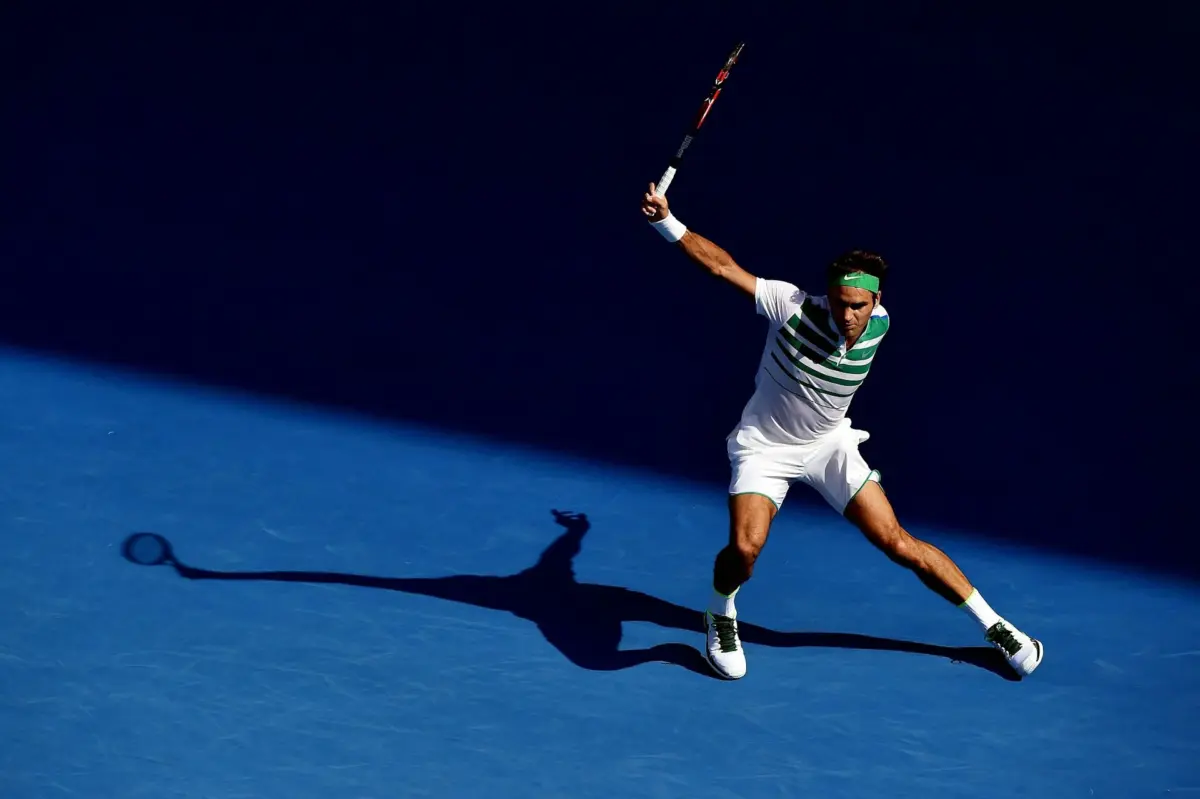
This is far more than a mere statistical anomaly. It is a watershed moment for professional tennis, marking the culmination of a half-century tactical shift toward the two-handed backhand. Once the gold standard of the sport, forged by legends like Rod Laver, Pete Sampras, and Roger Federer, the one-handed backhand is now facing functional extinction at the elite level.
As modern racquet technology, high-tension polyester strings, slower court surfaces, and hyper-aggressive topspin mechanics dominate the game, young players and coaches increasingly bypass the one-hander. The stroke requires exceptional strength, immaculate timing, and microscopic precision—traits that offer diminishing returns in an era dominated by baseline power and relentless defensive efficiency.
Yet, the decline of the single-hander is not merely a story of natural athletic evolution. It is a symptom of a broader homogenization sweeping through professional tennis. Much like the disappearance of the serve-and-volley style, the erosion of the one-handed backhand threatens to strip the sport of its stylistic variety, strategic contrast, and classical aesthetic. As tennis authorities grapple with the future of the game, the question remains: is the death of the one-hander an inevitable casualty of progress, or can the sport be reshaped to preserve its most poetic stroke?
Detailed Chronology: From Foundation to the Modern Crisis
To understand the gravity of the modern crisis, one must trace the arc of the one-handed backhand from its foundational dominance to its current marginalization.
The Era of Classical Foundations (1877–1970s)
In the nascent days of lawn tennis, the one-handed backhand was not merely a stylistic preference; it was the default mechanical reality. Early equipment—heavy wooden frames, natural gut strings, and tight constraints on athletic conditioning—necessitated a stroke that could maximize reach and leverage. Pioneers of the game utilized the single-hander to transition forward, blending defense with the transition game. Legends of the wooden-racquet and early composite eras, such as Rod Laver, relied on the fluidity of a single arm to generate slicing variations, deep defensive returns, and crisp approach shots.
The Two-Handed Revolution (1970s–2000)
The seeds of the modern shift were planted in the 1970s and 1980s, when pioneers like Björn Borg and Chris Evert popularized the two-handed backhand. By utilizing the non-dominant hand as a stabilizer and a secondary source of power, players found they could absorb heavy paces more effectively and generate explosive topspin on the run.
Despite this rising tide, the one-handed backhand held its ground at the absolute pinnacle of the sport through the 1990s and early 2000s. Players like Pete Sampras, Stefan Edberg, and later, a young Roger Federer, proved that the single-hander could still conquer the tennis world. It was the weapon of choice for the quintessential serve-and-volleyer and the aggressive all-court player.
The Nadal Blueprint and the Federer Counter-Era (2000s–2010s)
The vulnerability of the one-handed backhand was exposed during the golden era of Roger Federer’s dominance, courtesy of his arch-rival, Rafael Nadal. Armed with a ferocious, left-handed topspin forehand, Nadal devised a tactical blueprint: pound Federer’s backhand corner with high-bouncing, heavy-spin balls that forced the Swiss maestro either to retreat deep behind the baseline or strike the ball at shoulder height—an awkward, energy-sapping zone for any single-hander.
While Federer’s extraordinary talent allowed him to mitigate this weakness and capture 20 Grand Slam titles, the rest of the tour took notes. The "Nadal blueprint" demonstrated that modern athletic conditioning, combined with specific tactical targeting, could neutralize the spatial advantages of a single-handed player.
The Tipping Point (2020s–Present)
As Djokovic perfected the two-handed backhand on the run—demonstrating an open-stance mastery that allowed him to retrieve wide balls with interest and recover instantaneously—the single-hander lost its final tactical refuge. The year 2024 marked the formal end of an era. With Tsitsipas’s exit at Flushing Meadows, the 149-year Grand Slam semi-final streak was snapped, signaling that the tour’s remaining single-handers could no longer consistently breach the sharp end of major tournaments.
Supporting Context & Metrics: Why the Stroke is Failing
The rapid obsolescence of the one-handed backhand cannot be blamed solely on tactical shifts. It is the result of a symbiotic convergence of biomechanics, equipment technology, and coaching economics.
1. Technological Shifts: Strings, Frames, and Courts
Modern tennis is unrecognizable from the sport played in the 20th century, largely due to materials science:
- Polyester Strings: The introduction of co-polyester strings in the late 1990s and 2000s revolutionized spin production. Players could hit the ball with ferocious downward head-speed, creating RPMs (revolutions per minute) that were previously unimaginable. For a one-handed player, dealing with a ball spinning at 4,000 RPM that rockets off the court at shoulder height is a biomechanical nightmare.
- Larger Racquet Heads: The shift from wooden frames to oversized graphite composites expanded the sweet spot, rewarding off-center hits with modern power. However, a one-handed stroke requires pristine center-mass contact; a frame-heavy swing lacks the structural reinforcement that a second hand provides under pressure.
- Homogenized Slow Courts: The general slowing down of court surfaces across the globe—from Melbourne to New York—has favored high-bouncing, baseline-grinding styles. Topspin rules these surfaces, systematically punishing low-skidding slices and flat one-handed drives.
2. Biomechanical Demands vs. Coaching Economics
The physics of the two strokes reveal a stark contrast in efficiency:
- The One-Handed Mechanics: Execution requires the non-dominant hand to pull the racket back to coil the hips and shoulders. As the ball enters the hitting zone, the non-dominant hand releases, and the dominant arm whips through while the opposing arm extends as a counterbalance. It is a masterpiece of timing, balance, and core stability.
- The Two-Handed Efficiency: By contrast, the two-hander acts essentially as a mirror image of a forehand executed on the non-dominant side. It relies on symmetrical muscle groups, provides structural stability against heavy incoming balls, and allows players to strike effectively on the run using an open stance.
For junior tennis coaches, the math is simple. Teaching a two-handed backhand yields faster developmental rewards. Young players lacking the upper-body strength and intricate motor coordination required for a reliable single-hander can achieve competency much sooner with two hands on the grip. Consequently, elite academies produce conveyor belts of baseline-anchored, two-handed players.
Official Statements & Industry Perspectives
The debate surrounding the extinction of the single-hander has drawn commentary from some of the sport’s greatest minds:
- Roger Federer, whose name is eternally synonymous with the artistry of the stroke, has publicly lamented its decline. While acknowledging the immense physical and tactical pressures placed on modern single-handers, Federer has repeatedly expressed hope that the shot will not vanish entirely from the professional ranks, emphasizing its unique place in the tennis ecosystem.
- Coaching Analysts and Biomechanists point out that the survival of elite sports relies on efficiency. Dr. Howard Brody, a noted physicist of tennis, has long argued that equipment modifications directly dictate tactical evolution. As long as string and racquet technology continue to reward heavy topspin from the baseline, coaches will naturally select the biomechanically safer option for their students.
- Traditionalists and Historians argue that the governing bodies of tennis—the ITF, ATP, and WTA—have been passive observers to a dangerous trend of tactical homogenization. By allowing court speeds to normalize and ball pressures to remain uniform, they have inadvertently curated an environment hostile to stylistic diversity.
Future Outlook: Can the One-Handed Backhand Be Saved?
The demise of the single-hander is frequently framed as a natural, unalterable law of athletic evolution—much like the adoption of the Fosbury flop in high jump. However, this comparison overlooks a fundamental truth: tennis is governed by rules, equipment standards, and court specifications that can be altered.
Unlike track and field, where athletes compete in a vacuum against raw physics, tennis players respond directly to the artificial conditions established by sport authorities. The systematic erosion of the one-handed backhand mirrors the extinction of another noble art form: the serve-and-volley.
By allowing the game to devolve into a landscape where elite competitors are merely "different shades of baseliners," tennis is shedding the contrasting styles that built its most compelling rivalries—clashes like Björn Borg versus John McEnroe, Chris Evert versus Martina Navratilova, and Andre Agassi versus Pete Sampras. These historic rivalries thrived not because the players played the same way, but because they offered a breathtaking dialectic of contrasting geometries and philosophies.
If tennis authorities wish to preserve the rich tapestry of the sport, they can take proactive steps to restore balance:
- Court Surface Diversification: Introducing faster, more varied court surfaces that reward low trajectory, variety of spin, and net-play tactics.
- String and Ball Regulations: Modifying regulations regarding co-polyester string elasticity or ball compression to curb the absurd, game-breaking levels of topspin currently dominating the tour.
Without intervention, elite tennis risks stepping into a future of clinical, frictionless uniformity. The one-handed backhand was never merely a way to hit a tennis ball; it was an exquisite collision of efficiency and beauty. As it edges toward the history books, the sport loses not just a shot, but a piece of its soul.