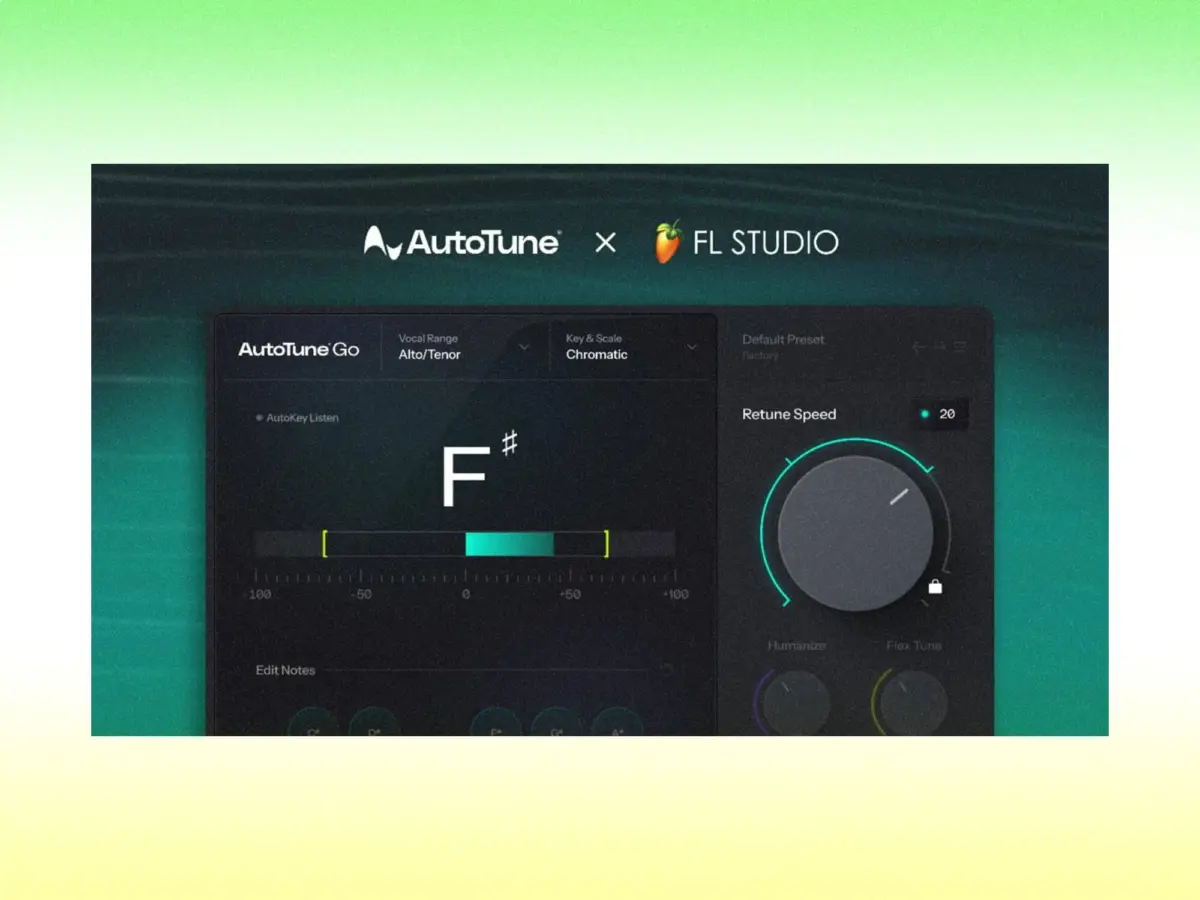
In a landmark collaboration that bridges three decades of music production history, software developer Image-Line has joined forces with pitch-correction pioneer Antares to launch Auto-Tune Go. Built specifically for FL Studio and integrated directly into the ecosystem’s FL Cloud service, this new plugin marks a monumental shift in the accessibility of professional-grade vocal processing.
Most notably, Auto-Tune Go is not locked behind an expensive paywall or reserved for elite tier subscribers; it is available to all FL Studio users, including those operating on the free tier of FL Cloud. By embedding the industry-standard sound of Auto-Tune directly into the DAW’s native workflow, Image-Line and Antares are dismantling long-standing financial barriers that have traditionally separated bedroom producers from major-label studios.
Representing the convergence of Image-Line’s hyper-efficient user interface design and Antares’ legendary algorithms, Auto-Tune Go distills thirty years of vocal innovation into a streamlined, high-performance tool. This comprehensive report explores the anatomy of the new plugin, the strategic importance of the collaboration for both companies, the shifting landscape of software-as-a-service (SaaS) within digital audio workstations (DAWs), and what this means for the future of modern music production.
Detailed Chronology & Background
The Evolution of Pitch Correction and FL Studio
To understand the significance of this release, one must look at the trajectories of the two titans behind it. Antares Audio Technologies revolutionized the music industry in 1997 with the introduction of Auto-Tune. Originally developed by Dr. Andy Hildebrand using seismic data-processing algorithms, Auto-Tune quickly evolved from an invisible, corrective utility used to salvage out-of-tune vocal takes into a bold, stylistic creative effect. From Cher’s 1998 hit "Believe" to the ubiquity of modern trap, hip-hop, and pop, Auto-Tune became the undisputed sonic signature of contemporary popular music.
Simultaneously, FL Studio (originally known as FruityLoops) carved out its own revolutionary path. Developed by Belgium-based Image-Line, the software transformed from a simple MIDI sequencer launched in the late 1990s into one of the most widely used DAWs on the planet. Renowned for its pattern-based workflow, lifetime free updates policy, and massive footprint among beatmakers and electronic music producers, FL Studio has long championed accessibility.
However, historically, advanced vocal production tools were often sourced from third-party developers, requiring separate purchases, complex routing, and significant financial investment. The introduction of FL Cloud—Image-Line’s integrated ecosystem offering sounds, distribution, and plugins—laid the groundwork for a more unified production experience. The arrival of Auto-Tune Go represents the pinnacle of this integration strategy.
The Genesis of Auto-Tune Go
Development on Auto-Tune Go began as a direct response to feedback from the global FL Studio community. Producers wanted a native, lightweight, and foolproof way to handle vocal tuning without sacrificing the pristine audio quality associated with the flagship Antares brand.
Engineering teams from both Image-Line and Antares collaborated closely to optimize the plugin’s digital signal processing (DSP) engine. The goal was twofold: ensure zero-latency performance suitable for real-time tracking during live vocal sessions, and design an intuitive user interface that eliminates the steep learning curve traditionally associated with professional vocal processing suites.
By distilling the core mechanics of Antares’ technology into a streamlined layout, the development team created a tool that bridges the gap between raw vocal takes and polished, radio-ready stems with minimal friction.
Supporting Context & Metrics: Inside Auto-Tune Go
Auto-Tune Go is engineered to cater to both novices taking their first steps in vocal production and seasoned engineers looking for a fast, reliable solution. Below is a breakdown of the plugin’s core features, technical capabilities, and workflow advantages.
1. Real-Time Visual Pitch Display
One of the most striking elements of Auto-Tune Go is its real-time visual feedback system. Producers can visually track incoming vocal pitches on a dynamic interface as they are being sung or played back. This instantaneous visual feedback helps demystify pitch correction, allowing users to see precisely how hard the algorithm is working to pull notes into alignment.
2. Intelligent Vocal Range Auto-Detection
Configuring pitch correction software traditionally required users to manually define the vocalist’s register (Soprano, Alto, Tenor, Baritone, Bass). Auto-Tune Go simplifies this process by incorporating an Auto Detect feature. By analyzing the incoming audio signal, the plugin automatically determines the vocal range, ensuring that the correction algorithm targets the correct frequencies without manual calibration.
3. Key and Scale Selection
To ensure musicality and prevent unnatural artifacts, Auto-Tune Go features robust key and scale controls. Users can instantly lock vocal performances to Major, Minor, or Chromatic scales. This guarantees that corrected notes remain anchored within the correct harmonic framework of the instrumental track, whether subtle adjustments or aggressive, hard-tuned stylistic effects are desired.
4. Four-Tier Retune Speed Settings
Flexibility is vital in modern vocal production, where the line between natural correction and the iconic robotic "T-Pain effect" is razor-thin. Auto-Tune Go addresses this via four distinct Retune Speed settings:
Subtle & Natural: Designed for transparent pitch correction that preserves the organic imperfections and emotional nuances of the original performance.
Moderate Correction: Balances natural human expression with structural pitch stabilization.
Fast Tuning: Tightens phrasing and smooths out minor wobbles, ideal for modern pop and R&B production.
Maximum Speed: Unlocks the classic, rapid-fire robotic tuning effect synonymous with contemporary hip-hop and electronic music.
5. Integration with FL Cloud
Perhaps the most disruptive aspect of Auto-Tune Go is its distribution model. Integrated directly into FL Cloud, the plugin is accessible to all tiers of users. Even producers operating on the zero-cost free tier of FL Cloud gain immediate access to the software. This breaks decades of industry precedent where genuine Antares technology required a substantial hardware dongle, subscription, or software purchase.
Official Statements & Industry Perspectives
The partnership has generated significant buzz across the audio technology sector, drawing enthusiastic commentary from the executive leadership at both Image-Line and Antares.
Constantin Koehncke, CEO of Image-Line, emphasized the cultural and workflow impact of the launch:
"Auto-Tune has been a defining tool in modern music production for decades. We are very excited to launch Auto-Tune Go in FL Cloud. It gives FL Studio producers a fast, intuitive path from raw vocal to finished sound. Available across every FL Cloud tier, it’s built right into the workflow, at no extra cost."
Koehncke’s comments underscore Image-Line’s ongoing commitment to value-driven software development, ensuring that the company’s massive user base remains equipped with cutting-edge tools without perpetually reaching into their pockets.
Jeff Wright, CEO of Antares, highlighted the democratic ethos driving the collaboration:
"Auto-Tune has always been about giving artists the freedom to shape their voice and create something uniquely their own. Bringing Auto-Tune Go directly into FL Studio puts the sound and technology that have helped define modern music into the hands of millions of creators, right where they’re already making music. We’re excited to make Auto-Tune more accessible than ever."
Wright’s perspective signals a strategic pivot by Antares toward broader ecosystem integrations. By partnering with one of the world’s most popular DAWs, Antares ensures its brand remains deeply embedded in the creative processes of the next generation of music producers.
Future Outlook: The Shift Toward Integrated Ecosystems
The release of Auto-Tune Go is more than just a software update; it is a clear indicator of where the music technology industry is heading. For years, the standard model of music production involved a fragmented ecosystem: producers bought a DAW from one company, virtual instruments from another, and mixing plugins from a dozen third-party vendors.
In recent years, however, DAW developers have increasingly moved toward unified cloud ecosystems. By bundling high-value third-party technology directly into subscription or tier-based cloud services (such as FL Cloud, Ableton’s ecosystem expansions, or Pro Tools Inner Circle partnerships), software companies are redefining user expectations. Producers no longer want to manage dozens of separate installers, authorization managers, and license keys; they want a seamless, plug-and-play experience.
What This Means for Producers and Competitors
Lowering the Barrier to Entry for Vocals: Vocal mixing has historically been one of the most technically challenging and expensive hurdles for independent artists. By providing world-class pitch correction for free within FL Cloud, the barrier to releasing professionally tuned vocals has virtually vanished.
Pressure on Competitors: Rival DAW manufacturers and plugin developers will undoubtedly take notice. The expectation that core mixing utilities must be purchased separately is under siege. Competitors will likely need to forge similar high-profile partnerships or enhance their native vocal processing suites to remain attractive to modern producers.
The Evolution of the "Freemium" Model: The inclusion of Auto-Tune Go in the free tier of FL Cloud demonstrates the viability of high-value freemium offerings. Rather than using crippled trial versions as bait, companies are finding success by offering genuine, professional-grade tools to entry-level users, ultimately driving long-term loyalty and conversion to paid ecosystem tiers.
Conclusion
Auto-Tune Go represents a historic milestone for both Image-Line and Antares. By uniting thirty years of vocal pitch-correction legacy with one of the most vibrant and dedicated DAW communities in the world, they have created something far greater than the sum of its parts.
As Auto-Tune Go rolls out to millions of FL Studio producers worldwide—from bedroom beatmakers tracking their first vocal hooks to seasoned professionals streamlining their workflow—it cements a simple truth: the future of music production belongs to integration, accessibility, and collaboration.