Executive Overview
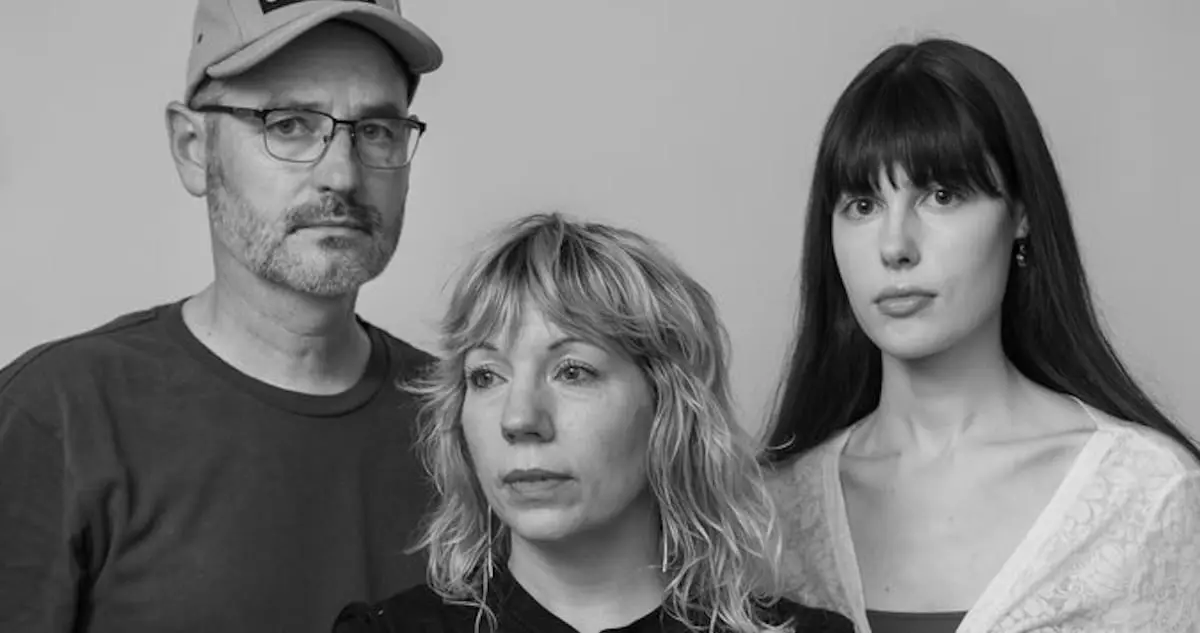
Two decades after first materializing from the fertile, murky soils of the British underground music scene, the visionary folk collective The Owl Service have returned. Their latest full-length studio album, Tied to the Land—slated for release on October 16, 2026, via Hobby Horse—marks their first collection of new material in a decade.
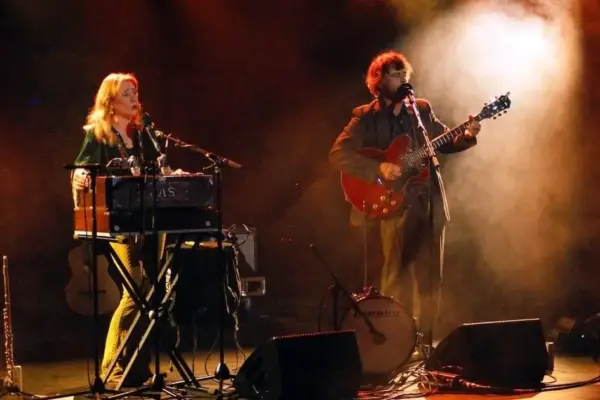
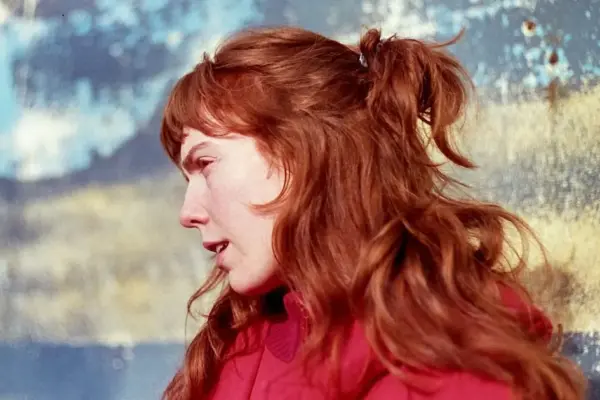
In an era dominated by algorithmic curation, the relentless hum of the digital panopticon, and the accelerating artificial intelligence-ification of modern creative industries, Tied to the Land arrives not merely as a record, but as a cultural artifact and an act of sonic resistance. Bandleader and founder Steven Collins has steered the project through a significant metamorphosis. The lineup featuring Jason Steel, Diana Collier, and Nancy Wallace has stepped aside, making way for new vocal and instrumental forces in Dorothy Chappell and Rebecca Lievers.
Together with returning collaborators, this revitalized iteration of The Owl Service has forged an album that honors traditional British and Cornish folklore while aggressively dismantling and mutating its tropes. Blending pastoral melodies with ominous drones, avant-garde saxophone, and squelchy analog synthesizers, Tied to the Land positions itself as a bright, guiding star within a wider contemporary renaissance of esoteric, nature-conscious, and community-driven British folk music.
Detailed Chronology: From the 2006 Underground to the 2026 Resurgence
Genesis in the Analog Dawn (2006)
When The Owl Service first emerged in 2006, the landscape of independent music in the United Kingdom was defined by cottage-industry cassette labels, hand-silkscreened CD-Rs, independent festivals, and a thriving community of esoteric artists. Social media was in its infancy, and smartphones had not yet atomized human attention spans or fostered widespread digital anxiety.
It was within this cultural greenhouse that Steven Collins established the band, deriving their name from Alan Garner’s classic children’s fantasy novel and the experimental late-1960s television series about teenage innocents awakening an ancient Welsh curse. The project was conceived as an organic response to a changing world—an intuitive reach for traditional folk culture as a herbal remedy to the gathering digital storm. Their output prioritized handcrafted, communally oriented, and seasonally observant forms of music-making that simultaneously tipped their hats to traditional tropes while chewing them up from the inside.
The Decade-Long Silence and Lineup Metamorphosis
As the 2010s unfolded, the pressures of modern life accelerated, and the music industry fractured further into digital streaming silos. The Owl Service went quiet following a prolific run of releases, eventually entering a silent hiatus that lasted ten years. During this period, the broader cultural backdrop shifted dramatically; the perceived existential threat of mass digitization, hyper-connectivity, and artificial intelligence made the tactile, earth-bound themes of traditional folk music feel more urgent than ever.
When Collins decided to resurrect the moniker, the project demanded a reinvention. The departure of long-standing members Jason Steel, Diana Collier, and Nancy Wallace cleared the canvas for a new chapter. Enter Dorothy Chappell and Rebecca Lievers. This injection of fresh creative blood provided the catalyst needed to bring Tied to the Land to fruition, bridging the gap between historical folk preservation and contemporary avant-garde experimentation.
Supporting Context & Metrics: The Anatomy of Tied to the Land
Clocking in as a masterclass in sonic contrast, Tied to the Land is built on a foundation of acoustic authenticity disrupted by jarring, modern, and experimental textures. The album’s tracklist weaves together traditional songs, instrumental soundscapes, and dramatic adaptations of regional folklore.
Track-by-Track Breakdown
- "Bonnie Boy": The album opens with a deliberate juxtaposition. Ominous, low-end electronic drones give way to melodious birdsong before violently accelerating into a juggernaut of classic folk-rock instrumentation. Driven by heavy guitars, marching drums, a shaking tambourine, and ex-Current 93 member Joolie Wood’s tantric violin, the track sets a high-stakes tone. Rebecca Lievers delivers dreamy vocals drenched in tape delay, narrating the timeless and dangerous follies of falling for a 17th-century rogue.
- "Barbara Allen": Dorothy Chappell takes the lead vocal duties here, presenting an unadorned, bell-like clarity. Her pure tone is counterpointed by grinding, distorted guitars and Julian Overall’s serpentine saxophone lines, giving the centuries-old standard a modern, uneasy edge.
- "The Trees They Do Grow High": Overall’s saxophone hangs like an existential question mark throughout this track. Chappell sings with a hypnotic fluency about fatalistic arranged marriages, anchored by Collins’ dynamic, shifting arrangements that emphasize the claustrophobia of the narrative.
- "Revolt from the Monolith, Come Back to the Village": Offering a radical shift in pace and texture, this centerpiece track leans heavily into the sonic world of hauntology. Featuring squelchy synthesizers, Mellotron strings, and spoken-word audio samples from the seminal 1970s folk-horror television fable Penda’s Fen, the song functions as a direct manifesto. It amplifies the album’s core message: humanity must return to a community-focused existence that respects the rhythms and rituals of the pagan calendar year.
- "The Mermaid of Zennor": Steeped in obscure Cornish mythology, this track recounts the tale of an anthropomorphized creature rising from the sea to seduce a local church chorister, ultimately drawing him back to live beneath the waves. The legend is famously memorialized by a 15th-century wooden bench-end carving in St Senara’s church near West Penwith—the most mystical, windswept corner of the Cornish peninsula. The Owl Service adapts the lore using plaintive organs and Lievers’ acrobatic vocal delivery, culminating in an arrangement where Collins’ guitar and Overall’s saxophone entwine like a sonic stained-glass window.
- "The Gay Goshawk": Serving as the album’s triumphant closer, this track features Chappell and Lievers alternating verses like two peregrine falcons locked in an aerial mating ritual. Their voices represent a masterclass in vocal opposites: Chappell’s celestial purity offsets Lievers’ earthy, tactile grit, creating a potent brew that supercharges the emotional resonance of the band’s decade-long absence.
Official Statements and Industry Alignment
While major commercial labels chase algorithmic hits generated or assisted by artificial intelligence, a vital counter-movement has taken root across the British Isles. Tied to the Land does not exist in a vacuum; rather, it shines brightly within a broader constellation of contemporary underground acts.
Artists such as Fuzzy Lights, Angeline Morrison, Lavinia Blackwall, Jim Ghedi, and the eclectic, community-driven roster at Broadside Hacks are all engaged in a similar cultural project. Together, they form an informal front rejecting the "A.I.-ification" of the modern world in favor of something arcane, tactile, and fundamentally vital.
Reflecting on the ethos of the album and the wider movement, creative figures within the modern British folk revival have increasingly emphasized the necessity of physical craft:
"In an environment where every cultural product is flattened into digital content, looking backward to local lore, seasonal rituals, and communal music-making isn’t escapism—it’s an act of psychological self-defense. We are building sanctuaries out of sound."
This philosophy is mirrored in the thematic weight of Tied to the Land. The album’s title itself acts as a double entendre: a critique of the rootless, hyper-mobile digital economy, and a celebration of a deep, psychological, and historical grounding in the physical geography of Britain and its folklore.
Future Outlook: The Cultural Legacy of Tied to the Land
As Tied to the Land prepares for its October 16 release via Hobby Horse, industry observers and underground music critics alike are watching closely to see how the album will impact the broader neo-folk landscape.
The successful transition from the band’s early 2000s incarnation to this modern, Chappell-and-Lievers-fronted iteration proves that traditional folk music—when handled with reverence, imagination, and a willingness to subvert expectations—possesses infinite adaptability. The Owl Service have not merely returned from a decade-long wilderness; they have returned with a map for navigating the spiritual malaise of the 2020s.
For listeners weary of sterile digital spaces, automated creative outputs, and the relentless speed of modern media consumption, Tied to the Land offers an invitation to step off the grid, listen to the land beneath their feet, and heed the timeless call: Revolt from the monolith and come back to the village.
Release Details:
Tied to the Land
Release Date: October 16, 2026
Label: Hobby Horse