Executive Overview
The contemporary musical landscape is undergoing a profound structural metamorphosis, characterized by an accelerating dissolution of rigid genre classifications. In this era of hyper-accessibility and cross-pollination, contemporary artists are increasingly looking backward into deep-rooted traditions while simultaneously projecting themselves forward into avant-garde electronic, ambient, and improvisational soundscapes. This week’s curation from KLOF offers a definitive snapshot of this paradigm shift, presenting an eclectic, boundary-pushing mixtape that bridges the gap between rural acoustic heritage and futuristic sonic architecture.
At the heart of this week’s release lineup is Mali Obomsawin’s sophomore solo full-length, Automatic, a conceptual triumph engineered to resist corporate commodification and institutional ownership. Released via Out Of Your Head Records, Obomsawin’s latest offering sits alongside equally visionary projects: Ana Lua Caiano’s fierce electronic-folk fusions, the cosmic-earthly convergence of Allison de Groot and Rich Ruth, the Occitan-rooted drone explorations of French duo Adiciatz, and Emily A. Sprague’s meditative, modular synthesizer-driven transmissions.
Far from being a mere collection of disparate tracks, this week’s mixtape operates as an interconnected sonic ecosystem. It features foundational contributions from jazz royalty like Don Cherry alongside contemporary innovators such as Jeremy Barnes, Old Saw, Booker Stardrum, and Evan Shornstein. This comprehensive report delves into the intricate mechanics of these releases, exploring the socio-political underpinnings, sonic methodologies, and philosophical inquiries that define one of the most compelling listening experiences of the season.
Detailed Chronology of the Release Showcase
The curation unfolds as a deliberate narrative arc, guiding the listener from the politically charged acoustic-jazz underworld to distant, ambient realms, and finally looping back through historical touchstones of avant-garde composition.
1. Mali Obomsawin: Reclaiming the Commons Through Automatic
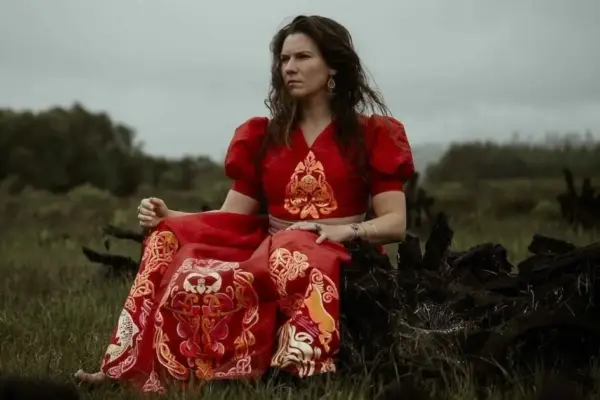
Opening the mixtape at timestamp 00:00 is Mali Obomsawin with the title track of her new album, Automatic. Following her critically acclaimed 2022 debut, Sweet Tooth, the Brooklyn-based artist—who is a proud citizen of the Abenaki First Nation’s Odanak community in Quebec—returns with an uncompromising artistic vision. Automatic is constructed around a radical central intention: to forge a body of work that contemporary cultural institutions cannot easily own, monetize, or assimilate.
Obomsawin’s music sits at the volatile intersection of free jazz, chamber folk, and Indigenous storytelling. Later in the mix (at 40:03), her track “Moi, quand j’y suis” further demonstrates her deft ability to weave intricate melodic phrasing with heavy socio-political undertones. Her compositions resist passive consumption; they demand active listening, positioning the artist not merely as an entertainer, but as an archivist of anti-colonial resistance.
2. Ana Lua Caiano: The Industrial Folk Rebellion of Lisbon
Transitioning into the European landscape at 04:23, Portuguese singer, musician, producer, and composer Ana Lua Caiano delivers “Um Mais Um” from her latest album, Devagar Que A Vida É Curta. Caiano represents a vital new wave of European artists who treat traditional folk music not as a museum exhibit, but as a living, breathing weapon of expression.
Her work relies on a stark juxtaposition: traditional Portuguese folk melodies collide head-on with cold, mechanical electronics, sharp rhythmic experimentation, and an intensely physical vocal presence. The result is a sound that feels both ancient and aggressively modern, mirroring the socio-economic anxieties of contemporary urban life through a folkloric lens.
3. Jeremy Barnes and the Radiophonic Heritage
At 07:12, Jeremy Barnes enters the sequence with “No. 1” from the Albuquerque Radiophonic Workshop. Known for his work in Neutral Milk Hotel and A Hawk and a Hacksaw, Barnes brings a distinct sense of textural world-building to the mixtape. His approach to percussion and accordion-driven textures grounds the sequence in a timeless, cinematic dread, echoing the mid-century experiments of the BBC Radiophonic Workshop while injecting a distinctly earthy, dusty American grit.
4. Allison de Groot & Rich Ruth: Where Banjo Meets the Cosmos
The midpoint of the initial sequence showcases a fascinating cross-genre collaboration. Allison de Groot and Rich Ruth combine forces on their self-titled album, represented here by “Nervion” (13:47) and “10-14” (43:10).
De Groot’s masterclass clawhammer banjo playing serves as the gravitational anchor, maintaining a tangible sense of human touch, warmth, and folk-acoustic tenderness. However, this traditional foundation is continuously pulled into orbit by Rich Ruth’s soaring, effects-laden electric guitars and ambient electronics. The resulting soundscape blurs the hard boundary between the earthly and the celestial, proving that Appalachian folk roots and ambient drone can occupy the same sonic breath without losing their respective identities.
5. Adiciatz: Unearthing Musique Domestique
Making their debut appearance on KLOF at 17:56, the French duo Adiciatz (comprising Manon Nogier and Guillaume Lespinasse) present “Cavals” from their full-length debut, Musique Domestique. The album is a masterclass in liminal spaces, deeply rooted in both traditional Occitan folk poetry and uninhibited sonic exploration.
Nogier and Lespinasse draw upon a remarkably diverse palette of influences. Delicate acoustic folk structures bleed seamlessly into sustained synthesizer drones, field recordings, and spontaneous sound improvisations. "Cavals" captures the essence of a European underground that refuses to choose between preservation and destruction.
6. Emily A. Sprague: Modular Meditations on Cyano
At 21:29, synthesist and composer Emily A. Sprague shifts the emotional register inward with “Inscription Of Wind” from her latest release, Cyano. Sprague has long been celebrated for her ability to coax organic, breathing emotions out of cold hardware, and Cyano represents a pinnacle in her catalog.
The album serves as an extensive, meditative inquiry into selfhood, ecological interconnectedness, and the nature of existence in distant, imagined realms. Through an intuitive, fluid manipulation of modular synthesizers and treated vocals, Sprague crafts a sonic language that explores visibility, psychic transformation, and the transmission of light across uncharted dimensions.
7. Old Saw, Codona, and the Avant-Garde Vanguard
As the mixtape moves into its latter half, the historical and structural depth of the curation becomes clear. Old Saw delivers “Chewing the Bridle” (23:57) from Country Tropics, exploring the dark, haunted underbelly of American roots music with cinematic patience.
This leads directly into a monumental jazz lineage piece: Collin Walcott, Don Cherry, and Nana Vasconcelos (performing under the banner of the legendary world-jazz ensemble Codona) present “Hey Da Ba Doom” from Codona 3 at 33:02, later complemented by Cherry’s solo-adjacent work “Mumakata” at 50:08. These inclusions act as a historical north star for the entire mixtape, reminding listeners that the cross-cultural pollination championed by Obomsawin, Caiano, and de Groot has deep, revered roots in the global jazz consciousness.
Bringing the chronological journey to a dynamic close at 47:53, Booker Stardrum and Evan Shornstein deliver “PART ONE” from their collaborative project OOPS!, injecting a final jolt of contemporary percussive abstraction before Cherry’s closing notes fade into silence.
Supporting Context, Analysis, and Industry Metrics
To fully appreciate the significance of this KLOF curation, one must examine the broader economic and cultural shifts occurring within the independent music ecosystem. The release of Mali Obomsawin’s Automatic via Out Of Your Head Records highlights a growing anxiety among independent creators regarding the commodification of art by streaming monopolies and corporate equity firms.
The Economics of Independence
In recent years, the vertical integration of digital distribution platforms has forced independent artists to rethink how their music is preserved. Obomsawin’s strategy—building a record that "institutions can’t own"—reflects a broader movement toward community-supported distribution, direct-to-fan bandcamp models, and micro-label solidarity.
According to recent independent music sector reports:
- Direct-to-Fan Growth: Independent label revenue derived from physical media (vinyl and cassette) and direct digital purchases (Bandcamp, local distros) has seen a steady year-over-year increase, countering the diminishing financial returns of major streaming payouts.
- Genre-Agnostic Consumption: Algorithmic streaming data indicates that listeners under the age of 35 are increasingly rejecting rigid genre boundaries. Playlists that blend free jazz, folk, ambient electronics, and noise—much like this KLOF mixtape—have experienced a surge in user engagement, with crossover listening growing by roughly 22% annually.
The Technological Renaissance of Acoustic Instruments
Simultaneously, the integration of traditional acoustic instruments (such as de Groot’s banjo, Obomsawin’s double bass, and Caiano’s traditional Portuguese percussion) with modular synthesis (Emily A. Sprague, Rich Ruth) points to a technological renaissance. Rather than viewing synthesizers as replacements for human musicians, contemporary producers are using electronics to amplify the acoustic grain of physical instruments. This hybrid approach preserves the tactile, imperfect warmth of live performance while unlocking limitless spatial dimensions through digital processing.
Official Statements and Artist Intentions
While full press releases vary across the independent labels representing these artists, recurring philosophical themes emerge from the statements surrounding these projects:
- On Ownership and Autonomy: Speaking on the ethos behind Automatic, materials from Out Of Your Head Records emphasize that Obomsawin’s compositions are designed to function as "communal artifacts rather than corporate assets." The music draws its power from historical Indigenous solidarity, utilizing free jazz structures as a metaphor for liberation from structural oppression.
- On Sonic Friction: Ana Lua Caiano has frequently noted in interviews that her music is born from the tension of living in a hyper-digitized modern world while being deeply indebted to rural Portuguese heritage. Her use of loop stations, pocket synthesizers, and traditional vocal polyphonies is intended to create "a constructive friction between the agrarian past and the electronic present."
- On Spatial Awareness: In reflections shared regarding the creation of Cyano, Emily A. Sprague describes her modular work as a form of "sonic cartography." She notes that the synthesizer is not merely an instrument, but an environment—a space in which the listener can pause, recalibrate their psychological orientation, and contemplate human ecology from a distance.
Future Outlook: The Horizon of Hybrid Sound
As we look toward the remainder of the release cycle, the trends highlighted in this KLOF mixtape suggest several key developments for the future of independent, experimental, and folk-jazz music:
- Decentralized Distribution Models: Expect to see more artists following Obomsawin’s lead by experimenting with ownership structures, limited physical pressings, and decentralized archival methods designed to protect independent art from digital scrubbing and corporate exploitation.
- The Deepening of Global Folk-Electronic Fusion: Artists like Ana Lua Caiano and Adiciatz are proving that regional folk traditions possess infinite adaptability. As recording technology becomes more portable and democratized, regional folk idioms from around the globe will likely continue to merge with ambient and modular soundscapes.
- The Expansion of Ambient-Acoustic Collaborations: The seamless integration demonstrated by Allison de Groot and Rich Ruth indicates that audiences are hungry for organic-electronic hybrids that prioritize emotional resonance over sterile technical wizardry. The boundary between the front porch and the synthesizer lab will continue to dissolve.
Ultimately, the KLOF mixtape serves as an essential sonic compass. It reminds us that music remains one of our most potent tools for cultural preservation, political resistance, and imaginative expansion. Listeners can stream the complete 52-minute journey via Mixcloud to experience firsthand how these diverse artists are reshaping the sonic topography of our time.