Executive Overview
For decades, the standard 33 1/3 rpm 12-inch long-playing (LP) record has served as the gold standard of musical consumption. Emerging in the late 1940s through the engineering efforts of Columbia Records—which steadily phased out brittle, heavy 10-inch 78 rpm discs—the LP format revolutionized how humanity interacts with recorded sound. It transitioned music from isolated, disposable singles into immersive, continuous artistic statements.
Yet, within the hallowed halls of music criticism, a paradox persists: the enduring necessity of the "duff track."
Far from being mere mistakes, filler, or compositional misfires, these flawed, jarring, or outright unlistenable compositions are the structural glue of recorded music. They provide dynamic contrast, spark endless pub debates, and elevate masterpieces from sterile perfection to human, relatable artifacts. From The Beatles and David Bowie to Lou Reed, The Fall, and beyond, music history proves that an album’s greatness is often paradoxically defined by its weakest link. Without the friction of a misfiring song, our favorite records would lose their narrative peaks and valleys, devolving into monotonous blocks of sound.
Detailed Chronology: The Evolution of the LP and Its Flawed Masterpieces
The Birth of the Format and the Fab Four
The evolution of the LP reached its artistic zenith in the early 1960s, largely thanks to the cultural dominance of The Beatles. Transforming the era’s standard formula of "hit single plus filler," the Fab Four turned the long-player into modern art. The trajectory from Rubber Soul to Revolver, culminating in the undisputed "Big Daddy" of the concept album, Sgt. Pepper’s Lonely Hearts Club Band, established the template for popular culture as we know it.
However, alongside these towering achievements came a subtler, equally vital invention: the institutionalized duff track.
Take, for instance, George Harrison’s sitar-driven epic, "Within You Without You," housed inside Sgt. Pepper’s—an album viewed for years as popular music’s crowning glory. While modern listeners celebrate the era when the band embraced avant-garde experimentation, for decades "Within You Without You" was regarded as a jarring blemish on an otherwise pristine masterpiece. Harrison’s catalog faced similar domestic critique; parental consensus often held that his later songwriting occasionally dragged down otherwise solid compositions, such as transforming a potential vocal showcase with a distinctively nasal delivery.
David Bowie and the Art of the Strategic Misstep
If The Beatles laid the foundation, David Bowie perfected the strategic deployment of the questionable track. Bowie’s early masterclass, Hunky Dory, is universally adored, yet listeners frequently stumble over tracks like "Eight-line Poem" or "Fill Your Heart." (The latter, a cover originating from Biff Rose and championed by Tiny Tim, introduced generations to eccentric musical detours—whether welcomed or not).
Bowie’s fascination with the uncomfortable interlude continued on The Rise and Fall of Ziggy Stardust and the Spiders from Mars. Lurking at the vulnerable tail-end of side one is "It Ain’t Easy," a track that often feels out of step with the relentless sequence of glam-rock bangers surrounding it. While apologists argue it serves a narrative purpose, the track begs the question: given the sheer quality of material Bowie was generating at the time, couldn’t he have tried a bit harder?
The answer, invariably, is that he didn’t want to try harder. The duff track is a calculated release of tension.
Lou Reed, The Velvet Underground, and Interchangeable Flaws
No songwriter weaponized inconsistency quite like Lou Reed, both solo and with The Velvet Underground.
Consider Loaded, a beloved Velvet Underground record featuring interchangeable duff tracks, conveniently isolated on side two—earning it the historical status of a "classic one-sided album" among impatient listeners. In youth, "I Found a Reason" might have seemed like a misstep, until one matures enough to recognize Reed’s audacity in singing about "walking hand in hand with myself." Later, "Lonesome Cowboy Bill" assumes the mantle: a throwaway Western vignette rather than the literary homage to William S. Burroughs one might initially hope for.
Reed’s solo catalog is a treasure trove of questionable curio choices:
- "Wagon Wheel" on Transformer
- "A Gift" on Coney Island Baby
- "Disco Mystic" on The Bells
- "Leave Me Alone" on Street Hassle
Purists might even point backward to "Lady Godiva’s Operation" on White Light/White Heat or "The Murder Mystery" on the Velvets’ self-titled third album. These tracks divide rooms instantly, proving that the true joy of the duff track lies in its subjectivity.
Post-Punk Eccentricity and Mark E. Smith
Moving past the classic rock canon, post-punk architects understood the strategic utility of deliberate difficulty. Mark E. Smith of The Fall was a consummate rock trainspotter who weaponized track sequencing.
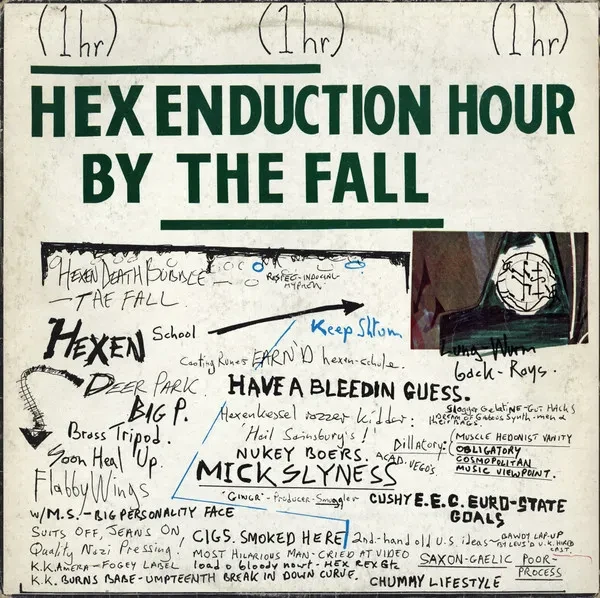
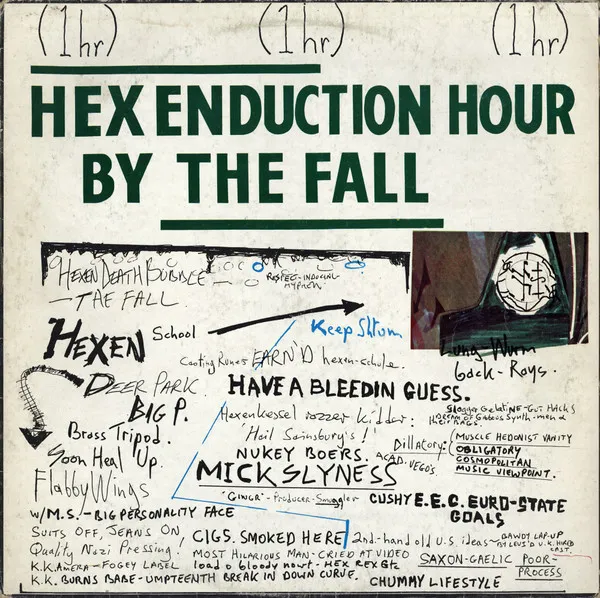
The inclusion of "WMC Blob 59" on the classic LP Grotesque (After the Fact) practically advertises its experimental awkwardness right down to its tongue-in-cheek title. Meanwhile, Hex Enduction Hour offers "And This Day"—a monotonous, concrete-block hangover of sound that challenges even the most devoted fan’s endurance. These moments prevent an album from becoming too smoothly digestible, anchoring it in the raw, unpolished reality of artistic output.
Supporting Context & Metrics: The Physics of Album Dynamics
To understand why duff tracks matter, one must examine the physical and psychological dynamics of the 12-inch vinyl format.
| Era / Format | Primary Technical Constraint | Resulting Aesthetic Impact |
|---|---|---|
| Early 70s Vinyl | Side-length limits (approx. 22 mins per side) | Forced sequencing; pacing required a "cool-down" track before side-closing anthems. |
| CD Era (1990s) | Extended runtime (up to 80 mins) | Dilution of quality; the "filler track" epidemic due to excess digital storage space. |
| Streaming Age | Algorithmic cherry-picking & shuffle play | The erosion of album sequencing, making the traditional duff track an endangered species. |
Musicologists and audio engineers have long understood that human ears suffer from auditory fatigue when subjected to relentless sonic intensity. A sequence of twelve consecutive high-energy bangers does not sound more exciting; it simply desensitizes the listener. The duff track acts as a sonic palate cleanser. It lowers the emotional temperature of the record, making the return of the next great song feel transcendent rather than expected.
Furthermore, cultural metrics show that community engagement around music relies heavily on shared grievances. Online forums, record store debates, and critical essays thrive not on unanimous praise, but on friendly division. If an album is flawless from start to finish, the conversation ends quickly. If it features a baffling, out-of-place experiment, the conversation lasts for decades.
Industry Perspectives and Alternative Concepts
The debate over album filler has drawn radical proposals from legendary producers and conceptualists throughout music history.
The late Steve Albini, renowned for his purist approach to recording and deep skepticism of industry bloat, once floated a radical thought experiment during the pre-internet downloading era. Why bother constructing an album with a weak link at all? Albini’s satirical proposition suggested that an artist could simply press a 12-inch vinyl record featuring a single exceptional track repeated fourteen times.
While theoretically efficient, this concept strips away the narrative journey of recorded music. As music writer Luke Haines notes, such an approach misses the point entirely:
"I say, even if you have an album of 12 or 13 Starmans, you’ve still got to have an It Ain’t Easy lurking around to make it all worthwhile."
Musicians, producers, and vinyl collectors continue to defend the flawed album structure because it mirrors life itself: greatness is contextualized by mediocrity, and artistic ambition occasionally requires stumbling to achieve greatness.
Future Outlook: The Survival of the Flawed Record in the Streaming Era
As the global music industry shifts increasingly toward algorithmic streaming, personalized playlists, and single-track consumption, the traditional album format faces an existential threat. Playlists encourage the isolation of hits, effectively editing out the duff tracks that older generations grew to love through forced listening.
Yet, the remarkable vinyl resurgence of the 2020s signals a counter-movement. Younger generations are rediscovering the tactile ritual of dropping a needle onto a physical disc, listening to a full side, and confronting the entirety of an artist’s vision—warts and all.
In an era optimized for frictionless, algorithmically approved perfection, the duff track stands as a bastion of human authenticity. It reminds us that real art is made by real people who take risks, make missteps, and occasionally throw a strange, puzzling song onto side one, track four, just to see what happens. As long as records are spun and music lovers gather in pubs to argue over tracklistings, the noble duff track will remain safe—unloved by some, essential to all.