Executive Overview
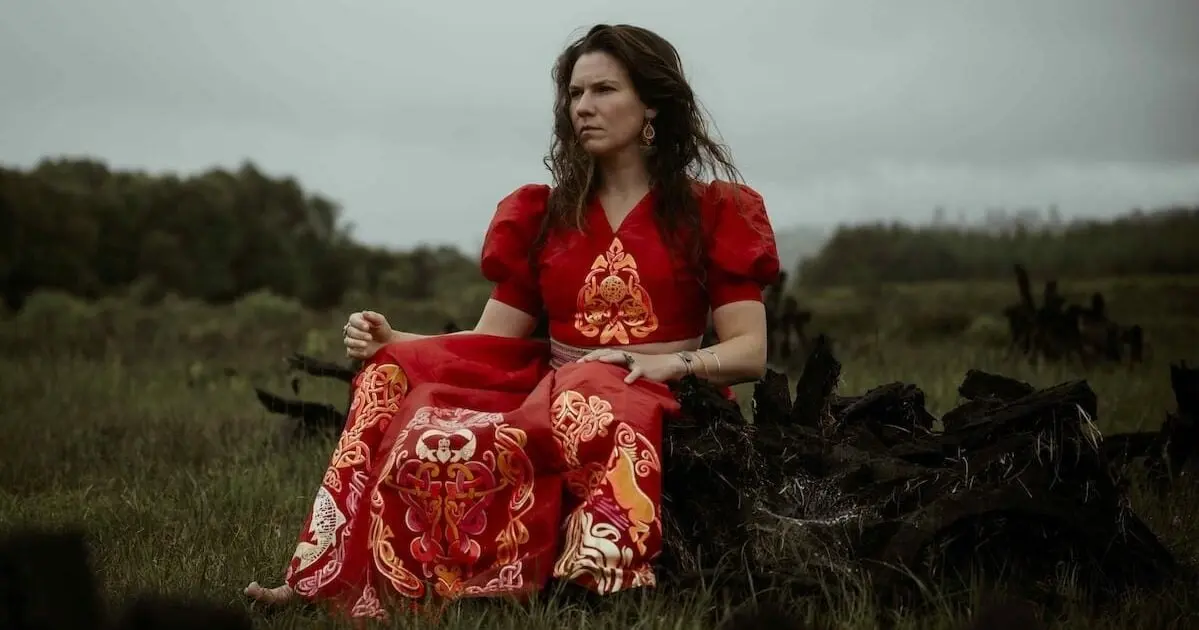
In an era defined by accelerating ecological degradation and the systematic silencing of marginalized voices, contemporary folk music continues to serve as both a sanctuary and a megaphone of resistance. Today marks the official release of "Curlew Song," a haunting, evocative new single by acclaimed Cork-born multidisciplinary artist Clare Sands, featuring the mesmerizing vocal talents of Ríoghnach Connolly.
Serving as the advance herald for Sands’ eagerly anticipated upcoming studio album, They Tried to Bury Us—slated for release on October 9—the track is much more than a standard single release. It is a sonic intervention, a lament for a vanishing ecosystem, and an urgent political and cultural rallying cry.
Centered on the catastrophic decline of the Eurasian curlew, a bird whose evocative, melancholic call has haunted Irish folklore for centuries, the song bridges the chasm between ancient indigenous cosmologies and the stark, sobering realities of the twenty-first-century biodiversity crisis. With breeding populations in Ireland plummeting by an astonishing 98% since the 1980s, leaving an estimated 100 to 150 breeding pairs remaining on the island, Sands confronts this ecological collapse not as a distant, abstract tragedy, but as a living extinction unfolding in real-time.
Produced in collaboration with an elite cadre of Northern Irish traditional and folk musicians—including Seán Óg Graham of Beoga—and featuring ethereal videography captured in County Antrim, "Curlew Song" sets the tone for an album dedicated entirely to giving voice to the silenced. From endangered species and mythological figures of Irish folklore to lost linguistic roots and contemporary poets facing displacement, They Tried to Bury Us insists that love, memory, and ecological stewardship can never truly be eradicated.
Detailed Chronology and Artistic Genesis
The genesis of "Curlew Song" traces back to the wild, elemental landscapes of Gaoth Dobhair, located within the Irish-speaking Gaeltacht of West Donegal. It was here, immersed in a living repository of native language and ancient tradition, that Clare Sands conceptualized a piece that examines the persistence of the human spirit through the lens of the natural world.
From West Donegal to the Antrim Plateau
Writing in an environment where the Irish language remains deeply intertwined with the topography, Sands began to explore the metaphorical parallels between human resilience and the plight of the curlew. The composition reflects upon an inner fire—the elusive, perpetual search for the internal spark that keeps individuals and communities going through times of crisis, the daily struggle to hold onto it, and the urgent necessity of figuring out how to reignite it when it threatens to extinguish entirely.
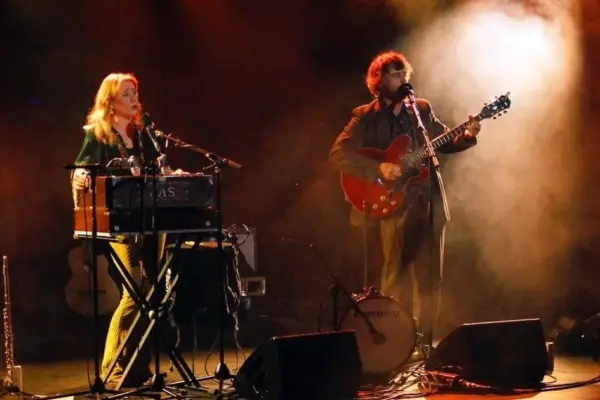
The recording process brought together a formidable ensemble of traditional and contemporary artists. Alongside Sands on vocals and viola, the track features the inimitable Ríoghnach Connolly on vocals, Stephen Loughran on flute and low whistles, Cian McGrory on guitar, Laura McFadden on cello, Conor Mallon on uilleann pipes, and Seán Óg Graham handling additional production and instrumentation.
The visual component of the release further anchors the song in specific, threatened geographies. Striking footage of the curlew, provided by Cáit Ó Néill, is paired with sensitive, atmospheric videography by Méabh Ní Dhoibhlin of Moneyglass, County Antrim. Together, the audio and visual elements construct a cohesive narrative that demands the listener’s absolute attention.
The Ancestral Thread: Connecting to the Song of Amergin
Crucially, "Curlew Song" does not rely solely on contemporary environmental rhetoric; it reaches deep into the bedrock of Irish literary and mythological history. The track concludes with a powerful incantation directly inspired by the Song of Amergin. Widely believed to be the oldest surviving poem in Irish literature—and famously said to be the first utterance spoken upon Irish shores by the Milesians—the text outlines a holistic worldview in which humanity is not positioned as a conqueror or separate entity, but as an intrinsic, inseparable strand of the natural web.
By weaving this ancient incantation into a lament about the disappearance of the curlew, Sands consciously invokes the deep, reverent relationship with the natural world that characterized pre-Christian, pagan Ireland. In that ancient cultural framework, the land, its flora, and its fauna were woven directly into the spiritual fabric of society. The song serves as an urgent reminder of that lost paradigm, framing ecological destruction not merely as a scientific failure, but as a profound spiritual and cultural rupture.
Supporting Context & Metrics: The Crisis of the Curlew
To fully comprehend the emotional and political weight of Clare Sands’ new work, one must examine the staggering ecological metrics surrounding the Eurasian curlew (Numenius arquata) on the island of Ireland.
The Haunting Call of the Curlew in Lore and Science
Long before its precipitous population decline, the curlew occupied a complex, dual space in the collective imagination of the British Isles and Ireland. Ornithological and ethnomusicological projects—such as the acclaimed Simmerdim: Curlew Sounds—have frequently explored the unique sonic qualities of the bird’s cry. Spanning the blurred boundaries between major and minor musical scales, the curlew’s call has long been described as haunting, melancholic, and strangely ecstatic all at once.
This unusual vocalization gave rise to deep-seated superstitions across various regions. In Shropshire and Worcestershire, British folklore warned of "The Seven Whistlers"—a ghostly phenomenon said to consist of six curlews perpetually searching for a seventh, with the apocalyptic belief that the discovery of that final bird would herald the end of the world. In Irish tradition, the curlew’s piercing cry was similarly fraught with meaning, viewed alternately as a harbinger of death and a powerful symbol of renewal and rebirth.
Modern Conservation Realities and the Red List
Today, however, the cultural anxieties surrounding the bird’s call have been eclipsed by the stark reality of its physical disappearance. The Eurasian curlew is currently classified on the Birds of Conservation Concern Red List, marking it as a species of highest conservation priority due to extreme population crashes.
The statistics are harrowing:
- Decline: Breeding populations in Ireland have collapsed by an estimated 98% since the 1980s.
- Current Population: Conservationists estimate that only 100 to 150 breeding pairs remain across the entire island.
- Primary Drivers: The collapse is driven primarily by severe habitat loss, agricultural intensification, and high rates of predation on ground nests.
In response to this terminal trajectory, intensive conservation interventions have been mobilized. Initiatives such as the RSPB’s Curlew LIFE project have stepped into the breach, identifying five priority landscapes that serve as vital breeding grounds. Among these crucial sanctuaries are the Antrim Plateau and the Lough Erne Lowlands—landscapes deeply connected to the geographic and cultural roots of Sands’ latest artistic endeavors.
Official Statements and Artistic Vision
The release of "Curlew Song" arrives accompanied by profound reflections from its creator regarding the intersections of art, ecology, and heritage.
Reflecting on the track’s thematic core, Clare Sands notes:
"Written in Gaoth Dobhair in the Irish-speaking Gaeltacht of West Donegal, this song is about that inner fire that keeps us going—the perpetual search for it, the struggle to hold onto it, and if it goes out, how to reignite it. This is represented by the curlew in the song. Its breeding population in Ireland has declined by 98% since the 1980s due to habitat loss, and it’s estimated that only 100–150 breeding pairs remain. We are living through extinctions in real time. I wanted the song to draw attention to the curlew and its extraordinary call—a sound that was believed to be a harbinger of death in Irish tradition, but also a symbol of renewal and rebirth."
Expanding on the incorporation of ancient Irish philosophy, Sands adds:
"The incantation at the end is inspired by the Song of Amergin, an ancient poem believed to be the oldest in Irish literature—and the first ever uttered on Irish shores. The poem gives voice to a world in which human beings are not separate from nature, but part of it. By bringing that ancient incantation into a song about the disappearance of the curlew, I wanted to draw a connection with the deep respect for the natural world that existed in old pagan Ireland—when land and nature was deeply woven into our culture and beliefs. The song is ultimately about that connection, and our responsibility to keep it alive."
Future Outlook: They Tried to Bury Us
"Curlew Song" serves as the primary philosophical and aesthetic anchor for Sands’ upcoming full-length album, They Tried to Bury Us, which will be released independently on October 9.
A Tapestry of the Silenced
The forthcoming album is structured as a sweeping sonic monument dedicated to those who have been systematically silenced or erased by history and modern development. Beyond the endangered curlew, the tracklist gives voice to a diverse pantheon of figures and ecological entities:
- Lí Ban of Lough Neagh: The mythical mermaid-saint of Ireland’s largest lake.
- Native Tongue: The lost words and declining structures of the native Irish language.
- The Rostrevor Oak: Ancient arborial landmarks symbolizing endurance.
- Modern Refugees: Those currently seeking safe harbor and refuge on Irish shores.
- Palestinian Poets: Writers whose words embody unbreakable defiance and inspire generations across global struggles against oppression.
Written entirely across Ulster with an incredible array of Northern-based musicians, and expertly shaped by producer Seán Óg Graham (renowned for his work with Beoga and Karen Karran), They Tried to Bury Us deliberately cultivates a profound North of Ireland connection. It is an album engineered to rise directly from the earth, acting as an act of resistance against cultural and ecological oppression while insisting that love, hope, and memory can never truly be buried.
Pre-Order and Live Tour Itinerary
Physical and digital pre-orders for They Tried to Bury Us (available across Digital Download, CD, and LP formats) are currently active via Clare Sands’ Bandcamp page.
To support the album’s release, Clare Sands and her ensemble will embark on an extensive live tour across the island of Ireland and the UK throughout the autumn and winter months:
- Sat 10th Oct: Yarn, Ballycastle, UK
- Fri 16th Oct: Cultúrlann Uí Chanáin, Derry
- Sun 18th Oct: Belfast Empire Music Hall, Belfast
- Fri 23rd Oct: The Dock, Carrick-on-Shannon
- Sat 24th Oct: Revive, Donegal
- Fri 13th Nov: Dublin Unitarian Church, Dublin
- Sat 14th Nov: Mermaid Arts Centre, Bray
- Fri 20th Nov: Live at St. Luke’s, Cork
- Thurs 3rd Dec: Cleere’s, Kilkenny
- Sat 5th Dec: Wexford Arts Centre, Wexford
- Thurs 10th Dec: Monroe’s Live, Galway
- Sat 12th Dec: Jim O’ The Mills, Thurles
- Sat 19th Dec: Ionad Cultúrtha an Dochtúir Ó Loinsigh, Ballyvourney
For full ticketing details and up-to-date schedule changes, visit claresands.com/shows. As "Curlew Song" demonstrates, Sands is not merely preserving the traditional arts; she is deploying them as an essential, living defense of the earth and its inhabitants.