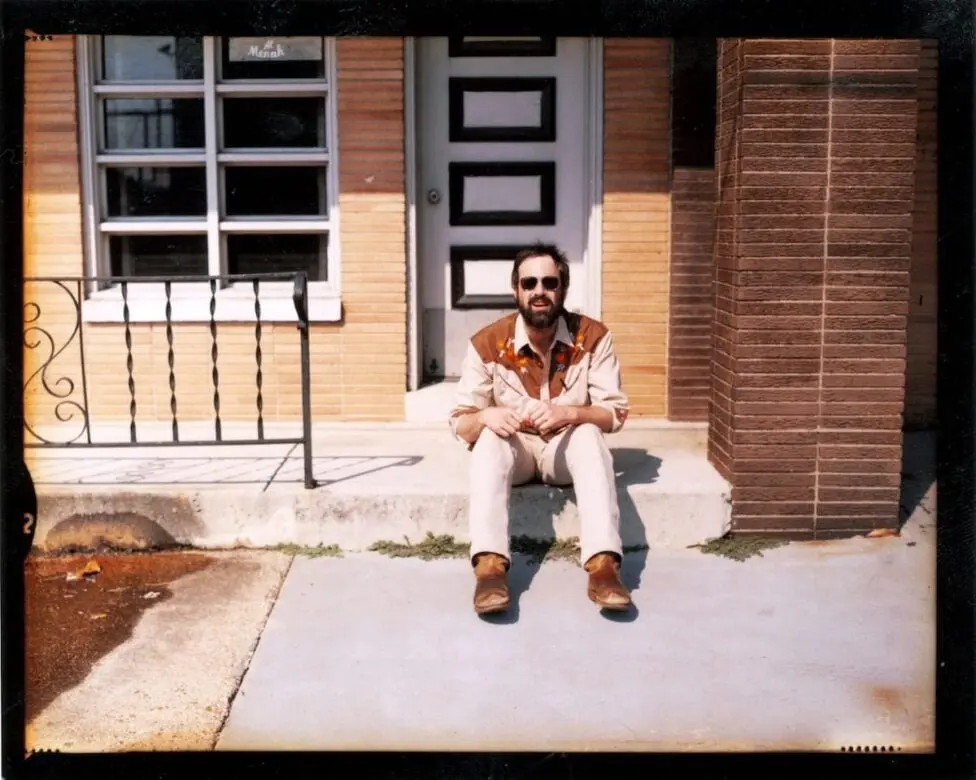
In the somber wake of the July 2019 death of David Berman—the singular lyricist, poet, and frontman of Silver Jews and Purple Mountains—the landscape of indie rock underwent a permanent seismic shift. What began as a routine critical retrospective of the 1996 Silver Jews masterpiece The Natural Bridge transformed, overnight, into a poignant meditation on mortality, the architecture of depression, and the haunting interplay between a creator and his art.
Berman’s suicide, occurring mere weeks after the triumphant, devastating release of his eponymous Purple Mountains LP, forced critics, fans, and academics to re-read his vast catalog through a devastating new lens. Present tenses collapsed into past; bright structural blueprints turned into somber, boarded-up memorials. This long-form assessment synthesizes the thematic architecture of Berman’s masterwork The Natural Bridge, exploring its obsessive fixation on architectural mirroring, theological dualism, estrangement, and the dark undercurrents of the American vernacular. More than a standard review, this piece investigates how a generation of listeners and writers process the tragic loss of an architect of words whose life and work were bound inextricably to the complexities of mental illness.
Detailed Chronology: The Making, the Mirroring, and the Loss
The Genesis of The Natural Bridge (1995–1996)
When Berman and his rotating ensemble—featuring New Radiant Storm King members Peyton Pinkerton and Matt Hunter, alongside Rian Murphy and Michael Deming—entered the studio for The Natural Bridge, strict and idiosyncratic rules governed the sessions. Eschewing the freewheeling, lo-fi collaborative abandon of 1994’s debut Starlite Walker (which heavily featured Pavement’s Stephen Malkmus), Berman sought tight, controlled, and sparse arrangements. The musicians were permitted to practice each song only three times, with merely one or two takes recorded per track.
This stringent methodology created a thin, pressurized atmosphere—an "aluminium sound" rather than a fluid mercury one. It left Berman a vast, uncompromising canvas to vocalize his poetic explorations of physical and psychological structures. Yet, even as the album was heralded for its sophisticated expansion of indie rock lyricism, its underlying architecture was laced with portents of grief, spatial entrapment, and emotional desolation.
The Staging of a Tragedy (2018–2019)
Decades later, as critical assessments of The Natural Bridge began to materialize in late 2018, the world was still operating under the assumption of Berman’s eventual return. The writing process was meticulous, building an architectural framework around his fascination with mirrors, doubles, and temporal preservation.
Then came August 2019. Weeks after Purple Mountains broke a ten-year recording silence and immediately established itself as one of the finest records of the decade, Berman took his own life. The immediate task for any writer tracking his work became agonizing: every "Berman is" had to be retrofitted into a "Berman was." The mechanics of criticism suddenly felt callous, insignificant, and terribly raw, illuminating the chasm between artistic performance and lived psychological reality.
Supporting Context & Metrics: The Architectural Metaphors of Berman’s Universe
Berman’s work is famously constructed around recurring motifs: houses, rooms, blueprints, ghosts, and mirrors. Understanding The Natural Bridge requires navigating these structural touchstones.
Songs as Rooms in Time
Throughout his career, Berman analogized songwriting to architecture. In a 1998 interview with the Washington City Paper, he noted:
"I have this idea that you could make a record and it would be like you can live inside it forever […] Songs are like rooms and houses."
This obsession manifests physically and lyrically across The Natural Bridge. In tracks like "Albemarle Station," the narrator is trapped in an air-conditioned tomb, a "split-level ranch" where the memories of a failed relationship echo like footsteps in an empty hallway. Architectural space becomes a cage designed to fix moments in time, yet it continuously fails because Berman’s narrators are always cast out or standing uncomfortably on the threshold.
Mirrors, Doppelgängers, and Micro-Repetitions
Mirrors on The Natural Bridge function as disorienting funhouse refractions. In "Dallas," the album’s most outwardly driving track, buildings are literally made of glass and mirrors, drawing the narrator into an inescapable honeytrap.
Furthermore, Berman’s lyrics are laced with syntactic tripwires—micro-repetitions that stutter and stall the momentum of the songs:
- "They don’t come to you / They don’t come to you at all" ("Pretty Eyes")
- "These days, these days will end" ("Pretty Eyes")
- "To save us, to save us" ("Pretty Eyes")
- "The building, building blocks of life" ("The Frontier Index")
These verbal stutters act as psychological resistance, blinking in unconscious opposition to the glaring light of angels, grief, and inevitable decay.
Official Statements and Personal Reckonings
The shadow cast over Berman’s life and art cannot be separated from his fraught relationship with his father, Richard Berman—a powerful, conservative corporate lobbyist whose public career stood in stark, ironic contrast to the vulnerable, left-leaning humanity of his son’s poetry.
When Berman officially laid the Silver Jews moniker to rest in a blistering 2009 statement, he did not mince words regarding his father, labeling him a "motherfucking son of a bitch" and a "human molestor." This paternal estrangement leaked into the DNA of The Natural Bridge from its very opening track, "How to Rent a Room":
"No I don’t really want to die / I only want to die in your eyes."
This line encapsulates a subtler psychological void: the desire to distance oneself not just from a toxic progenitor, but from the genetic bloodline itself. Berman’s anxieties regarding what might be inherited from his "sire and dam" form the bleeding edge of the album’s most tragic moments.
Yet, amidst the critical retrospectives, personal accounts from those who corresponded with Berman reveal a man defined as much by startling generosity as by deep torment. On July 23, 2019—just days before his passing—Berman sent a personal note thanking a writer for a generous review of Purple Mountains. It was a brief, humbling interaction that laid bare his profound understanding of human connectivity and the cyclical nature of grace.
Future Outlook: The Legacy of The Natural Bridge in a Post-Berman World
As time moves forward, how do we process an artistic catalog written by a man who ultimately felt the weight of existence was too heavy to bear?
The critical consensus surrounding The Natural Bridge has evolved from traditional music journalism into a deeper, more empathetic branch of cultural and psychological analysis. Critics and listeners alike have abandoned the comforting fallacy that suicide is an act of peace or a "lifestyle choice." Instead, the album is now understood for what it truly is: a breathtakingly brave, deeply flawed, and structurally brilliant dispatch from the frontline of depression.
The modern discourse surrounding David Berman emphasizes several critical takeaways:
- The Fallacy of the "Happy Ending": Observers have learned to scrutinize the dangerous tendency of music media to read a new album as a miraculous redemption arc, ignoring the explicit cries of despair embedded in the lyricism (e.g., "All my happiness is gone").
- The Endurance of Artifice vs. Reality: While listeners often wish to view art as alchemy—the magical transformation of sadness into beauty—Berman’s legacy reminds us that art does not erase trauma. Sadness remains, structural and unyielding.
- The Power of the Wild Kindness: Despite the omnipresence of depressive ideation, Berman’s ultimate gift to his audience was a fierce commitment to empathy, humor, and linguistic brilliance.
Ultimately, The Natural Bridge stands not as a monument to death, but as an enduring testament to the resilience of language. It forces us to look into the distorted mirrors of our own lives, to stand on the precipice of seventeenth-year nostalgia, and to recognize that while the architectural rooms we build in time may eventually crumble, the echoes left behind remain permanently inscribed upon the human soul.
If you or someone you know is struggling with depression, mental health challenges, or thoughts of self-harm, please know that support is available. In the UK, you can contact the Samaritans anytime at 116 123 or visit samaritans.org. In the United States, call or text 988 to reach the Suicide & Crisis Lifeline.