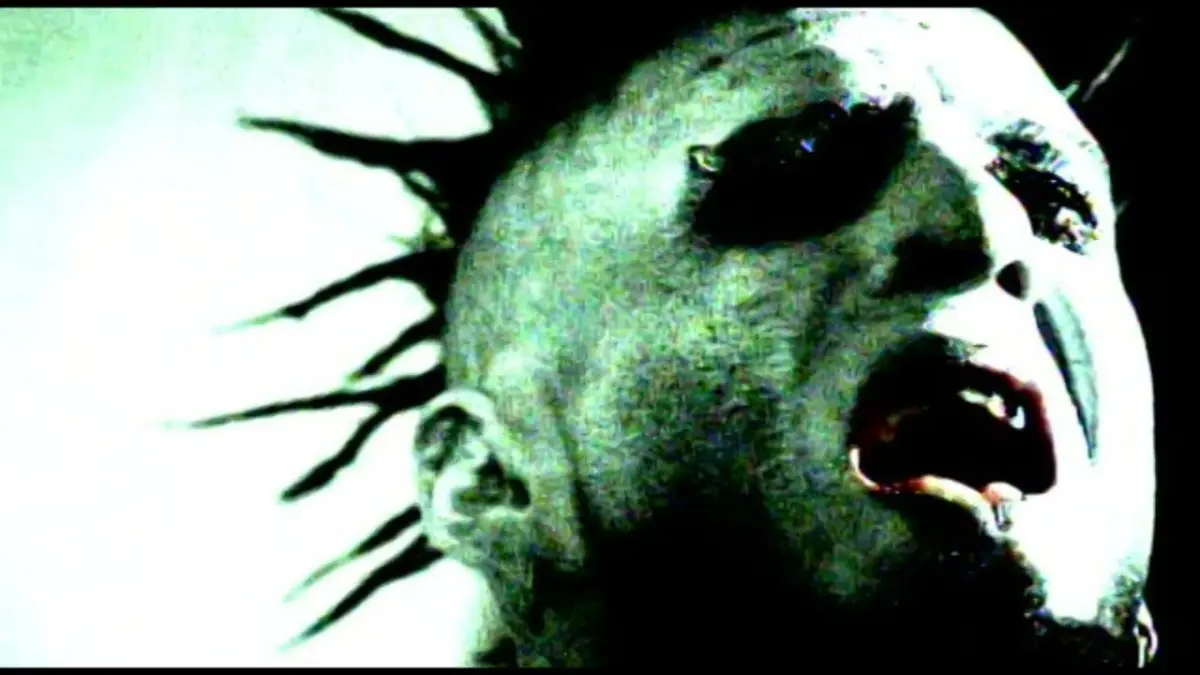
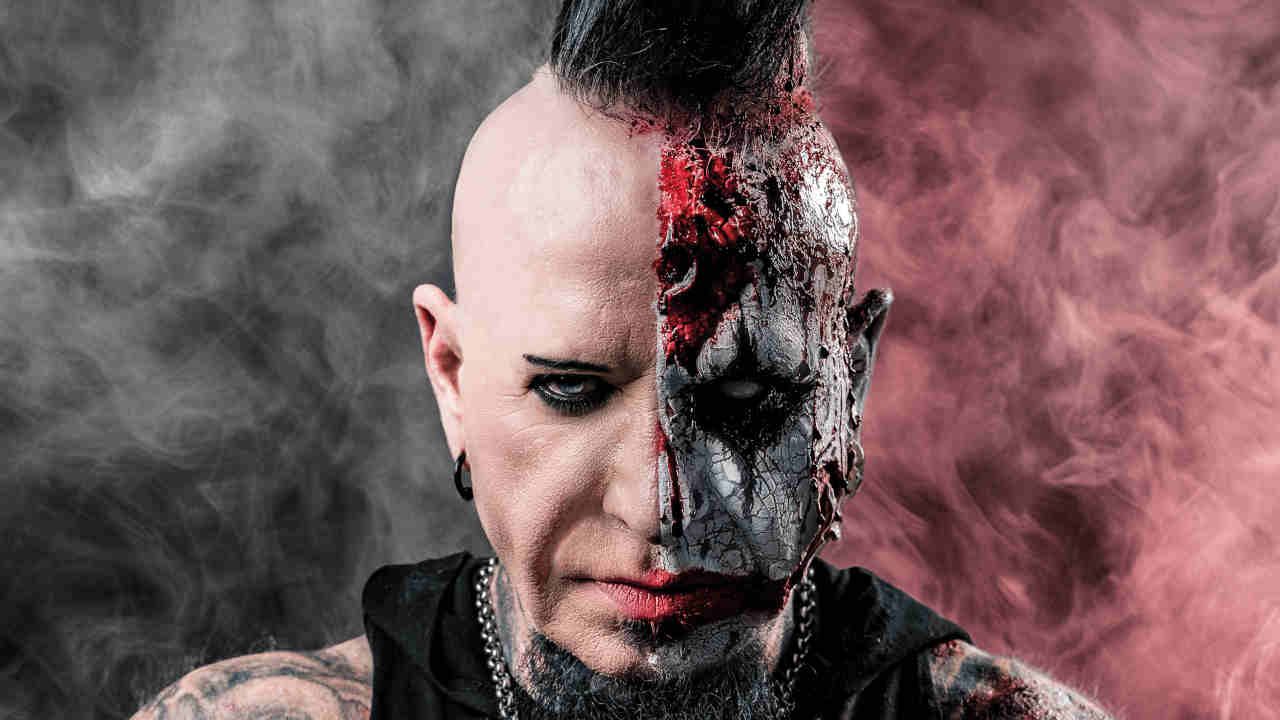
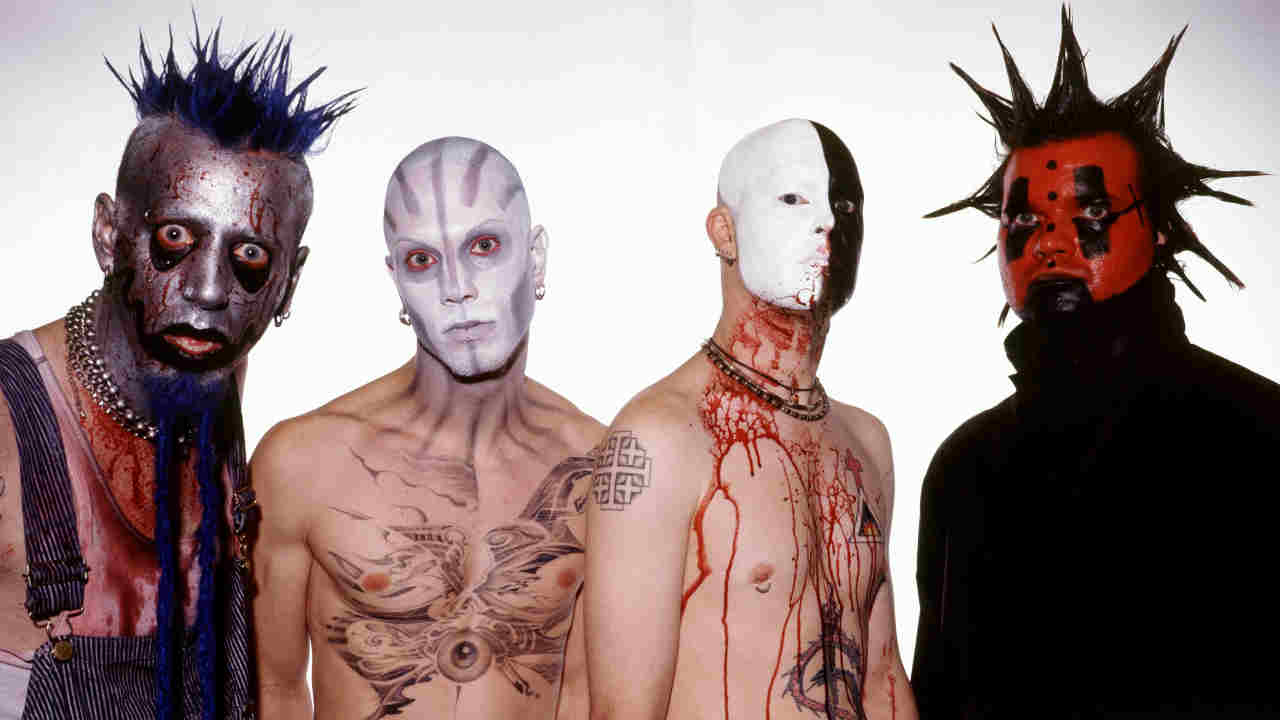
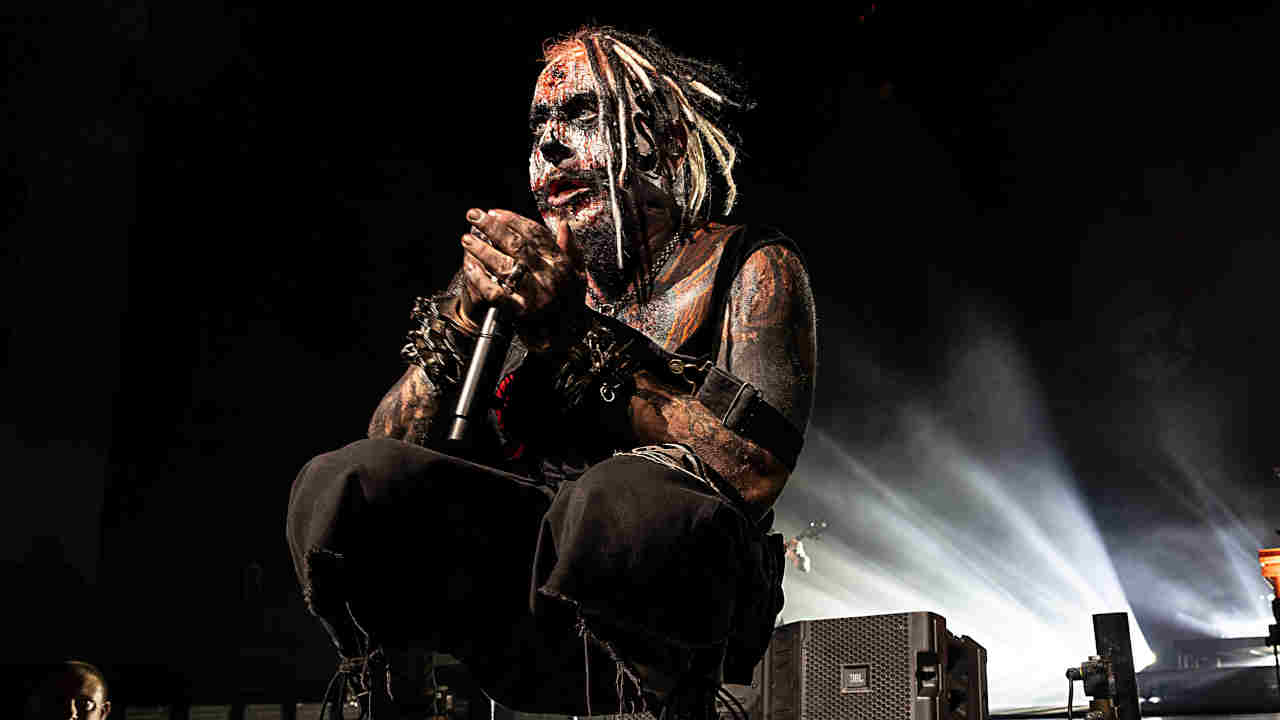
Across a career spanning more than thirty years, two defining bands, and multiple eras of industrial and cultural transition, Chad Gray has operated as one of heavy music’s most ferocious frontmen. As the blood-splattered, theatrical centerpiece of Peoria, Illinois math-metal pioneers Mudvayne and the hard-rocking supergroup Hellyeah!, the 54-year-old vocalist has experienced the absolute highest peaks and lowest valleys of the modern music business. From multi-platinum album sales and stadium tours alongside Metallica to crippling $2 million corporate lawsuits and grueling physical injuries, Gray’s journey mirrors the turbulent trajectory of heavy metal itself since the turn of the millennium.
Now firmly back at the helm of a reunited Mudvayne, Gray offers an unvarnished, authoritative post-mortem on what it takes to survive in an industry that routinely consumes its artists. In an era where digital perfection, click tracks, and pre-recorded backing tracks dominate live concert production, Gray stands as a vocal defender of analog authenticity, dynamic imperfection, and raw human catharsis. This deep-dive investigation examines Gray’s career milestones, the punishing financial mechanics of modern touring, and the uncompromising ethos that keeps one of metal’s most physical performers stepping onto the stage night after night.
Detailed Chronology: A Career Forged in Blood, Makeup, and Litigation
[1996] Mudvayne forms in Peoria, IL
  │
[2000] Pivotal Epic Records showcase; Debut album 'L.D. 50' released
  │
[2001–2003] $2M management litigation; Summer Sanitarium tour with Metallica
  │
[2006] Hellyeah! formed with Pantera drummer Vinnie Paul Abbott
  │
[2010] Mudvayne enters extended hiatus
  │
[2018] Passing of Vinnie Paul; Hellyeah! pauses operations
  │
[2021–Present] Mudvayne reunites for festival headlines & global tours
The Midwestern Underground and the Slipknot Showcase (1996–2001)
Mudvayne emerged from the unheralded scene of Peoria, Illinois, in 1996, blending complex time signatures, death metal intensity, and visual avant-gardism. By the late 1990s, heavy music was undergoing a seismic shift, dominated by the rise of nu-metal and theatrical performance art.
The band’s pivotal breakthrough occurred in 2000 during an intimate industry showcase. Performing in full graphic makeup and stage attire, Mudvayne took the stage before a tiny audience consisting of Shawn "Clown" Crahan (percussionist and visual architect of Slipknot), Crahan’s drum technician, and their manager, who was affiliated with Epic Records.
Midway through the very first song, Gray’s vocal microphone cut out entirely. Rather than pausing or breaking character, Gray threw his unamplified voice over the thunderous instrumental mix, screaming directly into the empty room while the sound engineer frantically attempted to rewire the PA system. The unrelenting display of raw aggression impressed Crahan, who immediately approached Gray post-show, declaring, "You got fucking issues!" This endorsement cemented a strategic relationship, leading to Crahan executive producing Mudvayne’s groundbreaking 2000 debut album, L.D. 50.
The subsequent L.D. 50 touring cycle thrust the band into non-stop global performances. Given their limited repertoire, the band performed the complex album in its entirety every night. This technical precision occasionally yielded catastrophic live failures. During an early show at The NorVa in Norfolk, Virginia, drummer Matthew McDonough made a critical error in a complex section of a song. Within seconds, the performance collapsed entirely: Gray was singing one section, guitarist Greg Tribbett was executing a different riff, and bassist Ryan Martinie was playing a separate measure entirely. Demonstrating early on his philosophy of unvarnished honesty, Gray stopped the performance, apologized directly to the audience for the total sonic meltdown, and immediately reset for the next track.
As L.D. 50 achieved gold status and catapulted Mudvayne into mainstream prominence, the band quickly discovered the predatory realities of the music business infrastructure. Behind the scenes, severe contractual disputes erupted between Mudvayne and their former management company.
The resulting litigation stretched across multiple years, draining the band’s royalty streams and earnings. Mudvayne spent an astounding $2,000,000 in legal expenses to free themselves from onerous contracts and secure control over their intellectual property. Reflecting on that chaotic period, Gray frequently jokes that if he could travel back to 2001, he would tell his younger self to quit the music industry entirely, go to college, and avoid the corporate legal machine that nearly derailed the group at their creative peak.
Despite the financial strain, Mudvayne’s live reputation surged. In 2003, the band was selected to join Metallica’s massive Summer Sanitarium Tour alongside Linkin Park, Deftones, and Limp Bizkit. The tour served as a masterclass in arena-level vocal technique and peer mentorship. During one hallway interaction, Metallica frontman James Hetfield introduced Gray to Vocalzones—specialized throat pastilles engineered to preserve vocal cords during extreme performances. Hetfield’s mentorship left a lasting impression on Gray, underscoring how iconic legacy artists maintain longevity through discipline and technical care.
The Hellyeah Era and Supergroup Dynamics (2006–2020)
Following the release of Mudvayne’s third album, Lost and Found (2005), Gray and guitarist Greg Tribbett partnered with former Pantera drummer Vinnie Paul Abbott and Nothingface guitarist Tom Maxwell to form the metal supergroup Hellyeah!.
For Gray, working alongside Vinnie Paul—widely regarded as one of the most influential drummers in heavy metal history—offered a profound lesson in artistic humility. Despite his legendary status with Pantera, Abbott eschewed superstar behavior, operating as an equal partner within the group. Hellyeah! released six studio albums over a 14-year period, carving out a distinct southern-infused metal sound until Abbott’s sudden passing in 2018 from heart failure, which ultimately put the group on indefinite hiatus.
Mudvayne Reunion and Post-Pandemic Arena (2021–Present)
After a decade-long hiatus during which Mudvayne was completely inactive, the original lineup—Gray, Tribbett, Martinie, and McDonough—officially reunited in 2021. Re-entering a vastly altered live music market defined by soaring touring overheads, post-pandemic venue bottlenecks, and hyper-polished production standards, Mudvayne reassumed their position as festival headliners across North America.
Supporting Context & Metrics: Economics, Production, and Artistic Freedom
The Economic Realities of International Touring
While international demand for a reunited Mudvayne remains high—particularly in the United Kingdom and continental Europe—the financial economics of modern touring present immense logistical hurdles for mid-to-high-tier legacy metal acts.
+-------------------------------------------------------------------+
|            EUROPEAN/UK TOUR LOGISTICAL CHALLENGES                 |
|                                                                   |
|  [Transatlantic Freight & Gear Shipping Costs]                    |
|                         +                                         |
|  [Wide Gaps Between Major European Festivals]                      |
|                         +                                         |
|  [Lack of Mid-Sized Club/Hall Venue Availability]                 |
|                         =                                         |
|  [Potential Net Deficit: Exceeding $100,000 per Tour]             |
+-------------------------------------------------------------------+
To execute a financially viable European run, American bands must align major festival appearances (e.g., Download Festival, Wacken Open Air, Rock am Ring) back-to-back while filling intermediate days with headline hall shows to cover freight, bus leases, and crew per diems.
Current market conditions—characterized by inflated fuel prices, elevated transatlantic shipping fees, and limited venue availability in key markets—frequently force bands into projected net losses exceeding $100,000 per tour, making non-festival European runs cost-prohibitive without major promoter subsidies.
The Authenticity Crisis: Click Tracks vs. Human Dynamics
A central element of Chad Gray’s artistic philosophy is his vocal opposition to the modern music industry’s over-reliance on click tracks and digital backing tracks during live performances.
Gray contends that the practice of locking a live band to a digital metronome eliminates the organic tempo shifts—the natural "push and pull"—that build emotional tension during a performance. In a traditional live environment, musicians naturally accelerate slightly during the final measures of a quiet verse as anticipation builds for a heavy chorus. This micro-acceleration creates a physiological reaction in the audience, magnifying the impact when the chorus hits.
Furthermore, Gray heavily criticizes the modern practice of running pre-recorded backing vocals, rhythm guitars, and synth layers through the PA system:
Vocal Layering: Modern pop and metal acts often blend 3 to 4 pre-recorded vocal tracks behind the singer, eliminating raw vocal dynamic variation.
Tempo Rigidity: Click tracks remove a band’s ability to adjust performance speeds based on crowd energy or stage movement.
Genre Constraints: Heavy Metal vs. Mainstream Pop/Country
Gray emphasizes that heavy metal provides a unique level of creative latitude not found in commercial pop or country music:
Listener Expectations: Pop and country artists are constrained by strict vocal arrangements, radio-format song structures, and brand image guidelines tailored for corporate sponsorship.
Experimental License: Metal audiences regularly encourage stylistic shifts, time signature changes, and theatrical transformations. As Gray notes, "Metal wouldn’t sell shampoo," freeing artists from corporate squeamishness and allowing them to take genuine artistic risks.
Official Statements and Unfiltered Commentary
On Corporate Litigation and Financial Realities
"If I were talking to the 2001 version of myself, right around [Mudvayne album] L.D. 50, when that was exploding, the one piece of business advice I would give myself would be to quit and go to college! Get the fuck out of here, quick! Run for the fucking hills! I could never imagine the fucking horseshit we would go through. I mean litigation. We spent $2,000,000 in litigation [with our former management company]. It was insane."
On Vinnie Paul and Supergroup Dynamics
"Vinnie Paul brought so much to the table [in Hellyeah], but he was a bandmember, dude. He wasn’t the big superstar celebrity drummer — who is arguably one of the top fucking five greatest fucking metal drummers out there — acting like, ‘I’m fucking Vinnie Paul. I was in Pantera. I’m bigger than you.’ He didn’t have that attitude at all. He was always just one of the guys, and he made us a band."
+-------------------------------------------------------------------+
|                      CHAD GRAY ON LIVE MUSIC                      |
|                                                                   |
|  "Ain't nothing wrong with a single vocal, man! If you sound      |
|   exactly like the record because of the tracks, I mean, let's    |
|   keep it fucking real a little bit, what are we doing?"          |
+-------------------------------------------------------------------+
On Backing Tracks and Modern Production Standards
"New music is really hard for me to deal with, because of the way it’s being done now with the backing tracks and the clicks. Mudvayne never played to a click. Vinnie Paul never played to a click. And I love that, because when you’re live, there’s an actual push and a pull that happens… When you’ve got a click, you can’t create momentum because you’ve got a bunch of backing tracks running along with you… Ain’t nothing wrong with a single vocal, man! If you sound exactly like the record because of the tracks, I mean, let’s keep it fucking real a little bit, what are we doing?"
On International Touring Logistics and UK Fans
"It costs a tremendous amount of money to go to Europe and the UK — trucking all your gear over there is incredibly expensive… Download Festival came at us with a guarantee, but to make a European tour work, you have to string all the festivals together back-to-back… Because those festivals are a couple of weeks apart, you have to get side gigs in between to cover costs. Right now, there’s no venue availability, or the available venues are too small to make the math work. I’ll go over there and play for nothing, but it’s hard to go $100,000 in the hole."
On Physical Sacrifice and Stage Performance
"I am one of the most physical performers in metal, and every night my body tells me I should have quit! I’m killing myself out there. Over 25 or 30 years, I look in the mirror and think, ‘Why the fuck did you choose to wear make-up every day?!’ I blew my knee out on the last Mudvayne tour. I just threw three braces on it and did what I do. I can’t just stand at a mic stand and sing; that intensity gets my blood boiling."
Future Outlook: Legacy, Catharsis, and Aftershock
As Mudvayne advances into the next chapter of their reunion, the band remains a prominent attraction across the global festival circuit. They are slated to perform at high-profile autumn events, including the Aftershock Festival in Sacramento, California, alongside top-tier heavy rock acts.
               [MUDVAYNE LIVE EXPERIENCE]
                           │
       ┌───────────────────┴───────────────────┐
       ▼                                       ▼
Physical Catharsis                     Audience Family
- Severe vocal output                  - Safe space for crowd
- Full-body performance                - Emotional release
- Complete stage exhaustion            - Unvarnished authenticity
For Chad Gray, the longevity of Mudvayne relies not on corporate expansion or modern studio shortcuts, but on preserving the emotional contract established with their audience decades ago. Gray views every show as an act of service—a shared cathartic space where fans are urged to drop their personal grievances, financial strains, and life anxieties at the arena door.
Despite severe physical wear, including chronic joint damage and knee injuries sustained during his energetic performances, Gray insists that as long as Mudvayne takes the stage, it will be executed without safety nets, pre-recorded audio tracks, or compromised integrity. In a heavy music landscape caught between technological automation and raw human expression, Gray remains an unyielding guardian of heavy metal’s original, chaotic soul.