Executive Overview
In the high-stakes arena of modern theatrical rock, few spectacles match the visual and musical ambition of Ghost. Led by mastermind Tobias Forge, the Swedish hard rock group has elevated live performances into multi-sensory theatrical events. However, behind the carefully crafted personas, elaborate stage sets, and seamless execution lies an intricate infrastructure extraordinarily vulnerable to human frailty and unpredictable logistics.
During a scheduled three-night residency at Mexico City’s iconic Palacio de los Deportes, the convergence of high-altitude touring, a high-budget concert film production, and an acute medical emergency brought the band’s global operations to a sudden halt. Forge was struck by severe food poisoning hours before the opening night—a performance meant to serve as the anchor footage for the band’s feature-length IMAX documentary, 2 Big To Rig.
The incident forced an abrupt, last-minute cancellation with thousands of fans already assembled outside the venue, leaving the production team to manage immediate financial, technical, and emotional fallout.
This deep dive examines the chronological timeline of the crisis, the logistical complexity of capturing live IMAX footage, how the crew recovered to complete the remaining dates, and what this high-pressure incident reveals about the realities of world touring, artistic accountability, and the future trajectory of Ghost.
Detailed Chronology
[5 Days Prior]  -->  [Showday Morning]  -->  [T-minus 2 Hours]  -->  [Night 1 Cancelled]  -->  [Nights 2 & 3 Saved]
Arrival in Mexico      Extreme Fatigue      Severe Illness / IV    Emergency Notice          Filming Adapted
City for Altitude      & Inability to Keep  Treatment on           Issued to Thousands       Under Director
Acclimatization        Food Down            Stretcher              Outside Venue             Amir Chamdin
Phase I: The Acclimatization Protocol in Mexico City
Recognizing the physical demands of performing at Mexico City’s elevated altitude (approximately 2,240 meters above sea level) alongside extreme jet lag, Tobias Forge, 45, arrived in the Mexican capital five days ahead of the scheduled three-show run at Palacio de los Deportes.
The strategy was designed to allow his body to adapt, ensuring optimal vocal performance for what was planned as a monumental landmark in the band’s career: capturing live performances for their upcoming feature film, 2 Big To Rig.
Phase II: The Onset of Acute Illness
On the morning of the opening performance, early indicators of a physiological breakdown began to surface. During the one-hour transit from his hotel to the venue, Forge slept soundly throughout the entire drive—an unusual level of exhaustion for the vocalist on a showday. Upon arrival at Palacio de los Deportes, his condition deteriorated rapidly. He found himself unable to retain food, suffering from severe gastrointestinal distress that stripped him of his physical stamina.
Phase III: The Eleven-Hour Cancellation and Emergency Intervention
As the afternoon progressed, the production team faced an escalating crisis. With every passing hour, Forge’s energy reserves depleted further. Approximately two hours before the doors were scheduled to open to the public, the vocalist began vomiting violently.
Unable to stand or walk, Forge was reduced to lying on a stretcher in his dressing room while medical staff administered intravenous (IV) fluids in a desperate attempt to stabilize his condition.
With thousands of fans already gathered outside the gates of Palacio de los Deportes and multi-camera film crews standing by, Forge and his management reached a sobering conclusion: performing was physically impossible. The executive decision was made to "pull the plug," cancelling the opening night show under extreme pressure.
Phase IV: Resumption and Strategic Pivots
Following an intensive night of rest and fluid recovery, Forge returned to the venue the following day. Though weakened, he was medically cleared to perform the second and third scheduled nights.
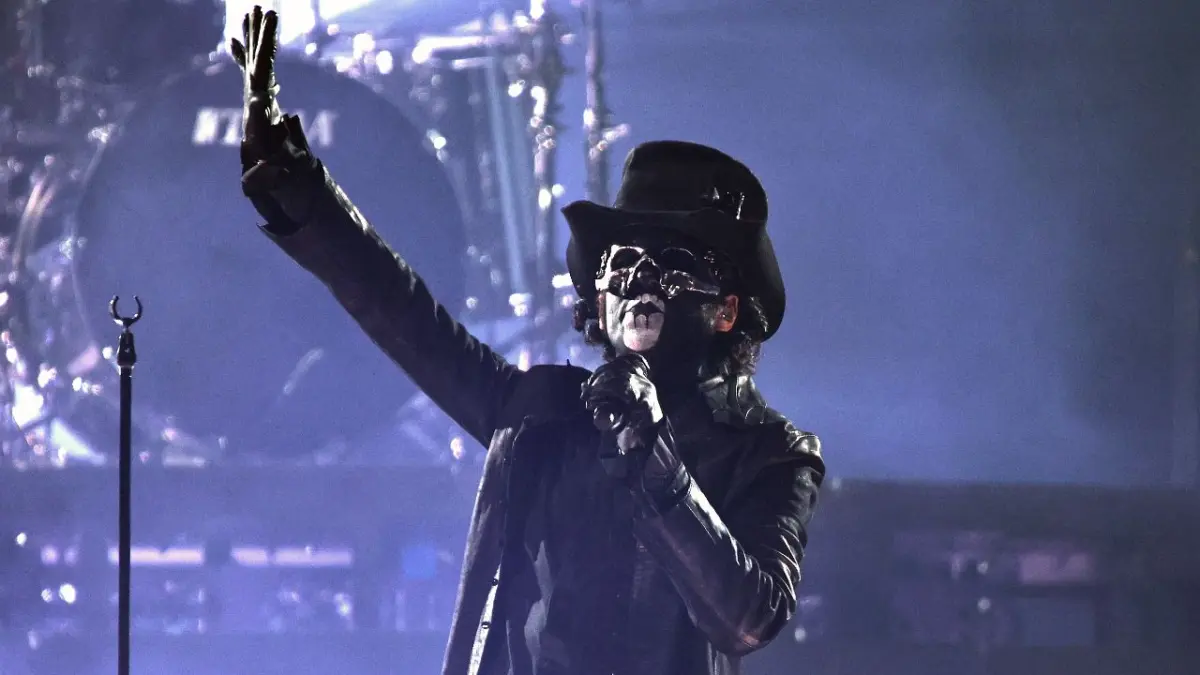
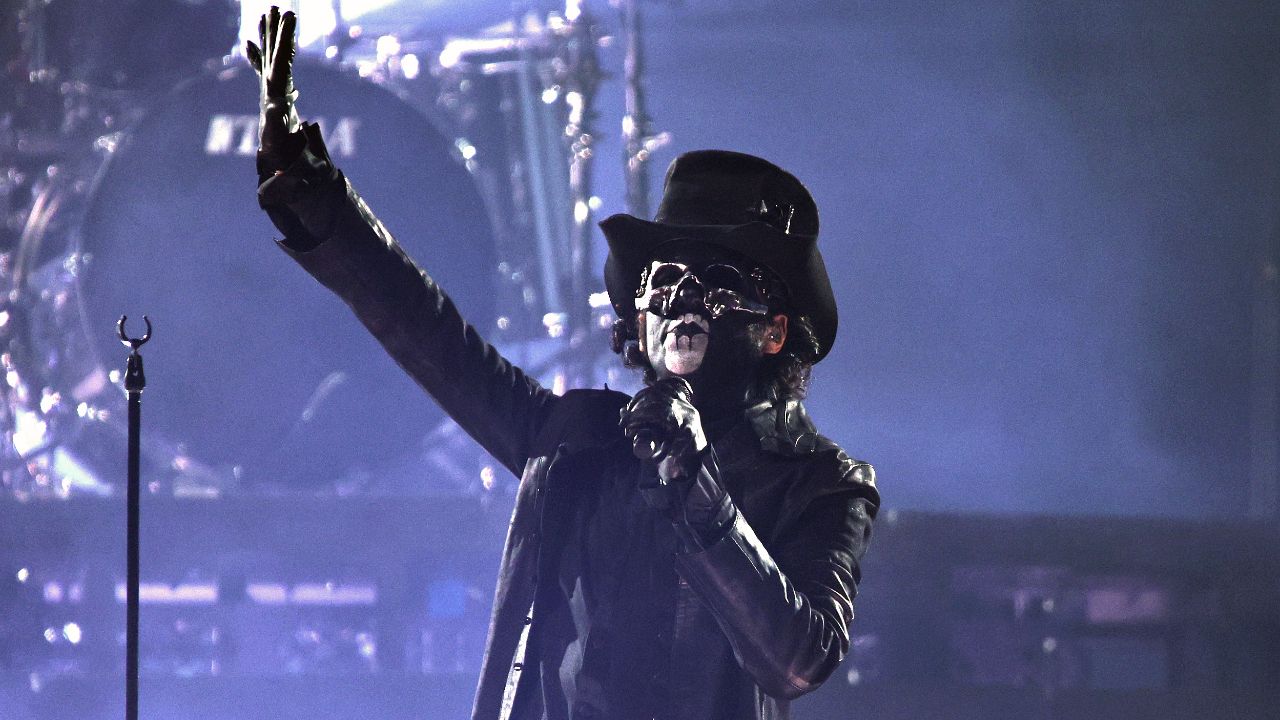
Stepping onstage under his alter-ego, Papa V Perpetua, Forge addressed the Mexican audience with self-deprecating humor on September 24, attributing his sudden collapse to the famous localized illness informally known as "Montezuma’s Revenge."
Under the leadership of director Amir Chamdin, the film production crew restructured their shooting schedule on the fly. By shifting primary coverage and high-definition IMAX camera setups to the remaining two nights, the team successfully captured the required footage, avoiding a catastrophic disruption to the film’s global theatrical release.
Supporting Context & Metrics
The Economics and Logistics of Live Concert Cinema
Executing a feature-length concert film in an international arena setting involves significant financial capital and mechanical coordination. Unlike traditional live recording setups, filming for high-spec theatrical formats like IMAX leaves almost zero margin for operational error.
| Production Metric | Standard Arena Show | IMAX / Feature Film Recording (2 Big To Rig) |
|---|---|---|
| Camera Crew Contingent | 3–5 Broadcast Cameras | Multi-angle, high-frame-rate cinematic camera rig |
| Financial Risk Per Night | Venue rental, staff, gear freight | Multi-million dollar theatrical distribution commitment |
| Logistical Dependency | Standard sound and lighting check | Rigorous sync of pyro, theatrical cues, and cinema lighting |
| Vocal/Performance Tolerance | Minor vocal flaws hidden in live mix | Unforgiving close-ups and high-fidelity IMAX audio mix |
When a concert filming night is cancelled, the sunk costs—spanning specialized camera crew day-rates, local venue staffing, satellite links, and rig hire—mount instantly. For Ghost, missing the first night meant that nights two and three carried double the operational burden. Every audio track, lighting change, and pyrotechnic cue had to be executed perfectly without the safety net of extra nights.
Ghost’s Cinematic Evolution: Rite Here Rite Now vs. 2 Big To Rig
Ghost’s approach to cinematic releases reflects an evolving artistic strategy. The band’s 2024 film Rite Here Rite Now pioneered a hybrid model, combining live performance footage recorded at the Kia Forum in Los Angeles with an scripted narrative expansion of the band’s lore.
[Rite Here Rite Now (2024)] ───► Hybrid: Narrative Lore Fiction + Live Concert Footage
[2 Big To Rig (2026)]       ───► Documentary: Unfiltered Behind-the-Scenes & Industrial Scale
In contrast, 2 Big To Rig abandons fictional narrative framing in favor of an unfiltered, documentary-style look behind the scenes. Directed by Amir Chamdin, the film focuses heavily on the sheer scale, mechanical complexity, and human labor required to transport and execute Ghost’s massive production around the world. This contextual pivot made the real-world drama in Mexico City uniquely relevant to the film’s overarching theme: the fragile reality behind the grand illusion.
Industry Precedents: Live Performance Vulnerabilities
Ghost is far from the only major act to face production disruptions while capturing live material for feature-length releases:
- Iron Maiden (Paris / Knebworth): During a live film shoot in Paris, the venue suffered a massive, unexpected power outage that prematurely terminated the show by an hour. To salvage the project, the band was forced to film the missing setlist items weeks later during their self-curated Eddfest in Knebworth, UK.
- Metallica (Vancouver, Through the Never): Experienced multi-day technical delays when custom-built, intricate stage props malfunctioned on camera, spiking production budgets significantly.
These incidents highlight a universal truth in the music industry: no matter how large the budget or how meticulous the planning, live event filming remains bound to physical and human unpredictable factors.
Official Statements and Perspectives
Tobias Forge on Vulnerability and Public Accountability
Reflecting exclusively in an interview with Metal Hammer, Tobias Forge offered an intimate account of the helplessness he felt as his body gave out hours before showtime:
"For every hour that went by I was getting more and more drained. And then, all of a sudden, I started puking violently. Everything, just, ‘Out, out, out!’ Everyone’s getting super-nervous: not only is the show dependent on this, but we also have a film depending on this! Fuck!"
"About two hours before the show starts, it was clear that I couldn’t stand up. I was lying on the floor, dizzy and hurling… Even if you get me up onstage, I will not be able to sing. Then you just have to do the rational thing: ‘Fuck this, we need to pull the plug.’ The rest of the evening, I was just lying on a stretcher with intravenous liquid going in. And then you have to handle the defeat and hope for people to understand."
Onstage Alter-Ego Persona and Local Engagement
Upon returning to the stage at Palacio de los Deportes for night two, Forge blended his character’s theatrical arrogance with lighthearted candor to acknowledge the disruption:
"At the end of the day, I am just a gringo, coming here with my army, asking for too much. So no wonder I got hit by the curse of Montezuma!"
Addressing the heightened stakes for the remaining camera captures, Forge noted the intense focus required from the whole production team:
"Luckily, Amir [Chamdin] is a very controlled, very nice person. He was like, ‘Just relax, we’ll figure it out’, and the next day I felt better and ready to do it. So we had to deal with what we got, but obviously, it goes without saying: ‘We better not fuck up now!’ If you’re going to go up and do that thing, you need to nail it."
   "We better not fuck up now! If you're going to go up and do that thing, you need to nail it."
   — Tobias Forge on the high-pressure recovery nights in Mexico City
Reflections on Hiatus, Family, and Long-Term Sustainability
Beyond the acute crisis in Mexico City, Forge has spoken frankly about the broader strain that fifteen years of relentless touring has placed on his personal life. In a separate conversation with radio host Full Metal Jackie, Forge explained the necessity of the band’s current operational hiatus:
"I’ve had two kids waiting at home with my wife for 15 years. And maybe that says something about me that it wasn’t a pushing enough factor during those years. Believe me, I felt bad, but I’ve definitely come to a point where I feel, physically and mentally, I need to be home. [My kids are] 17; they’re not gonna be around for an eon."
Future Outlook
Cinematic Release and Technical Execution
The documentary 2 Big To Rig is slated for a major global theatrical rollout across commercial cinema screens and IMAX venues beginning August 26.
By capturing raw backstage moments alongside high-octane performance footage, the film promises to give fans a transparent look at the immense pressure, technical prowess, and physical toll involved in mounting a modern arena tour.
Tickets are available via official distribution platforms, with industry analysts watching closely to see if the project can match or exceed the global box-office success of Rite Here Rite Now.
The Strategic Trajectory of Ghost
Ghost’s current hiatus marks an important transitional phase for the group. After more than a decade of aggressive album-and-tour cycles that elevated the Swedish band from an underground occult curiosity to a festival-headlining arena act, Forge’s decision to step back highlights a growing focus on long-term sustainability.
[15 Years of Relentless Touring] ──► [Mexico City Medical Crisis] ──► [Operational Hiatus] ──► [Creative Reset & Future Era]This intentional pause serves three strategic purposes:
- Physical & Mental Recovery: Mitigating burnout and preventing severe health episodes caused by prolonged physical exertion on the road.
- Family Integration: Allowing Forge to fulfill personal commitments during his children’s formative teenage years.
- Creative Re-imagining: Providing space to conceptualize the next evolution of Ghost’s theatrical narrative, character alter-egos, and musical direction without the distraction of immediate tour deadlines.
When Ghost eventually returns from hiatus, fans can expect a refreshed production model—one informed by the lessons learned on the road in Mexico City, where the line between theatrical illusion and human reality was briefly, but dramatically, erased.