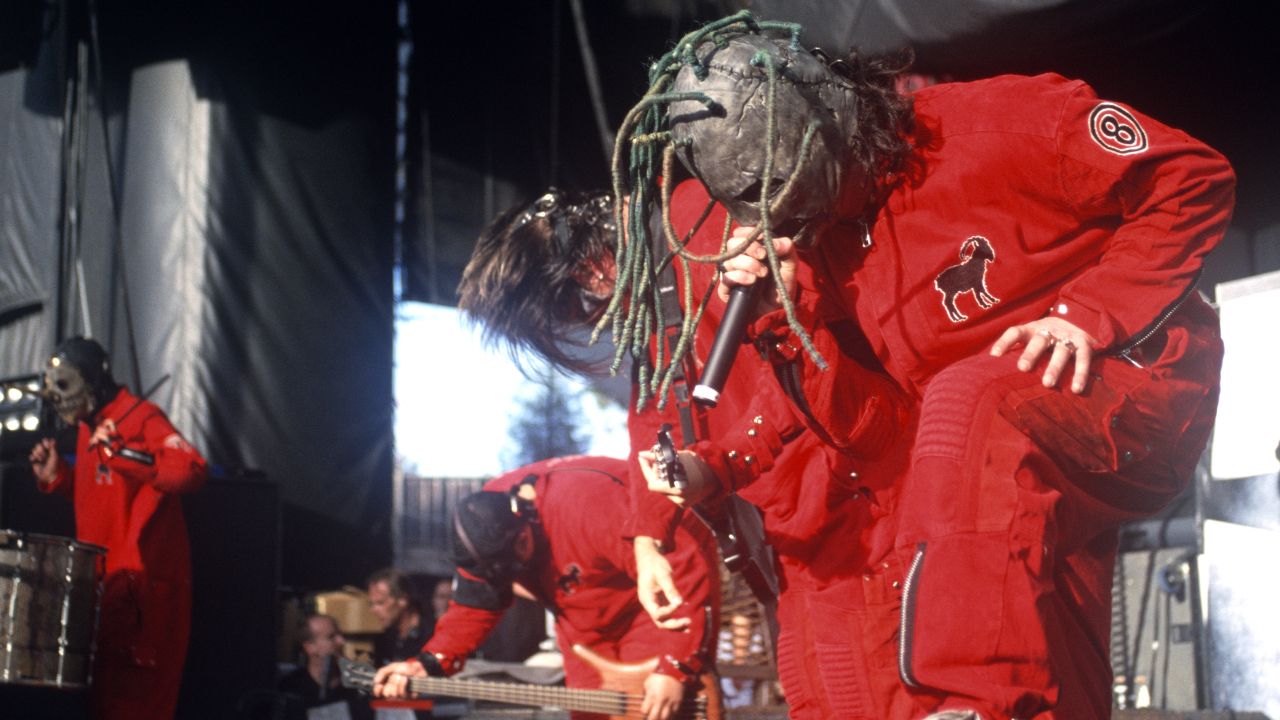
The recording of Slipknot’s landmark 2001 sophomore album, Iowa, remains one of the most fraught and relentless chapters in heavy music history. At the epicenter of this tumultuous production was legendary producer Ross Robinson. Having previously guided the nine-piece Iowan nu-metal group through their groundbreaking 1999 self-titled debut, the 59-year-old producer returned to helm Iowa under extraordinary conditions—most notably, overseeing the recording sessions while suffering from a freshly broken back.
Rather than stepping aside or delegating directorial control to a secondary producer after a devastating motocross accident, Robinson took just a single day off before returning to the mixing desk. In a comprehensive interview with Metal Hammer, Robinson revealed that his severe physical injury became an unexpected catalyst for the album’s uncompromising direction. At a moment when the band members were experiencing the disorienting trappings of sudden global fame and Hollywood excess, Robinson’s agonizing physical ordeal re-anchored the group to their brutal work ethic and raw artistic roots.
The resulting record, released on August 28, 2001, stands as a commercial and critical titan. It claimed the number-one spot on the UK Albums Chart, peaked at number three on the US Billboard 200, and secured Platinum certifications across the United States, the United Kingdom, and Canada. However, the extreme toll of its creation—marked by heavy substance use, emotional exhaustion, and severe internal friction—ultimately drove the band into a temporary hiatus in 2002.
Decades later, as Slipknot prepares their eighth studio album alongside producer Matt Wallace, the psychological intensity and physical endurance that defined the Iowa era continue to offer a stark window into the band’s creative ethos.
Detailed Chronology of the Iowa Recording Sessions
+-----------------------------------------------------------------------------------+
|                            TIMELINE OF EVENTS                                     |
+-----------------------------------------------------------------------------------+
| 1999           : Slipknot releases self-titled debut, produced by Ross Robinson.   |
| 2000-2001      : Band achieves massive commercial success; pre-production for     |
|                  'Iowa' begins amidst growing internal tension.                   |
| Mid-Production : Ross Robinson breaks back in a motocross accident; takes 1 day   |
|                  off before returning to the studio desk.                         |
| August 28, 2001: 'Iowa' is officially released worldwide, debuting at #1 in UK    |
|                  and #3 in US.                                                    |
| 2002           : Band enters temporary hiatus due to burnout and substance abuse. |
| 2004           : Slipknot returns with 'Vol. 3: The Subliminal Verses'.            |
| Present        : Band stockpiles 50+ songs for 8th album with producer Matt       |
|                  Wallace amidst reports of Sid Wilson's line-up departure.        |
+-----------------------------------------------------------------------------------+
From Breakthrough Debut to Sophomore Pressure (1999–2000)
Following the explosive impact of Slipknot’s 1999 self-titled debut, the nine-member collective from Des Moines, Iowa, was catapulted into the upper echelons of international rock stardom. Having subverted industry expectations with their aggressive sonic landscape and anonymous, masked aesthetic, the group faced monumental pressure to deliver a follow-up that matched their newfound status without sacrificing their intrinsic brutality.
Producer Ross Robinson, who had forged a reputation for pushing musicians to their absolute physical and emotional limits, was re-engaged to produce the sophomore endeavor, titled Iowa.
The Motocross Accident and the One-Day Recovery
Midway through the high-stakes production of Iowa, the project was nearly derailed when Robinson suffered a catastrophic motocross accident that resulted in a broken back. In an industry where such an injury typically halts production indefinitely or necessitates a replacement producer, Robinson refused to relinquish his position.
After taking merely a single day off to receive initial medical intervention, Robinson returned directly to the studio console. He described a grueling daily routine: enduring intense physical agony throughout the tracking sessions, returning home to immobilize himself while watching The Big Lebowski until passing out from pain, and then returning to the studio the following morning with unyielding energy.
Countering Hollywood Distractions
Robinson’s return to the studio in a state of severe physical impairment coincided with growing atmospheric shifts within the band. As initial financial success and notoriety took hold, several band members began frequenting Hollywood social circles, interacting with high-profile celebrities and experiencing the seductions of mainstream fame.
According to Robinson, his visible suffering and refusal to compromise served as a stark reality check for the group. Seeing their producer overcome excruciating pain to track their songs recalibrated the band’s mindset, forcing them to re-engage with the unrelenting discipline that had characterized their early years.
Vocal Tracking and Raw Emotional Overdubs
While Robinson was managing his spinal trauma, the tracking process presented severe emotional hurdles. Robinson identified the vocal overdubbing phase as the most taxing element of the entire album cycle. Vocalist Corey Taylor was navigating personal turbulence, frequently spending nights out in Los Angeles surrounded by an entourage, which made capturing his vocal performances particularly complex.
Conversely, some of the album’s most iconic moments were born out of genuine, unvarnished grief. During the recording of background textures for the flagship track "People = Shit," turntablist Sid Wilson learned that his grandfather had passed away. Distraught and sobbing in the studio, Wilson was guided by Robinson directly into the tracking booth. Channeling his immediate sorrow and heartbreak directly into the microphone, Wilson delivered performances that Robinson recalled as flawless in their visceral authenticity.
Post-Release Breakdown and Rebound (2001–2004)
When Iowa hit retail shelves on August 28, 2001, its impact was instantaneous, yielding top-tier global chart placements and widespread critical acclaim. However, the victory was short-lived on a interpersonal level. Exhausted by relentless touring cycles and struggling with heavy substance dependency, the band collapsed under its own weight, entering an official hiatus in 2002.
The group eventually regrouped to record their third album, 2004’s Vol. 3: The Subliminal Verses, which debuted at number two on the US Billboard 200 and achieved Platinum status, establishing a pattern of resilience that continues to define their career.
Supporting Context & Commercial Metrics
Despite the extreme environmental hostility surrounding its creation, Iowa stands as an unqualified commercial success. It consolidated Slipknot’s transition from an underground phenomenon into a major global arena act.
Chart Performance and Industry Certifications
Metric / Region
Achievement / Position
Context & Details
UK Albums Chart
#1
Topped the official national chart upon release in August 2001.
US Billboard 200
#3
Highest entry for the band at the time, confirming mainstream saturation.
RIAA Certification (US)
Platinum
Denotes over 1,000,000 certified units sold in the United States.
BPI Certification (UK)
Platinum
Certified Platinum for sales exceeding 300,000 units in the UK.
Music Canada Cert.
Platinum
Denotes over 100,000 certified sales units in Canada.
Comparative Album Performance
The legacy of Iowa set a high commercial benchmark for Slipknot’s subsequent releases, demonstrating that extreme, uncompromised heavy music could achieve massive global saturation.
COMMERCIAL COMPARISON (US BILLBOARD 200 CHART PEAKS)
----------------------------------------------------
1999: Slipknot (Self-Titled)  [Multi-Platinum Anchor]
2001: Iowa                    [#3 Billboard 200 / UK #1]
2004: Vol. 3: Subliminal...   [#2 Billboard 200 / Platinum]
Official Statements and Primary Source Analysis
Ross Robinson on His Physical Condition and Studio Culture
In his feature interview with Metal Hammer, Ross Robinson reflected on the psychological impact his injury had on the studio dynamic and why stepping down was never an option:
"No, that’d be impossible. It was actually really good for the record because the guys were being taken out in Hollywood, hanging out with all these big stars and shit. When I broke my back and showed up anyway, it put a very next-level diligence into those guys."
Robinson detailed the stark contrast between his private physical agony and his dynamic studio presence:
"It was really tough – I’d get home and just lie there watching The Big Lebowski until I passed out. I was in so much pain, but I’d get to the studio and it’d be, ‘Let’s get it the fuck on!’"
Addressing the difficulty of vocal tracking versus emotional breakthrough moments, Robinson highlighted Sid Wilson’s tracking session for "People = Shit":
"Vocal overdubs could be tough. The bar was set so high with the band slamming together – when you’re that extreme, it gets difficult, especially when you’re on your own and trying to get back into the zone… Weirdly, the easiest one to get in the zone was when Sid’s grandfather passed away, and I’d asked him to do some overdubs for the background of People = Shit. He was so distraught, sad, hurt and was just crying. I was like, ‘You’re doing backgrounds today’ and he nailed it."
Joey Jordison on the Producer’s Injury
The late Joey Jordison, who served as Slipknot’s founding drummer during the Iowa sessions, underscored the psychological turning point caused by Robinson’s accident. As recounted by Robinson, Jordison later confided in him:
"It was the greatest thing that ever happened to us."
Corey Taylor on the Dark Realities of Success
Reflecting on the psychological state of the band during the Iowa period, frontman Corey Taylor offered a candid assessment in a 2015 interview with Loudwire:
"We fought every cliche leading up to getting signed, going out and playing shows, and then, all of a sudden, we had everything: double-Platinum album, we were one of the biggest metal bands in the world, we were headlining because nobody wanted us to open for them. We were making a hugely, hugely anticipated album, so we just started getting fucked up."
Future Outlook: The Eighth Album and Lineup Shifts
As Slipknot looks past the historical legacy of Iowa, the band is actively engaged in crafting their as-yet-unannounced eighth studio album. Guitarist Jim Root recently revealed that the group has stockpiled more than 50 song ideas and is currently tracking new material alongside producer Matt Wallace, known for his definitive work with Faith No More.
However, this new creative phase arrives amidst potential internal structural changes. Reports published by TMZ indicated that long-time turntablist Sid Wilson had separated from the band’s lineup after a 28-year tenure. While this development has circulated widely across major media outlets, the band’s official representatives have yet to issue a formal public statement clarifying Wilson’s current status within the group.
Whether navigating intense physical trauma as they did with Ross Robinson in 2001 or managing internal personnel transitions in the modern era, Slipknot’s history demonstrates an ability to channel adversity directly into creative output. The lessons learned during the grueling tracking of Iowa continue to serve as the benchmark for their enduring resilience.