Executive Overview
As the glittering legacy of British television drama continues to evolve, few productions hold the cultural and institutional weight of Casualty. Entering its milestone fifth decade on air, the BBC’s flagship medical drama is preparing to cement its status as the world’s longest-running primetime medical series with an ambitious, two-part anniversary special scheduled for broadcast this September.
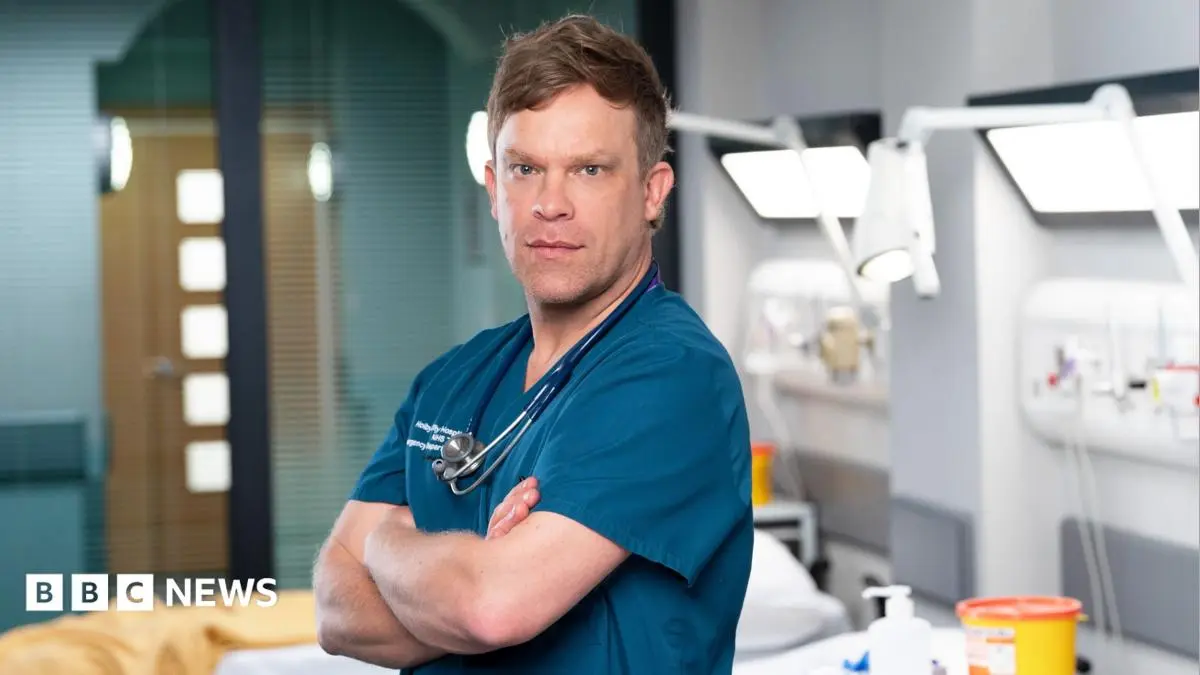
At the epicentre of this high-octane narrative is actor William Beck, whose portrayal of the acerbic, brilliant, and fiercely dedicated Dr. Dylan Keogh has become a cornerstone of the series. Beck finds himself stepping into the ultimate leadership crucible as the fictional Holby City Hospital is once again thrown into chaotic, heart-stopping peril.
The BBC has confirmed that the upcoming anniversary broadcast will feature a "high-stakes major incident" designed to test the emotional and physical limits of the hospital’s remaining staff. For Beck, leading the ensemble cast through this monumental television event is both a professional pinnacle and a profound responsibility.
This comprehensive report examines the structural anatomy of the upcoming 40th-anniversary special, traces William Beck’s journey within the television landscape, contextualises the historic milestone of Casualty within global broadcasting history, and explores the broader cultural impact of a series that has continuously reinvented itself across four decades of changing medical, political, and social landscapes.
Detailed Chronology: The Road to the 40th Anniversary
To understand the magnitude of the upcoming September special, one must examine the meticulous long-term planning required to sustain a weekly medical drama for forty years. Television milestones of this scale are rarely accidental; they are the result of years of narrative architecture, character development, and logistical foresight.
The Evolution of Holby’s Crisis Narrative
The narrative arc leading up to the 40th-anniversary special has been carefully engineered by the production team at BBC Studios Wales. Over the past several seasons, Casualty has leaned increasingly into serialized storytelling, blending its traditional "patient-of-the-week" format with deeper, serialized explorations of staff mental health, the systemic strains on the National Health Service (NHS), and inter-departmental politics.
Dr. Dylan Keogh has served as a narrative anchor during much of this turbulence. Known for his clinical brilliance, sharp tongue, and deep-seated aversion to administrative bureaucracy, Dylan’s character progression has quietly prepared him for this moment. Far from being a reluctant leader, Dylan has consistently emerged as the emotional and operational spine of the emergency department when catastrophic events unfold.
In the lead-up to the anniversary two-parter, subtle foreshadowing has laid the groundwork for what producers are describing as the most harrowing shift in the hospital’s history. The major incident—details of which remain fiercely guarded by production executives—will strike without warning, trapping staff, patients, and emergency responders in a crucible of life-and-death decision-making.
Behind the Scenes of Production
Filming for a disaster narrative of this scale requires extraordinary coordination between directors, stunt coordinators, prosthetic makeup teams, and the primary cast. Shot over several intensive weeks at the BBC’s Roath Lock studios in Cardiff, the production utilized state-of-the-art practical effects alongside advanced CGI to create an authentic depiction of a catastrophic urban emergency.
William Beck, speaking on the grueling yet exhilarating nature of the shoot, noted that the physical demands of the scripts were matched only by the emotional weight placed upon the characters. The storyline requires Dylan Keogh to navigate a devastating personal tragedy simultaneously while managing a catastrophic triage scenario that threatens to overwhelm Holby’s resources entirely.
"The opportunity to give people something that feels authentic and recognisable but also surprises them, that’s gold dust in TV," Beck reflected during discussions about the production process. For the cast and crew, maintaining the gritty realism that has defined Casualty since its inception in 1986 is paramount, especially when tackling high-concept disaster scenarios that risk tipping into melodrama if not grounded in genuine human stakes.
Supporting Context & Metrics: The Longevity and Legacy of Casualty
When Casualty first broadcast its pilot episode, entitled "Gas", on September 6, 1986, the television landscape looked profoundly different. Created by Jeremy Brock and Paul Unwin, the series was conceived as a gritty, socially realistic portrayal of the British National Health Service under pressure. It aimed to reflect the working-class realities of industrial towns, the dedication of overworked medical professionals, and the fragile nature of human life.
By the Numbers: A Statistical Overview of a Titan
- Launch Date: September 6, 1986
- Total Broadcast Episodes: Over 1,300 episodes across 39 completed seasons.
- Global Ranking: The longest-running primetime medical drama television series in the world.
- Production Hub: Roath Lock Studios, Cardiff, Wales (relocated from BBC Bristol in 2011).
- Notable Alumni: A vast roster of British acting talent passed through its doors early in their careers, including Kate Winslet, Orlando Bloom, Minnie Driver, David Tennant, and Michael Fassbender.
- Spin-offs: Holby City (1999–2022) and the short-lived HolbyBlue (2007–2008).
Reflecting the Real-World NHS
Throughout its history, Casualty has maintained a symbiotic relationship with real-world medical institutions. While dramatized for theatrical effect, the storylines frequently engage with contemporary healthcare crises—ranging from funding shortages and nursing strikes to the COVID-19 pandemic and the mental health burnout experienced by frontline workers.
This dedication to social realism has earned the show both critical acclaim and occasional political controversy. Yet, it is precisely this unflinching willingness to hold up a mirror to society that has kept audiences returning week after week for nearly half a century.
The upcoming 40th-anniversary special continues this tradition. By placing Dr. Dylan Keogh at the center of a major incident while he grapples with personal grief, the show touches upon a painfully authentic reality of modern healthcare: the expectation that professionals must heal others while quietly carrying their own unyielding burdens.
Official Statements: The Cast and Creative Vision
The anticipation surrounding the September milestone has prompted reflections from key figures within the BBC and the show’s creative hierarchy.
William Beck on the Privilege of Leadership
William Beck, whose tenure as Dr. Dylan Keogh has spanned well over a decade, expressed profound gratitude for being entrusted with the narrative weight of the anniversary milestone.
"The opportunity to give people something that feels authentic and recognisable but also surprises them, that’s gold dust in TV," Beck stated, capturing the elusive alchemy required to keep a long-running serial fresh.
Addressing the psychological depth of his character during the crisis, Beck challenged the recurring notion that Dylan shies away from authority:
"With Dylan, there’s a real opportunity to explore what happens when the person everyone relies on is pushed to his limits. I know it’s been said that Dylan doesn’t like the responsibility of leading the department, but I think he does. It’s a lovely opportunity, and a real privilege, to lead the audience through this story, particularly for the 40th anniversary. It really is pinch-yourself stuff."
Balancing Entertainment and Trauma
Beck also emphasized that the two-part special has been crafted to deliver a complex emotional payload—one that balances harrowing stakes with compelling narrative entertainment. In a television climate dominated by on-demand streaming and rapid-fire algorithmic content appointment-to-view linear television relies heavily on shared cultural moments. The Casualty anniversary special is explicitly designed to be one of those defining communal viewing experiences.
Executive producers and directors have echoed Beck’s sentiments, noting that the milestone is as much a celebration of the loyal audience as it is of the fictional staff of Holby City Hospital. Viewers who have invested decades of their lives into these characters will see longstanding emotional threads tested, resolved, or tragically shattered.
Future Outlook: The Next Era of Medical Drama
As Casualty crosses the threshold into its fourth decade, the television industry faces unprecedented disruption. The rise of subscription video-on-demand (SVOD) platforms, shifting viewing habits among younger demographics, and evolving production economics have placed traditional weekly serials under intense pressure.
Yet, Casualty continues to demonstrate a remarkable resilience. By adapting its production models, embracing diverse storytelling perspectives, and maintaining high technical standards, the series proves that serialized, character-driven broadcast television still holds a vital place in the cultural ecosystem.
What Lies Beyond the 40th Anniversary?
While the immediate focus remains firmly fixed on the high-stakes chaos of the September two-part special, conversations behind the scenes at BBC Studios are already turning toward the future. The fallout from the major incident will inevitably reshape the staffing, morale, and operational structure of Holby City Hospital for seasons to come. Characters who survive the crucible will be forced to pick up the pieces, ensuring that the dramatic momentum generated by the anniversary will ripple far into the future.
Furthermore, the enduring success of Casualty serves as a testament to the power of public service broadcasting in the United Kingdom. By providing a platform for home-grown writers, directors, technicians, and actors, the show functions not merely as entertainment, but as an essential training ground for the broader British creative industries.
As the countdown to September ticks away, fans and critics alike are bracing themselves for an unforgettable television event. When the sirens finally wail across Holby and William Beck’s Dr. Dylan Keogh steps into the breach, millions of viewers will tune in, ready to witness how a legendary institution marks forty years of saving lives, breaking hearts, and defining the gold standard of British drama.