Executive Overview
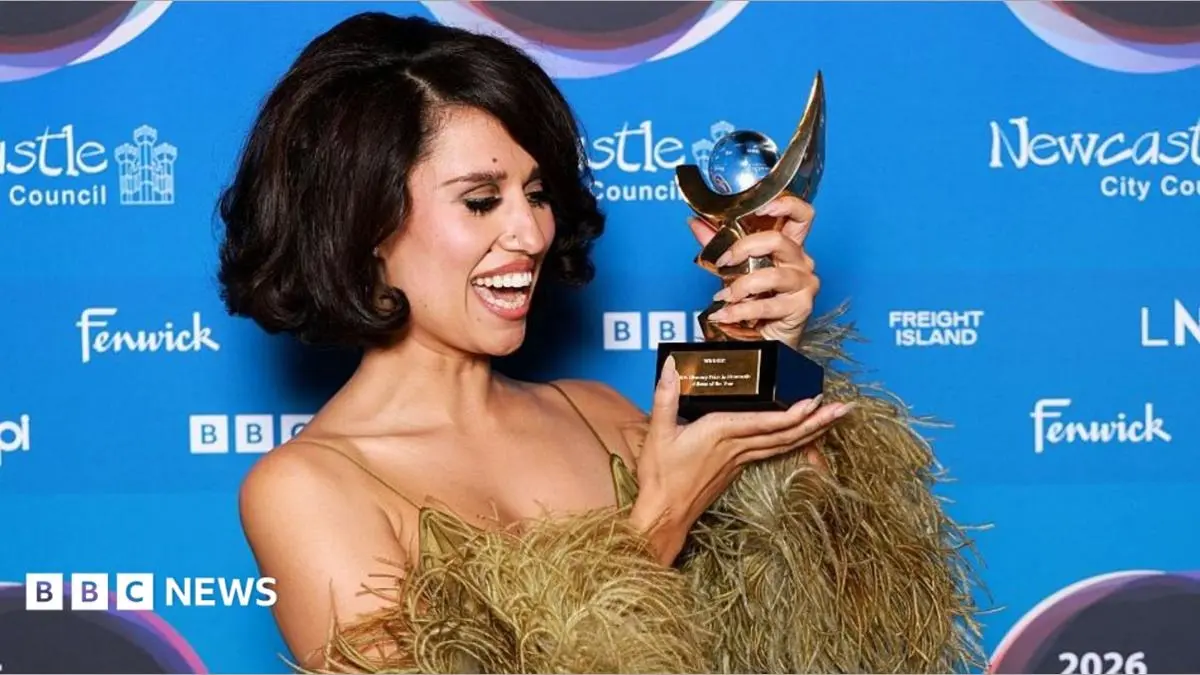
In a landmark decision that rewrites decades of chart history, British singer-songwriter RAYE has won the prestigious 2026 Mercury Prize for her critically acclaimed, unapologetically maximalist sophomore album, This Music May Contain Hope. Besting a high-profile shortlist that included music legend Sir Paul McCartney, bookmaker favorite Olivia Dean, and pop innovator Jade, RAYE collected the £25,000 prize at a jubilant ceremony held at Newcastle’s Utilita Arena.
This victory marks a watershed moment for modern British pop. This Music May Contain Hope is the first pop-focused record to capture the coveted prize—which honors the best British or Irish album of the preceding 12 months—since M People’s Elegant Slumming claimed the trophy back in 1994. Over the past three decades, the Mercury Prize has predominantly leaned toward indie rock, electronic experimentation, underground hip-hop, and raw debuts. RAYE’s triumph signals a critical shift in the industry, proving that grand, cinematic pop can marry mass emotional resonance with uncompromising artistic integrity.
Spanning 17 tracks and an immersive 73 minutes, the winning record is an ambitious, golden-age-Hollywood-drenched journey through heartbreak, resilience, and rebirth. Yet, its path to victory was fraught with unexpected peril, including a devastating theft that threatened to derail the project entirely. As the music industry gathers to digest the results of the 2026 ceremony, RAYE’s victory stands as a testament to creative perseverance, artistic risk-taking, and the enduring power of high-budget, beautifully orchestrated storytelling in an era dominated by bite-sized streaming trends.
Detailed Chronology: From Stolen Notebooks to the Utilita Arena Stage
To fully appreciate the weight of RAYE’s 2026 Mercury Prize win, one must examine the arduous, winding road that brought This Music May Contain Hope to life. The album’s creation was nearly derailed two years prior to the ceremony, during a week that tested the artist’s psychological and professional resilience to its absolute limits.
The Theft That Almost Stopped the Music
In an incident that sent shockwaves through her fanbase, RAYE’s car was broken into and stolen exactly two years before her Mercury triumph. Tragically, the vehicle contained virtually all of her physical songwriting notebooks, hard drives, and early demo recordings amassed for her second album project.
For any modern artist, the loss of unreleased material is a nightmare scenario; for a meticulous perfectionist like RAYE, whose work relies on deeply personal lyricism and intricate arrangements, it was cataclysmic. While law enforcement and public appeals eventually led to the recovery of the stolen property, the logistical fallout and psychological toll delayed the production of This Music May Contain Hope by nearly a full year.
Rather than rushing to make up for lost time, the 28-year-old artist channeled the disruption into the thematic DNA of the record. The album’s narrative—following a protagonist through a devastating breakup on the rainy streets of Paris to a triumphant re-emergence—mirrored her own real-life trials of overcoming unexpected loss and administrative chaos. Looking back on the ordeal from the winner’s podium in Newcastle, RAYE adopted a remarkably philosophical stance on the setback:
"I was distraught. I was very worried, but you know, it all turned out great. Every little slip, every little accident, every little thing, it creates the path that you take. And it’s easy to spend time wishing things were the other way. But right now, I certainly do not."
The Night of the Ceremony
The 2026 Mercury Prize ceremony, hosted outside of London for successive years following regional shifts in the arts landscape, transformed Newcastle’s Utilita Arena into a crucible of nervous energy. Rumors swirled throughout the afternoon regarding the judges’ leanings. Olivia Dean’s universally adored, soulful collection The Art of Loving had spent months as the odds-on favorite with bookmakers, following sweeping successes at the Brit Awards and MOBOs.
However, as the evening progressed, the tide turned toward RAYE. When her name was announced, the artist stepped forward to claim her trophy, visibly shaken and visibly exhausted from an unforgiving international promotional schedule.
Clutching the award tightly, she addressed the audience and the global press corps with characteristic candor:
"I couldn’t tell you how grateful I am to be holding this. I’m shaking, I’m jet-lagged, I’m tired. It’s all blurry."
Backstage, amid a flurry of flashbulbs and interview requests, she elaborated on the sheer magnitude of what she had accomplished, noting that she had yet to process the full reality of her win and intended to let it sink in only once she finally secured a quiet moment on a sofa during the upcoming Christmas break.
Supporting Context & Metrics: Breaking Down the Record and the Prize
The Mercury Prize was established in 1992 as a direct counter-balance to the commercially driven Brit Awards. Conceived to celebrate artistic merit, creative vision, and innovation without bowing to fleeting pop trends or commercial formulas, the prize has historically favored debut releases. Indeed, prior to 2026, 20 out of the award’s 35 historical winners were debut albums—a statistic that has frequently led casual music fans to mistakenly believe the Mercury is exclusively reserved for first-time artists.
The Anatomy of an Unlikely Winner
This Music May Contain Hope shatters conventional wisdom regarding what a contemporary pop record can—and should—be. In an industry increasingly optimized for short attention spans, algorithmically friendly sub-three-minute tracks, and minimalist production styles, RAYE swam entirely against the current.
- Scale and Scope: The album spans 17 tracks and runs for 73 minutes.
- Musical Arrangements: Eschewing digital shortcuts, the record incorporates four separate live orchestras and pulls together more than 100 individual musicians.
- Special Guests: The project features contributions from soul icon Al Green, alongside deeply personal voice notes and appearances from both of RAYE’s grandparents.
- Song Structure: Eschewing radio-friendly formulas, several tracks push past the seven-minute mark, embracing an indulgent, maximalist aesthetic.
When speaking to the BBC following her victory, RAYE emphasized her refusal to pander to modern commercial pressures:
"I made this album not focusing on commercial [success], not focusing on making things cookie-cutter. Some of these songs are seven minutes. They’re indulgent. They’re maximalist. I poured everything I had into it."
A Historic Shortlist
The 2026 shortlist offered an extraordinarily diverse cross-section of contemporary British and Irish music, proving that the nation’s creative output remains fiercely vibrant.
Among the contenders was Olivia Dean’s critically lauded The Art of Loving, which many anticipated would take the crown. Other notable nominees included rapper Kojey Radical, Newcastle jazz ensemble Knats, and pop star Jade. Jade’s nomination for her album That’s Showbiz, Baby marked a historic milestone, making her the first-ever X Factor winner to receive a Mercury Prize nod.
Further adding to the eclectic mix of the 2026 shortlist was the charity compilation album Help (2). Recorded in aid of War Child, the collaborative project featured new music and inventive cover versions by heavyweights such as Olivia Rodrigo, Damon Albarn, Depeche Mode, and The Last Dinner Party. Remarkably, the tracklist also boasted contributions from nine former Mercury Prize winners, including Arctic Monkeys, Young Fathers, Wolf Alice, Pulp, Sampha, Beth Gibbons, Arlo Parks, English Teacher, and Ezra Collective.
Official Statements and Industry Impact
The reverberations of RAYE’s win extend far beyond a single trophy and a £25,000 cash prize. By bridging the gap between high-art orchestration and accessible pop sensibilities, This Music May Contain Hope has ignited vital conversations among critics, producers, and executives regarding the future trajectory of mainstream music.
Changing the Guard in British Pop
Industry analysts have noted that RAYE’s victory represents the maturation of an artist who famously fought a public battle with her former major label to secure her creative independence. Having achieved massive independent success with her debut album My 21st Century Blues, RAYE leveraged her newfound artistic freedom to construct a sophomore record of staggering orchestral proportions.
The judges’ panel, choosing a pop record for the first time in 32 years, signalled a progressive evolution in how "innovation" is defined. No longer restricted to underground punk bands or esoteric electronic producers, innovation in 2026 can be found in the ambitious scaling of traditional pop structures, infusing them with classic Hollywood glamour, soul history, and sprawling narrative arcs.
Philanthropic Traditions Continue
Following in the footsteps of the 2025 Mercury Prize winner—Newcastle singer-songwriter Sam Fender, who famously donated his £25,000 prize money directly to grassroots music venues across the UK to support up-and-coming talent—industry observers are eager to see how RAYE will utilize her platform and financial award to foster the next generation of musical innovators. While RAYE has not yet formally announced the allocation of her winnings, her well-documented advocacy for independent artists, songwriters’ rights, and mental health awareness suggests the funds will likely be channeled into initiatives supporting creative equity.
Future Outlook: What’s Next for RAYE and the Mercury Prize?
As the dust settles on the 2026 ceremony at the Utilita Arena, the music world’s gaze turns rapidly toward the horizon. For RAYE, the immediate future promises an intensification of an already stratospheric career trajectory.
Industry insiders predict that her Mercury win will trigger a massive global resurgence for This Music May Contain Hope, driving physical vinyl sales and prompting international arena tour extensions. Furthermore, with fellow nominee Olivia Dean widely tipped to secure major Grammy nominations next month for The Art of Loving, British female singer-songwriters are currently dominating the global critical landscape, commanding unprecedented levels of artistic and commercial respect.
Looking further ahead, the 2026 Mercury Prize will likely be remembered as a turning point in the award’s storied history. By honoring a cinematic, maximalist pop record that refused to compromise on length, scope, or emotional depth, the judges have sent an emphatic message to the global music community: artistic ambition knows no genre boundaries, and true innovation can—and will—thrive at the very center of pop culture.
For RAYE, the girl whose notebooks were once stolen from her car on a rainy night, the journey from devastation to the pinnacle of British music is now complete. Yet, as she takes a well-deserved breather on the sofa this Christmas, it is abundantly clear that her musical renaissance has only just begun.